What is a down comforter, and why do so many people swear by them for better sleep? I know that when you’re shopping for bedding, all the technical terms can feel overwhelming and confusing.
Down comforters sit at the premium end of the bedding market, often costing significantly more than regular blankets. You’ve probably seen them advertised everywhere and heard people praise them, but the actual details remain unclear.
Understanding what makes a down comforter different helps you decide if the investment makes sense for you.
I’ve learned that down offers unique qualities that synthetic materials cannot replicate. Once you grasp the basics, choosing the right one becomes much easier than it first appears. Let me show you exactly what down comforters are all about.
What is a Down Comforter?
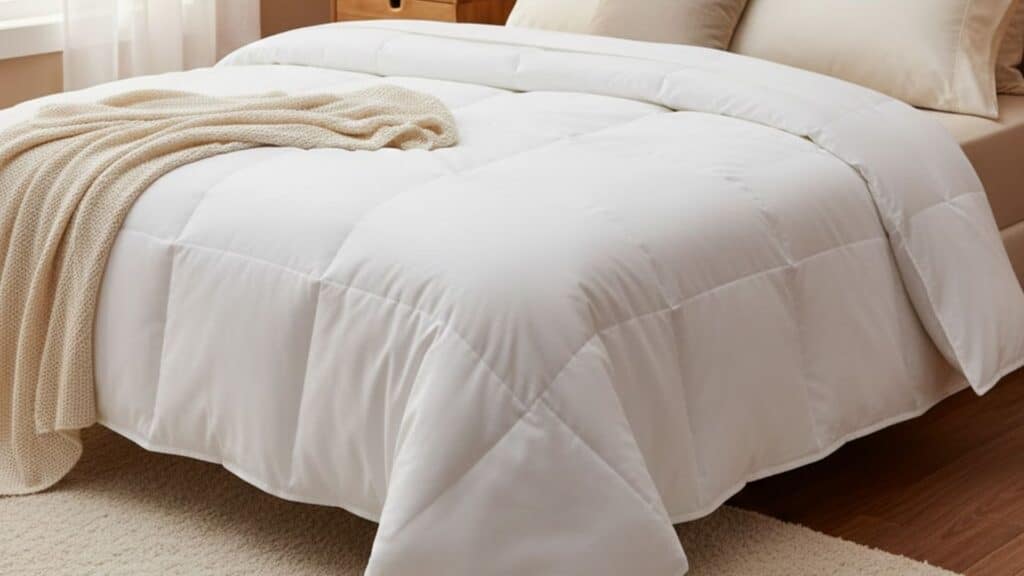
A down comforter is a thick blanket filled with soft, fluffy clusters from geese or ducks. Unlike regular blankets or quilts, down comforters are specifically designed to trap warmth and keep you cozy.
The comforter has three main parts: an outer shell fabric, the down filling inside, and stitched sections called baffles.
These baffles keep the down evenly distributed so it doesn’t clump up in one corner overnight. Down refers to the soft, fluffy clusters found under a bird’s outer feathers, not the feathers themselves.
These clusters don’t have quills or sharp parts, making them incredibly soft and comfortable against your skin. Down works so well because the clusters create tiny air pockets that naturally trap your body heat.
Key Features of a Down Comforter
When shopping online, you’ll see specs that can feel confusing if you don’t know what they mean. I’ve learned that understanding these key features helps you pick the perfect comforter for your needs. Here’s what matters most:
1. Fill Power
Fill power measures how much space one ounce of down takes up when it’s fully fluffed. Higher fill power means the down is fluffier, traps more air, and keeps you warmer with less weight.
Comforters with 400-550 fill power work well in warm climates or for summer use in moderate temperatures. The 600-700 range offers year-round comfort for most people in average climates and sleeping conditions.
2. Fill Weight
Fill weight refers to the total ounces of down stuffed inside your comforter. Two comforters can have the same fill power but feel completely different based on fill weight.
A lightweight comforter with high fill power stays warm without feeling heavy or suffocating. More fill weight means more down clusters, creating more warmth, regardless of the fill power rating.
3. Shell Fabric and Thread Count
The shell fabric holds the down inside and affects how your comforter feels and performs nightly. Cotton and cotton sateen shells feel soft, breathe well, and regulate temperature better than synthetic fabrics.
Down-proof shells have tightly woven fibers that prevent down from poking through and escaping over time. Higher thread counts feel smoother but may reduce breathability, making you feel hot during warm nights.
4. Construction Types
Baffle box construction uses fabric walls between stitched sections, allowing it to loft fully without creating cold spots. This construction keeps warmth evenly distributed and prevents down from shifting to the edges over time.
Sewn-through construction stitches directly through both shell layers, creating flatter areas where stitching compresses the down. Baffle box works best for cold climates where maximum warmth matters most.
Benefits of a Down Comforter
I’ve noticed that down comforters offer unique advantages that synthetic options simply cannot match at all. Here are the main reasons people love down comforters:
- Warmth Without Heavy Weight: Down traps heat incredibly well while feeling light and fluffy, making it perfect for cold sleepers who hate heavy blankets.
- Excellent Breathability: Natural down regulates temperature by releasing excess heat and moisture, keeping you comfortable throughout the night in any season.
- Year-Round Versatility: Pair your down comforter with different duvet covers to adjust warmth levels for summer, spring, fall, and winter easily.
- Long-Lasting Durability: High-quality down comforters last 10-15 years with proper care, significantly outlasting synthetic alternatives that flatten and wear out quickly.
These benefits explain why down comforters remain a worthwhile investment for better sleep quality and comfort. The initial cost pays off over years of comfortable, restful nights in your bed.
Are Down Comforters Good for Allergies?
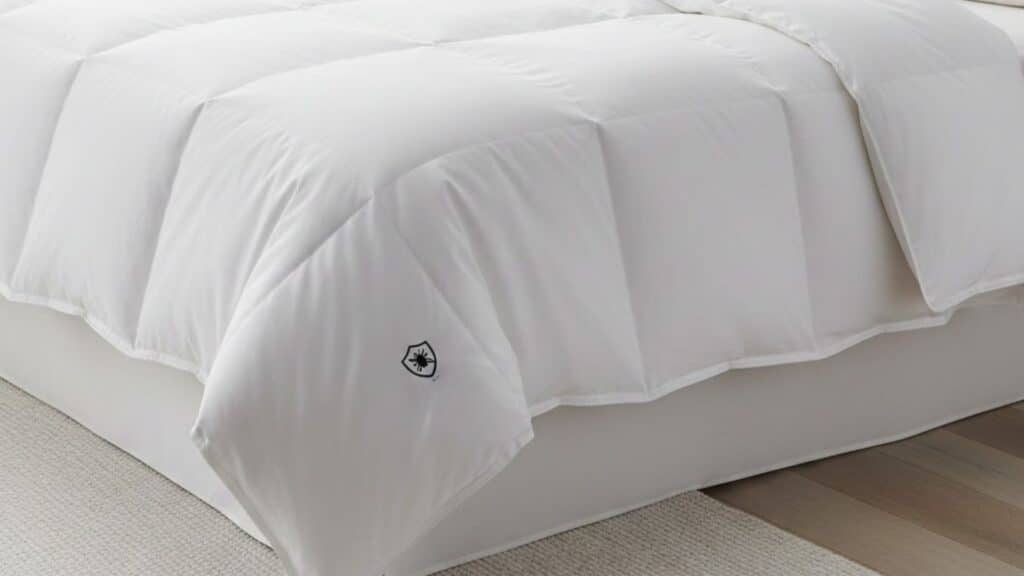
Many people think they’re allergic to down, but they’re usually reacting to dust mites instead of the down itself. Down allergies are actually quite rare, while dust mite allergies are prevalent in bedding and fabrics.
The key is to keep your comforter clean and use a tightly woven, down-proof shell that blocks allergens. When you see “hypoallergenic down,” it usually means the down has been thoroughly washed and processed to remove dust, dirt, and oils.
High-quality down comforters, when properly cleaned, cause fewer allergy problems than cheap, poorly processed ones.
Look for certifications like RDS or OEKO-TEX that indicate cleaner, better-processed down inside your comforter. If you have severe allergies, consider using a dust mite cover.
How to Choose the Right Down Comforter?
I know that choosing the right down comforter feels overwhelming with so many options and specs available. Breaking the decision into simple steps makes the process much easier and less stressful for everyone. Here’s how to find your perfect comforter:
- Pick Your Warmth Level: Match your comforter to your room temperature and personal sleep style for maximum comfort year-round.
- Choose Between Goose and Duck Down: Goose down offers higher loft and costs more, while duck down provides excellent warmth at lower prices.
- Select the Right Size: Buy your bed size or consider sizing up one level for extra drape and coverage.
- Decide Your Budget: Higher prices get you better fill power, superior construction, quality shell fabric, and ethical sourcing practices.
Taking time to think through each decision ensures you get a comforter that meets your specific needs. Prioritize the features that matter most to you rather than trying to maximize everything at once.
How to Use a Down Comforter Properly?
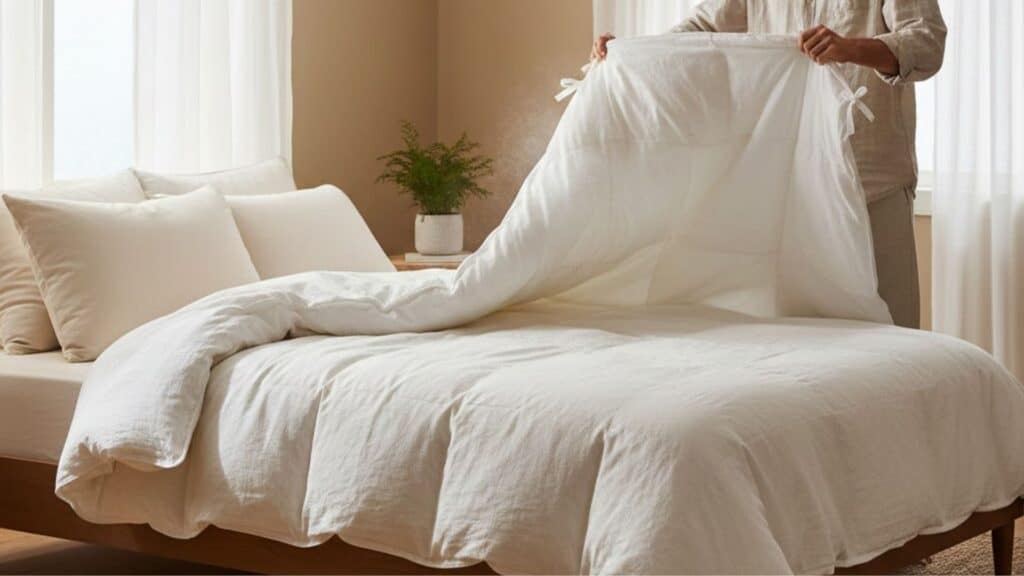
I’ve learned that using your down comforter properly keeps it clean and comfortable for years longer. Always use a duvet cover to protect your comforter from dirt, oils, and stains while making washing easier.
Look for duvet covers with corner ties or loops that secure your comforter and prevent it from shifting around.
For summer, use just a sheet and your down comforter without extra layers to stay cool. In winter, place a flat sheet between you and the comforter, then add a blanket on top.
Fluff your comforter daily by shaking it to redistribute the down and maintain its loft. These simple habits maximize comfort and significantly extend your comforter’s lifespan.
How to Clean and Care for a Down Comforter?
I’ve learned that proper care and cleaning make the difference between a comforter lasting five years or fifteen years. Following these simple guidelines keeps your down comforter fresh, fluffy, and damage-free for the long term. Here’s how to care for your down comforter properly:
- Only wash your down comforter one or two times per year if you’re using a duvet cover regularly.
- Wash on a gentle cycle with mild detergent and an extra rinse in a large front-loading machine only.
- Dry on low heat with clean tennis balls or dryer balls, checking repeatedly until completely dry with no damp spots.
- Keep your clean, completely dry comforter in a breathable cotton bag in a cool, dry place during off-season months.
Taking proper care of your down comforter protects your investment and ensures years of comfortable, cozy sleep. Never skip the drying step or store a damp comforter, as moisture causes permanent damage and mildew.
Common Problems and Easy Fixes
I’ve dealt with nearly every down comforter problem over the years, and most issues are surprisingly easy to fix. Knowing what causes these problems helps you solve them quickly and keep your comforter in great shape. Here are the most common issues and their solutions:
| Problem | Why It Happens | How to Fix It | When to Replace |
|---|---|---|---|
| Flat Comforter or Loss of Loft | Down compresses from body weight, moisture buildup, or dirt clogging the clusters | Fluff and shake daily, air it outside in sunlight, and wash properly | When fluffing no longer restores loft, or down feels permanently flat |
| Downshifting or Cold Spots | Poor construction or sewn-through stitching allows down to move to the edges | Shake and redistribute the down evenly, and use a duvet cover with ties | If construction is damaged or stitching has failed completely |
| Feathers Poking Through | Low thread count or loosely woven shell fabric allows quills to escape | Gently pull feathers back through from inside or patch small holes | When the shell fabric is worn thin and feathers constantly poke through |
| Musty or Bad Odor | Incomplete drying after washing allows mildew and bacteria to grow inside | Rewash and dry completely on low heat with dryer balls until dry | If odor persists after multiple washings or visible mold appears |
| Lumpy or Clumped Down | Washing without proper drying or using too much detergent causes clumping | Rewash with just water and an extra rinse, then dry thoroughly with dryer balls | When clumps cannot be broken up, even after proper washing attempts |
Catching problems early and fixing them properly extends your comforter’s life significantly and saves money. Regular maintenance prevents most of these issues from ever developing in the first place.
Final Thoughts
Now you understand what a down comforter is and how it differs from regular bedding options available today. I’ve walked you through everything from fill power to proper care so you can make informed decisions now.
This knowledge helps you avoid wasting money on the wrong comforter or falling for online marketing hype.
Down comforters offer real benefits when you choose the right warmth level and quality for your needs. I recommend starting by identifying your warmth needs and budget range, then using those factors to narrow options.
The right down comforter truly changes your sleep quality and makes every night more comfortable overall.
What questions do you still have about choosing your perfect down comforter? Drop your questions below!