

Do you know how wide a queen bed is and why it matters for your bedroom setup? Most people buy a mattress without checking if it actually fits their space and sleeping style properly.
I want to show you everything about queen bed widths so you can make a smart choice today. The width affects how comfortable you feel when sleeping alone or with a partner each night.
Different queen variations come in different sizes, which means you have options beyond the standard measurement available.
Understanding these dimensions helps you avoid cramped bedrooms and uncomfortable sleeping arrangements that ruin your rest quality.
Getting the right width makes your bedroom feel balanced instead of overcrowded and frustrating every single day.
The Appeal of Choosing a Queen Bed
Queen beds are the most popular choice for adults because they offer great value and comfort for most sleepers. Single sleepers get plenty of room to stretch out and move around freely without feeling restricted during the night.
Couples can share a queen bed comfortably without spending too much on a larger mattress. The width gives you enough personal space while still fitting nicely in average-sized bedrooms across most homes today.
You save money on both the mattress and bedding compared to buying king-size options that cost significantly more. Queen beds balance comfort and practicality better than any other size, which makes them perfect for everyday use.
Understanding the exact dimensions helps you plan your bedroom layout before making your final purchase decision.
Width of a Queen Bed: Standard and Specialty Sizes
I want to help you understand how the queen-size bed dimensions determine your comfort and room fit. Understanding different queen variations helps you pick the size that matches your sleeping habits and bedroom space:
1. Standard Queen Bed
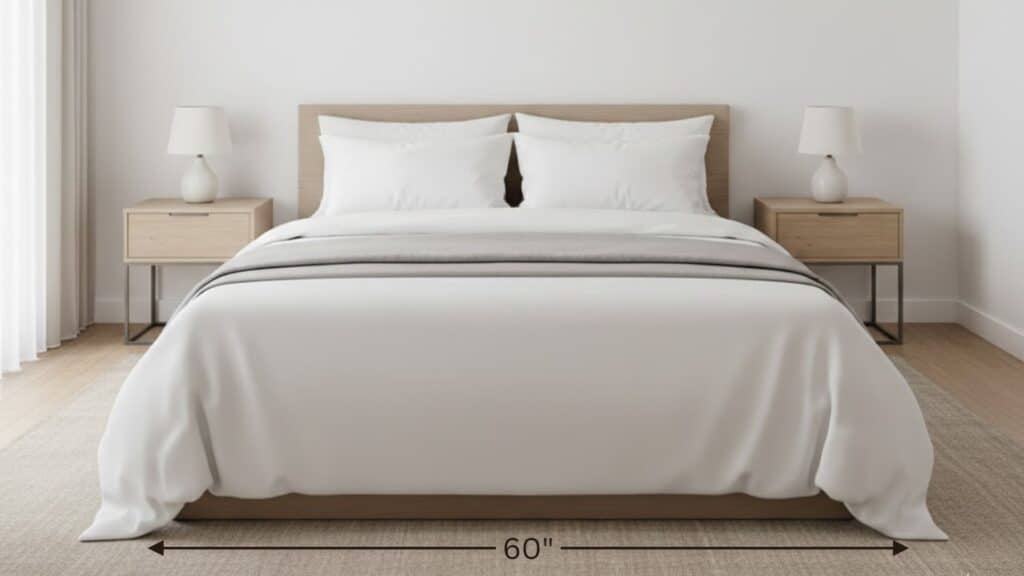
A standard queen-size bed has dimensions of 60 inches wide by 80 inches long, or 152 centimeters by 203 centimeters. This size works perfectly for couples who sleep close together or single sleepers who want extra room to spread out.
Each person gets about 30 inches of personal sleeping space when sharing the bed with a partner every night. Queen beds fit comfortably in most bedrooms without overwhelming the room.
2. Olympic Queen Dimensions

An Olympic queen bed measures 66 inches wide by 80 inches long, giving you 6 extra inches of width. This size offers more personal space for couples compared to a standard queen, but costs less than upgrading fully.
Each sleeper gets approximately 33 inches of room, which reduces disturbances when your partner moves around during sleep. Olympic queens work well in bedrooms that can accommodate slightly wider mattresses.
3. California Queen Dimensions

A California queen bed measures 60 inches wide and 84 inches long, making it four inches longer than standard. This size benefits taller sleepers who need extra legroom but don’t require additional width for a comfortable sleep.
The length helps prevent your feet from hanging off the edge while maintaining the same width as regular queens. California queens fit best in long, narrow bedrooms with limited side space.
4. Split Queen Dimensions
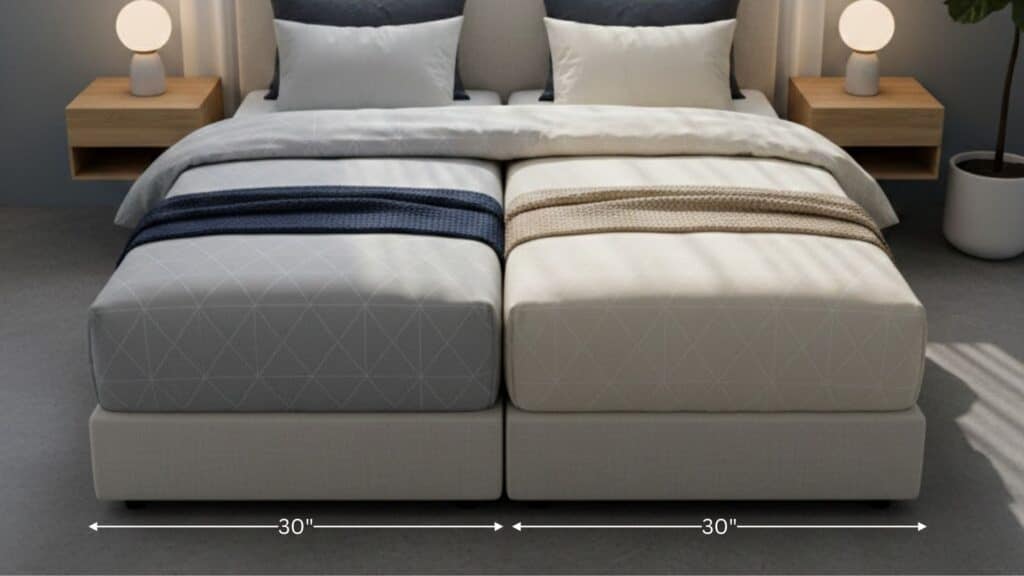
A split queen consists of two separate mattresses placed side by side, each measuring 30 inches wide by 80 inches long. Together, they create the same total dimensions as a standard queen bed at 60 inches wide by 80 inches.
This setup lets couples choose different firmness levels and adjust each side independently with their own bedding preferences nightly. Split queens work perfectly for partners with different comfort needs.
Room Size Requirements for a Queen Bed
Your bedroom needs enough space to fit a queen bed comfortably without making the room feel cramped or crowded.
A room that’s too small makes it hard to walk around and place other furniture like dressers or nightstands. The minimum room size for a queen bed is around 10 feet by 10 feet for basic functionality.
Ideally, you want a room that’s 10 feet by 12 feet or larger for comfortable movement and better furniture arrangement. You need at least two feet of walking space on each side of the bed for easy access daily.
Measure your room carefully before buying to ensure the bed fits well and leaves adequate clearance space.
Proper planning prevents frustration and helps you create a bedroom that feels spacious, not tight and uncomfortable.
The Limitations of a Queen Bed
Queen beds work great for most people, but they do come with some limitations. I want you to understand. I’ll show you these drawbacks so you can decide if a queen bed truly fits your needs before purchasing:
- It might feel tight for larger couples who need more personal sleeping space to stay comfortable throughout the night.
- Less personal space compared to a king bed, since each person only gets about 30 inches of width.
- Can feel cramped when sharing with pets or kids who occasionally climb into bed for cuddles and quality time.
- Movement from your partner may disturb your sleep more easily because you’re sleeping closer together than in a king bed.
Understanding these limitations helps you make a smart choice that matches your sleeping habits and lifestyle needs. Weigh these drawbacks against the benefits to see if a queen bed works best for your situation today.
How to Decide If a Queen Bed Is Right for You?
Choosing the right bed size depends on your lifestyle habits and how much space you actually need each night. I want to help you figure out if a queen bed matches your sleeping situation and room dimensions perfectly:
- Bedroom size: A queen bed needs at least 10 feet by 10 feet for comfortable movement around it.
- Sleeping positions: Side sleepers and starfish sleepers need more width than back or stomach sleepers typically require nightly.
- Movement during sleep: Queen beds keep couples closer together than king beds, which means you might disturb your partner.
- Pets or kids: Sharing the bed with pets or children takes up extra space, which makes a queen feel cramped.
- Budget constraints: Queen beds and bedding cost significantly less than upgrading to king-size options for your bedroom.
Evaluating these factors honestly helps you make a decision that improves your sleep quality instead of hurting it. Take time to measure your room and think about your sleeping habits before committing to your purchase today.
Queen Bed vs Other Mattress Sizes
I’ve created a quick comparison to help you choose between multiple sizes and see what works best. Understanding how queen beds stack up against other options makes your decision easier and prevents buyer’s regret later:
| Mattress Size | Width | Length | Space Per Person | Best For |
|---|---|---|---|---|
| Queen | 60 inches (152 cm) | 80 inches (203 cm) | 30 inches (76 cm) each | Couples or solo sleepers wanting space |
| Full | 54 inches (137 cm) | 75 inches (191 cm) | 27 inches (69 cm) each | Single sleepers or tight budgets |
| King | 76 inches (193 cm) | 80 inches (203 cm) | 38 inches (97 cm) each | Couples wanting maximum comfort |
| Twin XL | 38 inches (97 cm) | 80 inches (203 cm) | Single sleeper only | College students or single adults |
Use this table to match your sleeping needs with the right mattress size for your lifestyle. Your choice should balance comfort with your bedroom dimensions and budget constraints you face today.
That’s a Wrap
Now you know exactly how wide a queen bed is and which variation suits your needs best for sleeping. Measuring your bedroom space before purchasing saves you money and prevents the hassle of returns or exchanges later.
Take time to walk around your room and visualize where the bed will sit with enough clearance. Your sleeping habits and who shares the bed with you should guide your final decision about size.
The right queen bed creates a comfortable retreat where you can relax and recharge properly every night.
Your bedroom deserves furniture that fits perfectly, without forcing you to squeeze past tight spaces or feel restricted daily.
Share your bedroom measurements in the comments below and tell me which queen size you’re choosing.