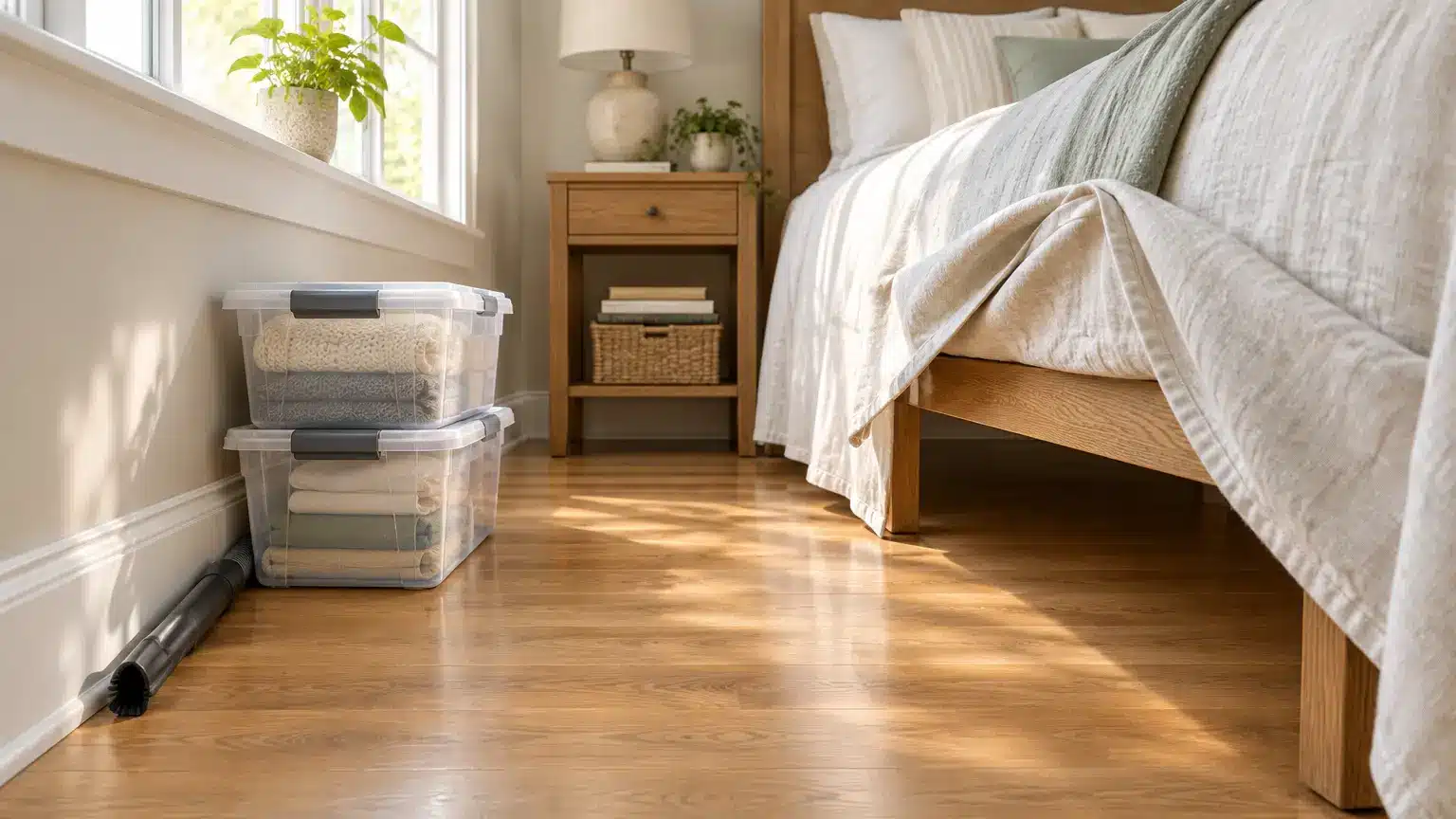

Routine cleaning is usually thought of as a way to control dust, spills, fingerprints, and everyday grime. It can also create useful opportunities to notice small changes around a home before they become easy to ignore.
A loose cabinet pull may become obvious while wiping a door. Dampness beneath a sink may stand out once stored items are moved. A floor seam may look different after dust and debris have been removed. None of these observations automatically signals a serious problem, but recurring changes deserve attention.
The useful skill is knowing where ordinary cleaning ends and home maintenance begins.
Reappearing Moisture Deserves More Than Another Wipe
Water beside a bathroom or kitchen sink is common immediately after use.
Water that keeps returning to the same place without an obvious reason is different.
While cleaning around a sink, dry the area fully and note exactly where the moisture appeared. Check the faucet base, accessible plumbing, cabinet floor, and surrounding surfaces.
If the area stays dry, the original moisture may have been a simple splash.
If dampness reappears, repeated wiping should not become the permanent response. A plumbing connection, seal, condensation issue, or another source may need closer investigation.
Cleaning is useful here because it creates a clean baseline. Once the old moisture is gone, fresh moisture becomes much easier to identify.
Cabinet Hardware Can Reveal Gradual Wear
Cabinet doors and drawers are handled every day, which makes slow changes easy to miss.
During ordinary cleaning, a handle may suddenly feel loose. A hinge may move differently. A drawer may no longer close smoothly.
These changes become more noticeable because wiping requires direct contact with the hardware.
Some minor adjustments may be straightforward, but stripped screw holes, damaged hinges, swollen cabinet material, or misaligned drawers should not be forced.
Cleaning can expose the change. It does not repair the mechanism causing it.
A Cleaning Visit Can Separate Dirt From a Repair Problem
Imagine opening the cabinet beneath a sink during a scheduled house cleaning and finding a fresh water mark beneath the plumbing. The surrounding work may still involve normal residential cleaning, wiping cabinet interiors, removing grime, cleaning the nearby floor, and resetting the kitchen or bathroom but the source of that moisture belongs in a different category. During a visit from Mums Cleaning Services Chicago, professional cleaners can deal with the household dirt and buildup around the area while the homeowner separately arranges the appropriate repair if the leak or moisture returns.
That distinction matters because a clean surface makes the underlying condition easier to see.
Window Areas Can Reveal More Than Dust
Window sills and tracks collect normal household debris.
Dust, outdoor particles, and small insects may gather there without indicating any problem.
Once that loose material is removed, however, other conditions can become easier to notice.
Look for staining around the lower frame, peeling paint, softened material, or marks that repeatedly return.
Condensation can also leave visible changes around windows, particularly when moist indoor air meets a cold surface.
One mark does not tell you the cause.
What matters is whether it changes after rain, colder weather, or repeated window use.
Patterns are more useful than assumptions.
Recurring Door Scuffs May Come From Contact
Doorways collect fingerprints and marks through normal use.
A scuff that appears in exactly the same location again and again may have a physical cause.
After cleaning it, open and close the door slowly.
Does the edge touch the frame?
Does the handle strike the wall?
Is the lower corner rubbing against flooring or trim?
If contact is creating the mark, increasing the cleaning frequency will not stop it.
A hardware adjustment, bumper, or other maintenance solution may be more appropriate depending on the cause.
Cleaning helps by removing the old mark so you can see whether a new one forms.
Floor Transitions Can Reveal Movement
The center of a floor usually receives plenty of attention.
Edges and transitions may reveal more about how the flooring is holding up.
Look where tile meets wood, where carpet reaches hard flooring, and where transition strips connect rooms.
Once grit and dust have been removed, you may notice cracked grout, an edge that has lifted, or a strip that no longer sits flat.
These are not problems to solve with stronger floor cleaners.
In fact, adding unnecessary moisture may be a poor choice for some flooring materials.
If something has physically shifted, the next step is maintenance rather than more aggressive cleaning.
Failed Caulk Can Resemble Stubborn Grime
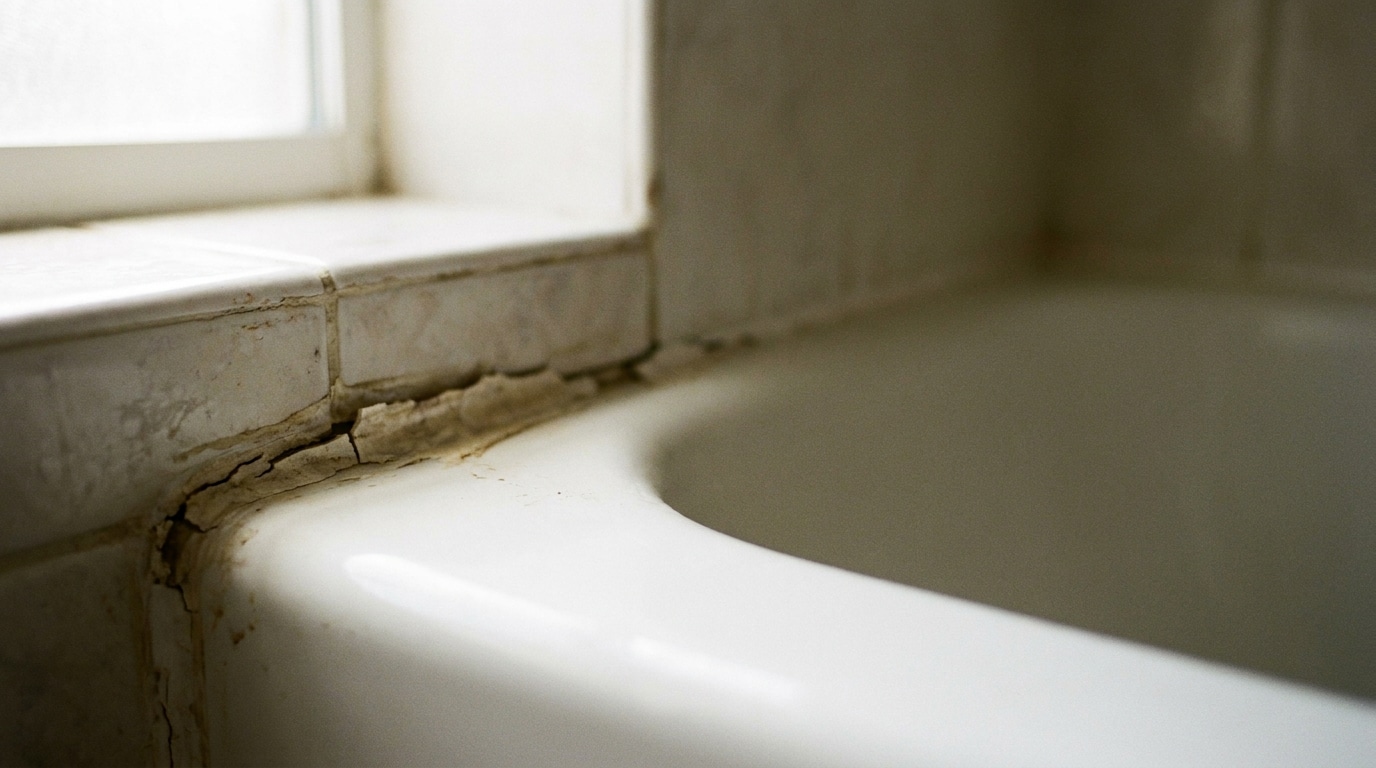
Caulk around sinks, tubs, showers, and backsplashes naturally sits in areas where residue develops.
That makes deterioration easy to confuse with dirt.
After cleaning the surrounding surface, inspect the joint itself.
Has the material pulled away?
Is there a visible opening?
Does a section remain discolored because the caulk itself has changed?
Scrubbing harder will not restore a seal that is physically separating.
Once surface residue is gone, a damaged joint becomes easier to distinguish from ordinary buildup.
Dust Patterns Can Tell You How Air Moves
Dust is normal in every home.
Where it repeatedly settles can still be informative.
If one shelf becomes dusty far more quickly than the one beside it, look at what affects the airflow around that area.
A supply register may direct air toward the surface. Furniture may create a quiet pocket where particles settle. A doorway may channel air between rooms.
This does not automatically mean the HVAC system has a problem.
It simply gives you a reason to observe the area more carefully.
If dust returns unusually fast despite regular cleaning, the pattern itself may be worth noting.
Wall Marks Can Reveal How the Room Is Being Used
Not every wall mark is caused by dirty hands.
Furniture and household objects may repeatedly hit the same area.
A dining chair can touch the wall every time it is pushed back.
A laundry basket may scrape one corner.
A door handle may create a mark behind an open door.
Clean the area, then watch what happens during ordinary use.
If the same mark returns, the better solution may be changing the contact point rather than cleaning the wall more often.
This is one of the clearest examples of cleaning exposing a household pattern instead of solving it.
Under-Sink Areas Deserve Periodic Attention
The cabinet beneath a sink is easy to ignore because cleaning supplies, trash bags, and household products often fill the space.
Every so often, move enough items to see the cabinet base.
Look for fresh staining, swelling, moisture, or corrosion around accessible plumbing.
A dry old mark and active dampness are very different conditions.
If you are unsure, clean and dry the area, then inspect it again later.
Avoid immediately covering a suspicious spot with stored products or liners that make it difficult to monitor.
Baseboards Can Reveal What Is Happening at Floor Level
Baseboards collect dust, but they also sit beside walls, flooring, doors, and furniture.
After the surface grime is removed, look for physical changes.
A chipped area may be normal wear.
A section that appears swollen near a bathroom or kitchen may deserve closer attention.
A widening gap could reflect movement rather than dirt.
The goal is not to treat every imperfection as a problem.
It is to notice when something continues changing after normal cleaning has already removed the surface residue.
Appliance Cleaning Can Bring Early Warning Signs Into View
Appliance areas often hide changes behind everyday dirt.
A refrigerator gasket may need cleaning, but it may also be torn.
The floor around a washing machine may contain lint, or there may be fresh moisture.
A cabinet next to a dishwasher may look dirty until wiping reveals that the material has actually swollen.
Always follow appliance care guidance and avoid moving connected appliances unless it is safe to do so.
Once the surrounding grime is removed, physical damage or moisture often becomes easier to distinguish.
Persistent Odors Need a Source
Many household odors have ordinary cleaning causes.
Food residue, damp towels, trash spills, pet bedding, bathroom grime, and dirty floors can all make rooms smell stale.
Those are problems routine house cleaning can address through vacuuming, mopping, dusting, washing surfaces, and removing accumulated dirt.
If the odor returns quickly after the obvious sources are gone, though, cleaning may no longer be the full answer. Mums Cleaning Services Chicago can handle normal home-cleaning work and recurring household buildup, but a persistent smell linked to plumbing, moisture, an appliance, or another building issue should be investigated separately.
Covering the smell with fragrance only hides the clue.
Keep a Simple Record of Problems That Repeat
Homeowners do not need a formal inspection log for every mark they notice.
A photograph or short note can still be useful.
Take a picture of a stain after cleaning.
Note when a floor transition first appeared raised.
Record whether a window mark becomes visible after rain.
This gives you something to compare later.
A condition that stays unchanged may simply be old wear. Something that spreads, darkens, or repeatedly returns deserves more attention.
Know When More Cleaning Is the Wrong Response
One of the most useful parts of routine home care is knowing when cleaning has already done everything it can.
Loose hardware needs adjustment.
A leaking fixture needs repair.
Damaged flooring may need evaluation.
Failed caulk needs replacement.
Permanent finish wear will not disappear because a stronger product is applied.
Continuing to scrub after ordinary dirt is gone can damage the surface without correcting the underlying condition.
Let Cleaning Reveal What the Home Is Doing
Routine cleaning brings people close to fixtures, floors, cabinets, windows, appliances, and other parts of a home that normally fade into the background.
Most of what appears will be ordinary household dirt.
Sometimes, though, removing that dirt reveals something different: moisture that returns, hardware that keeps loosening, a mark caused by repeated contact, or a material that has begun to change.
The goal is not to turn cleaning into an inspection service.
It is simply to notice what remains after the grime has been removed.
That small distinction can help homeowners recognize when the next step should involve maintenance rather than another round of cleaning.