Bringing a newborn home means adjusting to a whole new rhythm, especially when it comes to sleep.
Somewhere between the swaddle blankets gifted at your baby shower and the sleep sacks recommended by your pediatrician, it is easy to feel unsure about what your baby actually needs.
Every family wants the same thing, a baby who feels calm, safe, and ready to rest through the night.
The good news is that choosing between these two options does not have to be complicated once you understand what each one offers. Keep reading to find the option that best fits your baby.
What is a Swaddle?
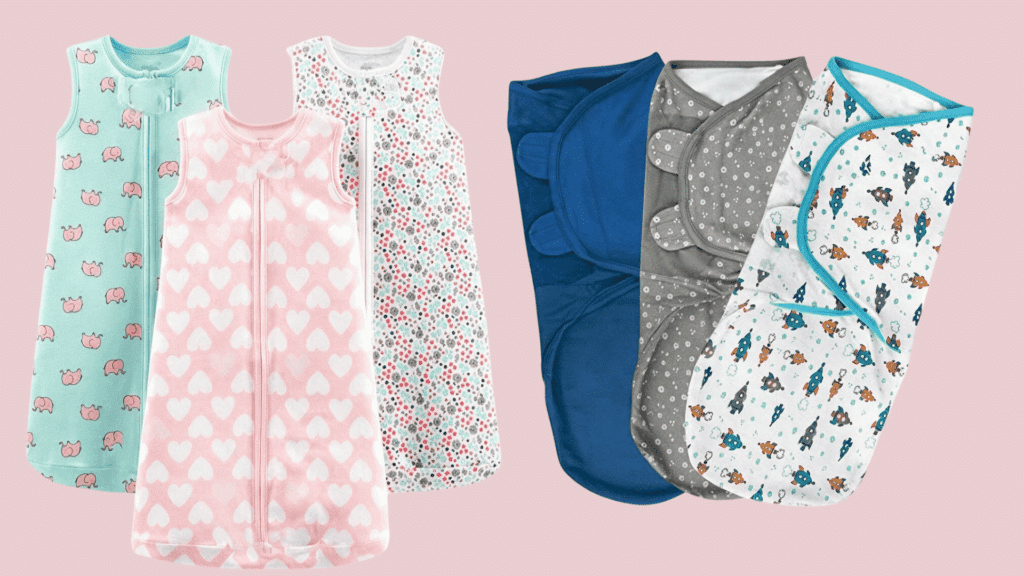
A swaddle is a wrap, usually made from thin cotton or muslin, that holds a newborn’s arms snugly against their body.
The idea is to recreate the tight, secure feeling of the womb. Newborns are born with a startle reflex, also called the Moro reflex.
Sudden jerking movements can wake a sleeping baby, and a swaddle helps keep those movements contained.
Pre-made swaddle wraps with Velcro or zippers have largely replaced loose blankets, since a blanket can come undone and create a suffocation risk.
Most swaddles are meant for babies from birth through about three to four months old, or until the baby shows any sign of rolling over.
What is a Sleep Sack?
A sleep sack, sometimes called a wearable blanket, is a sleeveless or armless garment that zips up around a baby’s body while leaving the arms and legs free to move.
It replaces loose blankets in the crib entirely. Unlike a swaddle, a sleep sack does not restrict arm movement.
A sleep sack that allows free arm movement can continue to be used after swaddling stops.
Sleep sacks come in different weights, often labeled by a TOG rating, which indicates how warm the fabric is.
Parents can use a sleep sack from birth through toddlerhood, adjusting the rating and size as the baby grows.
Sleep Sack vs Swaddle: Key Differences
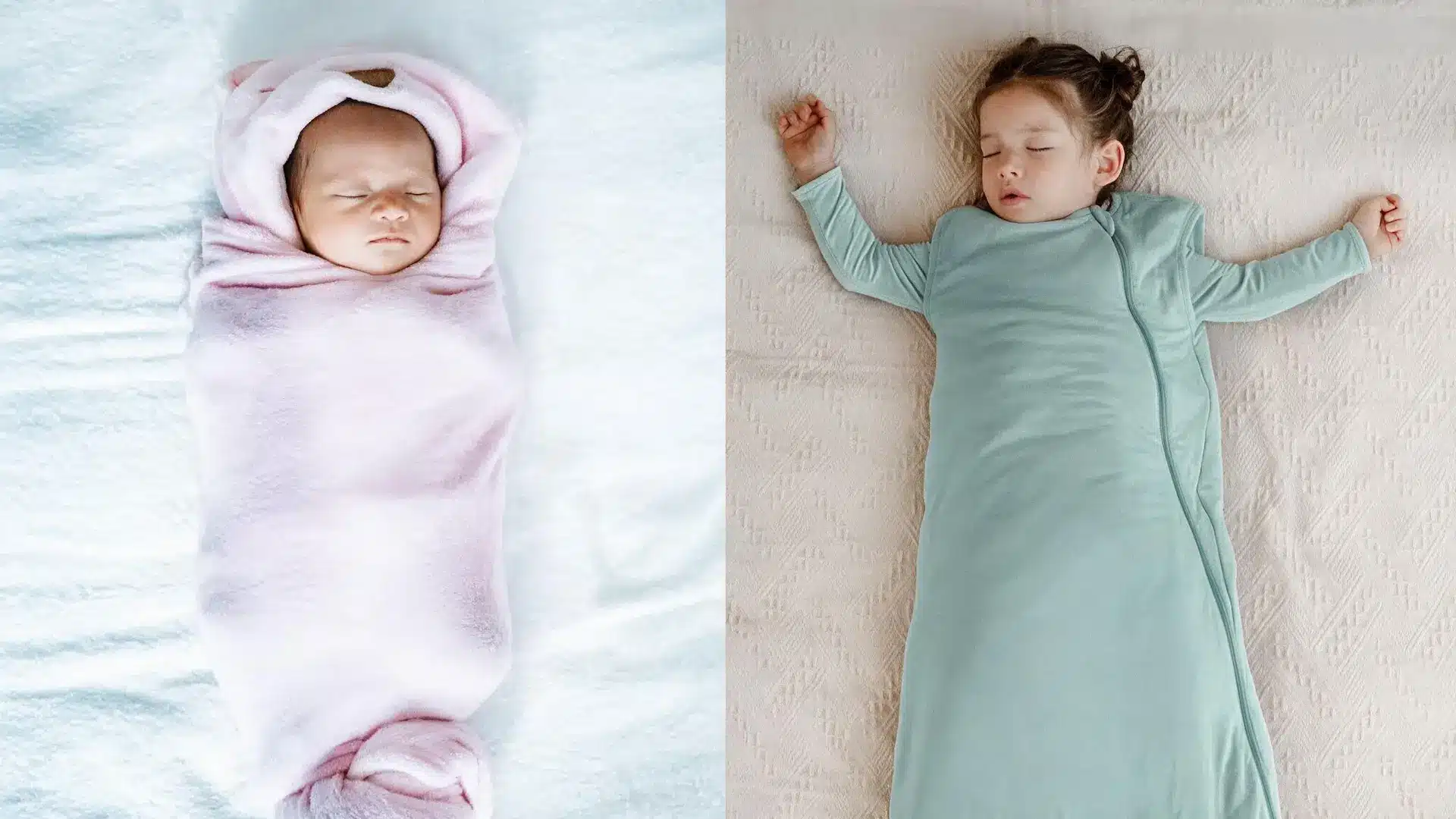
The two products differ in several practical ways, covering how each one works, when to use them, and which stage of your baby’s development they suit best.
How Each One Works
A swaddle wraps a light blanket snugly around a newborn’s arms and torso, recreating the pressure and warmth of the womb.
A sleep sack works differently. It zips around the body like a sleeved or sleeveless garment, leaving the arms and legs completely free while keeping loose bedding out of the crib.
Both keep a baby warm at night, but one relies on gentle restraint, the other on freedom of movement.
When to Use Each One
In a swaddle vs sleep sack newborn decision, timing matters most. A swaddle works best in the first three to four months.
Before a baby gains the strength to roll and suits naps and overnight sleep as long as the baby lies on their back.
A sleep sack can be used from birth onward and takes over once the swaddle stage ends, fitting naps, overnight sleep and travel without any wrapping technique.
Age and Sleep Stage Suitability
Newborns up to about three months, who cannot yet roll, are generally the best fit for a swaddle.
The CDC advises stopping the swaddle as soon as a baby shows any sign of rolling, even before a full roll happens.
A sleep sack suits every stage after that, from early infancy through toddlerhood. Sizes and TOG ratings adjust as the baby grows, letting one product carry a family through several stages.
Arm Mobility
The clearest difference in the sleep sack vs swaddle comparison is what happens to the arms.
A swaddle wraps the arms against the chest, keeping them still. A sleep sack leaves the arms completely free.
This matters once a baby starts trying to roll, since free arms are a safety feature, not a distraction. Free arms allow a baby to move naturally once swaddling is no longer appropriate.
Ease of Use
Wrapping a baby snugly in a traditional swaddle blanket takes some practice.
Even pre-made swaddles with fasteners require some technique to get a fit that is snug but not too tight around the hips.
A sleep sack is closer to putting on a piece of clothing. It zips or snaps into place in seconds, which matters at three in the morning when patience runs thin.
Duration of Use
A swaddle has a short shelf life by design. Parents typically use one for a few weeks to a few months.
Then retire it once the baby shows early signs of rolling. A sleep sack lasts much longer.
Many families use a version of it well into the toddler years, since it keeps loose bedding out of the crib while still allowing full, safe movement for an active baby.
Do not use weighted swaddles, weighted sleep sacks, or weighted clothing for infant sleep.
Pros and Cons of Swaddles and Sleep Sacks
Each option serves a different purpose, so comparing practical benefits and limitations can make the choice easier without repeating their basic features.
| Option | Pros | Cons |
|---|---|---|
| Swaddle | Can create a calming bedtime routine and may help newborns settle faster during the early weeks. | Requires careful wrapping or fastening to prevent loose fabric from moving toward the face. |
| Often gives parents a simple way to soothe babies who respond well to gentle pressure. | Needs enough room around the hips and legs to support natural lower-body movement. | |
| Sleep Sack | Offers a consistent wearable layer that can become part of a familiar bedtime routine. | Some designs can be bulky around the zipper or neckline if the sizing is not suitable. |
| Wide lower sections give babies space to kick, bend their knees, and change leg position comfortably. | Different fabric weights may be needed as seasons and indoor temperatures change. |
Real Parent Experiences
Parents across different households often report similar observations, and these recurring insights can help inform a more confident decision for your own family.
“They’re so easy. Do the sleep sacks.”
A parent on Reddit shared that sleep sacks are simply easier, plainly recommending them over swaddles for day-to-day use.
“Swaddling is safe and can help help reduce the startle reflex so they don’t wake themselves up and to replicate that feeling of being in the womb.”
A parent on Reddit noted that swaddling is safe and can help reduce the startle reflex so babies don’t wake themselves up, while also replicating the feeling of being in the womb.
“just went with a sleep sack for my son pretty much right away- he didn’t mind not having the compression of the wrap around his stomach and like yours he prefers his arms out.”
One parent on Reddit shared that they moved to a sleep sack for their son almost right away, since he didn’t mind skipping the compression of a wrap and preferred having his arms free.
Choosing The Right Option for Baby

Making the right call comes down to a few clear signals and practical checks that fit your baby’s exact stage.
- Pushing up During Tummy Time: shows growing arm and neck strength that signals readiness to roll.
- Watch for Rolling: Stop swaddling as soon as your baby shows signs of attempting to roll rather than waiting for a specific age.
- Breaking Free from The Swaddle Overnight: means the wrap no longer fits or restrains safely.
- Neck and Arm Holes: should be snug enough that the sleep sack cannot ride up toward the face.
- Tog Rating: choose a lighter rating for warm rooms and a heavier one for cold rooms.
- Hip Room in Swaddles: legs should bend up and out to protect healthy hip development.
Final Thoughts
Getting sleep right in those early months rarely happens through guesswork; it comes from paying close attention to how your baby is growing and moving.
A snug wrap can bring comfort in the newborn weeks, while more freedom of movement becomes the safer priority as your baby gets stronger.
Trust the signals your baby gives you, lean on your pediatrician’s guidance, and stay open to changing course as needs shift.
Every parent figures this out differently. What has your experience been like? Let us know in the comments.
Frequently Asked Questions
What if Baby Doesn’t Like Being Swaddled?
Some babies resist swaddling. A snug, correctly fitted sleep sack offers a safe alternative that still keeps arm movement free.
Can a Baby Overheat in a Sleep Sack?
Yes, if the TOG rating is too high for the room’s actual temperature. Choose a lighter weight for warmer rooms.
Is It Safe to Swaddle a Baby at Daycare?
Many daycare centers restrict swaddling due to strict safe sleep policies. Check with your provider, since rules vary by location.