



Is a 13-month-old suddenly fighting naps, waking early, or staying wide awake at bedtime?
Sleep often becomes less predictable at this age. A toddler may seem ready for one nap some days but still need two on others.
A steady routine can help when it reflects total sleep, wake windows, nap quality, and daytime behavior. Small timing changes may also reduce overtiredness and bedtime resistance.
This blog covers sleep needs, one-nap and two-nap routines, suitable awake periods, transition signs and practical schedule adjustments. Read the following to find a routine that matches the toddler’s changing sleep needs.
How Much Sleep Does a 13-Month-Old Need?
At thirteen months, sleep needs continue to change as longer wake periods, active development, and shifting nap patterns begin to shape a child’s daily routine and rest.
| Sleep factor | Typical range at 13 months |
|---|---|
| Total daily sleep | 11–14 hours |
| Nighttime sleep | About 10–12 hours |
| Daytime sleep | About 2–3 hours |
| Number of naps | Usually 2 |
| Wake windows | About 3–4 hours |
| Common bedtime | Around 7:00–8:00 p.m. |
13-Month-Old Sleep Schedules
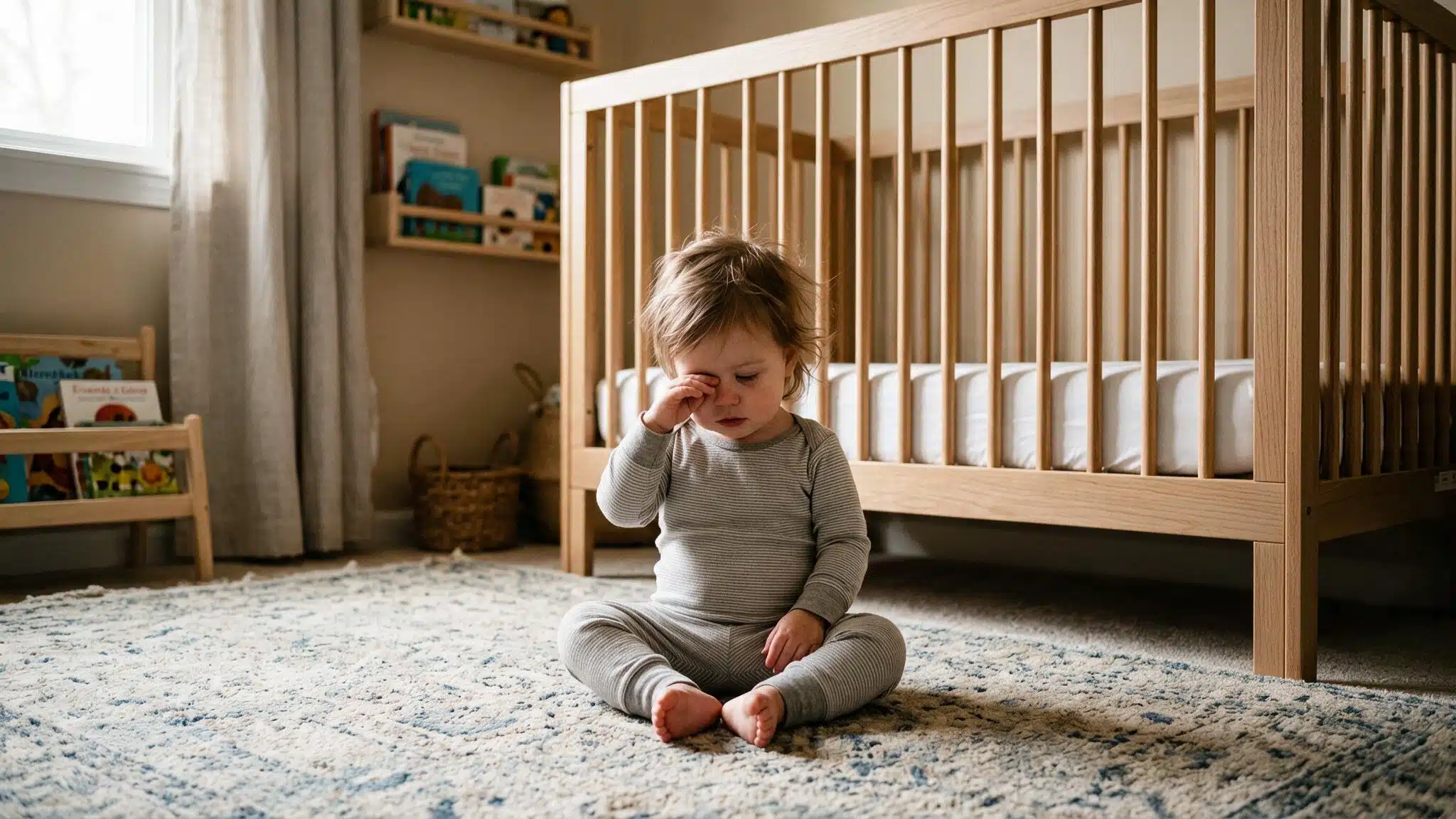
A flexible schedule reflects morning wake time and nap length. Most toddlers need two naps, while some can manage one nap and longer wake periods.
Two-Nap Schedule
For a two-nap routine, morning wake time may fall around 6:30 a.m., followed by a first nap from about 9:45 to 10:45 a.m. A second nap may fit between 2:15 and 3:15 p.m.
A bedtime routine may begin near 6:45 p.m., with sleep around 7:15 p.m. The Centers for Disease Control and Prevention recommends a firm, flat sleep surface with a fitted sheet for a safer sleep environment.
With this timing, daytime sleep may total about two hours, while wake periods may gradually lengthen throughout the day without moving bedtime too late.
One-Nap Schedule
For a toddler showing consistent readiness for one nap, morning wake time may fall between 6:30 and 7:00 a.m. A midday nap may begin around 11:30 a.m. or noon and last until approximately 1:30 or 2:00 p.m.
Bedtime may then fall between 6:30 and 7:00 p.m., depending on nap length and daytime behavior. An earlier bedtime may help reduce overtiredness as the toddler adjusts to a longer morning wake period.
During the transition, the afternoon stretch without a second nap may initially feel long, so bedtime may need to shift earlier on shorter-nap days.
How Many Naps Should a 13-Month-Old Take?
The number and length of naps may vary at 13 months as sleep needs and wake periods gradually change.
- Two Naps: Most 13-month-olds may still benefit from two daily naps, although the naps may differ in length.
- Nap Duration: Some toddlers may sleep for about an hour during each nap, while others may have one longer and one shorter nap.
- Nap Timing: An earlier morning nap followed by a later afternoon nap may fit well when bedtime remains manageable.
- Occasional Nap Refusal: Teething, illness, travel, separation anxiety, or new developmental changes may temporarily affect naps.
- Daycare Routines: Daycare may introduce a midday nap, though the same change may occur at home.
- Non-Daycare Days: Two naps may still be offered when the toddler accepts them easily and appears to benefit from the additional daytime sleep.
When is The Toddler Ready for One Nap?
Readiness is determined by a stable sleep schedule, not by missing just one nap. The indicators can be rejection of the nap for one to two weeks, difficulty falling asleep or being very late for bed after having capped naps.
For a child who is ready for one nap, longer awake intervals without tantrums are also a good sign.
The transition will be too soon if missed naps cause a child’s afternoon breakdowns, constant nighttime awakenings, or earlier morning awakenings.
In this case, it would be better to extend the current awake intervals rather than eliminate naps. The first step in this shift would be to delay the morning nap by 15 minutes each day for several days.
What Time Should The Baby Go to Bed?
A consistent bedtime routine should end in a safe sleep space. The NIH Safe to Sleep program recommends keeping pillows, loose bedding, toys and bumper pads outside the sleep area.
- A bedtime between 7:00 and 8:00 p.m. suits many toddlers at this age.
- Bedtime often falls 3.5 to four hours after the second nap ends.
- A child waking from the afternoon nap at 3:00 p.m. may be ready for sleep near 7:00 p.m.
- An earlier bedtime may help after a missed or unusually short nap.
- A later bedtime may be suitable when the second nap ends later than expected.
- Bathing, pajamas, a book, and a quiet song can create consistent bedtime signals.
Why is The Baby Suddenly Sleeping Poorly?
Identifying the likely cause of disrupted sleep can help parents choose a suitable response without making several unnecessary changes to the child’s routine at once.
| Possible Cause | Common Signs | Helpful Response |
|---|---|---|
| Developmental changes | Practicing walking, talking, or standing during sleep time | Allow active practice during the day and maintain a calm bedtime routine |
| Separation anxiety | Crying when a parent leaves or frequent checking at bedtime | Use consistent reassurance and predictable sleep cues |
| Teething or illness | Pain, fever, congestion or unusual fussiness | Contact a pediatrician when symptoms are persistent or concerning |
| Hunger | Early waking or difficulty settling after a light evening meal | Review meal timing and discuss nutritional concerns with a pediatrician |
| Short wake window | Playing, talking, or resisting sleep | Move the next sleep period slightly later |
| Long wake window | Irritability, clumsiness, or intense crying | Shorten the wake window or offer an earlier bedtime |
| Late afternoon nap | Reduced tiredness and delayed bedtime | End the nap earlier while protecting sufficient daytime sleep |
| Travel or environmental changes | Sudden waking after a routine or room change | Restore familiar sleep cues and keep timing consistent |
How Do Sleep Needs Change Around 13 Months?
Baby sleep development at one year of age occurs gradually. You don’t need a new plan just because a new month is approaching.
Even at 12 months of age, the infant can take two naps and have shorter waking periods. For the 13-month-old, it would be good to keep the existing schedule but allow longer waking hours.
Some 14-month-old babies will already need to get used to having one daytime nap; however, some 14-month-olds will continue to have two naps. Plenty of internal content can help parents assess their baby’s developmental stage.
Relevant options include a 12-month sleep schedule, a 14-month sleep schedule, age-based wake windows, transitioning from two naps to one, and a toddler bedtime routine.
Key Points for Planning a Baby’s Day
A balanced daily plan should reflect the child’s sleep needs, changing wake windows, and response to each nap. The following points can help parents build a flexible routine without relying on rigid clock times.
- Most 13-month-olds still benefit from two naps.
- Wake windows commonly increase from about three hours in the morning to nearly four hours before bedtime.
- Daily timing can shift according to morning wake time and nap length.
- A one-nap transition should follow consistent signs of readiness.
- Short or missed naps may require an earlier bedtime.
- Schedule changes work best when introduced in small steps.
- Mood, energy, and settling time can reveal whether a routine is suitable.
Note: A pediatrician should assess persistent sleep problems, breathing concerns, pain, feeding difficulties or unusual daytime sleepiness.
Final Thoughts
A 13-month-old usually needs 11 to 14 hours of total daily sleep, supported by one or two naps. Age-appropriate wake windows can help you plan nap times and bedtime, while your child’s behavior can show when adjustments are needed.
Watching patterns over several days can also help you decide whether your toddler is ready to move from two naps to one.
For the original question, most children at this age still benefit from two naps, although consistent signs may indicate that the one-nap transition is approaching.
What sleep schedule works for your toddler? Share your experience and opinions in the comments.
Frequently Asked Questions
Why is The 13-Month-Old Suddenly Waking Up More at Night?
Night waking at this age is often linked to separation anxiety, teething, or a developmental leap. It’s usually temporary and tends to resolve on its own within a few weeks.
Should We Adjust The Toddler’s Nap Schedule While Traveling?
Try to keep nap and bedtime close to usual times, allowing some flexibility. A consistent wind-down routine helps toddlers adjust faster to new environments or time zones.
What to Do if The Toddler Skips a Nap Entirely?
An earlier bedtime that day can help prevent overtiredness. One skipped nap is usually not a concern if the regular schedule resumes the next day.