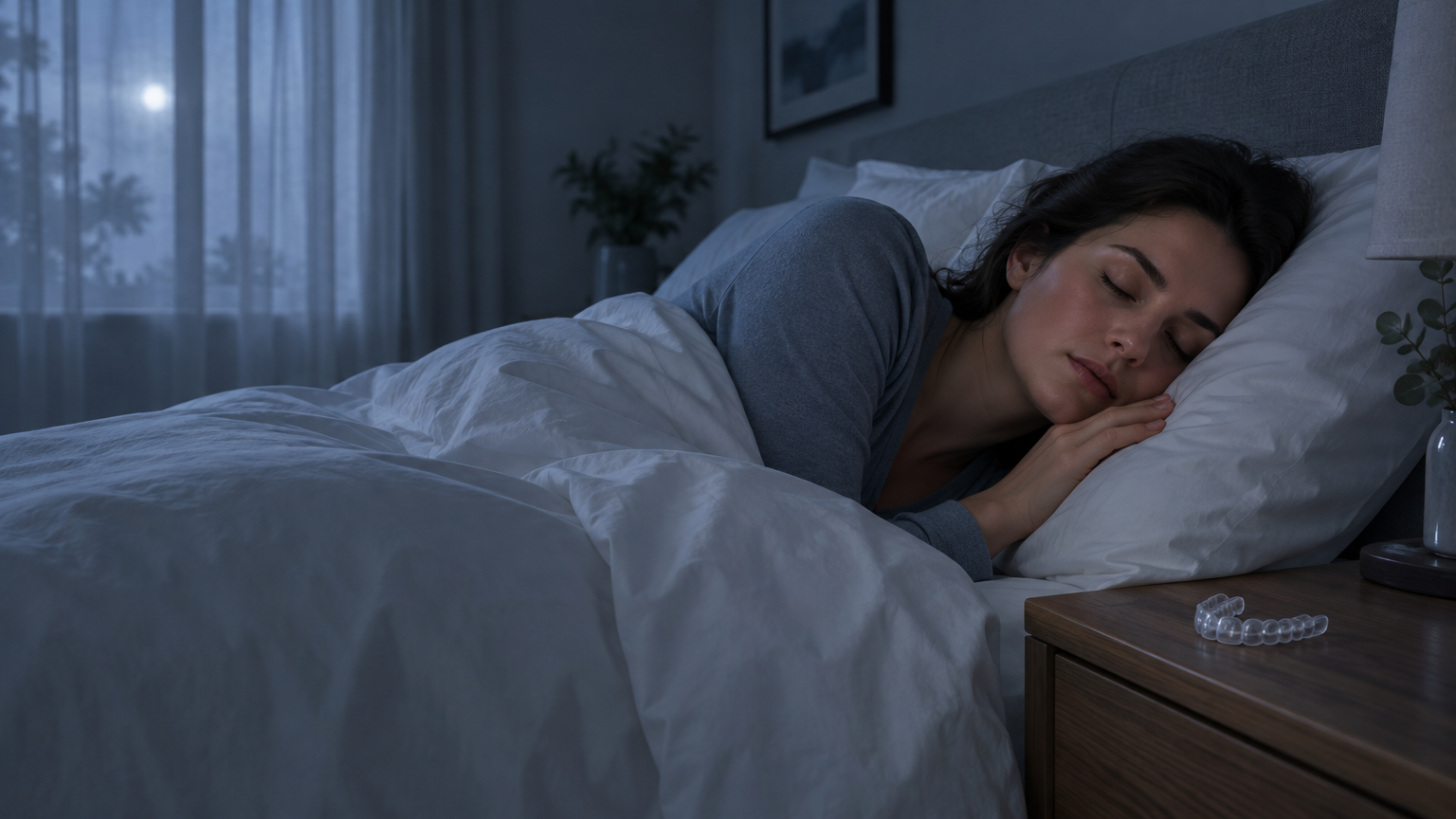
Most people who cannot sleep well are not dealing with a bedroom problem. They are dealing with an evening problem, and nobody ever frames it that way.
Think about what a typical night actually looks like. Dinner eaten late, a coffee somewhere around mid-afternoon that is still doing its thing at 10pm, an hour of scrolling that genuinely felt like nothing, then lying down and wondering why the brain will not cooperate. That sequence has a predictable outcome. It is not mysterious. It is just cause and effect playing out in the dark.
The fix is a wind-down routine, something consistent and recognisable enough that the brain starts treating it as a signal sleep is coming. Does not need to be complicated. Does not need to take long. Just needs to happen at roughly the same time each night until the pattern sticks.
Same Bedtime, Every Night, Including the Weekend
This is the one that gets the most resistance and also happens to be the most important. People hear “consistent bedtime” and immediately start negotiating in their heads. What about Friday nights? What about travelling? What about when life happens?
The thing is, the circadian rhythm genuinely does not care about any of that. It is a biological system built on light and timing, and when those inputs are all over the place, the system never quite settles. The result is that grim, familiar state of being completely exhausted but somehow unable to switch off.
The Mayo Clinic recommends adults get seven to nine hours nightly and hold the same sleep and wake times every day. Give it two weeks of actually sticking to this, and something genuinely shifts. The body starts getting drowsy at the right time on its own. Getting up in the morning becomes fractionally less terrible. Small changes, but they compound fast.
The Phone Before Bed Is Doing More Damage Than It Feels Like
Scrolling in bed feels passive. It feels like rest. The biology involved disagrees quite strongly. Blue light from phone and laptop screens suppresses melatonin, which is not just some vague sleep hormone. It is the specific signal the brain uses to generate actual sleepiness rather than the kind of tiredness where the eyes are heavy but the mind keeps running.
Research published in the Proceedings of the National Academy of Sciences found that people reading on a light-emitting device before bed had melatonin suppressed by over 55 per cent, with onset delayed by more than 1.5 hours compared to those reading a printed book. They also took nearly ten minutes longer to fall asleep and were measurably less alert the following morning.
Ninety minutes of sleep chemistry disrupted by something that felt completely harmless. Putting the phone somewhere else an hour before bed and dimming the house lights after 8pm gives the brain accurate information about what time it actually is.
The Warm Shower Works, But Only at the Right Time
A shower immediately before bed is not the same thing as a shower 90 minutes before bed. The gap matters because of what happens after stepping out.
Warm water raises core body temperature. Cooler air causes it to drop once out of the shower, and that drop is one of the main triggers the body uses to move towards sleep. A 2019 systematic review published in Sleep Medicine Reviews looked at data from thousands of studies, identified 17 that met inclusion criteria with 13 providing comparable results, and found that water between 40 and 42.5 degrees Celsius taken one to two hours before bed for as little as ten minutes shortened sleep onset by an average of ten minutes and consistently improved sleep quality.
Ten minutes. Correct temperature. Correct timing. Nothing to buy.
Slow Movement Before Bed, Not a Workout
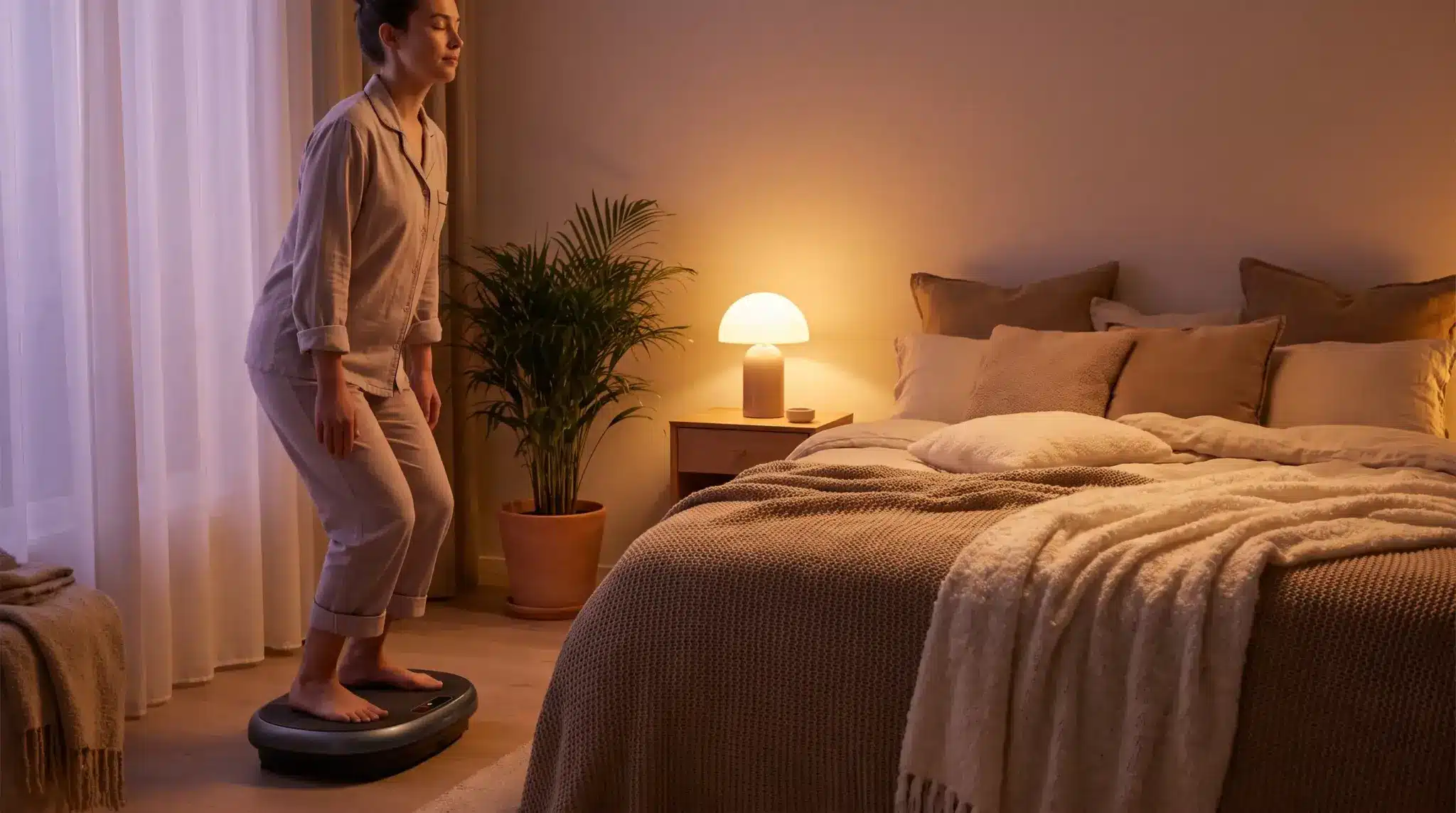
Two to three hours before sleep is not the time for anything intense. Hard training spikes adrenaline and raises core temperature, both of which push sleep back. But slow, deliberate movement, the kind where the point is not exertion but release, works very differently.
A 2021 systematic review in PeerJ pulled data from 35 studies on yoga, tai chi, and qigong and found consistent, meaningful improvements in sleep quality across all of them. The mechanism is the nervous system shifting from alert to recovery mode. Ten minutes on the floor before bed, breathing slowly through wherever the body is carrying the day, not rushing through it. That shift in state is the goal, not the stretch itself.
Is Genuinely Underrated, and Most People Have Never Actually Tried It Properly
The 4-7-8 technique has a bit of an image problem. It sounds like something printed on a tea towel. Inhale for four counts, hold for seven, and exhale for eight. Most people who roll their eyes at it have never actually sat quietly and done it for five uninterrupted minutes.
A 2017 study in Frontiers in Psychology found that slow-paced breathing at around six cycles per minute measurably reduced perceived stress and moved participants into a calmer physiological state. Heart rate slows. Cortisol drops. Dr Andrew Weil adapted this from pranayama breathing traditions, and the effect on the nervous system is well documented. Five minutes before bed, phone out of reach, done every night rather than when remembered. It works considerably better than it sounds.
This One Gets Left Out of Sleep Articles Far Too Often
Orgasm triggers oxytocin and prolactin release while cortisol drops. That is not a feeling or a theory. It is a documented hormonal response that produces genuine physical calm and documented sleepiness. A 2019 study published in Frontiers in Public Health surveyed 778 adults and found both men and women reported better sleep quality and faster sleep onset after sexual activity with orgasm, whether or not a partner was involved.
Solo intimacy produces exactly the same hormonal outcome. Using a quality vibrator as part of a nightly wind-down is not an indulgence. It is a physiologically sound way to lower cortisol before sleep, backed by actual research, even if most sleep hygiene articles are too squeamish to say so.
That Afternoon Coffee Is Still Active at Bedtime
Caffeine has a half-life of around five hours in most people, though genetics can push that higher. A coffee at 3pm still has roughly half its caffeine circulating at 8pm. A 2013 study published in the Journal of Clinical Sleep Medicine found that caffeine consumed six hours before bed reduced total sleep time by more than an hour, even in participants who reported feeling no particular alertness at bedtime.
That is the bit worth taking seriously. The disruption happens without awareness. Alcohol does something similar but from the other direction. It helps people fall asleep faster, which feels useful, but research in Alcoholism: Clinical and Experimental Research has consistently found it suppresses REM sleep and fragments the second half of the night. The hours are there. The actual recovery from those hours is not.
Write Tomorrow’s List Down Before Trying to Sleep
The late-night thought loop through undone tasks and tomorrow’s obligations has a name. The Zeigarnik effect describes how unfinished tasks stay active in working memory until they are written somewhere external. The brain is not spiralling for no reason. It is trying to make sure things do not get forgotten, which is genuinely useful behaviour at completely the wrong time of day.
A 2018 study from Baylor University, published in the Journal of Experimental Psychology: General and using polysomnography to measure sleep onset, found that participants who spent five minutes writing a specific to-do list for the next day fell asleep an average of nine minutes faster than those who wrote about completed tasks. Sixteen minutes versus twenty-five. The more specific the list, the faster sleep arrived. That is the entire intervention. A notebook and five minutes.
The Bedroom Has One Job, and the Setup Should Reflect It
Temperature is the factor that consistently gets underestimated. The body needs core temperature to fall to enter and sustain deep sleep properly. A warm room resists that all night without the person ever realising it is happening. The National Sleep Foundation recommends keeping the bedroom between 15.6 and 19.4 degrees Celsius.
In Australian summers that takes real effort. Heat lingers well past dark, and in parts of Queensland and Western Australia the sun is back before 5am in December. Blackout curtains, a fan running low, air conditioning set correctly. Not comfort upgrades. The actual conditions the body needs.
A work laptop on the bedside table or a phone charging next to the pillow also matters more than people assume. The brain builds strong associations between spaces and mental states. A bedroom that functions as an office or an entertainment zone is built entirely the wrong one every single night.
One Habit at a Time Is Actually How This Works
There is plenty of research behind everything on this list. The failure point is almost never information. It is trying to change everything simultaneously, making it four days, and then abandoning the whole thing when it becomes too much to sustain alongside an actual life.
One habit, done every night for two weeks, before adding anything else. That is genuinely how lasting routines form rather than collapse after a week.
A realistic starting point:
- Phone in another room, lights dimmed, one hour before bed
- Warm shower around 90 minutes before sleep
- Five minutes of slow stretching or deliberate breathing
- Specific to-do list for tomorrow, notebook closed
Sleep is not something reserved for people who have naturally good nights. It is something their evenings make possible. Get the evenings right, and the sleep tends to follow.