

Hearing a baby cry while still asleep can leave parents unsure what the sound means or whether to step in.
Some cries last only a moment, while others grow stronger, making it helpful for caregivers to pause, observe, and respond calmly.
Gentle soothing, steady bedtime habits, and careful attention to changes can help caregivers approach each waking with greater confidence.
Every baby has a different sleep pattern, so parents can focus on what is normal for their child. Keep reading for practical guidance and real parent perspectives. Read on for support.
Is it Normal for Babies to Cry in Their Sleep?
Yes, brief crying during sleep can be normal for babies, especially during active sleep or while moving between sleep cycles.
A baby may whimper, fuss, twitch, or cry for a few seconds without fully waking.
Caregivers can watch the baby briefly before responding. Closed eyes, relaxed movements, and comfortable breathing may suggest the baby is still asleep and could settle naturally.
If crying becomes stronger, lasts longer, or is accompanied by poor feeding, fever, difficulty breathing, unusual movements or other concerning changes, caregivers should contact a pediatrician for medical advice.
Why Do Babies Cry in Their Sleep?
Babies may cry during sleep for several reasons, from normal sleep changes to hunger, discomfort, teething, or other physical needs.
- Active Sleep: Babies may whimper, grunt, twitch or briefly cry without fully waking during active sleep.
- Sleep-Cycle Changes: Short cries may occur as a baby transitions between sleep stages.
- Hunger: Rooting, hand-sucking, and continued crying may indicate that the baby is ready to feed.
- Gas or Tummy Discomfort: Trapped gas may cause squirming, fussiness, or brief crying spells.
- Teething: Sore gums may disturb sleep and cause a baby to cry or wake more often.
- Illness or Pain: Unusual or persistent crying accompanied by other symptoms may require medical attention.
What to Do When a Baby Cries in Sleep
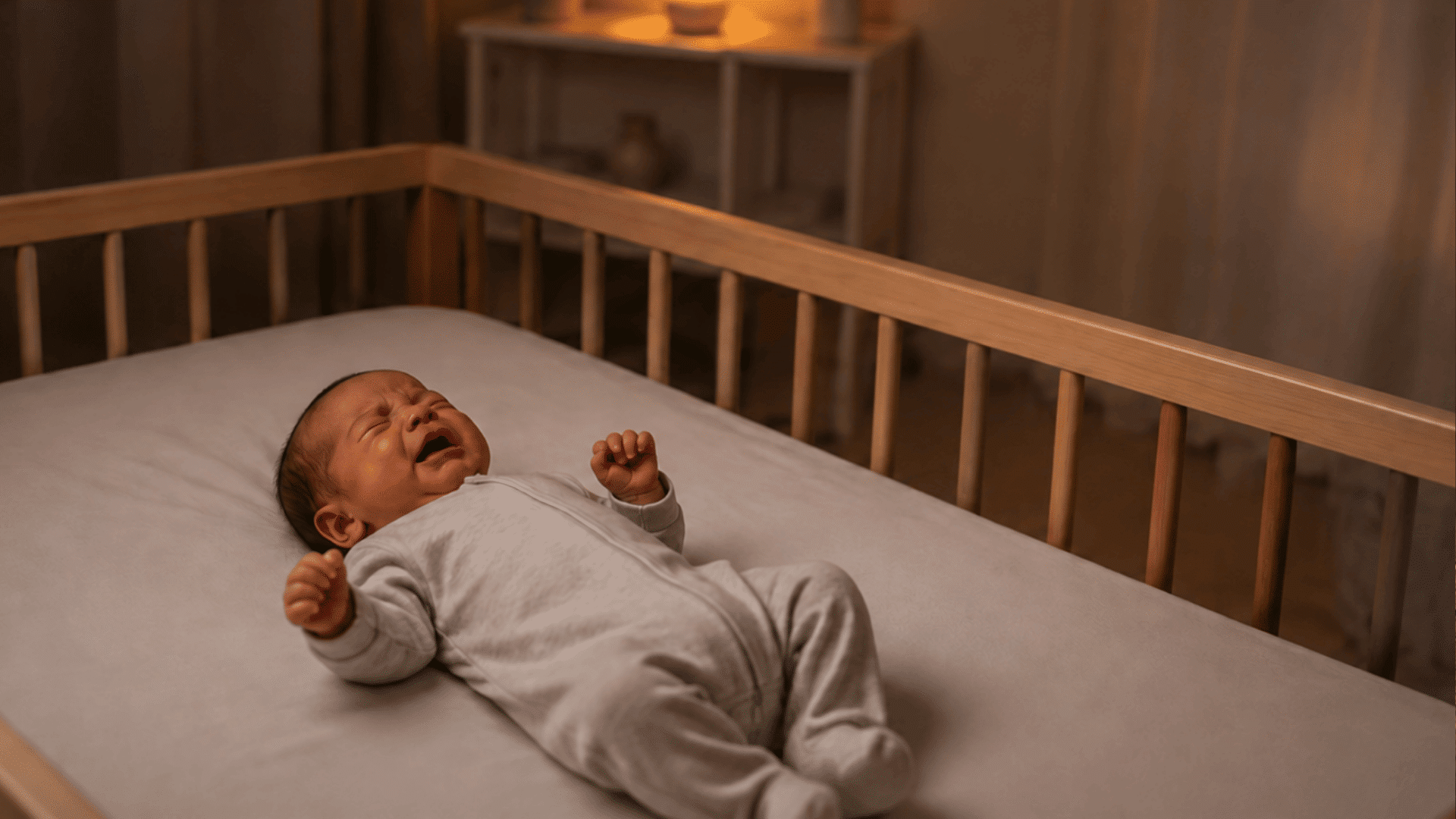
Caregivers can respond calmly by first observing the baby, checking basic needs, offering gentle comfort and carefully watching for any concerning changes.
Pause and Observe Before Responding
A brief cry does not always mean the baby is fully awake. Caregivers can wait a moment and watch before picking up the baby.
Some babies cry briefly as they transition between sleep stages and then settle without assistance. Keeping the room quiet and avoiding sudden movement may prevent unnecessary waking.
If the crying continues, becomes louder, or the baby appears restless, caregivers can then respond and check what is needed.
Check Whether The Baby is Still Asleep
Closed eyes, relaxed limbs, steady breathing, and brief sounds may indicate that the baby remains asleep.
Caregivers can observe from nearby or use a monitor without immediately touching or lifting the baby. Opening the eyes, increased movement, rooting, or stronger crying may suggest full waking.
Recognizing these differences can help caregivers avoid interrupting sleep when the baby is already beginning to settle naturally without added stimulation during the night.
Check for Hunger, Discomfort or Other Needs
If crying continues, caregivers can check common causes such as hunger, a wet diaper, uncomfortable clothing, gas, or teething discomfort.
Rooting and hand-sucking may point to hunger, while squirming or restlessness may suggest physical discomfort. Nighttime checks can remain quiet, with dim lighting and minimal activity.
Paying attention to the baby’s usual feeding, diaper, and sleep patterns can also help caregivers recognize what may be causing the crying.
Soothe The Baby Gently
When comfort is needed, caregivers can begin with calm, low-stimulation soothing. Speaking softly, placing a gentle hand on the baby, or holding and rocking the baby may help settle the baby.
Bright lights, loud sounds, and playful interaction can make it more difficult to return to sleep.
Caregivers can choose soothing methods that usually work for their baby while keeping nighttime interactions calm and consistent, especially when no feeding or diaper change is required.
Watch for Unusual or Concerning Changes
Caregivers should pay attention when sleep crying sounds different from the baby’s usual cry or occurs alongside other concerning changes.
Fever, breathing difficulty, repeated vomiting, poor feeding, unusual sleepiness, fewer wet diapers, or difficulty waking may require medical attention. A weak, painful, or persistent cry can also warrant concern.
When symptoms seem unusual, or caregivers are uncertain about the baby’s condition, contacting a pediatrician can help determine the appropriate next step.
What Other Parents Commonly Notice
Parents often share similar experiences with sleep crying, offering comfort ideas and reassurance to caregivers facing the same nighttime concern.
“Self-soothing is a skill that has to be learned. It’s not innate.”
One user on Reddit shared that self-soothing is not innate and must be learned over time.
“It happens during regressions, teething, illnesses, and maybe developmental leaps.”
One Reddit user shared that sleep crying often appears during regressions, teething, illnesses, and possible developmental changes.
“Happened to mine. Still does. I put my hand on his tummy and rub to help comfort him and let him know I’m there. Sometimes I’ll have him stir a bit so he can re-settle and hopefully not be in the nightmare anymore.”
One parent on Reddit shared that placing a hand on the baby’s tummy and rubbing gently often provided comfort and helped the baby settle again
How Can Parents Help a Baby Sleep Better?
A simple and consistent sleep routine can help babies become familiar with bedtime.
Parents can keep nighttime feeds and diaper changes calm by using dim lighting and reducing unnecessary noise or activity before sleep.
Watching for signs of tiredness may also help prevent the baby from becoming overtired and harder to settle.
A comfortable sleep environment matters as well. Babies should sleep on their backs on a firm, flat surface without pillows, loose blankets, or soft toys.
Keeping bedtime habits consistent can support healthy sleep patterns while giving parents a better sense of the baby’s normal nighttime behavior.
How to Tell if a Baby is Still Asleep or Fully Awake
Parents can observe several simple signs to determine whether a crying baby is still asleep or has fully awakened and needs attention.
| Signs Baby May Still Be Asleep | Signs Baby May Be Fully Awake |
|---|---|
| Eyes remain closed | Eyes open and appear alert |
| Movements stay relaxed or brief | Movements become more active |
| Short cries stop naturally | Crying continues or becomes louder |
| Brief twitching or sucking occurs | Rooting or hand-sucking increases |
| Baby settles without assistance | Baby remains restless |
| Breathing appears comfortable | Baby actively seeks attention or comfort |
When Should Parents Speak With a Pediatrician?
Certain symptoms may show that sleep crying needs medical attention, especially when the baby’s usual feeding or behavior suddenly changes.
- Frequent Crying: The baby cries several times each night during sleep.
- Unusual Crying: The cry sounds painful, sharp, weak, or different from the normal cry.
- Poor Feeding: The baby refuses feeds or eats much less than usual.
- Fever: A baby younger than three months has a temperature of 100.4°F (38°C) or higher.
- Breathing Trouble: The baby breathes rapidly, struggles to breathe, or develops blue or gray lips.
- Dehydration: Fewer wet diapers, a dry mouth, or unusual sleepiness may signal fluid loss.
- Behavior Changes: The baby becomes difficult to wake, unusually limp, or impossible to soothe.
Final Takeaway
Brief crying during sleep can happen as babies move through sleep stages, while stronger or continued crying may signal that feeding, comfort, or another need requires attention.
Watching the baby’s eyes, breathing, movements, and response for a moment can help caregivers decide when gentle soothing is needed.
Consistent bedtime habits and attention to each baby’s usual sleep patterns can make nighttime crying easier to understand.
Has a baby ever cried briefly while still asleep? Share what happened and what helped in the comments so other parents can learn from the experience.
Frequently Asked Questions
Why Does a Baby Cry at the Same Time Every Night?
Repeated timing may reflect the baby’s usual sleep-cycle transition, feeding schedule, bedtime routine, or a recurring source of physical discomfort.
Can Sleep Regressions Cause Crying During Sleep?
Sleep regressions may lead to more frequent waking and crying as the baby’s sleep patterns change during a new developmental period.
Can Room Temperature Cause a Baby to Cry While Sleeping?
Babies may cry when they feel too warm or too cold, so caregivers should check their clothing and the room temperature before soothing them.