A mattress may look clean while still holding sweat, dust, stains, and germs below the surface. After an illness, a pet accident, or a body-fluid spill, normal vacuuming may not be enough.
This raises an important concern: can you disinfect a mattress without damaging the fabric or trapping moisture inside?
The right method depends on the mattress material, the type of mess, and the products you use.
After reading, you will know how to clean, treat, deodorize, and dry your mattress safely. Follow the steps below to get started.
Can You Disinfect a Mattress at Home?
Yes, but the method depends on the mattress material and why it needs cleaning.
Cleaning removes dirt and many germs. Sanitizing lowers germ levels. Disinfecting uses a chemical product to kill germs listed on its label.
Routine cleaning is often enough. Disinfection is more effective after illness, vomit, urine, blood, or other body fluid spills. It may also be considered for a used mattress.
A mattress with deep contamination, widespread mold, pests, or heavy damage may need professional treatment or replacement.
When asking can you disinfect a mattress, remember that the label controls the method. Some foam brands warn that their mattresses should not become wet.
Supplies You Need to Disinfect a Mattress
Gather all supplies before removing the bedding so the cleaning process stays organized and the mattress is not left exposed longer than needed.
- Vacuum with upholstery and crevice attachments
- Clean microfiber cloths
- Mild liquid detergent
- Enzyme cleaner for organic stains
- Disinfectant labeled for soft surfaces
- Baking soda for odor control
- Spray bottle for diluted cleaning solutions
- Fan or dehumidifier to speed up drying
- Protective gloves when handling disinfectants
Use Each Product for its Intended Purpose:
An enzyme cleaner can help break down urine, vomit, sweat, and other organic stains, but it does not disinfect unless the label clearly states that claim.
Baking soda may absorb odors and light moisture, but it should not be used as a replacement for a tested disinfecting product.
Step-by-Step Instructions to Disinfect a Mattress
Read the mattress care label and the cleaner’s directions. Patch-test each liquid on a hidden area. Never mix cleaners.
1. Remove and Wash All Bedding
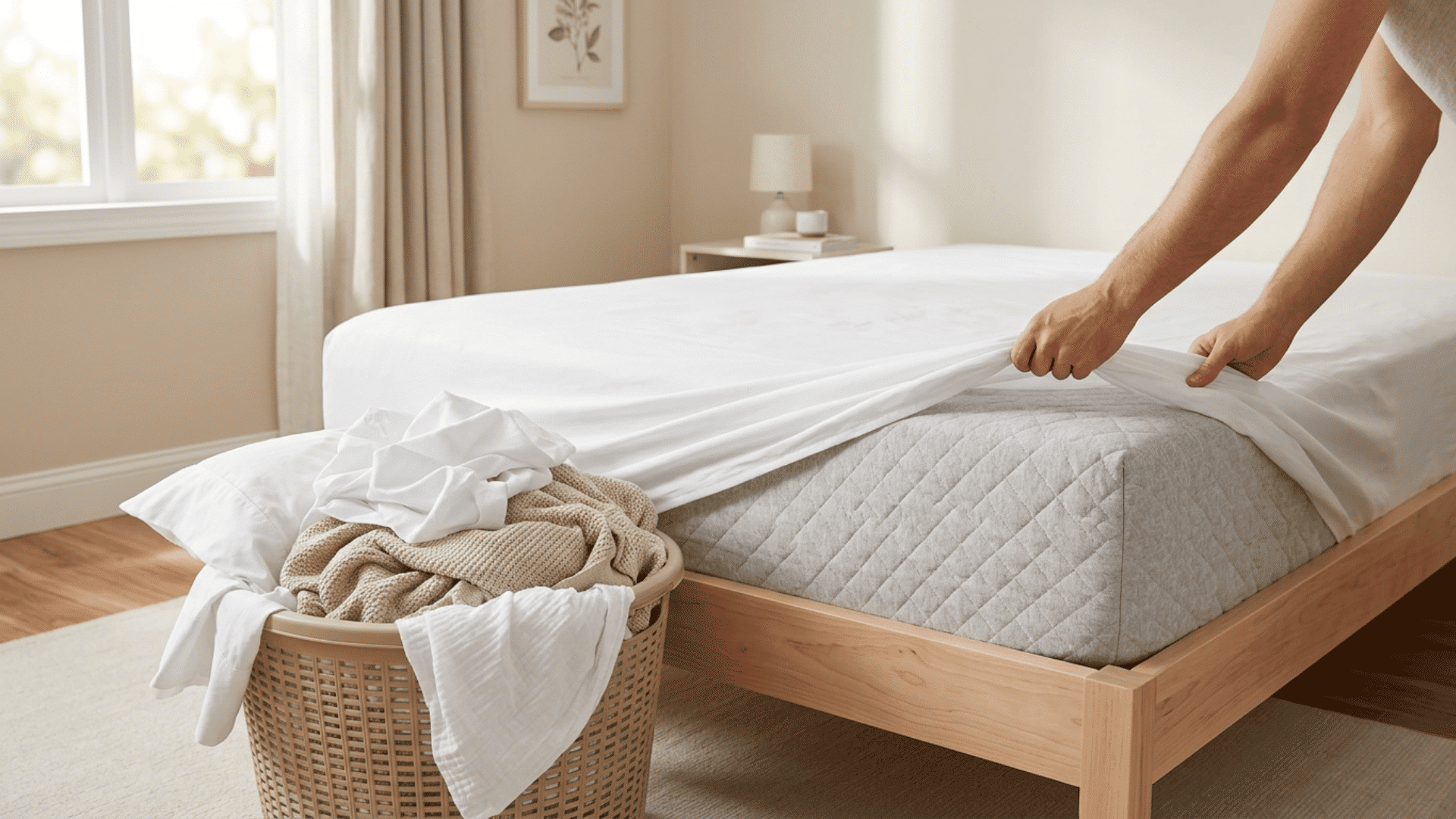
Remove sheets, pillowcases, blankets, protectors, and any washable mattress cover. Do not assume the cover can go in a washer. Some covers must stay in place and only allow spot cleaning.
Wash removable items according to their labels. The CDC advises using the warmest suitable water setting and drying laundry completely.
When can you disinfect a mattress? After sickness, your concern is that you start with the bedding because it has repeated contact with the sleeper.
2. Vacuum the Entire Mattress
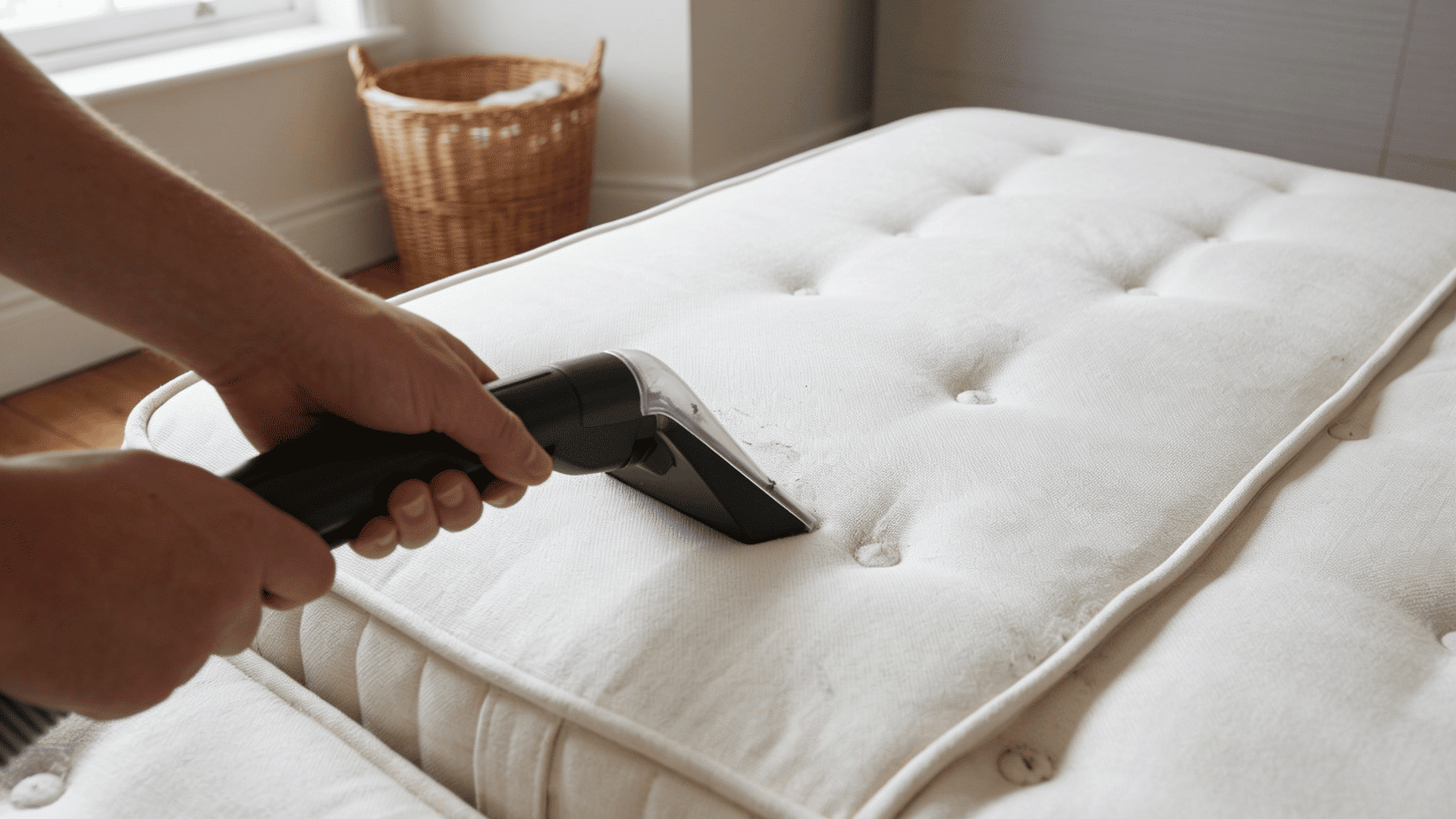
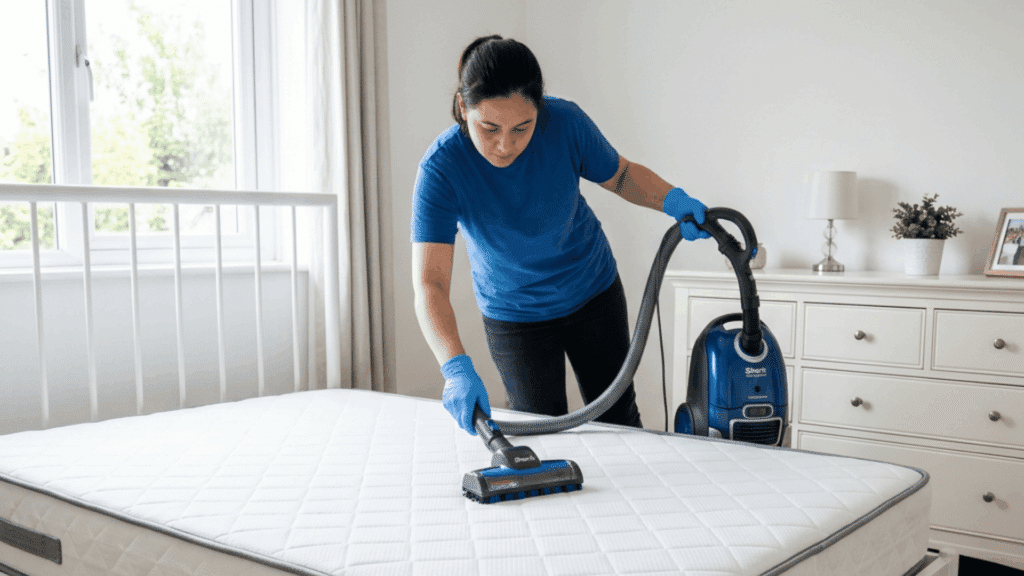
Vacuum the top, sides, seams, piping, buttons, and accessible underside. Move slowly and use the crevice tool along stitched edges.
Vacuuming does not disinfect. It removes dust, hair, skin flakes, crumbs, and debris that may block a cleaner from reaching the fabric.
For instance, removing pet hair and dry debris before treating a pet accident helps prevent the mess from spreading.
3. Spot-Clean Stains and Spills
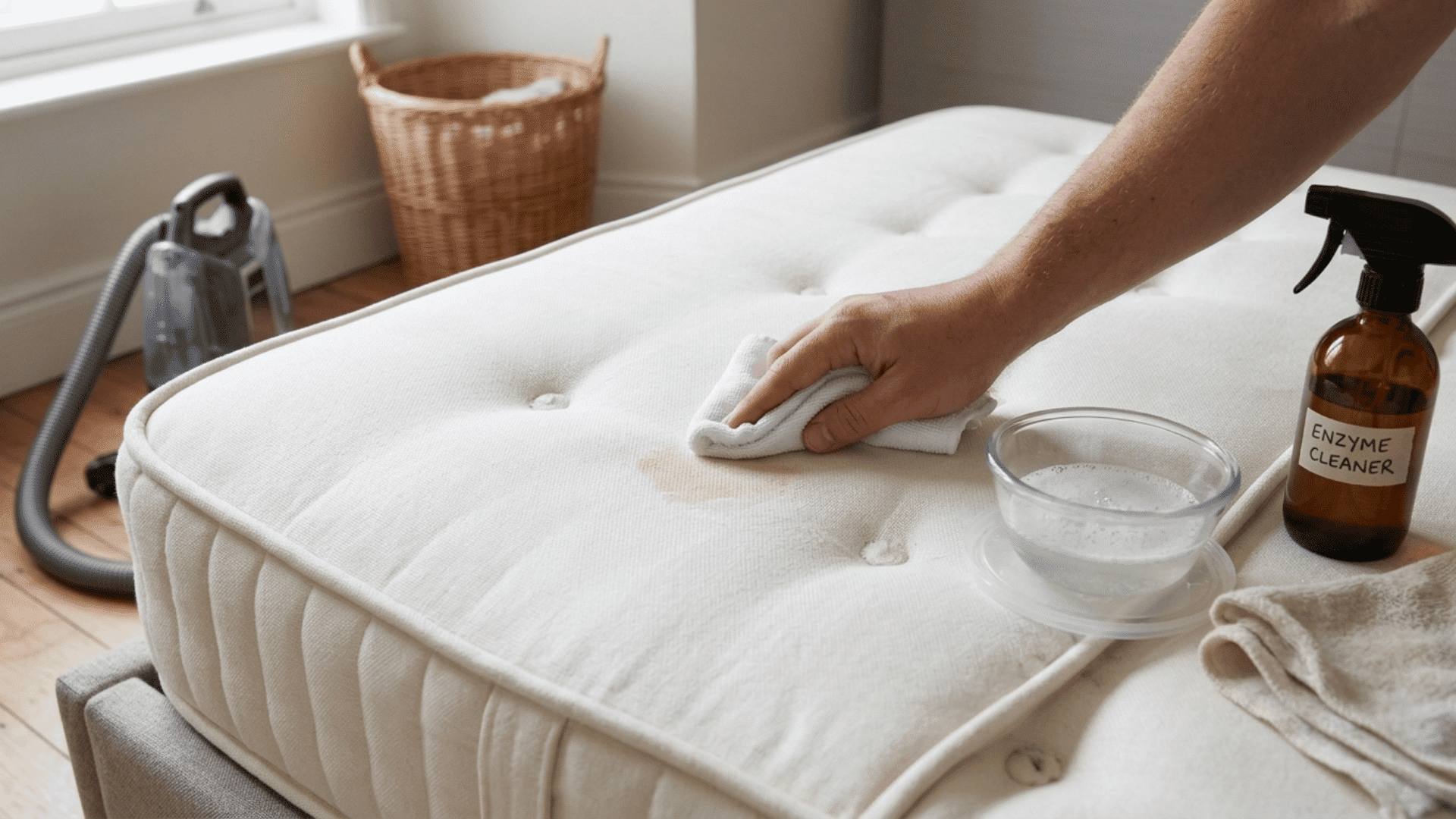
Blot fresh liquid with a dry white cloth. Press firmly without rubbing, since rubbing may spread the stain or push moisture deeper.
For light soil, mix a small amount of mild detergent with water. Dampen a cloth, wring it well, and blot. Use an enzyme cleaner for urine or vomit when the care label permits it.
Follow the product directions and limit moisture.
4. Apply a Mattress-Safe Disinfecting Product
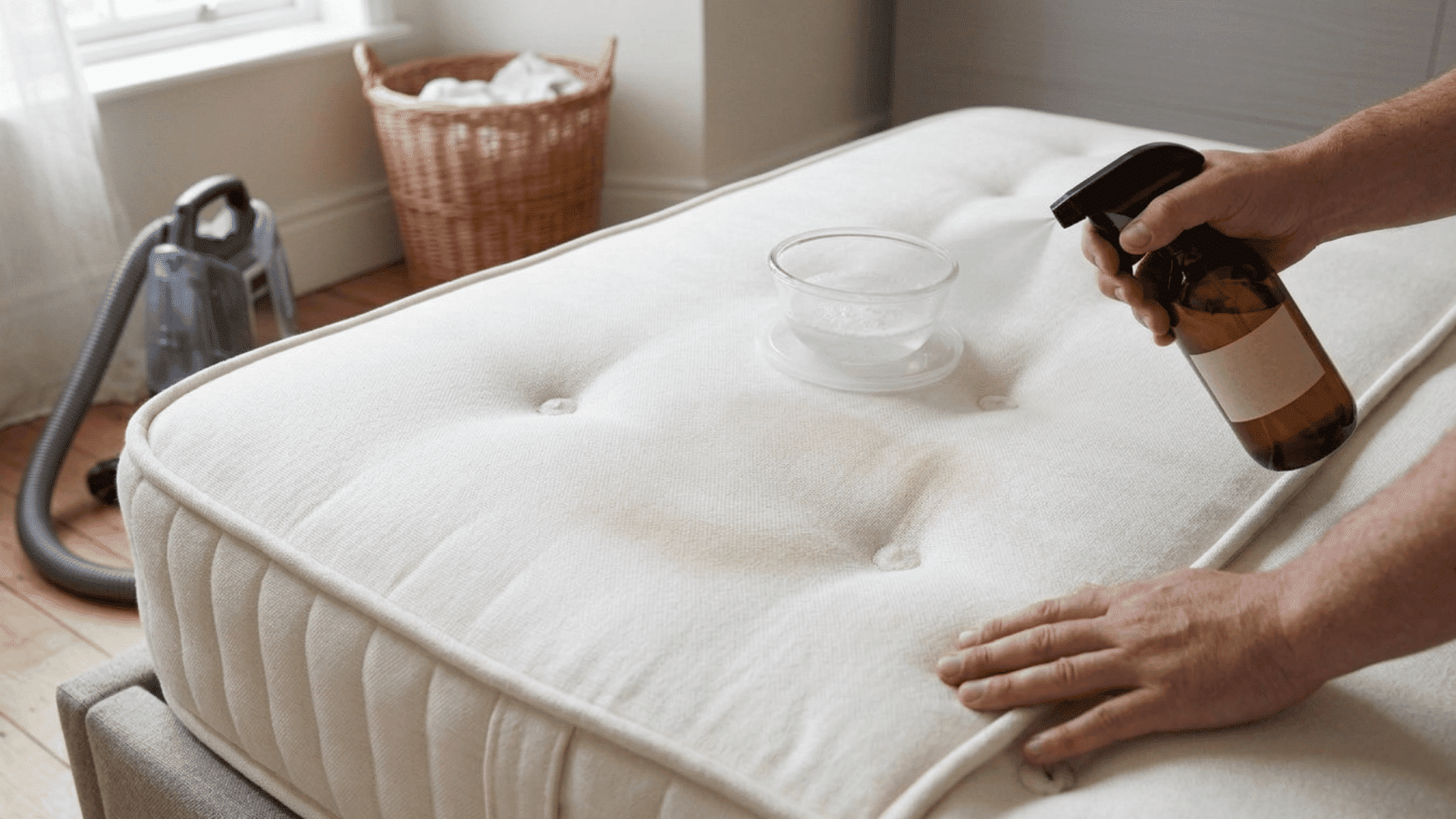
Use only a disinfectant labeled for fabric, upholstery, or soft surfaces. Clean visible dirt first, then follow the product directions for dose, contact time, ventilation, and drying.
Do not wipe it away too soon, as this may reduce its effect.
Vinegar, baking soda, rubbing alcohol, and hydrogen peroxide may help with stains or odors, but they should not be treated as disinfectants unless the label clearly supports that use.
5. Use Steam Only When the Mattress Allows It
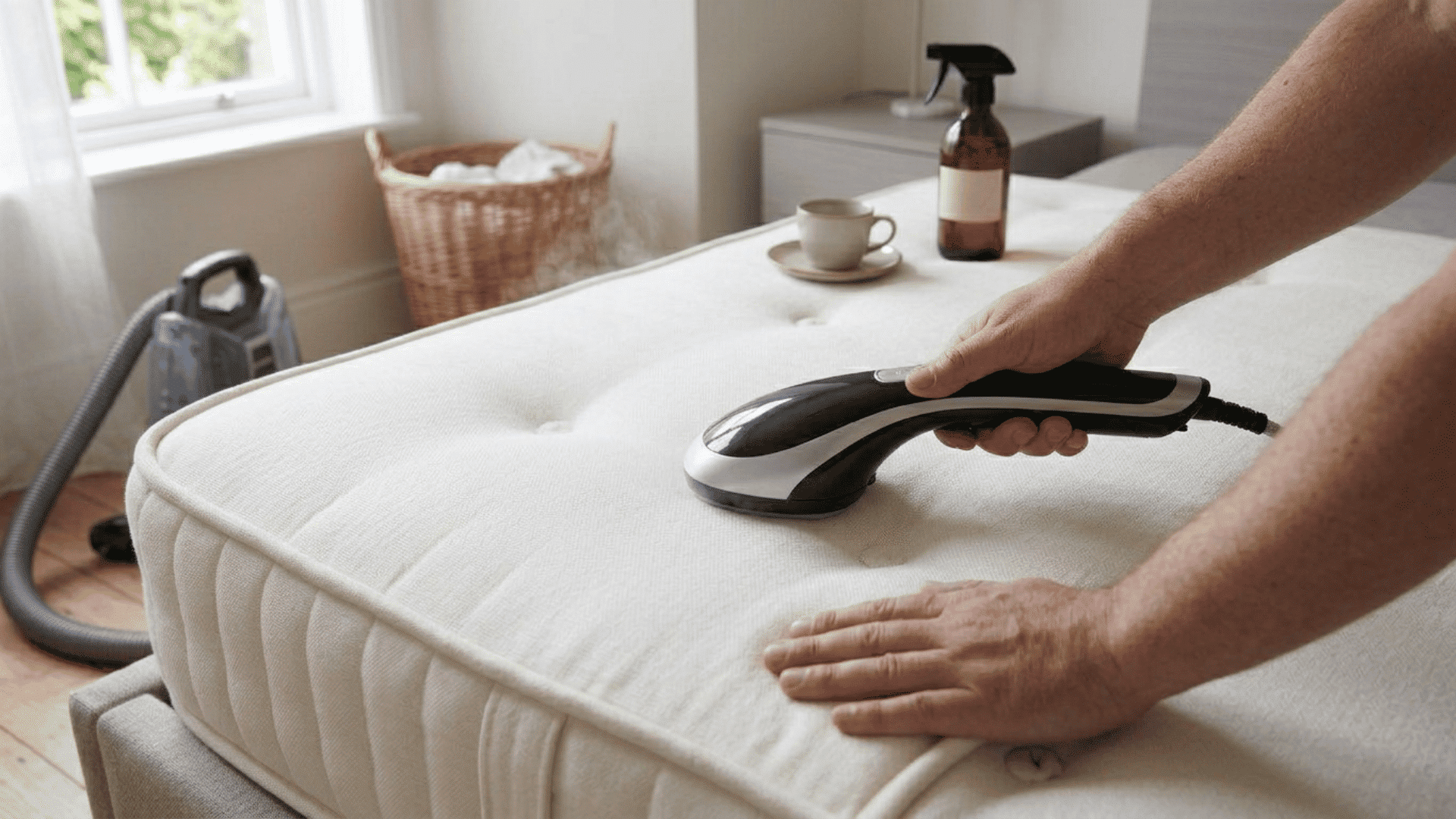
Steam is not safe for every mattress. Foam can absorb moisture and dry slowly, and some manufacturers tell owners not to steam or soak their beds.
Check the care guide first. When steam is allowed, vacuum before steaming, use brief passes, and avoid making the fabric wet.
Can you disinfect a mattress with steam alone? Steam may reduce some microbes or allergens, but home use does not prove that every area reached the required heat for the required time.
Skip steam on memory foam unless the maker clearly permits it.
6. Deodorize With Baking Soda
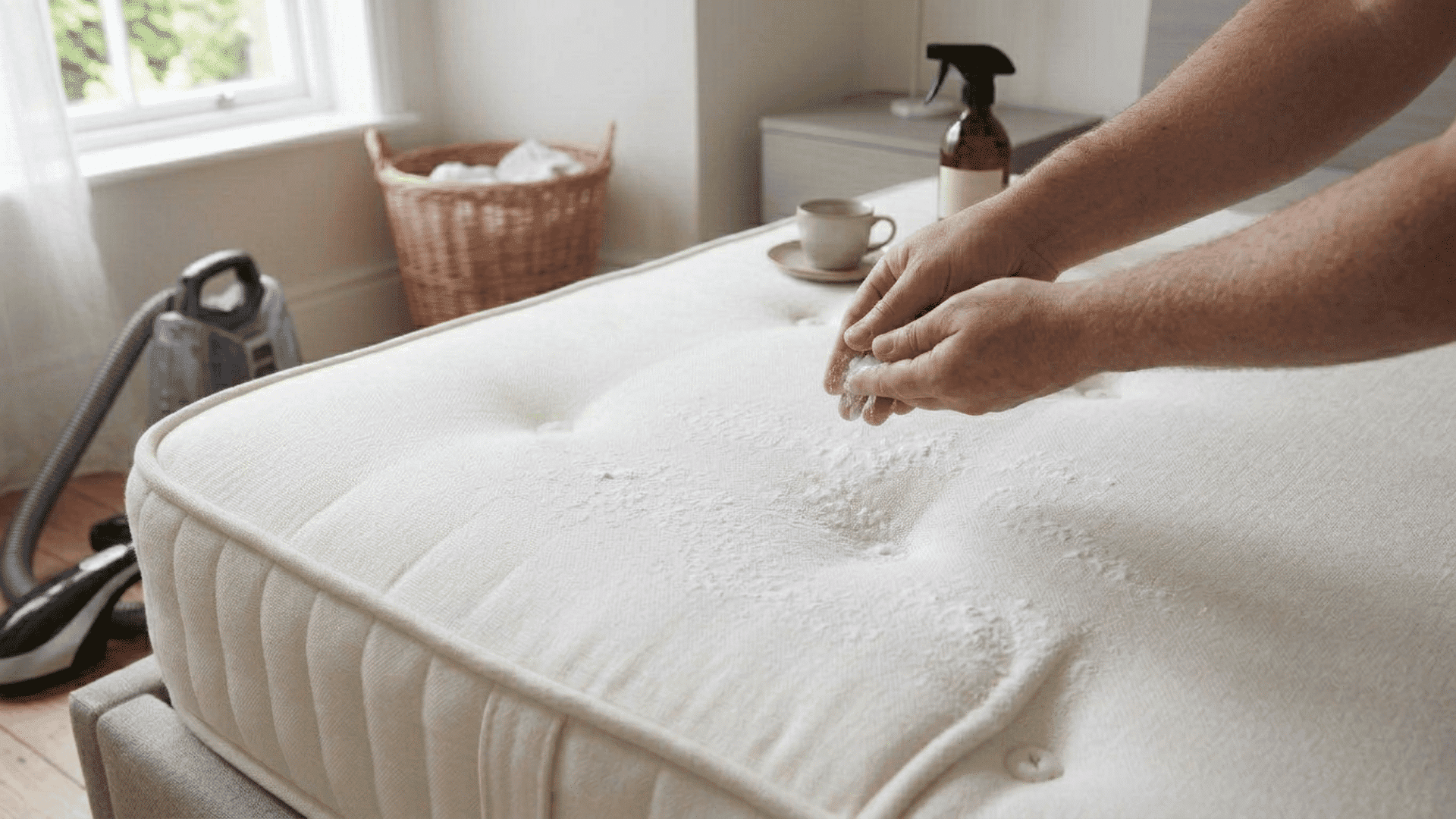
Wait until cleaned areas are mostly dry. Sprinkle a thin layer of baking soda over the mattress, leave it for several hours, and vacuum it up fully.
Baking soda may absorb odor and moisture. It does not kill germs or replace a labeled disinfectant.
After a urine spill, remove the stain first. Use an approved disinfectant when needed, dry the area, and then apply baking soda for any remaining odor.
7. Dry and Air Out the Mattress
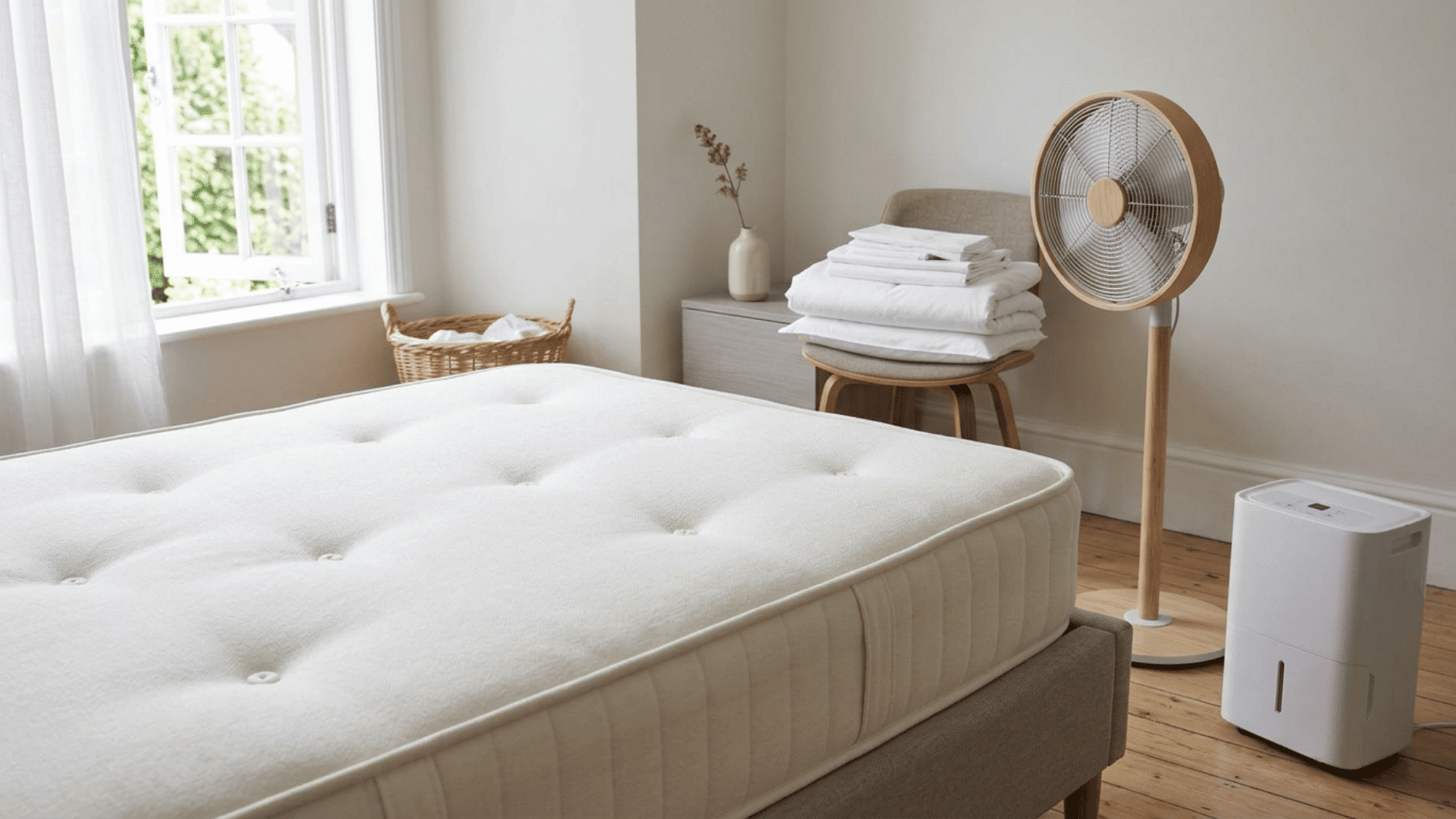
Drying helps prevent odor, material damage, and mold. Open windows when outdoor air is dry. Aim a fan across the mattress and use a dehumidifier in humid weather.
Do not add sheets until every treated area feels fully dry. Mattress manufacturers warn that excess moisture may soak into foam and become difficult to remove.
Safe Products You Can Use on a Mattress
Choose products that match the task and the mattress instructions.
1. Enzyme cleaner: Use it for organic stains when the product is approved for the mattress fabric.
2. Soft-surface disinfectant: Use it only when the label permits application to fabric, textiles, or upholstery. Follow the listed contact time.
3. Hydrogen peroxide stain product: It may lighten some blood or urine marks but can also bleach fabric. Patch-test first. Do not call it a disinfectant unless its label supports that claim.
Products to Avoid Using on a Mattress
Some products and cleaning methods can damage mattress fabric, trap moisture, or create unsafe fumes.
Avoid:
- Chlorine bleach unless both labels permit it
- Hard-surface spray with no fabric directions
- Heavy applications of rubbing alcohol
- Undiluted detergent or stain remover
- Large amounts of water
- Abrasive brushes
- Fragrance oils and untested mixtures
- Two cleaning products mixed together
- Steam on a mattress that forbids it
Mattress Cleaning Errors to Avoid
Small mistakes can reduce cleaning results or damage the mattress.
1. Disinfecting a Dirty Surface: Remove dust, stains, and visible soil before applying any disinfectant. Products work better when the surface is already clean.
2. Using Too Much Liquid: Soaking the mattress can trap moisture inside the foam or padding. Apply only the amount listed on the product label.
3. Ignoring Contact and Drying Time: A disinfectant must stay wet for the stated contact time. Let the mattress dry fully before replacing sheets or sleeping on it.
4. Confusing Odor Removal With Disinfection: A fresh smell does not mean germs are gone. Baking soda and stain removers may control odors without disinfecting the surface.
5. Treating Bed Bugs With Disinfectant: General disinfectant sprays do not remove bed bugs. Use products approved for bed bug control or contact a pest professional.
Conclusion
In many cases, you can clean and disinfect the surface of a mattress at home after checking the care label and choosing a product approved for soft surfaces.
Start by washing all bedding, vacuuming the mattress, treating stains, and applying the product exactly as directed.
Allow the mattress to dry fully before replacing the sheets or sleeping on it. Routine cleaning is usually enough when no one is sick and no body-fluid spill has occurred.
Share your mattress type and cleaning concern in the comments to help other homeowners.
Frequently Asked Questions
How Often Should You Disinfect a Mattress?
Disinfect after illness, body-fluid spills, or contamination. Otherwise, regular vacuuming, stain treatment, and bedding care are usually enough.
Can Sunlight Disinfect a Mattress?
Sunlight may reduce moisture and odors, but it cannot reliably disinfect the entire mattress surface.
How to Keep Your Mattress Cleaner After Disinfecting?
Use a washable protector, wash bedding regularly, vacuum the surface, clean spills quickly, and control indoor humidity.