



If you have been sleeping on the same mattress for a while without moving it, the padding under your heaviest spots is probably wearing down faster than the rest.
That is normal, but it leads to uneven support, body impressions, and a bed that does not feel as good as it used to.
The easy fix is to rotate the mattress every few months so the wear spreads out evenly. It takes about five minutes, requires you to use tools and it works on most mattress types.
Below, you will find how often to rotate the mattress, how to handle it yourself, and common mistakes to avoid.
Why Your Mattress Wears Out Unevenly
Your hips and shoulders carry most of your body weight, so those areas press harder into the mattress than your legs or feet.
Over time, the foam or springs underneath those spots compress faster than the rest of the bed.
Rotating your mattress 180 degrees swaps the head and foot ends, so those worn-down spots get a break while fresher areas take over.
It is a quick, free way to keep the surface feeling balanced.
A 2021 report from the National Library of Medicine noted that an uneven mattress can affect how well your mattress supports your spine and alignment.
Rotating vs. Flipping: They are Not the Same Thing
People mix these up all the time, and doing the wrong one can actually damage your bed.
| Rotating | Flipping | |
|---|---|---|
| What it means | Spinning 180 degrees so the head becomes the foot. Top stays on top. | Turning the mattress upside down so the bottom becomes the sleep surface. |
| Which mattresses | Memory foam, hybrid, pillow-top, and most modern one-sided beds. | Only double-sided innerspring models with padding on both sides. |
| Risk | None. Safe for almost every type. | Can ruin comfort and void your warranty on one-sided beds. |
If your mattress has a clear top and bottom with different materials on each side, stick with rotation only. Check your warranty card or the manufacturer’s website if you are not sure.
How Often Should You Rotate Mattress By Type
Not every mattress needs the same schedule. Here is a breakdown by type:
- Memory foam: Every 3 to 6 months. These beds hold body impressions more than other types, so regular rotation is especially helpful.
- Hybrid (foam + coils): Every 3 to 6 months. The coil base is durable, but the foam comfort layer still wears unevenly.
- Latex: Once a month for the first 6 months, then every 3 to 6 months after. Brands like Avocado recommend this during the break-in period.
- Innerspring (one-sided): Every 3 to 6 months.
- Innerspring (double-sided): Rotate every 3 months. Alternate between rotating and flipping on different cycles. For example, rotate in January, flip in April, rotate in July, flip in October.
If you just bought a new mattress of any type, rotating it once a month for the first six months helps the materials settle evenly during the initial break-in.
Step-by-Step Process for How to Rotate Your Mattress

This takes under five minutes with a partner and about ten on your own.
- Remove all blankets, sheets, mattress protectors, and pillows so the mattress is completely bare and easier to grip, lift, and rotate safely.
- Move nightstands, lamps, rugs, and other nearby items away from the bed frame to create enough open space for turning the mattress.
- Hold the mattress handles if available, or place both hands firmly along the sides to maintain a secure grip while moving it.
- Rotate the mattress 180 degrees in either direction until the end previously at the head of the bed reaches the foot.
- Adjust the rotated mattress until it rests evenly on the bed frame, with equal spacing and no edges hanging over the sides.
- Replace the mattress protector, fitted sheet, top sheet, pillows, and blankets, then smooth everything neatly to finish making the bed.
Will Rotating Fix a Mattress That Already Sags?
It depends on how deep the sagging is. Rotating can help minor impressions even out over time, especially in memory foam beds, and it prevents the wear from getting worse.
But if the dip is deeper than about 1 to 1.5 inches, the materials have permanently compressed, and rotation will not fix that.
Before replacing the mattress, check your warranty. Many brands cover body impressions past a certain depth.
Measure the dip with a straight edge and take photos. If the bed is past warranty and still sagging, a topper can help in the short term, but a new mattress is the better move.
Signs You Are Overdue for a Rotation
Not sure when you last rotated? Your mattress will tell you.
- There is a visible body impression on one side, especially around the hips and shoulders.
- You wake up with new aches, stiffness, or soreness that were not there a few months ago.
- One side of the bed feels noticeably softer or lower than the other.
- You and your partner keep rolling toward the center during the night.
- The mattress surface looks lumpy or uneven in certain spots.
Will a New Position Feel Better for Your Back?
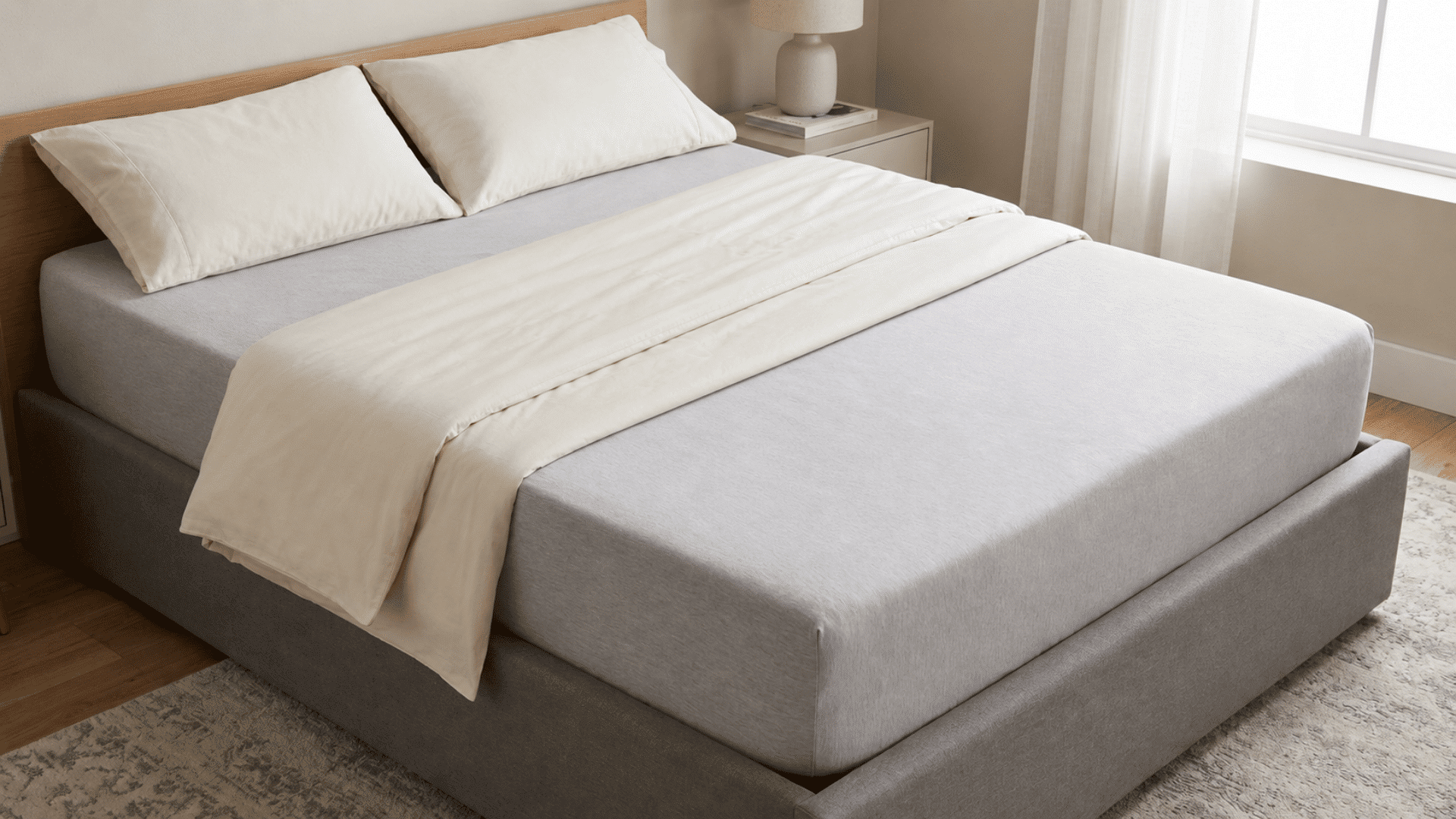
If one side of your mattress has worn down more than the other, rotating it puts your body on a fresher section.
That can feel more comfortable at first, but it does not repair the compressed materials underneath.
Give it a few nights and see if anything changes. Morning stiffness or soreness does not always come from the mattress alone.
Your sleep position, pillow height, daily habits, and overall health all play a role.
If the pain sticks around, gets worse, or starts affecting how you move during the day, it is worth talking to a licensed healthcare provider about it.
Other Ways to Keep Your Mattress in Good Shape
Rotation is one part of a bigger picture. These habits work alongside it to keep your bed lasting longer.
1. Use a mattress protector. It keeps sweat, oils, and dust mites out of the foam. A waterproof one handles spills too.
2. Vacuum the surface every 2 to 3 months. Use the upholstery attachment to remove dust, dead skin, and allergens from the top layer.
3. Air it out when you swap sheets. Leave the mattress uncovered for 30 minutes so trapped moisture can dry out.
4. Check your bed frame twice a year. Cracked or bowing slats cause uneven wear, even if you rotate on schedule.
5. Replace it after 7 to 10 years. If your mattress is past that range and still sagging after rotation, it is time for a new one.
What Users Say About Mattress Rotation
Users have different mattress rotation habits, ranging from seasonal schedules to frequent turning during the first few months of regular use.
I do it 4 times a year, every new season you rotate. 6 months is the absolute minimum IMO, especially if you have a modern hybrid or foam mattress
This Reddit user follows a seasonal schedule, believing regular rotation is especially useful for modern hybrid and foam mattresses used nightly.
You should rotate it every 3-6 months. Otherwise you get lumps and can get back pain from the dip in the mattress from the same spot.
This user from Reddit connects a three-to-six-month rotation schedule with fewer lumps, shallower dips, and more even comfort across the sleeping surface.
The purpose of rotating the mattress is to produce uniform breaking in, this usually occurs the first 3 months of the mattress.
This comment from Reddit focuses on early mattress use, when regular rotation can spread initial softening more evenly across the bed surface.
Common Mistakes That Make Things Worse
Rotating seems simple, but there are a few ways people get it wrong.
- Flipping a one-sided mattress. This voids most warranties and puts you on a base layer not meant for sleeping.
- Forgetting about your bed frame. Adjustable bases have head and foot zones. Make sure the mattress still lines up after rotating.
- Only doing it once. One rotation helps, but the real benefit comes from doing it consistently every few months.
- Skipping it on a new mattress. New beds benefit the most from monthly rotation during the first six months of use.
- Rotating a zoned mattress. Some beds have different firmness at the head and foot. Check care instructions before moving anything.
The Bottom Line
A few minutes every season is all it takes to keep your mattress from wearing out in the same spots. It costs nothing, works on almost every bed type, and can add years before you need a replacement.
Pair that habit with a protector, occasional vacuuming, and a solid bed frame, and your sleep setup stays in good shape for a long time.
If you are already dealing with dips or morning soreness, there is no better day to rotate your mattress than today. Set a quarterly reminder, and you are covered.
Have a tip or question about mattress care? Drop it in the comments below.
Frequently Asked Questions
Should a Topper Stay on While the Bed is Turned?
Remove a loose topper first because it can slide, bunch, or add awkward weight. Put it back after centering the bed.
Does Sleeping on One Side of The Bed Change the Routine?
Not usually. Head-to-foot turning changes pressure around the hips and shoulders, but occasionally switching sleep sides may spread side-to-side wear.
Can Split King Beds Be Turned Separately?
Yes, each compatible half can be turned on its own. Check both labels, as partners may use different models with separate care instructions.