
You sit down at your desk with a fresh cup of coffee and the best of intentions. You have a list of tasks to complete, but an hour later, your attention has drifted. You find yourself shifting in your seat, checking your phone, and wondering why it is so difficult to find your flow.
Losing focus is a common frustration, but it often has less to do with your willpower and more to do with your daily habits and physical environment. Small physical discomforts and disorganised spaces quietly drain your mental energy, leaving you exhausted before lunch.
The good news is that you do not need a complete lifestyle overhaul to fix this. By making a few simple adjustments to your routine and your physical surroundings, you can build momentum. Creating a space that actively supports your body and mind will help you stay engaged, motivated, and ready to tackle the day.
Motivational Habits for a Better Workday
Hospitals evoke numerous feelings. Some people fear them, while others are indifferent. Most of the time, it will depend on your experiences. If you fell ill as a child and required a hospital stay, then there is a high chance you’ll carry a shadow of that experience with you.
But what people don’t often realize is that, in a hospital, there are unspoken rules. If you’ve ever been a visitor in a hospital, such rules are easy to miss. They become rather noticeable when you are a patient, though.
Four of the most common – but still unspoken – rules have been outlined below:
The Curtain is Sacred
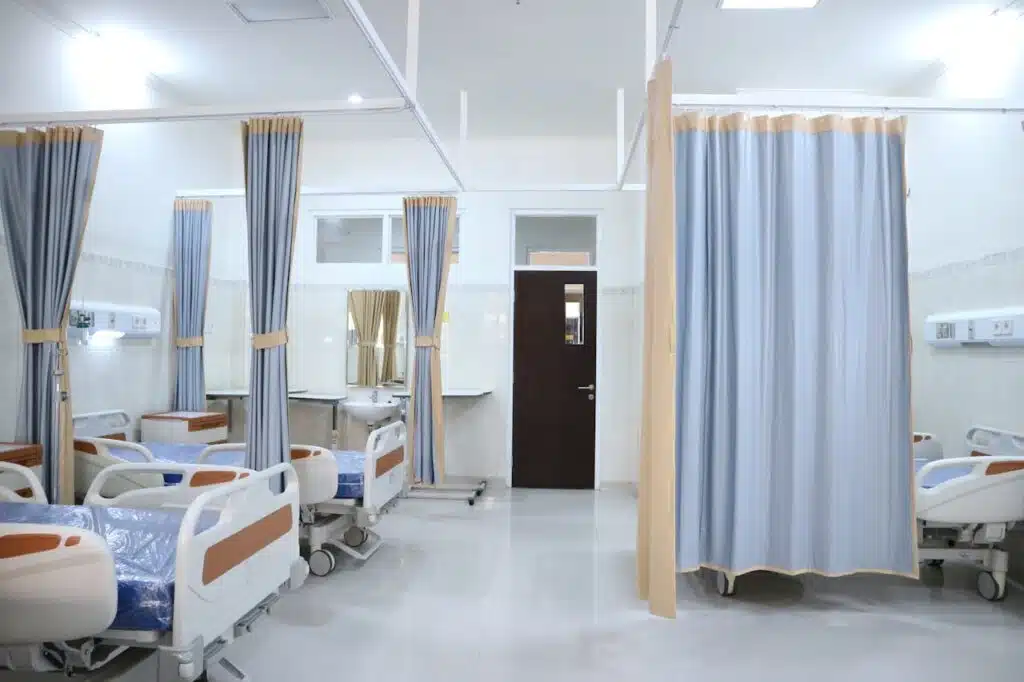
On a hospital ward, there will be multiple rooms. In each room, there could be several beds. These beds are separated by a curtain most of the time. This curtain is specifically there for privacy – and it must be respected.
Think of the curtain as a wall. It splits your world from your neighbor’s, even if sound still passes through. Just as you would not like someone barging through the curtain into your space, you shouldn’t do this to others. As such, only enter your neighbor’s space when invited. You might need to call out to them to ask, but it is vital you wait for an answer.
Similarly, your curtain must remain closed as certain times. This includes bathing, dressing, or during private medical conversations.
Healthcare Carts Have Their Own Territory
Whether it’s a medication cart, a computer-on-wheels, or a supply trolley, these Innerspace healthcare carts quietly shape the rhythm of the ward.
You might notice staff leave carts in certain places. It’s almost like each has an assigned parking spot. Even when unattended, these carts are treated as part of someone’s workspace. As a general rule, they should not be moved or leaned on by patients or visitors.
There is also an unspoken understanding that some carts signal important tasks are underway. When a nurse is preparing medication at a cart, interruptions are avoided. This means mistakes are less likely to happen. Likewise, a cart outside a room may indicate that treatment, an assessment, or even a private conversation is taking place inside.
“Silent” Shift Changes
Nurses work shifts. They normally have shift changes between the hours of 7am and 8 am as well as 7pm and 8pm. During these times, nurses are doing “bedside reporting.” This means the morning or daytime nurse will relay information about their patients to the nurse taking over. Sometimes, these conversations occur at the patient’s bedside.
They are often “silent” due to the focused communication between the two nurses. However, the patient could be involved. The patient will be given information regarding checking IV lines, reviewing medications, and so on.
As the discussions could happen throughout the ward, it is best to avoid listening to other patients’ medical information.
Respect “Quiet Time”
A lot of hospital wards have designated quiet hours. This usually lasts an hour or two during the afternoon – most often around 1pm to 2pm. Patients are encouraged to nap during this time, which is supposed to help with recovery. What doesn’t help, of course, is noisy or disruptive patients.
During this time, you should follow the rule. Try to be as silent as you can. Noise travels instantly in such a quiet environment. If you aren’t going to sleep, keep talking to a minimum. Use headphones if you plan on watching TV or listening to music.
By following these unspoken rules, you are being a respectful patient. This allows nurses and other staff to do their jobs, and your neighboring patients will have the best opportunity to recover fully.

Finding your rhythm starts with how you approach your tasks. When you feel overwhelmed, it is easy to procrastinate. Breaking your day into manageable pieces can make a significant difference.
Try Time-Blocking
Instead of staring at a massive project, divide your work into focused chunks of time. Work for 25 to 30 minutes, then stand up and stretch for five minutes. This simple rhythm gives your brain a chance to rest and prevents the mental fatigue that leads to afternoon slumps.
Celebrate Small Wins
Motivation thrives on progress. Write down three achievable goals each morning. Ticking these smaller items off your list creates a sense of accomplishment. That positive feeling naturally pushes you forward into the more challenging parts of your day.
The Hidden Cost of Working Uncomfortably
Your physical comfort directly impacts your mental drive. Sitting awkwardly at a makeshift desk or hunching over a laptop might seem harmless at first. Over time, working uncomfortably becomes incredibly unmotivating.
When your lower back aches or your shoulders carry tension, your brain diverts energy away from your work to focus on that discomfort. This subtle distraction breeds complacency. You might find yourself doing the bare minimum simply because you want to escape the desk as quickly as possible. Ignoring these physical signs creates a cycle of poor posture, low energy, and reduced output.
Creating a Space That Supports You
Your environment should do some of the heavy lifting when it comes to productivity. The items you interact with daily play a major role in how you feel and perform.
Invest in Ergonomic Support
A supportive chair is the foundation of a good workspace. Using standard dining chairs or unsupportive seating leads to the aches that ruin concentration. Introducing proper office chairs into your space encourages natural spinal alignment. Upgrading to ergonomic office chairs takes this a step further, providing adjustable lumbar support and armrests that adapt to your specific body type. When your body feels supported, your mind is free to focus entirely on your tasks.
Keep Distractions Out of Sight
Clutter is notoriously bad for concentration. A messy desk constantly reminds you of unfinished chores, pulling your attention away from your actual work. This rule applies to both private home offices and shared educational spaces. When selecting furniture for schools or busy collaborative offices, creating clean sightlines is essential. Using dedicated storage lockers allows students and staff to tuck away heavy bags, phones, and personal items. Removing that visual clutter instantly creates a calmer, more productive atmosphere.
Your Next Steps to a Better Routine
Upgrading your productivity does not require sweeping changes. Start by taking a quick inventory of your current setup. Adjust your screen so it sits at eye level. Clear away the loose papers scattered across your desk.
If you constantly feel stiff and tired by midday, it might be time to evaluate your seating. Prioritise a setup that respects your body. A comfortable, organised workspace makes it infinitely easier to sit down, find your focus, and do your best work.