
Hospitals evoke numerous feelings. Some people fear them, while others are indifferent. Most of the time, it will depend on your experiences. If you fell ill as a child and required a hospital stay, then there is a high chance you’ll carry a shadow of that experience with you.
But what people don’t often realize is that, in a hospital, there are unspoken rules. If you’ve ever been a visitor in a hospital, such rules are easy to miss. They become rather noticeable when you are a patient, though.
Four of the most common – but still unspoken – rules have been outlined below:
The Curtain is Sacred
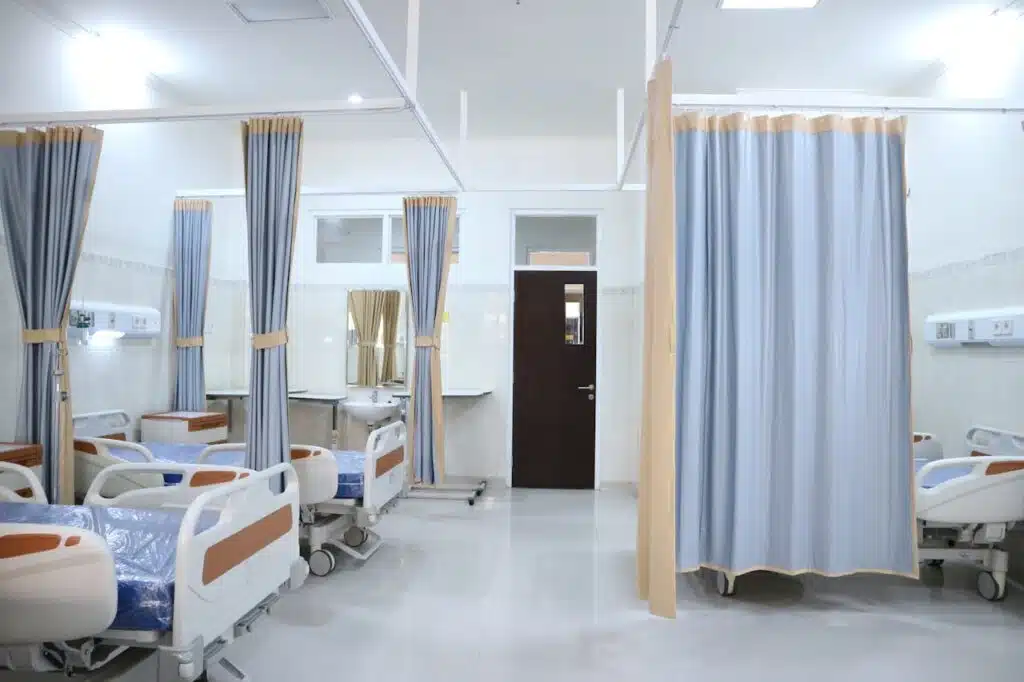
On a hospital ward, there will be multiple rooms. In each room, there could be several beds. These beds are separated by a curtain most of the time. This curtain is specifically there for privacy – and it must be respected.
Think of the curtain as a wall. It splits your world from your neighbor’s, even if sound still passes through. Just as you would not like someone barging through the curtain into your space, you shouldn’t do this to others. As such, only enter your neighbor’s space when invited. You might need to call out to them to ask, but it is vital you wait for an answer.
Similarly, your curtain must remain closed as certain times. This includes bathing, dressing, or during private medical conversations.
Healthcare Carts Have Their Own Territory
Whether it’s a medication cart, a computer-on-wheels, or a supply trolley, these Innerspace healthcare carts quietly shape the rhythm of the ward.
You might notice staff leave carts in certain places. It’s almost like each has an assigned parking spot. Even when unattended, these carts are treated as part of someone’s workspace. As a general rule, they should not be moved or leaned on by patients or visitors.
There is also an unspoken understanding that some carts signal important tasks are underway. When a nurse is preparing medication at a cart, interruptions are avoided. This means mistakes are less likely to happen. Likewise, a cart outside a room may indicate that treatment, an assessment, or even a private conversation is taking place inside.
“Silent” Shift Changes
Nurses work shifts. They normally have shift changes between the hours of 7am and 8 am as well as 7pm and 8pm. During these times, nurses are doing “bedside reporting.” This means the morning or daytime nurse will relay information about their patients to the nurse taking over. Sometimes, these conversations occur at the patient’s bedside.
They are often “silent” due to the focused communication between the two nurses. However, the patient could be involved. The patient will be given information regarding checking IV lines, reviewing medications, and so on.
As the discussions could happen throughout the ward, it is best to avoid listening to other patients’ medical information.
Respect “Quiet Time”
A lot of hospital wards have designated quiet hours. This usually lasts an hour or two during the afternoon – most often around 1pm to 2pm. Patients are encouraged to nap during this time, which is supposed to help with recovery. What doesn’t help, of course, is noisy or disruptive patients.
During this time, you should follow the rule. Try to be as silent as you can. Noise travels instantly in such a quiet environment. If you aren’t going to sleep, keep talking to a minimum. Use headphones if you plan on watching TV or listening to music.
By following these unspoken rules, you are being a respectful patient. This allows nurses and other staff to do their jobs, and your neighboring patients will have the best opportunity to recover fully.