

You might have mornings when you wake up feeling tired, even after getting a full night of sleep. I’ve seen this happen often, and one possible reason is not getting enough REM sleep.
REM sleep is the stage where your brain processes memories, regulates emotions, and supports mental clarity. When this stage is limited, you may notice brain fog, low energy, or trouble focusing during the day.
If you’ve been wondering how to increase REM sleep, the good news is that small lifestyle adjustments can help. Improving sleep habits, managing stress, and creating a better bedtime routine can support healthier REM cycles.
I’ll show you practical ways to increase REM sleep naturally, understand what affects it, and build habits that help your body rest more effectively
This blog provides general information and tips for improving REM sleep. It is not a substitute for professional medical advice. Always consult a healthcare provider if you have specific concerns or conditions related to sleep.
What is REM Sleep and Why is It Important?
REM (Rapid Eye Movement) sleep is a stage in the sleep cycle during which your brain becomes highly active, and your eyes move rapidly beneath closed eyelids. This phase typically occurs about 90 minutes after falling asleep and is characterized by vivid dreams.
During REM, your muscles become temporarily paralyzed, preventing you from acting out dreams.
REM sleep plays a crucial role in brain functions like memory consolidation, learning, and emotional regulation. It helps your brain process emotions, enhance creativity, and improve problem-solving.
Physically, REM sleep aids in muscle restoration and supports immune function. Without enough REM sleep, you may experience cognitive issues, mood swings, and even a weakened immune system, highlighting its importance for overall health and well-being.
Common Causes of Low REM Sleep
Several lifestyle and health factors can reduce the amount of REM sleep during the night.
- Sleep deprivation and irregular sleep schedules
- Alcohol or caffeine consumption before bedtime
- Stress and anxiety keep the brain active
- Certain medications that alter sleep cycles
- Sleep disorders such as sleep apnea or chronic insomnia
Identifying these causes can help improve sleep habits and support healthier REM cycles.
How Much REM Sleep Do You Need?
The amount of REM sleep varies across age groups and changes throughout life.
| Age Group | Average REM Sleep Percentage | Typical REM Duration |
|---|---|---|
| Newborns | ~50% of total sleep | 8 hours or more |
| Infants | 40–50% | 6–8 hours |
| Children | 25–30% | 2–3 hours |
| Adults | 20–25% | 90–120 minutes |
| Older adults | 15–20% | 60–90 minutes |
Adults typically spend about one-fifth of their sleep time in REM, usually during the second half of the night.
Effective Tips for Improving REM Sleep

Boost your REM sleep quality with these actionable tips: establish a consistent sleep routine, avoid sleep disruptors like caffeine and alcohol, and optimize your bedroom environment for better rest.
By sticking to a consistent sleep schedule, avoiding caffeine, and creating a sleep-friendly environment, you’ll know exactly how to get more REM sleep and improve your overall rest.
1. Stick to a Consistent Sleep Schedule
Maintaining a regular sleep schedule helps regulate the body’s internal clock. Going to bed and waking up at the same time each day allows the circadian rhythm to function smoothly.
When the sleep cycle becomes consistent, the body transitions more efficiently through different sleep stages, including REM sleep, which typically occurs later in the night.
2. Limit Caffeine and Alcohol Before Bed
Caffeine stimulates the nervous system and can delay sleep onset for several hours. Alcohol may cause drowsiness initially, but it often disrupts deeper sleep stages later in the night.
Reducing these substances, particularly in the evening, allows the body to transition more naturally into REM sleep and helps maintain uninterrupted sleep cycles.
3. Create a Sleep-Friendly Bedroom Environment
A calm and comfortable sleep environment supports deeper sleep. Keep the bedroom cool, quiet, and dark to reduce disturbances.
Blackout curtains, white noise machines, and comfortable bedding can help create conditions that allow the brain to relax. Reducing electronic light sources also encourages natural melatonin production, improving sleep quality.
4. Exercise Regularly During the Day
Regular physical activity supports healthy sleep cycles and may increase the amount of time spent in deeper sleep stages.
Moderate exercise, such as walking, stretching, or strength training, helps reduce stress and improve sleep efficiency. However, intense workouts late at night may stimulate the body and make it harder to fall asleep.
5. Manage Stress Before Bed
Stress and anxiety can keep the brain active during the night and delay REM sleep.
Relaxation practices such as deep breathing, meditation, journaling, or gentle stretching before bedtime may help calm the nervous system. Creating a relaxing wind-down routine helps signal to the body that it is time to prepare for sleep.
6. Reduce Screen Exposure Before Sleep
Bright light from smartphones, televisions, and tablets can interfere with melatonin production, the hormone that regulates sleep cycles.
Limiting screen exposure at least an hour before bedtime helps the brain transition into sleep more naturally. Replacing screen time with quiet activities like reading or listening to calming music may improve sleep quality.
7. Allow Enough Total Sleep Time
REM sleep typically occurs more frequently during the later stages of sleep. If sleep duration is shortened, the body may not reach enough REM cycles.
Most adults need 7–9 hours of sleep each night. Prioritizing adequate sleep duration ensures the brain has enough time to move through all sleep stages properly.
Tracking Your REM Sleep
Monitoring sleep patterns can help identify habits that influence REM sleep and overall rest quality.
- Using Sleep Trackers or Apps: Wearable devices and sleep apps estimate sleep stages by tracking movement, heart rate, and sleep duration. They provide helpful insights into nightly sleep patterns and possible disruptions.
- How to Interpret REM Duration: Adults typically spend about 90–120 minutes in REM sleep, roughly 20–25% of total sleep. Lower REM levels may suggest sleep interruptions or irregular sleep habits.
- Patterns to Look for and Adjust Habits: Sleep data may reveal patterns such as late bedtimes, frequent awakenings, or short sleep cycles that affect REM sleep quality.
Understanding these patterns can help guide small lifestyle adjustments that support healthier sleep cycles and improve REM sleep over time.
Community Advice and Shared Experiences
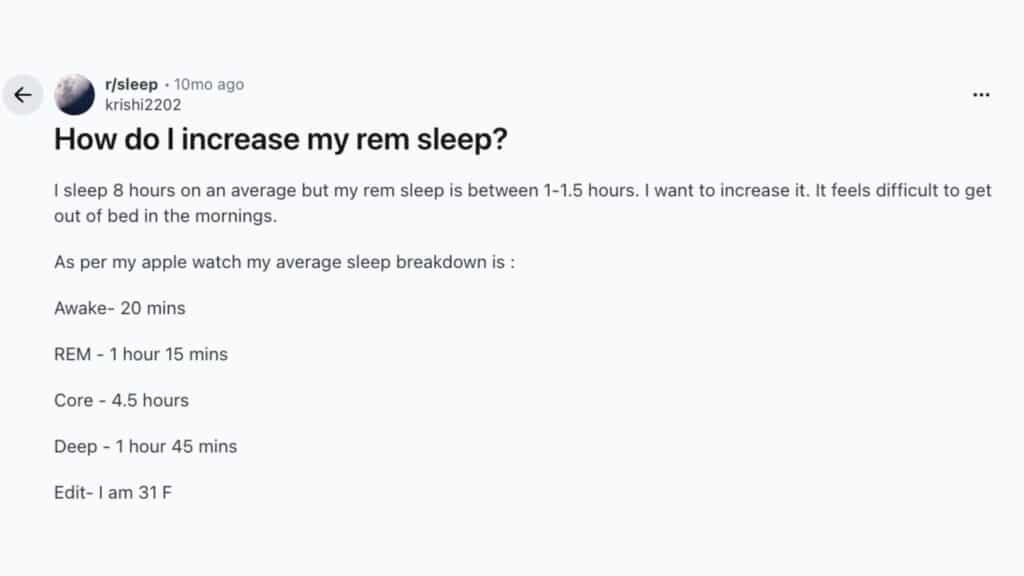
Online communities often share helpful insights about improving sleep habits and REM cycles. In a discussion on Reddit’s r/sleep community, one user asked how to increase REM sleep after noticing lower REM numbers on a smartwatch sleep tracker.
Several community members responded with practical suggestions. One commenter explained that consumer sleep trackers may not measure REM sleep perfectly and recommended focusing on maintaining a consistent sleep schedule instead of worrying too much about exact numbers.
Another commenter suggested improving sleep conditions by keeping the bedroom cool and dark and considering supplements such as magnesium.
The discussion also emphasized that consistent bedtime routines and paying attention to overall sleep quality may be more important than focusing only on REM sleep data.
Tips and Tricks from Sleep Experts
Sleep experts often recommend small daily habits that help the body relax before bedtime and improve overall sleep quality.
- Practice Wind-Down Routines: A consistent bedtime routine signals the brain that it is time to relax. Activities like light stretching, reading, or meditation can help prepare the body for sleep.
- Avoid Smartphones or TVs before bed: Screens emit blue light that can reduce melatonin production and disrupt natural sleep cycles. Limiting screen time before bedtime helps support deeper sleep.
- Keep the Bedroom Solely for Sleep: Using the bedroom only for sleep helps the brain associate the space with rest. Avoid working, eating, or watching television in bed.
Following simple habits like these consistently can help improve sleep quality, support REM sleep cycles, and create a healthier nighttime routine.
What Recent Research Says About REM Sleep and Memory
A recent study titled “Slow-wave sleep and REM sleep differentially contribute to memory representational transformation“ by Jing Liu and colleagues investigates how different sleep stages impact memory processing.
The study shows that REM sleep and slow-wave sleep (SWS) play distinct roles in memory consolidation.
REM sleep, with its high theta and beta power, is linked to the transformation of memories from item-specific details to more generalized, category-level representations.
On the other hand, SWS appears to stabilize item-specific memory details.
The study highlights that a higher ratio of REM to SWS sleep leads to greater memory transformation, while SWS is associated with the preservation of specific memory details.
This finding emphasizes the complementary yet differential roles of REM and SWS in memory consolidation.
When to See a Doctor
If you continue to have poor sleep despite making lifestyle changes, it’s important to consult a doctor.
Persistent sleep issues may signal a serious underlying disorder like sleep apnea or insomnia.
For sleep apnea, treatments like CPAP machines help maintain open airways during sleep. For insomnia, cognitive behavioral therapy (CBT-I) can be highly effective in addressing the root causes of sleep struggles.
Consulting a sleep specialist will ensure you get the proper diagnosis and treatment to improve your REM sleep quality.
That’s a Wrap
Better sleep isn’t about being perfect or forcing a strict routine overnight. It’s about paying attention to small signals from your body and making gentle changes that actually fit your life.
When your sleep improves, mornings feel lighter, your mood steadier, and your focus sharper. If you’re wondering how to increase rem sleep, start with one habit tonight, maybe an earlier wind-down time or a calmer bedtime routine.
Those small steps add up, helping your brain rest deeper and work better the next day. Give yourself grace as you try things out. Sleep is personal, and progress takes time.
If you want more ideas and simple wellness tips, feel free to read a few more of my blogs and see what resonates with you.