
Ever tried lying on your back to sleep, only to find yourself constantly shifting and unable to relax? If you’ve been asking yourself, why can’t I fall asleep on my back, you definitely have some company. It can feel frustrating when something that’s supposed to be good for your body just does not come naturally.
The truth is, back sleeping can actually improve your sleep quality and overall health, but getting comfortable in this position isn’t always easy at first. Factors like muscle tension, posture habits, or even your mattress setup can make it feel unfamiliar.
Here, I’ll break down why sleeping on your back can be challenging and share simple, practical tips to help you ease into it and finally get a more restful night’s sleep.
The Science Behind Back Sleeping
When you lie on your back, your body weight distributes evenly across a wider surface, reducing pressure on your spine and allowing your postural muscles to fully relax.
A 2021 study published in PLOS ONE found that sleep posture has a meaningful relationship with waking spinal symptoms, with supine and supported side lying being the positions most recommended for reducing lumbar and cervical discomfort in adults.
Stomach sleeping, by contrast, increases the risk of overheating, carbon dioxide buildup, and temporary changes in heart and lung function that are not associated with back sleeping.
The one real trade-off for adults is airway vulnerability, as gravity pulls throat tissues backward, increasing the likelihood of snoring or breathing disruptions.
Why can’t I fall asleep on My Back?

If you’ve ever wondered why you can’t fall asleep on your back when everyone says it’s the healthiest position.
Then let me walk you through the most common reasons why back sleeping feels uncomfortable or even impossible:
1. Airway Problems: Snoring and Sleep Apnea
When you sleep on your back, gravity pulls your tongue and throat tissues backward toward your airway. This narrows the airflow, making you snore louder.
For people with sleep apnea, this position causes breathing pauses to occur more often and last longer. Even without a diagnosis of sleep apnea, you might feel like you can’t breathe as easily when lying on your back.
One practical fix many of my clients overlook: a wedge pillow. Elevating your torso 30–45 degrees rather than lying completely flat can keep the airway more open while still letting you sleep on your back.
It’s a middle ground worth trying before you give up on back sleeping entirely.
2. Poor Spinal Alignment and Lower Back Pain
Your spine has natural curves, so there’s usually a gap between your lower back and the mattress when you lie flat. Without proper support filling this space, your back muscles work all night overtime trying to hold your spine in place.
This constant tension leads to that achy, stiff feeling when you wake up. Your mattress firmness matters too; too firm creates a bigger gap, while too soft lets you sink in weird ways that throw your spine out of alignment differently.
3. Tight Hip Flexors Pulling on Your Spine
If you sit a lot during the day, your hip flexor muscles tighten and shorten. When you lie flat on your back at night, these tight muscles don’t want to stretch out.
Instead, they pull on your pelvis, creating an uncomfortable arch in your lower back. This unnatural arch puts real pressure on your spine and causes pain. The weird part is you might not even notice tight hip flexors during the day.
4. Years of Sleeping Habit
Your body has spent years perfecting your current sleep position. Neurologically, your brain registers the unfamiliar position as a mild alertness signal, a low-level “something is different here” that keeps you from fully letting go into sleep.
From a behavioral science perspective, sleep positions function like deeply grooved habits: they’re cue-routine-reward loops your nervous system runs on autopilot.
Disrupting the routine without replacing the reward (comfort, relaxation) causes friction. That’s why willpower alone rarely works.
The key, based on what I’ve seen with clients, is not to force yourself to stay on your back all night from day one. Start with 15–20 minutes, then switch to your usual position. Your body adapts faster with gradual exposure than with cold-turkey switches.
5. Pregnancy-Related Discomfort
During pregnancy, your growing uterus compresses the inferior vena cava, a major blood vessel that carries blood from your lower body back to your heart. When it gets compressed, it reduces blood flow to both you and your baby.
This might make you feel dizzy, nauseous, or short of breath. Your body is basically telling you this position isn’t working right now. That’s why doctors almost always recommend side sleeping during pregnancy, specifically the left side.
6. Wrong Pillow Setup
Your pillow setup might be the real culprit. If your head pillow is too thick, it can push your head forward and strain your neck.
Too flat tilts your head back, which also causes tension. Without a pillow under your knees, that lower back gap gets even bigger, and your hip flexors keep pulling.
Missing lower back support means your muscles stay tense all night, trying to bridge the gap. Adding just one or two strategically placed pillows can completely alter back sleeping from uncomfortable to actually pleasant.
7. Anxiety or the “Vulnerability” Feeling
This is rarely talked about, but it’s more common than you’d think. Some people find back sleeping psychologically uncomfortable; lying face-up with limbs exposed can trigger a subtle sense of vulnerability or anxiety that makes it hard to relax enough to fall asleep.
This isn’t irrational. From an evolutionary standpoint, facing upward with the body open is a less protected position than curling inward.
For people with general anxiety or trauma-related sleep difficulties, this discomfort can be a real barrier that no amount of pillow placement will fix on its own.
If this resonates with you, a weighted blanket can help. The gentle, even pressure activates the body’s parasympathetic response, reducing that exposed, alert feeling. Combining this with a gradual position-training approach tends to work better than toughing it out.
How to Train Yourself to Sleep on Your Back
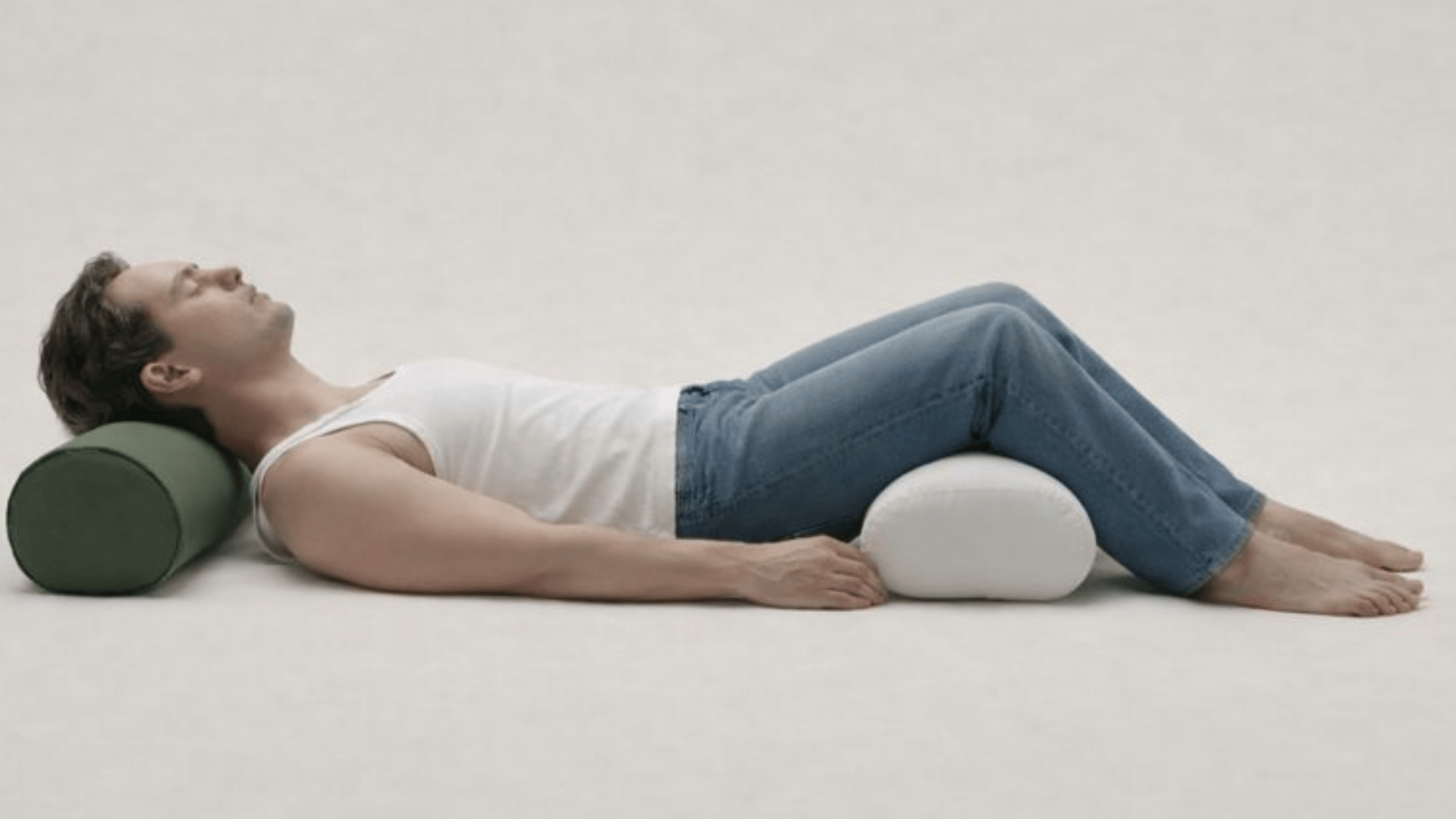
Now that you know the reasons why back sleeping can be tricky, let’s look at some ways you can train yourself to sleep more comfortably on your back.
It takes time, but these steps can make a huge difference:
| Week | Focus | What to Do |
|---|---|---|
| Week 1 | Introduce, don’t force | Spend 15–20 minutes on your back before switching to your usual position. Place pillows under your knees and lower back to create immediate support and comfort. |
| Week 2 | Extend and anchor | Stay on your back for 30–45 minutes at the start of sleep. Use a firm pillow or a rolled towel on each side of your hips to prevent rolling. |
| Week 3+ | Consolidate | The position should start feeling natural. If you still roll, hug a body pillow to mimic side-sleep comfort while keeping your spine in a back-sleeping position. |
One client I worked with, a 34-year-old project manager who’d been a stomach sleeper her whole life, cracked this habit by week three using this exact progression. The turning point wasn’t willpower; it was making the position feel physically inevitable from the start.
Common Mistakes to Avoid When Sleeping on Your Back
Even with the right intentions, a few small mistakes can make back sleeping feel uncomfortable. Avoid these to make the transition smoother:
- Using the wrong pillow height: A pillow that’s too high or too flat can strain your neck and throw off alignment. Aim for a neutral head position.
- Skipping knee support: Not placing a pillow under your knees can increase lower back pressure and make the position feel unnatural.
- Sleeping on a worn-out mattress: An unsupportive mattress can cause your body to sink or stay too rigid, leading to discomfort.
- Forcing the position too quickly: Trying to switch overnight can feel frustrating. Ease into it gradually instead of forcing yourself to stay on your back all night.
- Ignoring pain or breathing issues: If you feel discomfort, snoring, or shortness of breath, don’t ignore it; adjust your setup or consider another position.
Small adjustments can make a big difference, and avoiding these common mistakes can help you get comfortable much faster.
Alternative Sleeping Positions

If back sleeping just isn’t working for you, that’s okay. The best sleep position is the one that helps you rest comfortably while keeping your spine properly aligned. Here are some healthy alternatives and how to make them better:
| Sleep Position | Why It Works | How to Do It Right |
|---|---|---|
| Side Sleeping | Keeps spine naturally aligned, reduces snoring, and supports overall comfort | Place a pillow between your knees and use a head pillow that fills the space between your shoulder and neck |
| Fetal Position | Good for comfort and can reduce lower back strain | Keep a loose, relaxed curl (don’t tuck too tightly). Add a pillow between your knees |
| Stomach Sleeping | May feel comfortable for some people | Use a very thin pillow (or none) for your head and place one under your pelvis to reduce lower back strain |
Choosing the right position is important, but small adjustments like proper pillow support can make an even bigger difference in how well you sleep.
Final Thoughts
After understanding why I can’t fall asleep on my back, you can start making small, practical adjustments that make this position feel more natural over time.
Remember, training yourself to sleep on your back takes patience, usually 2 to 4 weeks, so don’t get discouraged if it feels weird at first.
Listen to your body, and if back sleeping causes pain or breathing problems that don’t improve, side sleeping is perfectly healthy too. The goal is quality sleep that leaves you refreshed, not uncomfortable.
Ready to sleep better tonight? Try the pillow-under-knees method and let me know how it works for you in the comments below!