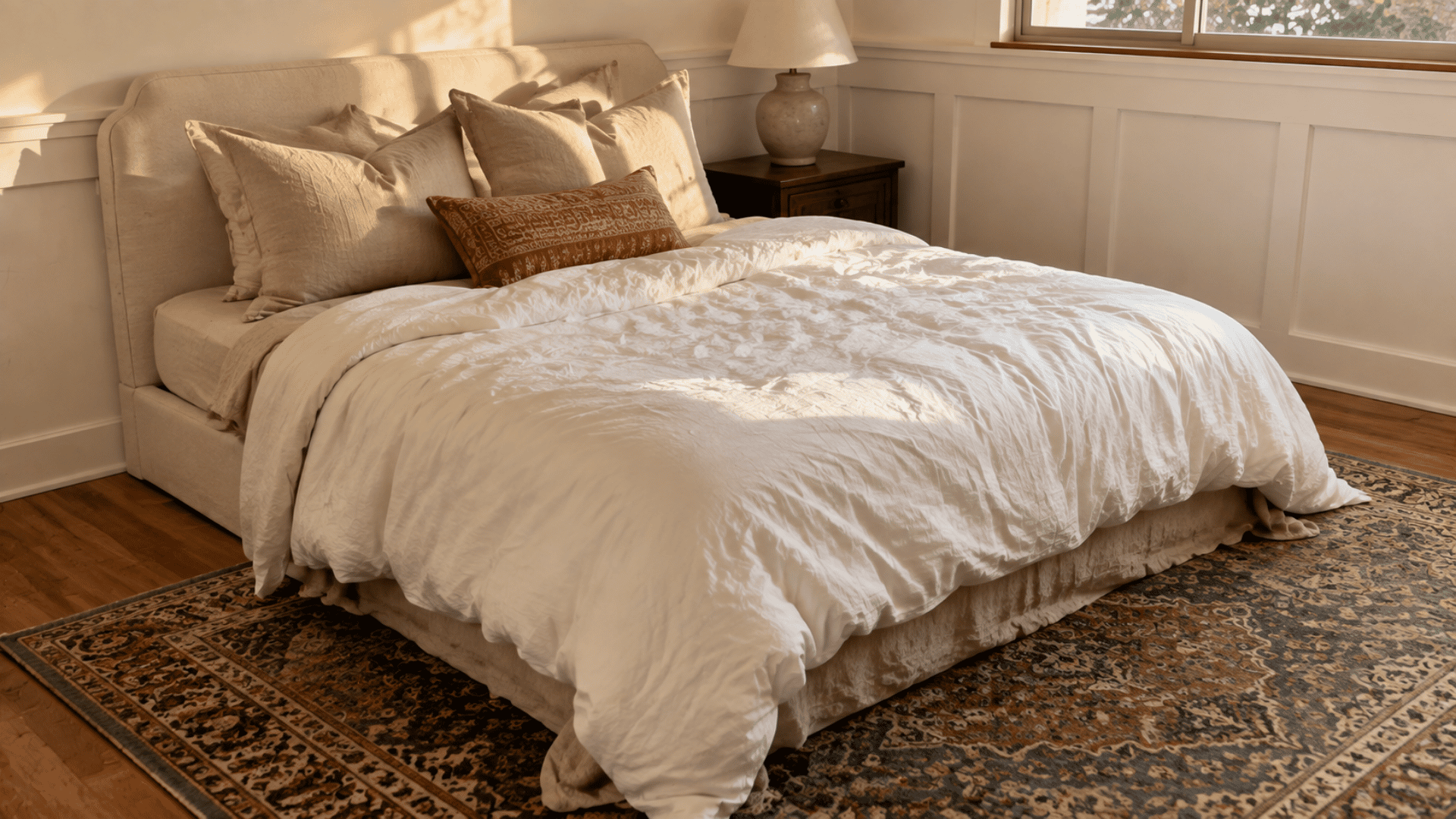
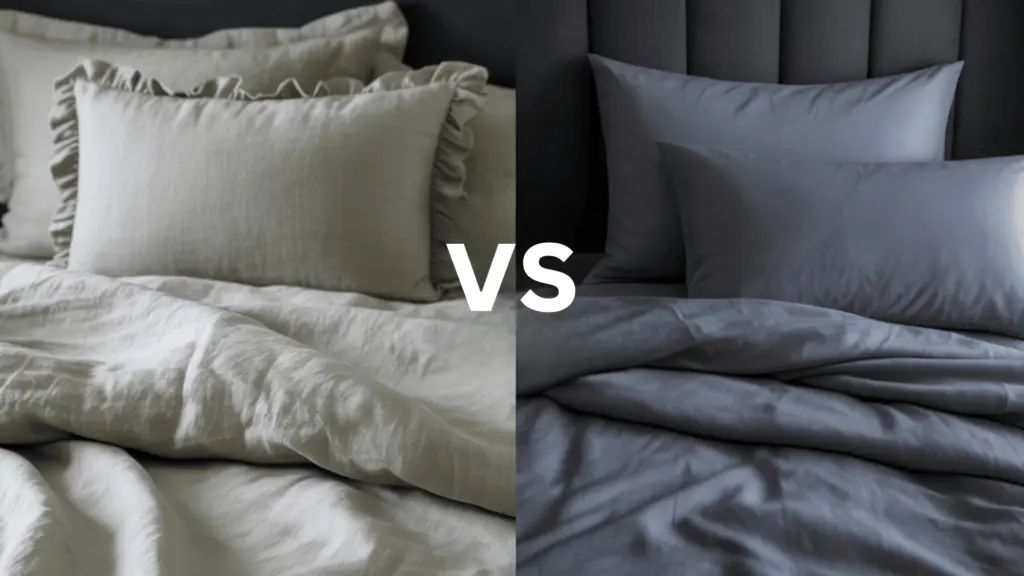
When it comes to cotton vs linen sheets, the difference goes far beyond how they look. After many nights testing bedding, I have come to one clear decision: these two fabrics feel very different in daily use.
In my experience, the choice comes down to comfort, airflow, and long-term value. If you sleep hot, have sensitive skin, or want sheets that last, these details matter more than most people realize.
I will walk you through how each fabric performs, where it works best, and what I have learned over time. The right choice can make your nights noticeably more comfortable and consistent.
What Are Cotton Sheets?
Cotton sheets are made from the natural fibers of the cotton plant. They have been a bedding staple for centuries due to their exceptional softness.
Quality varies significantly by type. Egyptian cotton is prized for its extra-long staple fibers that create an incredibly smooth fabric.
Pima cotton offers a similar level of luxury with superior softness. Organic cotton provides a chemical-free option for those who prefer a more natural bedding approach.
What makes cotton sheets particularly appealing is their immediate comfort. Unlike some fabrics, cotton does not require a break-in period. It feels soft and inviting from the very first night. They are also simple to care for with no special treatments needed.
What Are Linen Sheets?
Linen sheets are crafted from flax fibers and are among the oldest textiles in human history, valued for their distinctive texture and unique character.
Unlike cotton, linen has a naturally crisp and slightly rough feel when new. However, it becomes increasingly softer and more comfortable with every wash, developing a lived-in quality that is difficult to replicate with other fabrics.
Linen sheets have an appeal of their own that goes beyond just function. The more you use and wash them, the better they feel, making them a bedding option that genuinely improves over time.
For those who appreciate bedding that grows with use and exudes quality, linen sheets are a worthy and distinctive choice for any bedroom.
Cotton vs Linen: Key Differences
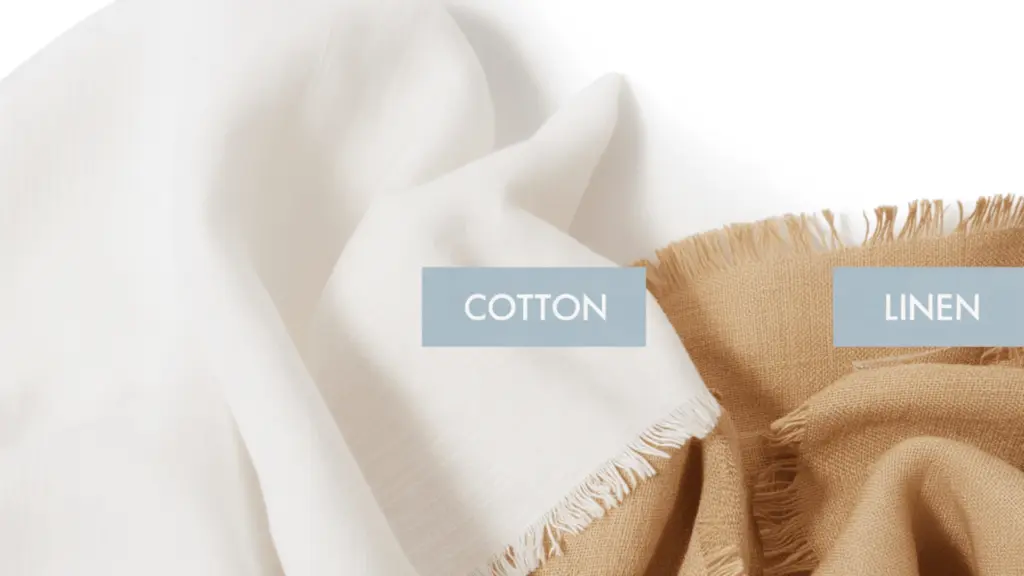
Comparing cotton and linen across key areas, including softness, breathability, durability, cost, and overall comfort. See how each fabric performs in real use, so you can pick what fits your sleep style and daily needs:
1. Initial Softness
Cotton wins the softness race right out of the package, offering an immediately plush, smooth feel that requires no break-in period.
Linen starts rougher with its textured weave but gradually softens with each wash, eventually achieving a buttery smoothness that devotees claim surpasses even the finest cotton.
2. Long-Term Durability
Cotton sheets typically last 2-5 years with regular use before showing significant wear, pilling, or thinning, making linen a better long-term investment despite higher upfront costs.
Linen stands as the clear champion in durability, with properly cared-for linen sheets lasting 20-30 years or more.
3. Temperature Regulation
Cotton works better in moderate temperatures or for those who prefer a cozier feel.
Linen’s hollow fibers create superior airflow, making it significantly cooler and more breathable than cotton, which tends to trap body heat. For hot sleepers or warm climates, linen provides unmatched cooling comfort.
4. Moisture Management
Linen absorbs up to 20% of its weight in moisture before feeling damp, actively wicking perspiration away from your skin throughout the night.
Cotton absorbs moisture too, but retains it longer, which can leave you feeling clammy or uncomfortable if you sweat during sleep.
5. Wrinkle Resistance
Cotton sheets emerge from the dryer relatively smooth and maintain a crisp appearance with minimal effort or light ironing.
Linen wrinkles easily and embraces a naturally rumpled, relaxed aesthetic that’s either charming or frustrating, depending on your style preferences. Attempting to keep linen wrinkle-free requires significant ironing effort.
6. Hypoallergenic Properties
Cotton, while gentle on sensitive skin, doesn’t possess the same natural resistance to allergens unless treated with special finishes.
Linen edges ahead with its inherent antimicrobial and antibacterial properties that resist mold, mildew, and dust mites.
7. Environmental Impact
Cotton, particularly conventional cotton, demands significant water resources and pesticide use, though organic cotton offers a more eco-friendly alternative with reduced chemical treatment.
Linen wins the sustainability battle as flax plants require minimal water, pesticides, or fertilizers, and every part of the plant can be used.
8. Cost Comparison
Cotton sheets are considerably more affordable, with quality sets ranging from $50-$200, making them accessible for most budgets.
Linen sheets typically start around $150 and can reach $500 or more for premium sets, representing a significant investment that pays off over decades of use.
9. Care Requirements
Cotton sheets are wonderfully low-maintenance, handling frequent machine washing and drying without special considerations beyond avoiding excessive heat.
Linen requires gentler care with cool water washing, line drying or low heat tumble drying, and optional ironing while slightly damp if you want to minimize wrinkles.
10. Weight and Feel
Cotton sheets feel lighter and smoother against the skin with a consistent, even texture throughout.
Linen has more body and weight, with a textured, dimensional feel that some find luxuriously substantial, while others may find it too heavy for their preference.
11. Color Retention
Cotton sheets hold dye well and maintain vibrant colors through numerous washes when properly cared for.
Linen’s natural fibers resist dye absorption, resulting in softer, more muted colors that may fade faster but develop an appealing vintage patina over time.
12. Seasonal Versatility
Cotton offers decent versatility across seasons but may feel too warm in summer for hot sleepers and potentially too cool in winter.
Linen adapts beautifully to all seasons, cooling in summer through breathability and insulating in winter by trapping warm air in its fibers.
13. Availability and Variety
Cotton sheets dominate the market with endless options in thread counts, weaves (percale, sateen), colors, and patterns at every price point.
Linen sheets offer fewer choices with more limited color palettes and styles, though the selection has expanded significantly as linen grows in popularity.
Which Fabric Is Best for Different Needs?
Choosing between cotton and linen depends on your sleeping preferences and lifestyle. Here’s a quick guide:
- For Hot Sleepers: Linen’s breathability and moisture-wicking properties create a cool, dry sleeping surface, making it ideal for warm climates and night sweats.
- For Allergy Sufferers: Both are hypoallergenic, but linen’s antimicrobial properties actively resist dust mites and mold, making it superior for severe allergies.
- For Long-Term Investment: Linen’s exceptional durability means it softens beautifully with age and outlasts multiple cotton sets, justifying its higher initial cost.
- For Sensitive Skin: Cotton offers immediate softness without a break-in period, though linen becomes incredibly soft after washing and provides antimicrobial benefits for irritation-prone skin.
Cotton comfort or Linen luxury, with my understanding, I have divided both fabrics. Now the important call is yours.
That’s a Wrap
From everything I have tested and observed, the cotton vs linen sheets debate always comes down to one simple question what kind of sleeper are you? The right sheets make a bigger difference to your nightly comfort than most people realize.
If you want something soft and budget-friendly, cotton does the job beautifully. If you are open to spending a little more for bedding that improves over time, linen is one of the most rewarding investments I have come across.
Think about what matters most to you: comfort, durability, or easy care. What have you tried so far? Drop your experience in the comments below.