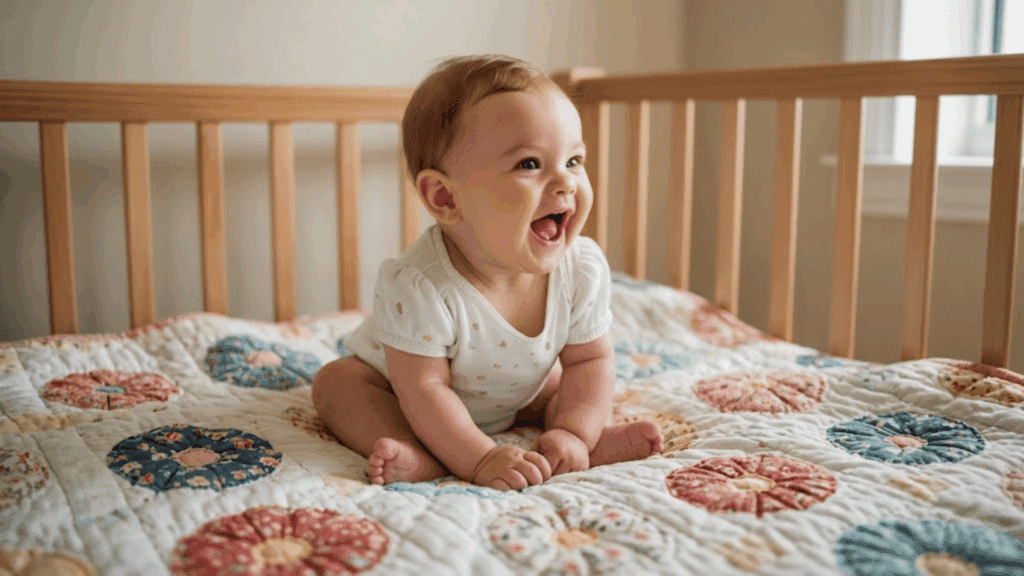
One wrong measurement and that beautiful handmade quilt becomes a safety hazard — or ends up stuffed in a drawer, never used. Baby quilt size is not a minor detail; it is the difference between something cherished and something forgotten.
An oversized quilt can bunch dangerously in a crib, while one too small won’t stay tucked during a stroller nap. Baby quilts come in several standard sizes, each designed for a specific purpose.
Here’s everything you need to know about the sizes of baby quilts, so you can create or purchase the perfect one with complete confidence.
What Are Baby Quilts?
A baby quilt is a small, layered blanket specifically designed for infants and young children. Unlike regular quilts, I’ve found that baby quilts are crafted with your little one’s safety, comfort, and developmental needs in mind.
The primary purpose of baby quilts goes beyond just keeping your baby warm. You’ll use them for crib bedding, tummy time, stroller outings, and cuddle sessions. They provide security that soothes your baby, and I can tell you many become cherished keepsakes.
From a sleep-product standpoint, what separates a well-chosen baby quilt from a poorly chosen one is whether its size, weight, and construction genuinely match the environment it’s being used in.
In construction, baby quilts feature three layers: decorative top fabric, soft batting, and backing fabric. You’ll often find them made from breathable cotton, flannel, or minky, each chosen for its gentle touch against sensitive skin.
Common Baby Quilt Sizes and Their Uses
Understanding the standard baby quilt sizes helps you choose the right option for your specific needs. Each size serves a distinct purpose, from portable travel quilts to generous toddler blankets that grow with your child.
1. Cradle/Car Seat Quilts
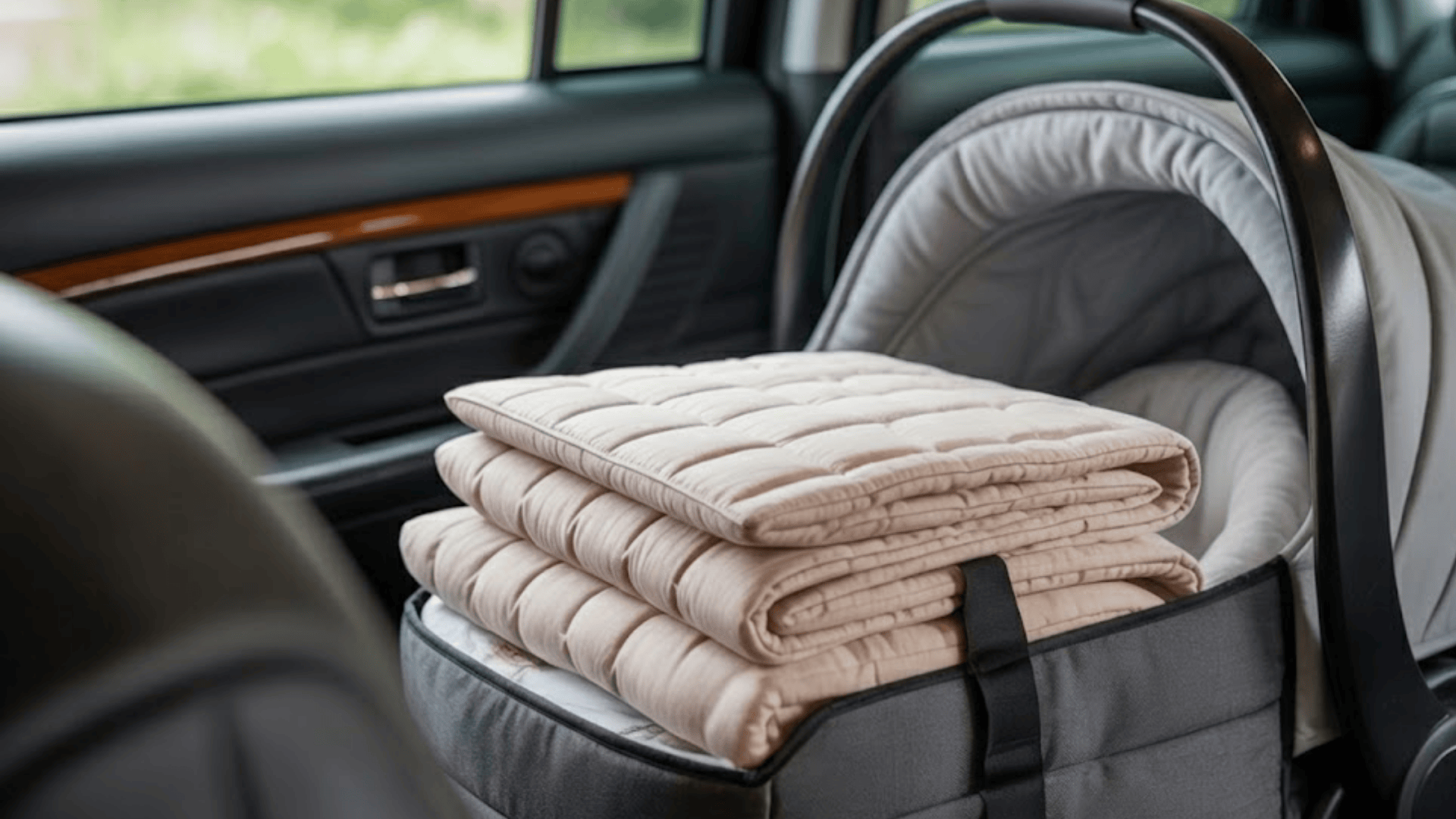
These compact baby quilts are perfect for parents who prioritize portability and convenience. Their compact size makes them ideal for tucking into diaper bags and for use in tight spaces. Here’s what makes this size so practical:
- Size: 24″ x 28″
- Travel-friendly: Easily fits in diaper bags for quick trips and outings
- Safe for car seats: Drapes over car seats without creating safety hazards
- Cradle and bassinet use: Provides just enough coverage for small sleeping spaces
- Minimal bulk: Offers convenience without excess fabric when you’re on the move
If you’re frequently traveling or need a grab-and-go option, this compact size delivers the portability you need without sacrificing your baby’s comfort and warmth.
Safety Note: Always remove loose quilts before buckling a baby in a car seat or stroller during active drives.
2. Newborn Quilt Size/Stroller Quilts
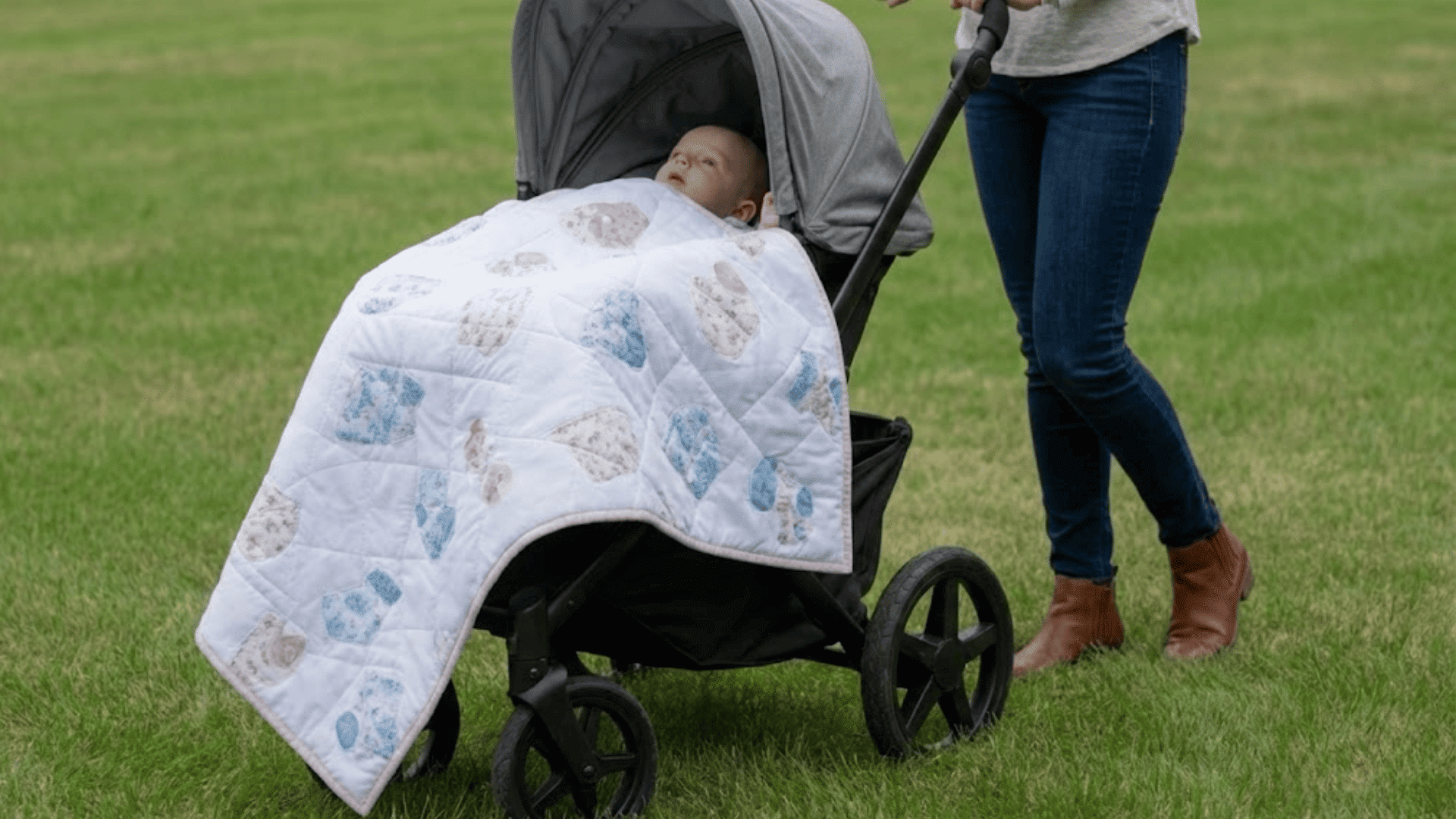
This size strikes the perfect balance between coverage and portability for everyday use. It’s the newborn quilt size I most often recommend to parents with babies in the 0–6 month range designed specifically for newborns and works beautifully for a variety of daytime activities and outings.
Key features of this versatile size include:
- Size: 30″ x 40″
- Ideal for stroller rides: Provides adequate coverage without overwhelming tiny frames
- Versatile everyday use: Perfect for doctor’s appointments, errands, and quick naps
- Easy to wrap: The dimensions work beautifully for snuggling your baby securely
- Convenient storage: Substantial enough for warmth yet compact enough to fold easily
Many parents consider this their essential everyday quilt, keeping it in the stroller at all times for unexpected naps and temperature changes.
Great baby shower gift choice: This is also one of the most practical sizes to give as a shower gift, it’s a universally useful dimension that new parents will reach for daily.
3. Standard Crib Quilts
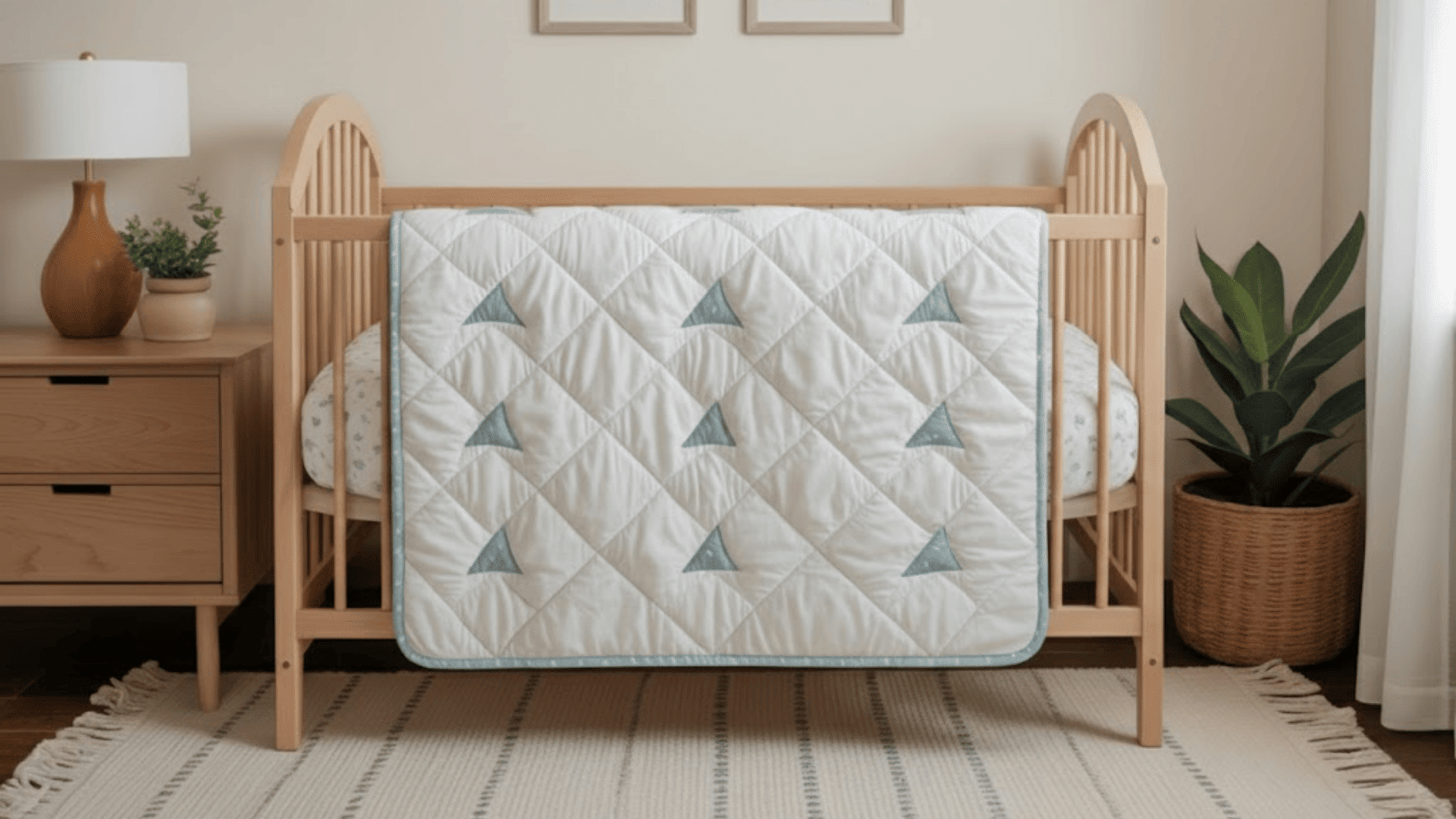
When you need a baby quilt for a standard crib mattress, this size provides the perfect fit. It’s the most popular choice for parents seeking a versatile, long-lasting option. This size stands out for several reasons:
- Size: 36″ x 52″
- Perfect crib fit: Designed for standard 28″ x 52″ crib mattresses with overhang
- Neat appearance: Provides adequate coverage with a few inches draping on each side
- Grows with baby: Transitions beautifully from crib to toddler bed
- Most versatile option: Ideal if you’re making just one quilt for multiple uses
This size offers several years of use, making it the best investment if you’re creating a single quilt that needs to serve multiple purposes throughout your baby’s early years.
4. Tummy Time Mats
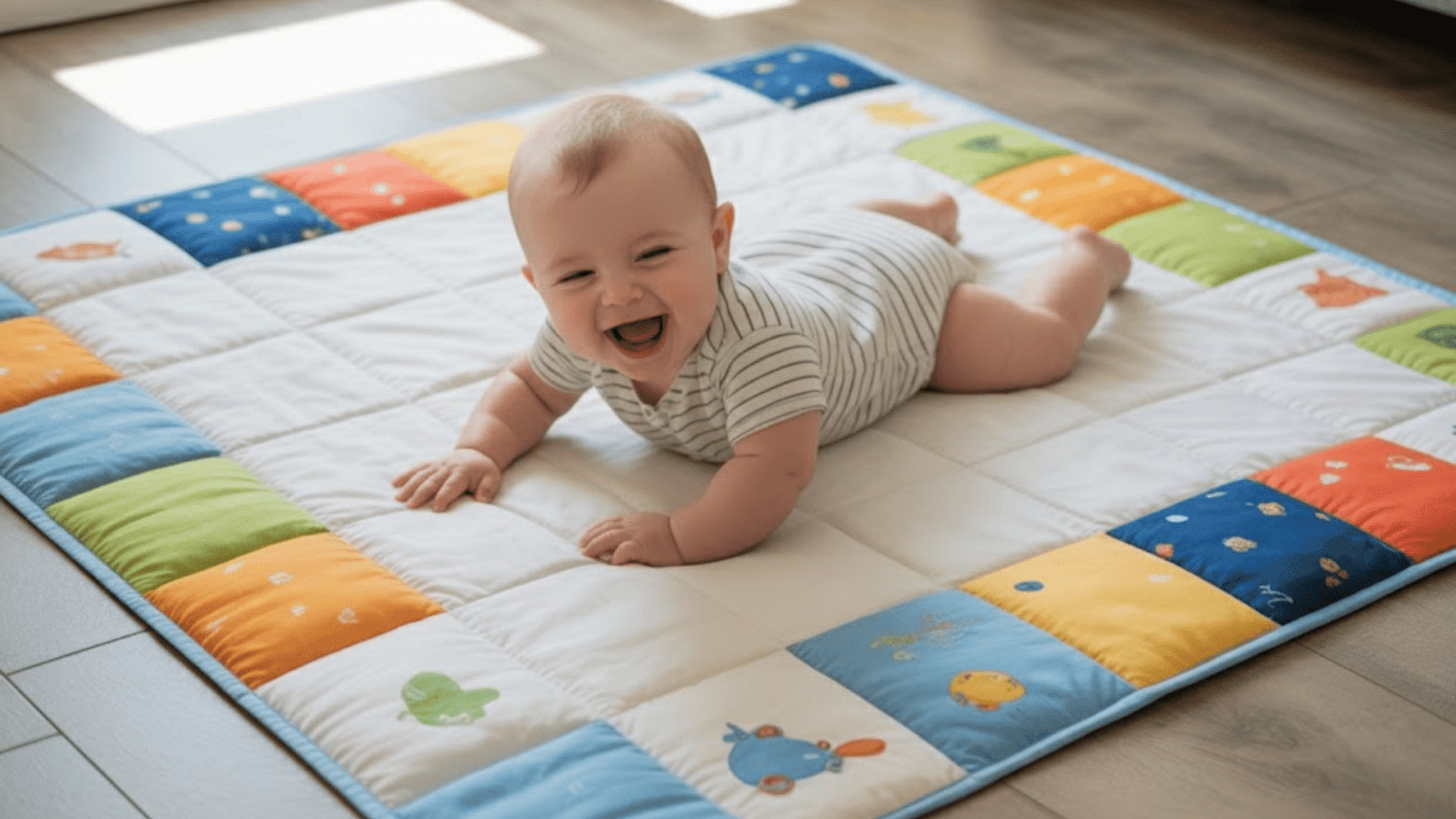
Square-shaped quilts in this dimension create the ideal play and development space. The even measurements ensure your baby stays comfortably on the padded surface from every direction. This developmental size offers these benefits:
- Size: 40″ x 40″
- Perfect play space: Ample room for stretching, rolling, and motor skill development
- Even dimensions: Baby stays on the padded surface regardless of movement direction
- Developmental benefits: Supports crucial tummy time sessions for muscle building
- Easy portability: Folds neatly for storage or transport to playgroups
This size prioritizes your baby’s physical development while providing a designated, comfortable space for supervised floor time and early exploration activities.
5. Toddler Quilts
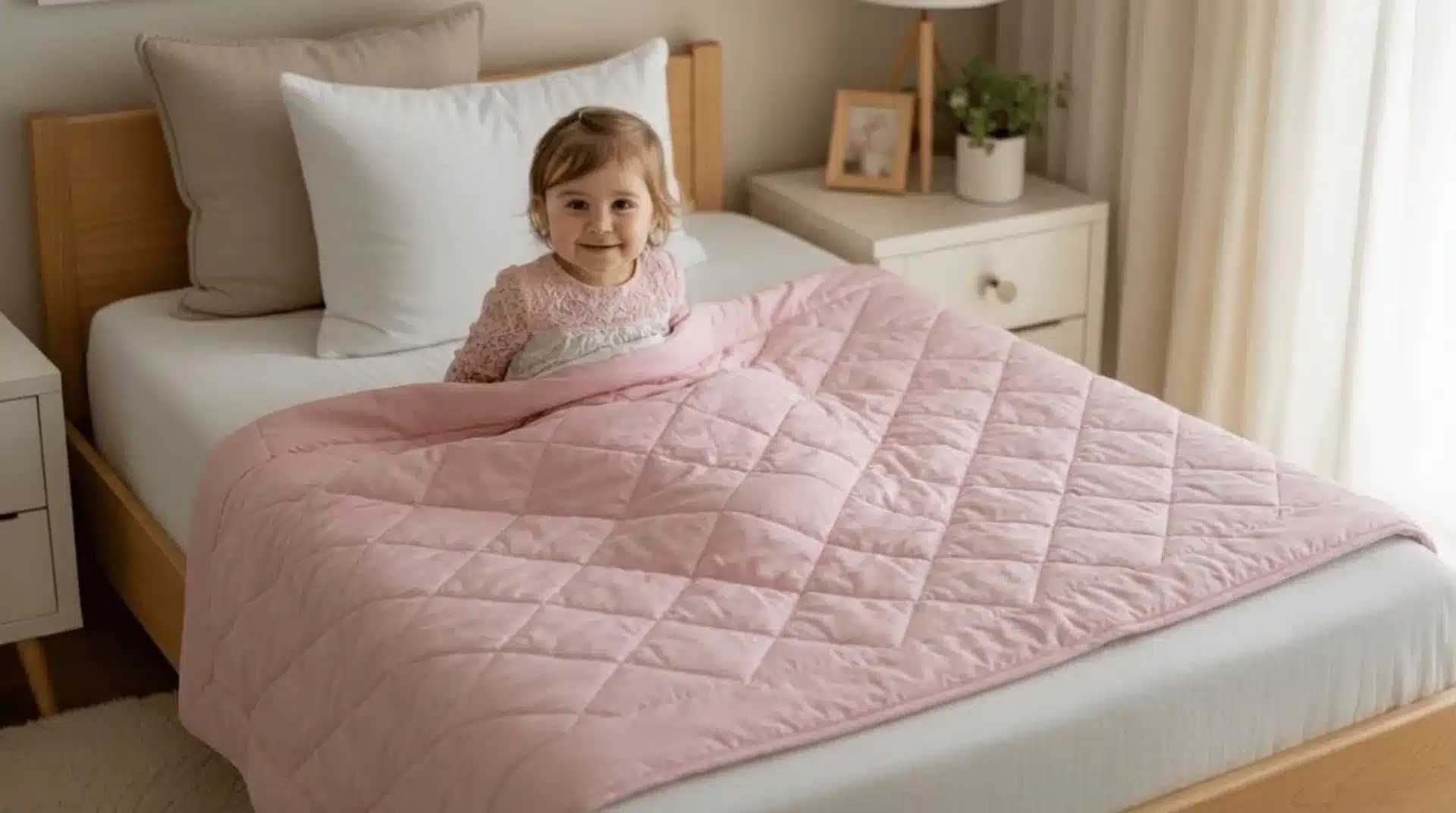
For parents who think long-term, these generously sized quilts grow alongside your child.
Once your baby crosses the 12-month mark and your pediatrician gives the all-clear for blanket use during sleep, this size becomes a genuine daily workhorse.
They provide coverage that lasts well beyond the infant stage into preschool years. Consider these advantages of the larger size:
- Size: 40″ x 50″ or 42″ x 54″
- Long-term investment: Grows with your child from infancy through preschool
- Generous coverage: Provides plenty of blanket for toddler beds and snuggling
- Eliminates replacement: Starting with this size means no need for quick upgrades
- Heirloom potential: Perfect dimensions for creating cherished keepsake pieces
While technically larger than traditional baby quilts, choosing this size from the start extends usability and creates a meaningful item your child can treasure for years.
Baby Quilt Size Chart by Age: Quick Reference
Not sure which size fits your baby’s current developmental stage? Use this age-based baby quilt size chart alongside the purpose-based guide above for a more specific decision:
| Baby’s Age | Recommended Quilt Size | Best Used For |
|---|---|---|
| Newborn – 3 months | 24″×28″ or 30″×30″ | Car seat, bassinet, loose swaddling |
| 3 – 6 months | 30″×40″ | Stroller, everyday outings, daytime naps |
| 6 – 12 months | 36″×52″ | Supervised tummy time, crib decor, play mat |
| 12 months – 3 years | 40″×50″ or 42″×54″ | Toddler bed, bedtime blanket, travel quilt |
Note for Parents of Premature Babies: Premature or small-for-gestational-age infants may shift inside standard newborn quilts, creating unnecessary risk. Consider sizing down by 2–4 inches and reassessing at corrected-age milestones rather than sizing up too early.
Choosing the Right Baby Quilt Size
Selecting the perfect baby quilt size requires considering several practical factors that affect both immediate functionality and long-term usability. Start by determining the quilt’s primary purpose: 36” x 52” works best for cribs, 30” x 40” for strollers, and 40” x 40” for tummy time.
Think about longevity: 40” x 50” toddler quilts last from birth through the preschool years, eliminating the need for replacements. Consider your baby’s growth trajectory.
Larger babies outgrow standard sizes faster, so factor in percentile rankings when choosing dimensions. If you’re making a gift, size up slightly to offer more versatility and ensure maximum usability.
Calculate your fabric yardage carefully, as standard quilting fabric measures 42 “-44” wide, which directly affects the size of the quilt you can realistically create.
Tips to Measure and Adjust Quilt Size
Getting your baby quilt measurements right ensures a perfect fit for its intended purpose. Follow these practical guidelines to measure accurately and adjust dimensions when needed for optimal results.
- Crib Quilts: Measure the mattress first and add 8–12 inches to both length and width. For example, a 28″ x 52″ mattress requires a 36″ x 60″ finished quilt.
- Stroller & Car Seats: Measure from the start to the endpoint, accounting for curves and contours.
- Adding Borders: Use a single wide border or multiple smaller ones to adjust size. A 4″ border added to a 30″ x 40″ quilt results in a 38″ x 48″ finished size.
- Seam Allowances: Always account for ¼” per seam, as this can reduce the finished size significantly if overlooked.
- Using Scraps: The border technique works perfectly for incorporating additional fabrics, making it a great way to use leftover materials you love.
Understanding how big a baby quilt should be comes down to proper planning and accurate measuring. These measurement techniques help you create quilts that fit beautifully, serve their purpose well, and meet expectations every time.
Essential Factors When Making a Baby Quilt
Creating a successful baby quilt involves thoughtful planning beyond just selecting the right dimensions. These key factors ensure your quilt is both beautiful and functional for your little one. Key considerations:
- Design and patterns: Simpler designs showcase fabrics better and complement nursery décor
- Fabric selection: 100% cotton for breathability, flannel for warmth, minky for softness
- Weight and thickness: Lightweight batting for strollers, thicker batting for cribs
- Prewash fabrics: Prevents shrinkage and removes manufacturing residues
- Safety: Avoid excessive thickness that poses suffocation risks
Following these guidelines ensures your baby quilt provides comfort and safety.
If you’re interested in making your own baby quilt, check out this YouTube video tutorial for a step-by-step process by clicking on the YouTube icon above.
Where to Buy Baby Quilts and What to Check When Buying
You can find baby quilts at various retailers, both online and in physical stores. Online stores offer variety and convenience, which works great for my busy schedule, while physical stores let you feel the fabric and assess quality.
Here’s a quick guide on where to buy and what to check when shopping for a baby quilt:
| Retailer | Type of Quilts | What to Check |
| Amazon | Wide variety, multiple price points | Check customer reviews for fabric quality, durability, and size accuracy |
| Etsy | Handmade, unique quilts | Look for craftsmanship and high-quality materials |
| Target | Affordable options, mass-produced quilts | Ensure fabric softness and secure stitching |
| Macy’s | Budget and premium options | Verify size, stitching, and fabric quality |
| Local Craft Fairs/Markets | Custom and handmade quilts, artisanal | Evaluate craftsmanship, ask for custom sizes if needed |
When purchasing a baby quilt, prioritize fabric quality for comfort and durability. Ensure the stitching is secure, and check that the size fits your crib or stroller. Finally, select pretty patterns that complement your baby’s room.
Creative Baby Quilt Ideas and Patterns
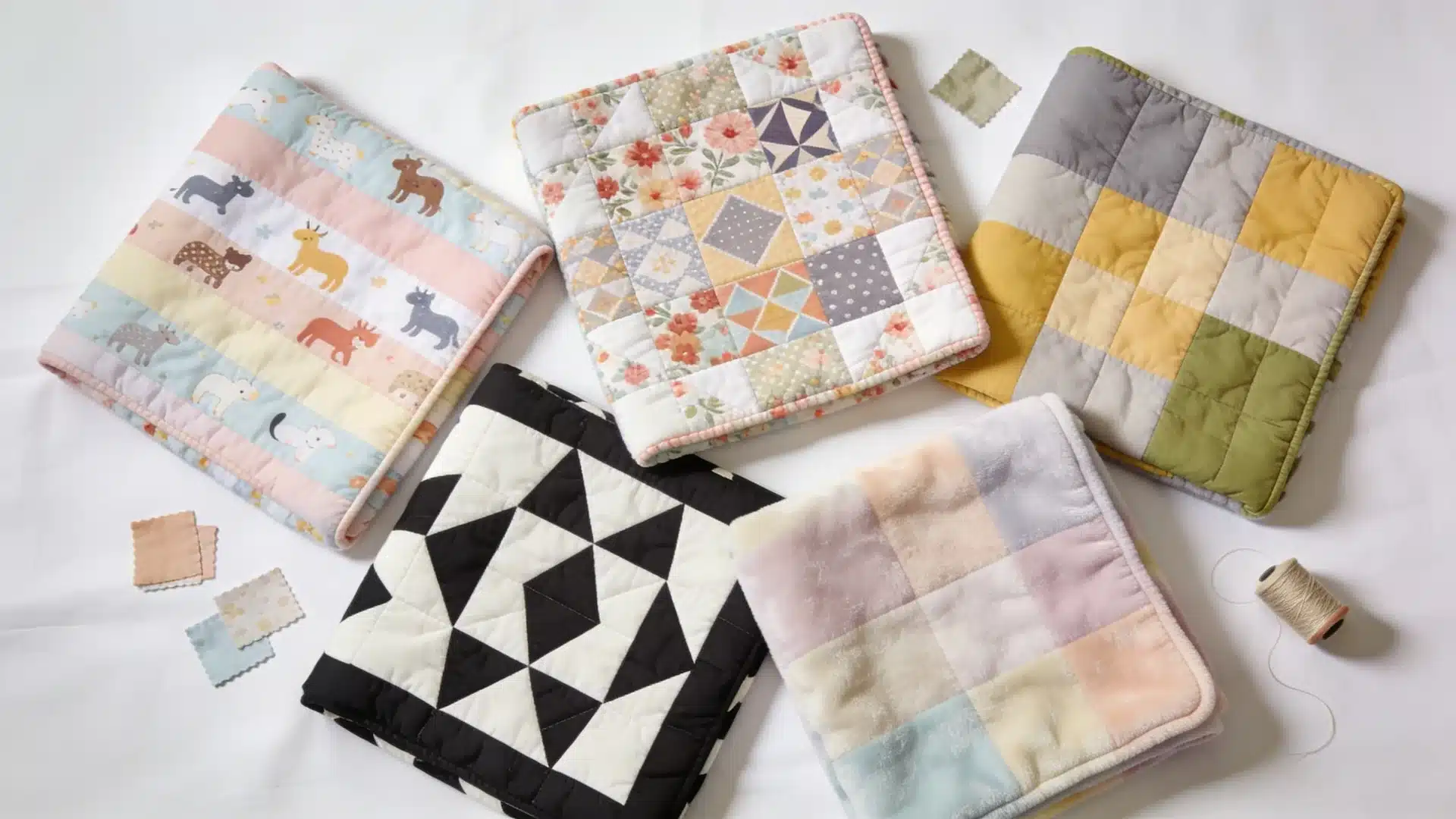
If you’re new to quilting, I recommend starting with simple patterns that don’t require precise matching.
Strip quilts made with 2.5” or 5” fabric strips create incredible results with minimal effort, while basic patchwork designs using squares let you easily showcase multiple coordinating fabrics.
Your fabric choices set the tone for the entire project. I love cotton prints featuring whimsical animals, geometric shapes, or soft florals, all with an age-appropriate design. Flannel adds extra warmth that babies adore.
When choosing colors, think about versatility. While pastels remain classic, I encourage you not to shy away from bolder hues. Gender-neutral palettes in grays, yellows, and greens work beautifully for any baby.
Remember that high-contrast designs are easier for newborns to see, so I always incorporate black, white, and bold colors alongside softer tones; it’s developmentally beneficial, too.
Final Words
Selecting the right baby quilt size comes down to understanding how you’ll use it and how long you want it to last. From compact 24” x 28” car seat quilts to generous 42” x 54” toddler sizes, each baby quilt dimension serves specific purposes in your baby’s life.
I’ve found the most success when I consider the baby’s current needs while planning for growth.
Whether creating a handmade jewel or purchasing a ready-made quilt, I always recommend paying attention to the baby quilt’s size, fabric quality, and construction to ensure it remains comfortable and warm for years to come.
Your thoughtful choice today becomes tomorrow’s cherished keepsake, holding precious memories. Drop a comment below if you have any questions.