

Filing a VA disability claim can be overwhelming, especially when it involves complex conditions like sleep apnea secondary to PTSD.
If you’re a veteran dealing with both of these issues, you might wonder how to file your claim, what documents are needed, and what the process looks like. Here, I’ll walk you through everything you need to know about filing a claim for sleep apnea related to PTSD.
From gathering the right documents to understanding the steps in the process, I’ll break it all down so you feel confident and prepared.
What Is Sleep Apnea and How Is It Linked to PTSD?
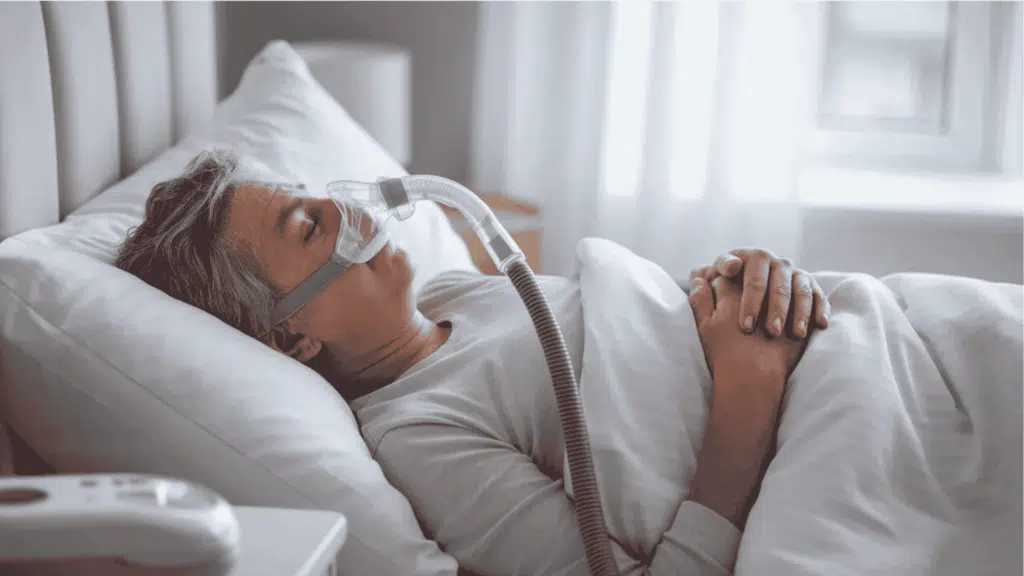
Sleep apnea is a sleep disorder in which your breathing stops and starts while you sleep. Some people snore loudly, wake up choking, or feel tired all day, even after a full night’s sleep.
PTSD (Post Traumatic Stress Disorder) can be linked to sleep apnea because PTSD often comes with high stress, anxiety, and broken sleep. Over time, poor sleep and constant stress can worsen breathing problems at night.
Some veterans also gain weight from stress, medications, or low activity, and weight gain can raise the risk of sleep apnea, too.
This is why many veterans end up with sleep apnea secondary to PTSD, meaning PTSD came first, and sleep apnea developed or got worse after.
Sleep Apnea Secondary to PTSD: How to File
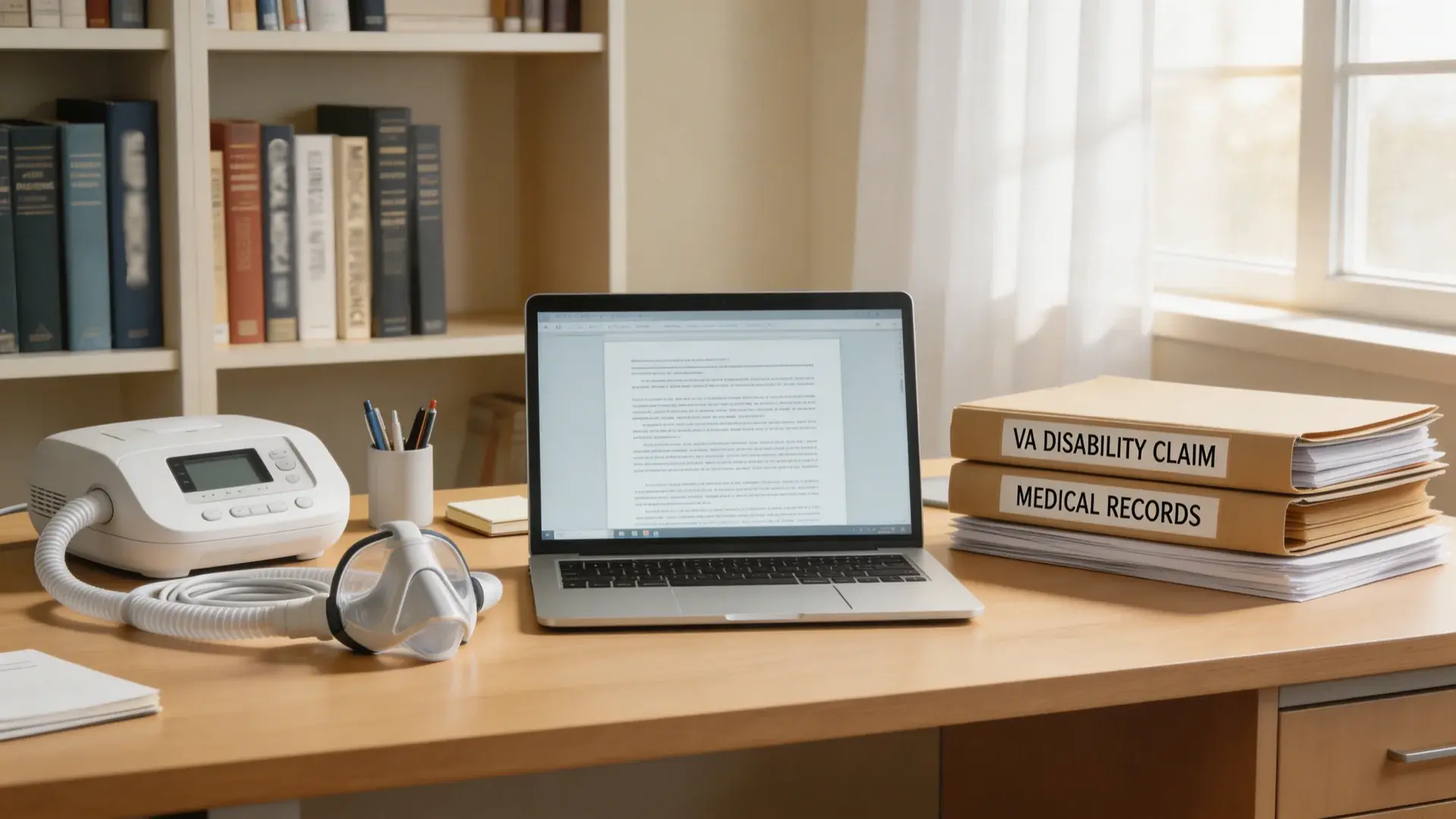
Filing a secondary VA claim means you must show PTSD is service-connected and it caused or worsened sleep apnea. The steps below keep it simple, so you know what to collect, what to file, and what to expect next.
Step 1: Gather Necessary Documentation
Start by collecting your PTSD rating decision and mental health records showing ongoing symptoms and treatment. Then, gather all sleep apnea documentation, including sleep study results, diagnosis notes, and CPAP prescription records.
Ask your doctor for a nexus letter that clearly links your PTSD to your sleep apnea. It must state that sleep apnea is “at least as likely as not” caused by your service-connected PTSD.
A strong letter cites peer-reviewed research rather than relying solely on clinical opinion. Also, request a Disability Benefits Questionnaire for Sleep Apnea to speed up processing
Step 2: Complete the VA Disability Application
To file your claim, use VA Form 21-526EZ, making sure to select sleep apnea as a secondary condition to PTSD. In your application, list relevant dates, clinics, doctors, and treatments, so the VA can quickly request any needed records.
When uploading your evidence, make sure to submit the sleep study, CPAP records, nexus letter, and your personal statement together in a neat, organized manner.
Step 3: Submit the Claim and Await a Decision
You can submit your claim online via VA.gov, through the mail, or with help from an accredited VSO. After submission, watch for any letters from the VA requesting additional exams or evidence, and be sure to respond before the given deadlines.
As part of the process, you may need to attend a C&P exam, where you’ll explain your symptoms, CPAP use, and how your PTSD impacts your sleep.
How Does the VA Rate Sleep Apnea Secondary to PTSD?
The VA can rate sleep apnea even when it is caused or worsened by a service-connected condition like PTSD. Getting the right VA rating for sleep apnea secondary to PTSD comes down to showing a clear medical link and meeting the VA rating rules for sleep apnea.
| Rating | Criteria (Diagnostic Code 6847) | Common Symptoms | Treatment Required | Monthly Compensation |
|---|---|---|---|---|
| 100% | Chronic respiratory failure with carbon dioxide retention, cor pulmonale, or requires tracheostomy | Severe breathing failure, heart complications | Tracheostomy or intensive medical care | Highest tier compensation |
| 50% | Requires use of a breathing assistance device such as CPAP, BiPAP, or APAP | Loud snoring, frequent waking, daytime fatigue | CPAP, BiPAP, or APAP machine | Mid-to-high tier compensation |
| 30% | Persistent daytime hypersomnolence or excessive sleepiness | Excessive daytime sleepiness, poor concentration | Lifestyle changes, possible medication | Mid-tier compensation |
| 0% | Asymptomatic but with documented sleep-disordered breathing | No active symptoms despite diagnosis | No active treatment required | No monetary compensation |
The most common rating is 50% under Diagnostic Code 6847, currently granted to veterans who require a CPAP machine.
Note: Proposed 2025 VA rule changes may eliminate the automatic 50% for CPAP use, instead tying the rating to treatment effectiveness or tolerance. Veterans rated before these changes take effect will likely be grandfathered in under the original criteria.
Tips to Improve Your VA Claim

A successful VA claim relies on clarity and organization. Ensuring your PTSD is service-connected is essential before moving forward with your sleep apnea claim.
- Stay Organized: Keep all records well-organized and easy to follow, including sleep studies, CPAP records, and recent treatment notes.
- Clear Personal Statement: Include a personal statement explaining how PTSD affects your sleep and how your sleep problems have evolved.
- Avoid Irrelevant Paperwork: Only submit documents directly related to sleep apnea or PTSD to avoid unnecessary delays.
- Attend Appointments and Respond to VA Letters: Missing appointments or deadlines can significantly harm your claim. Always stay on top of required exams and communications.
- Make Copies of Everything: Always keep copies of all documents and forms submitted to the VA for future reference.
By following these tips, you’ll set yourself up for a smoother and more successful VA claim process. Stay focused and organized, and remember that clarity makes all the difference.
What Happens After You File the Claim?
After you submit your claim, the VA reviews your forms and evidence and may request more records. Many veterans are scheduled for a C&P exam, which is a medical appointment used to evaluate their condition.
At the exam, you’ll be asked about symptoms, daily limits, and treatment like CPAP use. The VA then compares your medical evidence and exam results to its rating rules to decide your percentage.
You’ll receive a decision letter explaining the outcome, your rating, and the effective date. If the claim is denied or the rating feels too low, you can choose an appeal option and submit additional information.
Benefits You May Receive After VA Approval
If your sleep apnea claim is approved as secondary to PTSD, you may receive benefits such as monthly compensation based on your rating percentage.
- Monthly Disability Compensation: Once approved, you’ll receive monthly disability compensation according to the severity of your condition and VA rating.
- Increased Combined Rating: Your sleep apnea claim may boost your overall VA disability rating, thereby increasing your compensation.
- VA Health Care: You may qualify for VA health care, including treatments and supplies like CPAP support to help manage your condition.
- Priority Group Eligibility: A higher rating may make you eligible for priority groups, ensuring quicker access to certain services and benefits.
- Potential Tax Benefits: Some states offer tax breaks for veterans with higher disability ratings, which may apply to your situation.
These benefits can significantly improve your quality of life, so be sure to review your decision letter carefully for all granted entitlements.
Final Thoughts
Hope this helped simplify the process of filing your VA disability claim for sleep apnea secondary to PTSD.
While it may seem like a lot, taking it one step at a time and gathering the right evidence will make all the difference.
Whether it’s understanding the rating system, filling out forms, or knowing what to do after you’ve submitted your claim, you now have the knowledge you need.
If you’re ready, start your claim today and don’t hesitate to reach out to a VA representative or veteran service organization for extra help. Take the first step today!