
Let’s start with a question. How many times have you treated sleep like something you’ll “catch up on later”? Especially during times like these, when we’re all in a hurry living busy lives. To make things worse, even when we have free time, we struggle to relax thanks to social media.
We stay up late doomscrolling TikTok, watching “one more episode,” then wake up tired and act surprised. As if our body didn’t send us 14 warning signals the night before.
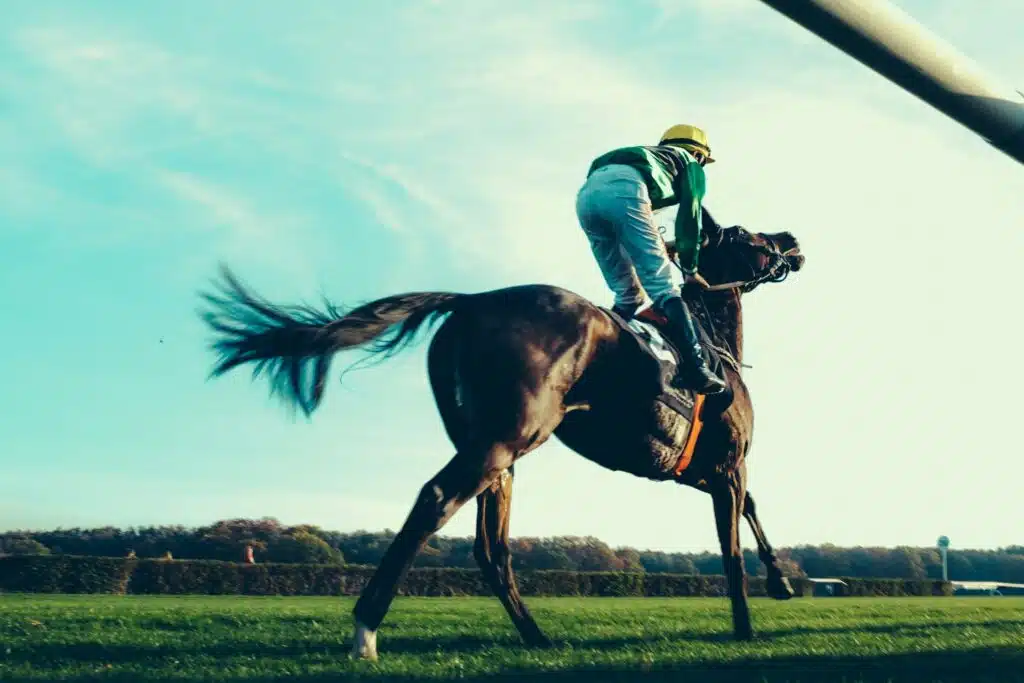
But in the world of racehorses, recovery isn’t treated like a bonus. It’s part of the program. Yes, champion racehorses are trained for speed, endurance, and peak performance, but none of that would really work if the horse were tired or if the horse didn’t recover properly.
Trainers understand something that many humans still ignore: You don’t get stronger if you push hard all the time. You start to see improvement when the body has time to repair after the work is done.
Okay, we’re not horses (please don’t start sleeping standing up in the kitchen), but there are real lessons we can learn from them.
Recovery Is Not Laziness
The first lesson is actually quite simple, yet most people still struggle with it. The first lesson is perception. You have to understand that rest is not a weakness.
Let’s take elite racehorses that will participate in big events like the Preakness Stakes. They don’t run at full speed every day, pushing their bodies to the limits. If they do that, trainers will notice that their performance will drop and the risk of injury will rise.
That’s why elite racehorses follow structured programs, with lighter days, harder workouts, trotting, walking, and recovery days when all they do is lie down. That’s why handicappers analyze the horse’s training regime before a big race like the Preakness Stakes. They look for steady routine, and they examine if the horse looks tired. That’s why only horses with the best routines are included in the Preakness expert picks.
When you think about it, humans do the same thing, just in a different way. We overload ourselves with work, stress, caffeine, late meals, and late party nights instead of sleeping and then expect one random early night to fix everything.
Well, it doesn’t work like that.
Sleep falls in the same category as training, not like the leftover part of the day. Just because you don’t pump muscle doesn’t mean that it’s not necessary.
Consistency Beats the “Perfect” Night
Horses work best when they have a strict routine. We’re talking feeding times, exercise times, turnout, grooming, and rest; every day is structured, organized, and smooth. This not only improves their performance but also reduces stress.
Humans work the same way. You should treat your body like a rhythm. If you go to sleep at wildly different times, then you have a problem. Your internal clock will struggle to stay stable.
So, going to bed at roughly the same time every day and waking up at the same time is the best strategy if you want to have more energy. Yes, it sounds boring, but it is very effective.
You Need a Wind-Down Period
Racehorses don’t just finish a workout and go straight back to “normal.”
There’s a cool-down process. Walking, calming the body, lowering intensity, checking how the horse responds. The idea is to transition from stress to recovery.
Humans need the same thing, but we usually do the opposite.
We go from bright screens, emails, arguments, work stress, or doom-scrolling directly into bed and then wonder why the brain is still running like it’s in the final stretch of the Kentucky Derby.
Your body needs a signal that the day is ending.
That doesn’t mean you need a two-hour wellness ritual with candles, whale sounds, and a robe you only wear for dramatic effect. It can be simple. Dim the lights. Stop checking work. Put the phone away earlier. Take a warm shower. Read something that doesn’t make you angry.
Environment Matters More Than Motivation
A racehorse’s environment is controlled for a reason.
Stable conditions matter. Noise, temperature, bedding, feeding routines, stress levels—these things affect comfort and recovery. A good trainer doesn’t just say, “Well, the horse should learn to relax.” They adjust the environment.
That’s a lesson humans need badly.
If your bedroom is bright, noisy, too warm, full of screens, and basically functions as a second office, your sleep is already fighting uphill. You need to work on your bedroom environment.
You don’t need to make your room look like a luxury hotel, but you do need to make it easier for your body to sleep. Keep it cool, dark, and quiet when possible. Use your bed mostly for sleep, not as a dining table, cinema, office, and emotional crisis center all in one.
Don’t Ignore Stress Signals
Good trainers pay attention to small changes.
If a horse is eating differently, moving differently, acting nervous, recovering slower, or showing signs of discomfort, they don’t ignore it. Small changes can signal bigger problems.
People are not as good at this.
We ignore tiredness, poor mood, headaches, low focus, irritability, and that strange 3 PM crash where coffee becomes a personality trait. Instead of seeing those signs as feedback, we push through.
But sleep problems often show up before they become obvious.
If you keep waking up tired, struggling to fall asleep, or relying on caffeine just to feel human, your body is telling you something. The goal isn’t to panic. It’s to pay attention earlier.
So, create a routine, try to stick to it, and see how you’ll feel much more energized.