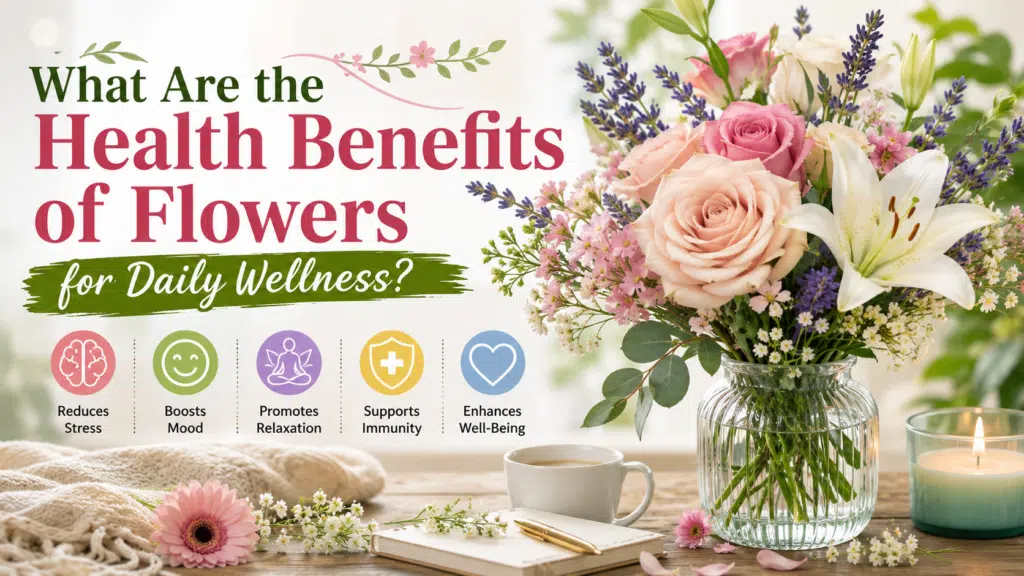
Flowers are the reproductive structures of flowering plants, and their value lies in their visual beauty, scent, colour, touch, care routines, and contact with nature. What are the health benefits of flowers? The main health benefits of flowers include improved mood, reduced stress, enhanced emotional well-being, stronger recovery support, better attention, and a more restorative indoor environment.
What Are the Health Benefits of Flowers?
The health benefits of flowers are psychological, physiological, and social benefits that occur when a person sees, smells, gives, receives, grows, or cares for flowers. Flowers affect health through sensory exposure, attention restoration, emotional signalling, and nature contact.
What are the health benefits of flowers in practical terms? Flowers support mental calm, emotional warmth, recovery comfort, and a more pleasant living space. The benefit depends on the person, flower type, scent strength, allergy status, and setting.
Flowers are not a medical treatment. Flowers work best as a supportive wellness element beside sleep, movement, nutrition, social contact, and professional care when mental health symptoms are severe.
How Do Flowers Support Mental Health?
Flowers support mental health and enhance well-being by giving the brain a positive natural stimulus. Flowers provide color, shape, fragrance, and living texture, which help to reduce stress and boost mood by drawing attention away from negative signals. This pleasant sensory input promotes relaxation and helps counteract the effects of stress, loneliness, low mood, and mental fatigue on daily function.
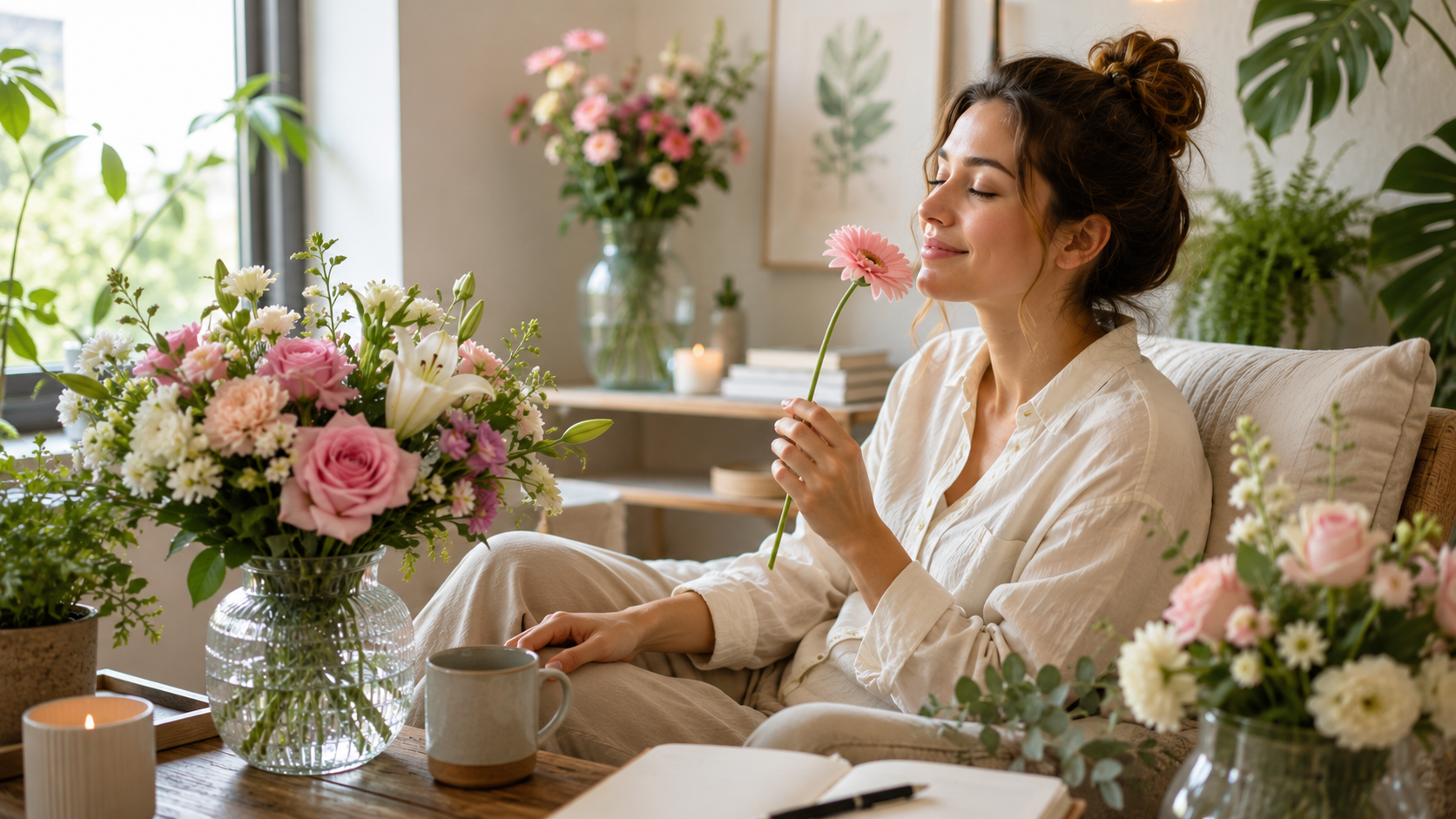
While flowers primarily affect mental health, they also contribute to a supportive environment that subtly bolsters immunity by promoting overall well-being. Horticultural therapy, which uses plants and gardening activities, demonstrates these benefits by supporting emotional well-being, purpose, and rehabilitation.
Besides, a 2020 study on horticultural therapy reported emotional benefits such as stress reduction, mood stabilization, and increased sense of purpose.
For a practical takeaway, place fresh flowers where you will see them daily, such as a work desk, bedside table, or dining table. Choose low-scent flowers if fragrance causes headaches or allergy symptoms. Meet a professional florist in Miami to help you design your space.
Do Flowers Reduce Stress?
Flowers reduce stress in certain settings because natural elements shift attention and create a calmer sensory environment. The body responds to the environment through heart rate, blood pressure, muscle tension, and stress hormone pathways.
Flower color also matters. A 2021 study on flower color and well-being examined how white, red, and yellow flowers affected psychological and physiological responses. The study supports the idea that flower color influences emotional and body-based responses.
What are the health benefits of flowers for stress? Flowers create a visible cue of safety, care, and beauty. That cue helps the nervous system move away from a state of constant alertness under suitable conditions.
The practical step is to use flowers during periods of high stress. A small vase near a screen, a reading area, or a kitchen counter gives the mind a short, nature-based break during the day.
Can Flowers Improve Mood and Happiness?
Flowers improve mood by creating a positive emotional association. A bouquet signals care, celebration, remembrance, sympathy, or gratitude. This social meaning makes flowers different from neutral decor.
Plants and natural views also support emotional health. UK Research and Innovation reported that more time in nature has beneficial mental health effects, and regular views of green space provide measurable health value.
What are the health benefits of flowers for mood? Flowers increase pleasant affect, reduce emotional dullness, and create a warmer room atmosphere. The effect is strongest when flowers carry personal meaning, such as a favourite colour, a seasonal bloom, or a gift from another person.
Use flowers as part of a mood routine. Put flowers in a visible place in the morning. Replace wilted stems promptly because decaying flowers reduce the environment’s restorative value.
Do Flowers Help Physical Recovery?
Flowers help physical recovery as a supportive environmental factor, especially in clinical or recovery spaces. Flowers do not heal tissue directly. Flowers improve the recovery environment through comfort, distraction, and positive sensory input.

A study by Park and Mattson on patients recovering from abdominal surgery found that hospital rooms with plants and flowers were associated with reduced postoperative analgesic intake, lower systolic blood pressure, lower heart rate, lower pain, lower anxiety, lower fatigue, and more positive feelings.
The American Society for Horticultural Science also summarized this research and stated that flowering plants supported post surgery recovery outcomes for abdominal surgery patients.
Are Some Flowers Better for Mental Health Than Others?
Some flowers are better for mental health when they match the user’s sensory needs, cultural meaning, and environment. Color, scent, pollen level, maintenance needs, and personal memory affect the outcome.
Bright flowers such as sunflowers and yellow tulips suit energy focused spaces. Soft flowers such as roses, lilies, and orchids suit calm spaces. Low scent flowers suit offices, hospitals, and allergy-sensitive homes.
The evidence does not prove one universal best flower for mental health. The better choice is the flower that creates comfort without irritation. Flowers for mental health work best when the person enjoys the flower and can maintain it easily.
Choose flowers by function. Use calming colors in bedrooms. Use brighter colors in social areas. Use low-pollen types near people with allergies.
Conclusion
Flowers provide significant health benefits, including enhanced mood, stress relief, improved emotional well-being, and support for attention and physical recovery. While they are a valuable wellness tool, they are not a medical substitute and require precautions for those with allergies. For high-quality arrangements that promote these benefits, Neroli Blume, the Miami Florist, offers luxury floral designs tailored to any space.
FAQs
1. What Are the Health Benefits of Flowers for The Brain?
Flowers support the brain through pleasant visual input, attention restoration, emotional association, and nature contact. These effects support mood, calm, focus, and mental recovery in suitable environments.
2. Are Flowers Good for Mental Health?
Flowers are good for mental health as a supportive wellness tool. Flowers for mental health work through color, scent, care routines, and positive emotional meaning. They do not replace therapy or medication.
3. How Long Do Flowers Affect Mood?
Flowers affect mood when the person sees, smells, or cares for them. The benefit lasts longer when flowers stay fresh, visible, and personally meaningful.
4. Which Flowers Are Best for Stress Relief?
Low-scent flowers with calming colors are better for stress relief in bedrooms, offices, and care spaces. Orchids, roses, tulips, and chrysanthemums suit many indoor settings, depending on allergy status.
5. Are Fresh Flowers Better than Artificial Flowers?
Fresh flowers provide scent, texture, natural change, and care routines. Artificial flowers suit people with allergies, asthma, pet safety concerns, or hospital restrictions.
6. Can Flowers Help with Anxiety?
Flowers help with anxiety as a calming environmental support in some cases. Severe anxiety requires professional evaluation, especially when anxiety disrupts sleep, work, relationships, or safety.