
A warm bedroom has a way of changing the pace of the evening. The room feels softer, the light is gentler, and the space seems to invite you to slow down before you even get into bed. That feeling rarely comes from one paint color or one decorative trend. It is usually the result of several small choices working together: muted color, tactile fabrics, thoughtful lighting, natural materials, comfortable airflow, and enough visual breathing room for the space to feel settled rather than busy.
The most inviting bedrooms also balance appearance with physical comfort. A room can photograph beautifully and still feel too warm, too bright, too cluttered, or too noisy at bedtime. Designing for both atmosphere and rest creates a space that feels cozy throughout the day and genuinely relaxing at night.
Build the Room Around a Warm, Muted Color Palette
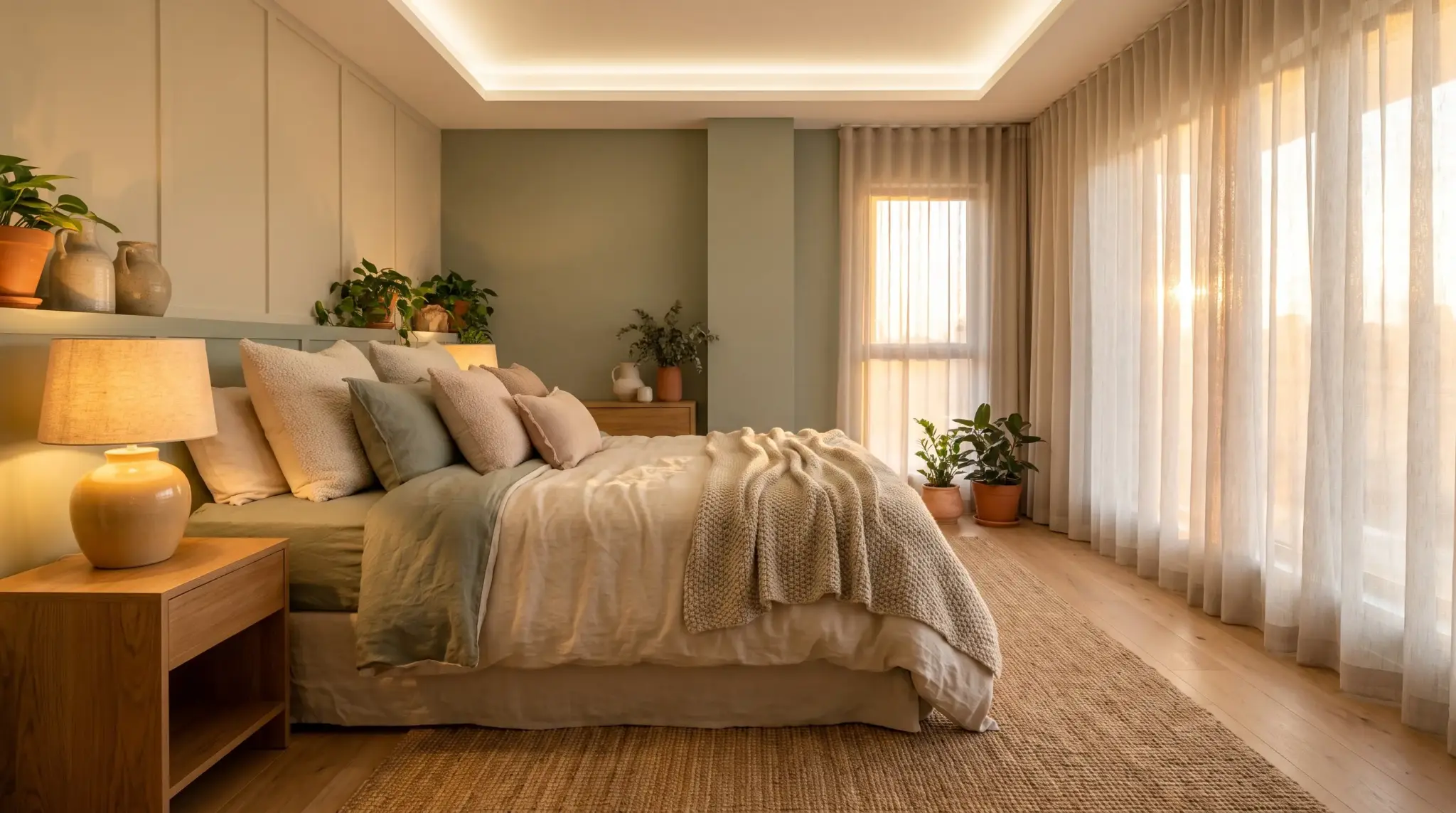
Color sets the emotional tone of a bedroom before furniture or accessories enter the picture. Warm whites, cream, soft beige, taupe, mushroom, and muted warm gray make a calm base because they reflect light without feeling stark. They also give bedding, wood tones, and textiles room to add character without making the space feel visually crowded.
For more depth, add earthy accent colors in smaller doses. Rust, terracotta, dusty rose, olive green, camel, and soft brown work especially well in cushions, throws, artwork, lampshades, or an occasional chair. The goal is not to make every surface warm-toned, but to repeat a few related colors so the room feels intentional.
Undertones matter more than many people expect. A beige with a blue or cool gray undertone can read colder than a warmer taupe in the same light. Before committing to a wall color, look at samples in morning light, late-afternoon light, and under your bedroom lamps. A color that feels comfortable at night is usually more important than one that looks perfect only in daylight.
Layer Textures Instead of Filling the Room With Decor
Cozy rooms often feel rich because of texture, not because they contain more objects. Linen curtains, cotton bedding, a boucle chair, a wool rug, a knit throw, and natural wood each react to light differently. Together they create visual depth while keeping the color palette calm.

This is also an easy way to avoid the common mistake of trying to make a bedroom cozy by adding more and more accessories. Too many small objects, accent pillows, wall pieces, and decorative baskets can make the room feel staged rather than restful. A few substantial textures usually create more warmth than a large collection of small decorations.
One useful approach is to keep large surfaces simple and let touchable materials do the work. A plain upholstered headboard, washed-linen bedding, a textured throw, and a soft rug can make a bedroom feel complete without needing every corner to hold something decorative.
Make the Bed the Soft Visual Center of the Room
In most bedrooms, the bed naturally becomes the visual center, so it is the easiest place to establish a warm, restful mood. Layering works best when the bed still looks comfortable enough to use. Breathable sheets, a lightweight quilt or duvet, two or three pillow textures, and one throw at the foot of the bed are usually enough.
A cozy bedroom does not require heavy bedding in every season. During warmer months, linen or cotton can keep the bed visually soft without trapping unnecessary heat. Warmth can come from color and texture rather than thickness. In cooler weather, a wool or knit layer can be added without changing the overall look of the room.
Headboard scale also matters. A softly upholstered or simple wooden headboard can frame the bed without overpowering it. In a smaller room, a tall or overly ornate headboard may make the wall feel crowded, while a low-profile design can preserve a quieter visual balance.
Use Layered Lighting Instead of One Harsh Ceiling Light
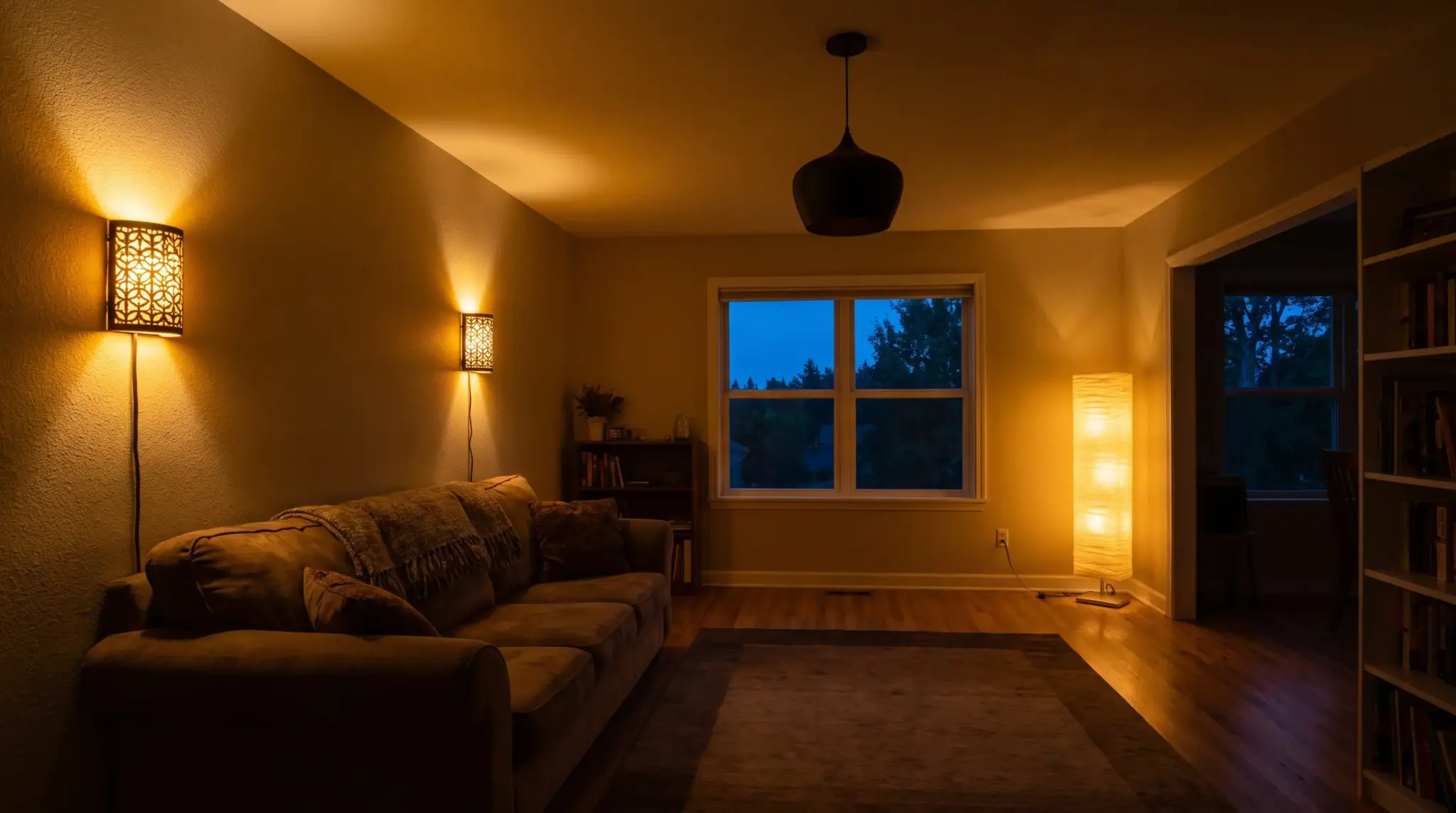
Lighting has an enormous effect on whether a bedroom feels warm or clinical. Relying on one bright overhead source can flatten textures and create hard shadows, especially at night. A more relaxing room uses several lower-intensity sources that can be adjusted as the evening progresses.
Bedside lamps, shaded sconces, soft indirect lighting, and dimmable fixtures create a more flexible atmosphere. Warm white light in the 2700K to 3000K range usually complements cream, wood, linen, and earthy colors particularly well. It also makes it easier to keep the room visually soft without turning it too dark.
The goal is not to eliminate overhead lighting altogether. It is to keep it from doing all the work. A ceiling fixture can provide useful general illumination, while bedside or wall lighting handles reading and evening wind-down time.
Treat the Ceiling as Part of the Bedroom Design
When people decorate a bedroom, they usually focus on the bed, wall color, rug, curtains, and nightstands. The ceiling is easy to overlook, even though it becomes especially visible when you are lying down. A bulky, overly bright, or poorly proportioned fixture can interrupt the sense of calm created elsewhere in the room.

Choose ceiling fixtures that feel proportionate to the room, coordinate with the main finishes, and provide practical light without becoming the dominant visual feature. In rooms where both overhead illumination and air movement are useful, ceiling fans with lights can combine two functions in one ceiling fixture, helping the room feel less visually crowded than using several separate overhead elements.
The aim is not to make the ceiling a focal point. It is to let the ceiling support the rest of the room quietly, with the right scale, finish, and amount of light.
Bring in Natural Materials Without Making the Room Feel Rustic
Wood, rattan, linen, ceramics, and plants can make a bedroom feel grounded and lived-in, but natural materials do not automatically push a room toward farmhouse or bohemian style. The effect depends on shape, finish, and how many materials compete for attention.
For a cleaner look, choose natural materials with simple lines. A warm oak nightstand, woven basket, linen shade, and one healthy plant may be enough. Repeating the same wood tone in two or three places makes the room feel connected without looking overly coordinated.
Natural materials are especially useful in neutral bedrooms because they prevent cream and beige palettes from feeling flat. Their small variations in grain, weave, and texture give the room depth without requiring stronger colors.
Keep the Bedroom Cozy Without Making It Feel Cluttered
Cozy and crowded are not the same thing. A restful bedroom needs a little negative space around the bed, nightstands, and main circulation paths. Furniture that blocks movement or presses too tightly against every wall can make even a large room feel uncomfortable.
Instead of filling every surface, choose fewer pieces with enough presence to feel intentional. One larger artwork can be calmer than a gallery wall of many small frames. A substantial rug can visually anchor the bed better than several smaller floor coverings. Two or three well-chosen pillows can look more inviting than a stack that has to be moved every night.
A good rule is to let some surfaces remain quiet. Warmth comes from layering materials and light, not from using every available inch.
Think About Temperature, Airflow, and Noise as Part of Cozy
A bedroom can look warm and inviting in photographs yet still feel uncomfortable once you try to sleep in it. Physical comfort matters just as much as color and styling. A room that feels stuffy, overly warm, too cold, or mechanically noisy can undermine the relaxing atmosphere created by soft fabrics and warm light.
Gentle air movement can make a room feel more comfortable without relying on aggressive cooling. It can also help the bedroom feel less stagnant during transitional seasons when full air-conditioning may be unnecessary. The important part is keeping that airflow subtle enough that it supports rest rather than becoming a distraction.
Because bedrooms are especially sensitive to background noise, quiet ceiling fans with lights can be worth considering when gentle air circulation, overhead lighting, and a calmer sleep environment all need to work together. Whatever cooling method you use, the goal should be stable comfort rather than a constant cycle of feeling too warm and then too cold.
Use Curtains, Rugs, and Upholstery to Soften Light and Sound
Soft furnishings affect more than appearance. Full-length curtains can filter strong daylight, provide privacy, and soften the hard edges of windows. Rugs add warmth underfoot and can reduce the sharpness of sound in rooms with wood or tile flooring.
Upholstered pieces such as a headboard, bench, or reading chair can have a similar effect. They break up hard surfaces and make the room feel quieter both visually and acoustically. In a bedroom, that sense of softness matters because the room is experienced at close range, often in low light and near silence.
The most comfortable result usually comes from mixing soft and firm surfaces rather than trying to make everything plush. Wood furniture, a ceramic lamp, a woven basket, and a fabric headboard can feel balanced because each material contributes something different.
Make the Room Personal Without Turning It Into Visual Noise
A warm bedroom should still feel like it belongs to the person who sleeps there. A few framed photographs, meaningful books, a piece of artwork, a favorite ceramic object, or a small collection displayed together can make a room feel familiar rather than styled for a catalog.
The key is editing. When personal objects are scattered across every surface, they can become visual noise. Grouping a few related pieces and leaving open space around them makes each one feel more deliberate. Personal style comes through more clearly when the room is not competing for attention.
Adapt the Cozy Look to the Size of the Bedroom
Small bedrooms benefit from restraint. Lighter warm colors, compact furniture, vertical storage, and one or two strong textures can create warmth without making the room feel tight. Hanging curtains closer to the ceiling can make walls feel taller, while a correctly sized rug can visually connect the bed and surrounding furniture.
Larger bedrooms can handle deeper colors, larger rugs, a reading chair, or an additional lighting layer, but they do not need to be filled simply because space is available. Leaving some open floor area helps a large room feel calm rather than empty or over-furnished.
Scale should guide every choice. A warm aesthetic works best when the bed, furniture, lighting, and accessories feel proportionate to the room rather than selected independently.
Common Cozy Bedroom Mistakes to Avoid
- Making everything beige. A warm neutral base is useful, but a room with no variation can feel flat. Add depth through wood tones, earthy accents, plants, and contrasting textures.
- Using only one overhead light. A bright single source can make an otherwise soft room feel harsh at night. Layer general, bedside, and ambient lighting instead.
- Adding too many decorative pillows. If the bed takes several minutes to clear before sleep, the styling may be working against comfort.
- Choosing a rug that is too small. A small rug can make the bed feel disconnected from the rest of the room. Choose a size that visually anchors the bed and extends comfortably beyond it.
- Mixing too many competing textures. Layering works best when materials share a calm color story. Texture overload can feel as busy as too many patterns.
- Ignoring temperature and airflow. A room that looks warm and inviting can still feel uncomfortable if it is stuffy, overly warm, or dependent on aggressive cooling.
What Does a Warm, Relaxing Bedroom Actually Need?
A warm, restful bedroom usually combines a muted color palette, layered natural textures, breathable bedding, soft lighting, comfortable airflow, low background noise, uncluttered circulation paths, and a few personal details that make the room feel familiar.
None of these elements needs to be expensive or dramatic. The strongest rooms are often built from small adjustments made with a clear purpose: warmer light, better bedding, fewer unnecessary objects, softer materials, and a layout that supports how the room is actually used.
Create a Bedroom That Feels Warm at Every Hour of the Day
The best cozy bedrooms work from morning to night. They feel pleasant in natural daylight, calm in the evening, comfortable once the temperature changes, and quiet enough for rest. They also leave enough room for daily routines to happen without constantly moving furniture or clearing decorative objects out of the way.
A successful warm bedroom is not designed only for photographs. It is designed around how the room feels when you wake up, wind down, read, get ready for bed, and actually sleep in it. When color, texture, light, airflow, and layout support those everyday moments, the space naturally feels warmer and more restful.