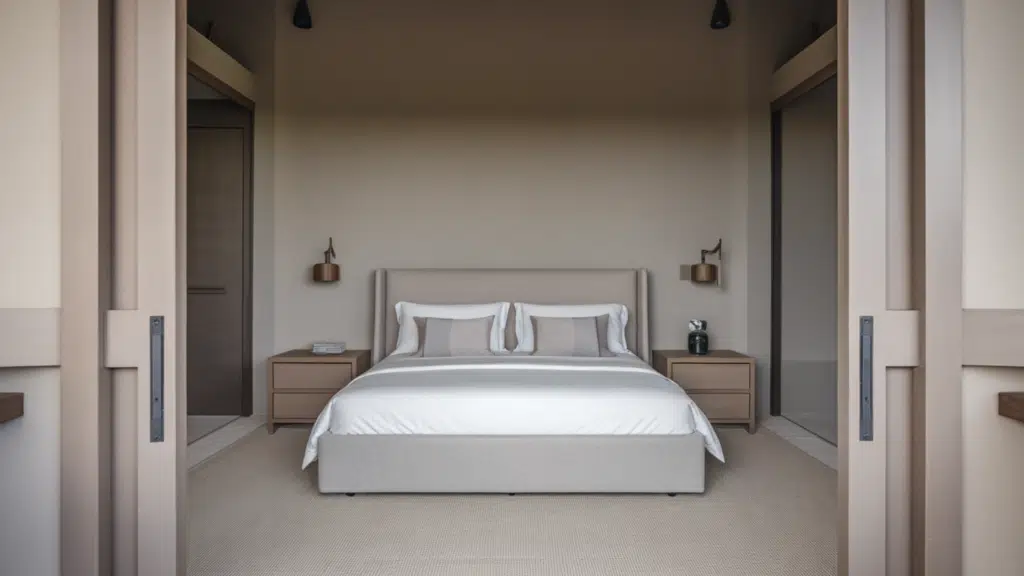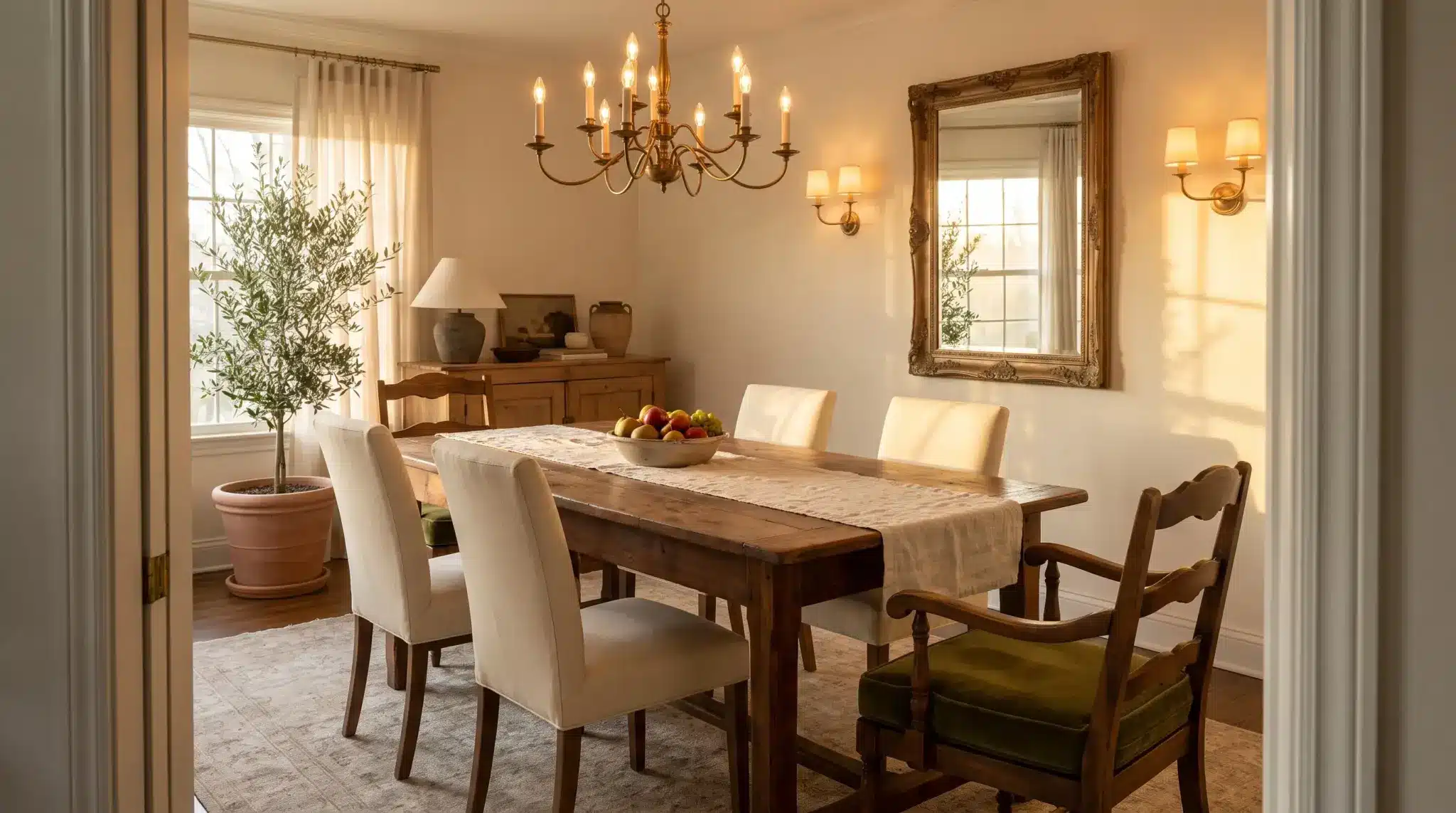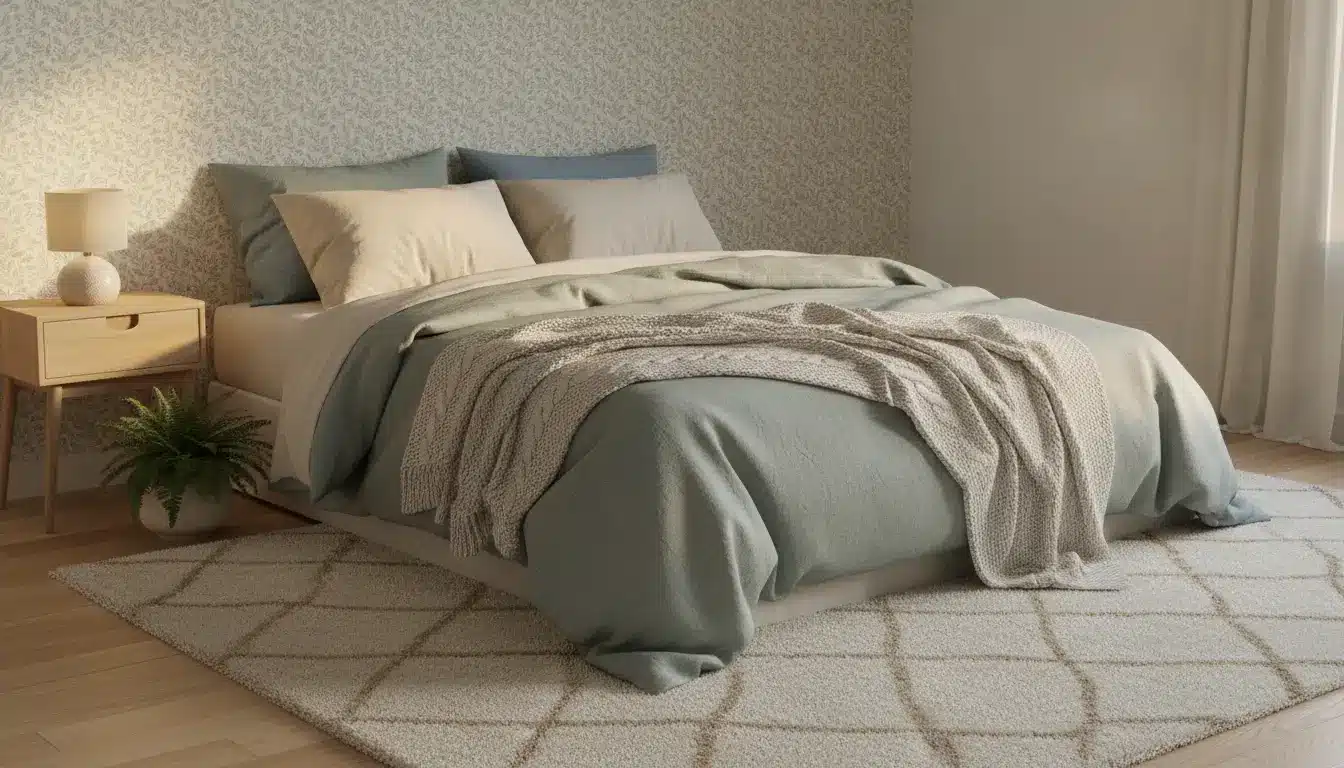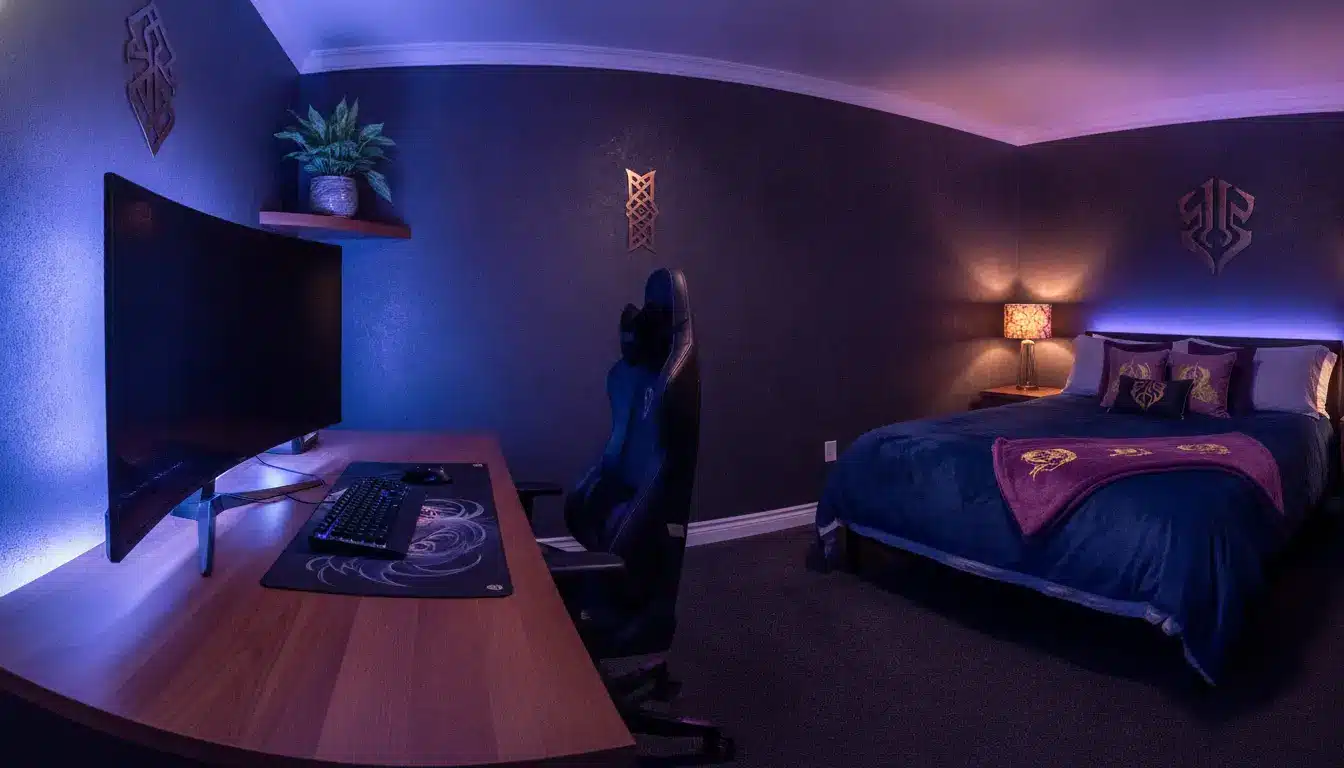

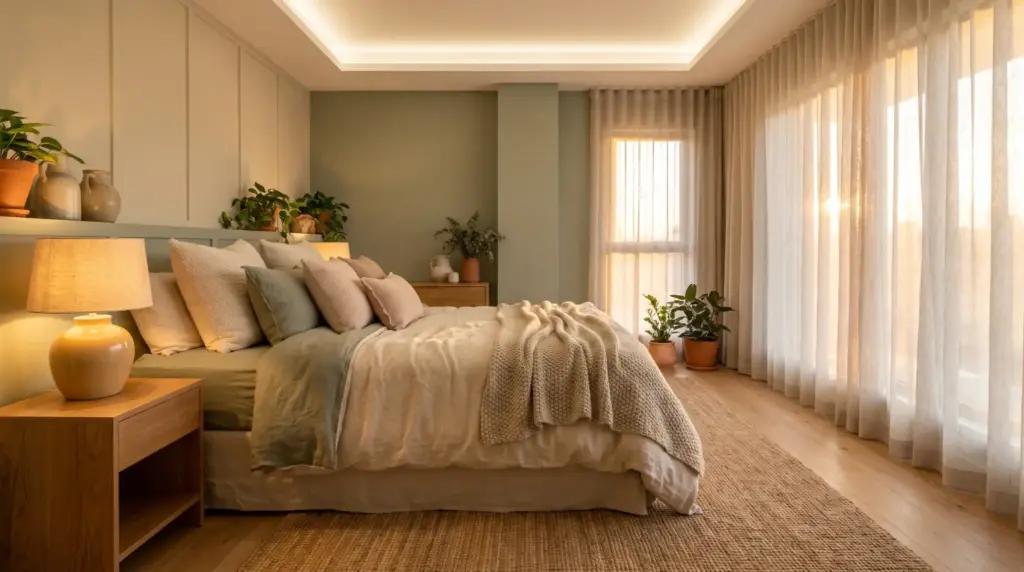
A bedroom doesn’t need an expensive renovation to feel completely different. Adjusting the lighting, introducing a calmer color palette, and layering comfortable textures can change how the room looks and feels while making it more conducive to rest. These updates can range from inexpensive decor swaps to larger investments in paint, window treatments, bedding, and fixtures, giving homeowners plenty of flexibility to work within their budget.
Layer Lighting for Comfort and Function
Lighting can have an outsized effect on a bedroom’s atmosphere. Combining ambient, task, and accent lighting rather than relying on a single overhead fixture.
Ambient lighting provides general illumination, bedside or floor lamps make reading easier, and accent lighting can draw attention to artwork or architectural details.
Costs will depend largely on the fixtures and electrical work involved. Simply replacing bulbs with warm-white LEDs or adding a table lamp can be an affordable change, while installing new sconces, ceiling fixtures, dimmers, or circuits can require a larger budget.
Use Color to Set a Calmer Mood
Colors such as blue, green, beige, cream, light gray, and soft pink can contribute to a calmer bedroom environment. More stimulating or very dark shades may be better used sparingly.
A full repaint isn’t the only option. An accent wall, new artwork, bedding, or decorative accessories can introduce a new palette for less. Paint costs vary based on room size, paint quality, wall condition, and whether you do the work yourself or hire a professional.
Add Warmth Through Texture

Texture helps keep a neutral bedroom from feeling flat. Incorporating comfortable textiles and natural materials such as linen, cotton, wood, stone, and ceramic. A woven rug, layered bedding, curtains, and a few well-chosen pillows can add visual depth without cluttering the room.
Textile costs can vary dramatically depending on the material and quality. Rather than replacing everything at once, homeowners can prioritize frequently used pieces, such as sheets and bedding, and gradually add decorative layers.
Focus Spending Where It Matters Most
Before making updates, consider why you’re refreshing the bedroom. If better sleep is the priority, controlling nighttime light, reducing clutter, getting morning sunlight, and keeping the bedroom near 65°F are recommended. Blackout curtains, dimmable lights, or upgraded bedding may therefore offer more practical value than purely decorative changes.
If you’re preparing to sell, priorities can shift. Accurate pricing was identified by 62% of agents as the biggest factor affecting how quickly a home sells, as reported by HomeLight’s network of Top Agents. That suggests sellers shouldn’t assume an expensive bedroom makeover is necessary to attract buyers.
Refresh With Resale in Mind
Cosmetic bedroom improvements can also help a property feel cleaner and more inviting to prospective buyers. Selling a house in poor condition notes that sellers can consider relatively low-cost improvements, such as fresh paint, updated fixtures, cleaning, and decluttering, rather than automatically undertaking extensive renovations.
Ultimately, the budget depends on the bedroom’s existing condition, its size, material choices, labor costs, and the extent of the changes.
Start with high-impact elements that affect both comfort and appearance. Thoughtful lighting, soothing colors, and tactile materials can transform the room without requiring a complete remodel.