
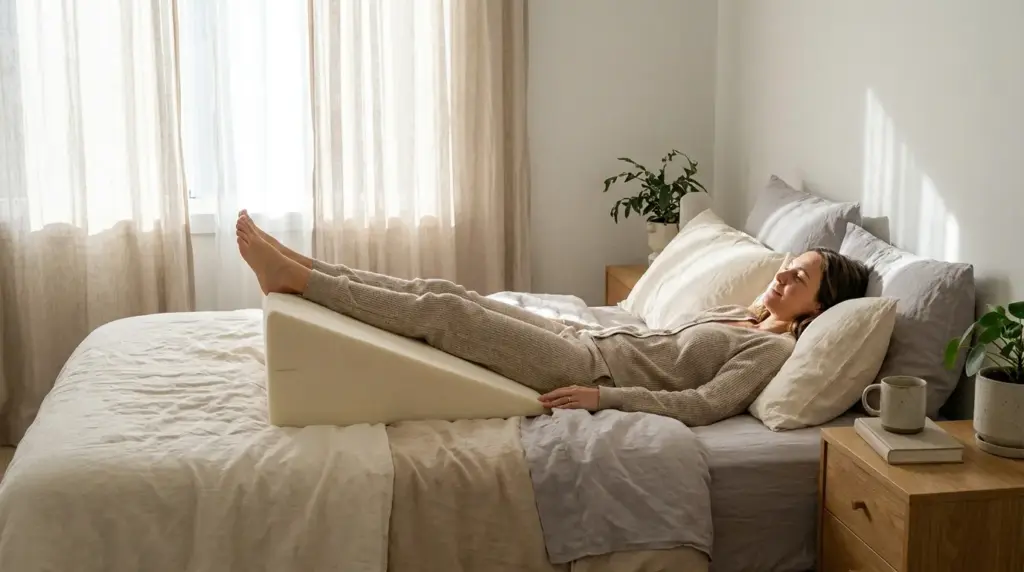
Leg discomfort has a way of making rest feel harder than it should. Sleeping with legs elevated is one of those simple sleep habits many people try when the lower body feels heavy, tight, or unsettled at night.
You may have heard it helps, but the real answer depends on why the discomfort is happening and how the legs are supported. I would not treat it as a random pillow trick because position, height, and timing can change the experience.
The sections ahead look at what this sleep position means, how to set it up safely, who should be cautious, and when leg symptoms warrant medical advice rather than a home trial-and-error approach.
| Disclaimer: This article is for informational and educational purposes only. It does not constitute medical advice and should not replace consultation with a qualified healthcare provider. Always consult a doctor before sleeping with your legs elevated or using leg elevation for swelling, circulation problems, varicose veins, pregnancy-related swelling, injury recovery, post-surgery care, or any existing heart, kidney, liver, vein, or blood clot condition. |
What Does Sleeping With Legs Elevated Actually Mean?
Sleeping with legs elevated means raising the lower body in a steady, supported position while lying down, not just resting the feet on a soft pillow.
True leg elevation places the legs near or above heart level, so blood and fluid have a clearer path back toward the core instead of settling in the lower limbs. A practical height is usually 6 to 12 inches, close to a 15- to 30-degree angle.
A slight lift may suit everyday heaviness, a moderate lift may support tired legs, and a zero-gravity position raises the legs more fully. For best support, the surface should run from the knee to the heel, keeping the legs stable through the night.
The Science Behind Leg Elevation During Sleep
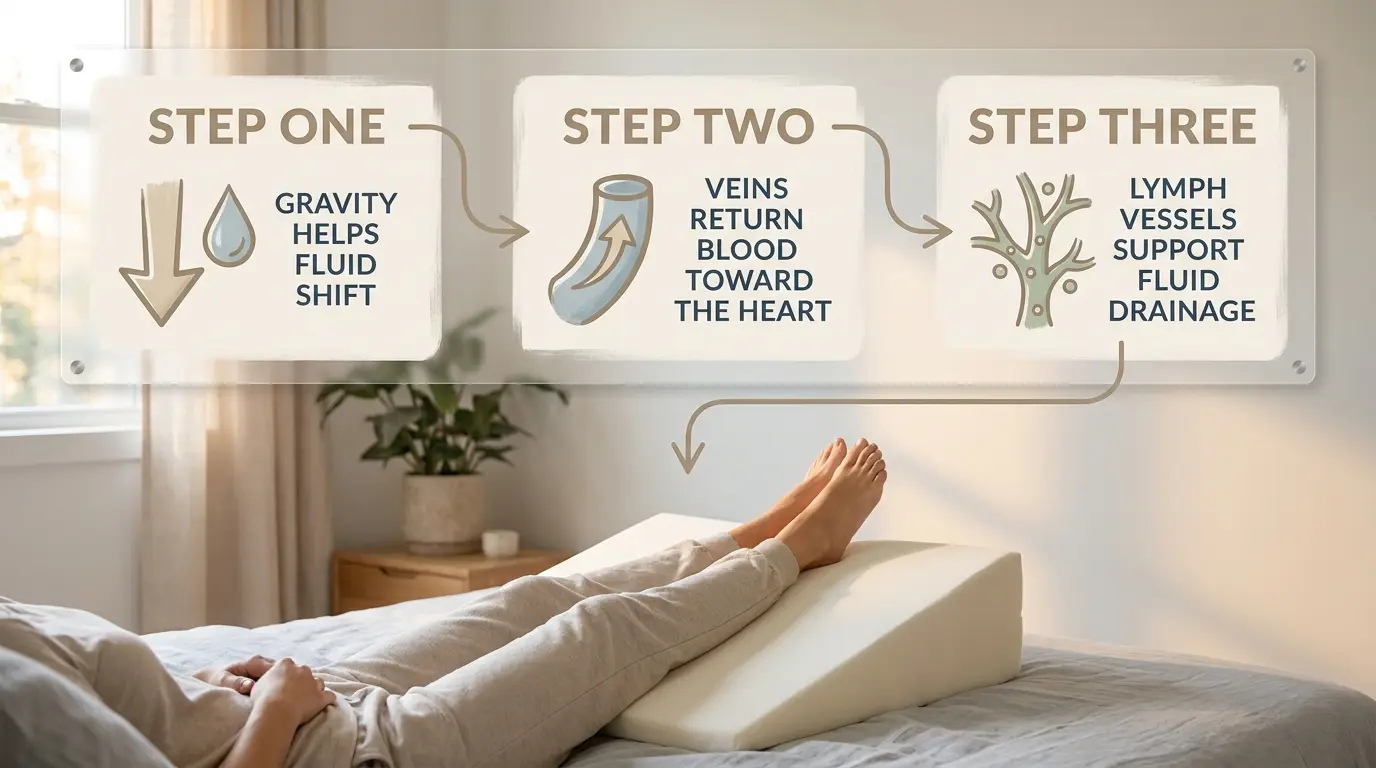
Leg elevation works because your body reacts to the position while you rest. When the legs are raised with proper support, gravity can help blood and fluid flow more easily away from the lower limbs.
- Gravity affects fluid flow: When you lie down, blood and lymph fluid spread more evenly. Raising the legs gives gravity a better angle to move fluid away from the feet, ankles, and calves.
- Venous return becomes smoother: Veins carry blood back to the heart. Elevating the legs may reduce the upward effort required, which can ease pressure on the vein walls and improve blood circulation.
- Lymph drainage gets help: The lymphatic system lacks a pump like the heart. It depends on movement, body position, and gravity, so elevating the leg can support natural fluid drainage during rest.
- Proper support changes the result: The legs should be supported from the knees to the heels. A pillow under only the feet may create uneven pressure and reduce the effect of leg elevation.
- The effect is based on body mechanics: This position works through gravity, venous return, and lymphatic flow. It is not a cure, but it may support comfort when used correctly
| Caution: Sudden, painful, one-sided, red, warm, or persistent swelling should not be managed with elevation alone. Seek medical advice, especially during pregnancy, after surgery, or with breathing trouble. |
By understanding how gravity, venous return, and lymph drainage work together, it becomes easier to see why leg elevation can feel helpful for some people. The key is to use the right setup and know when swelling or discomfort needs medical advice.
Health Benefits of Sleeping With Legs Elevated
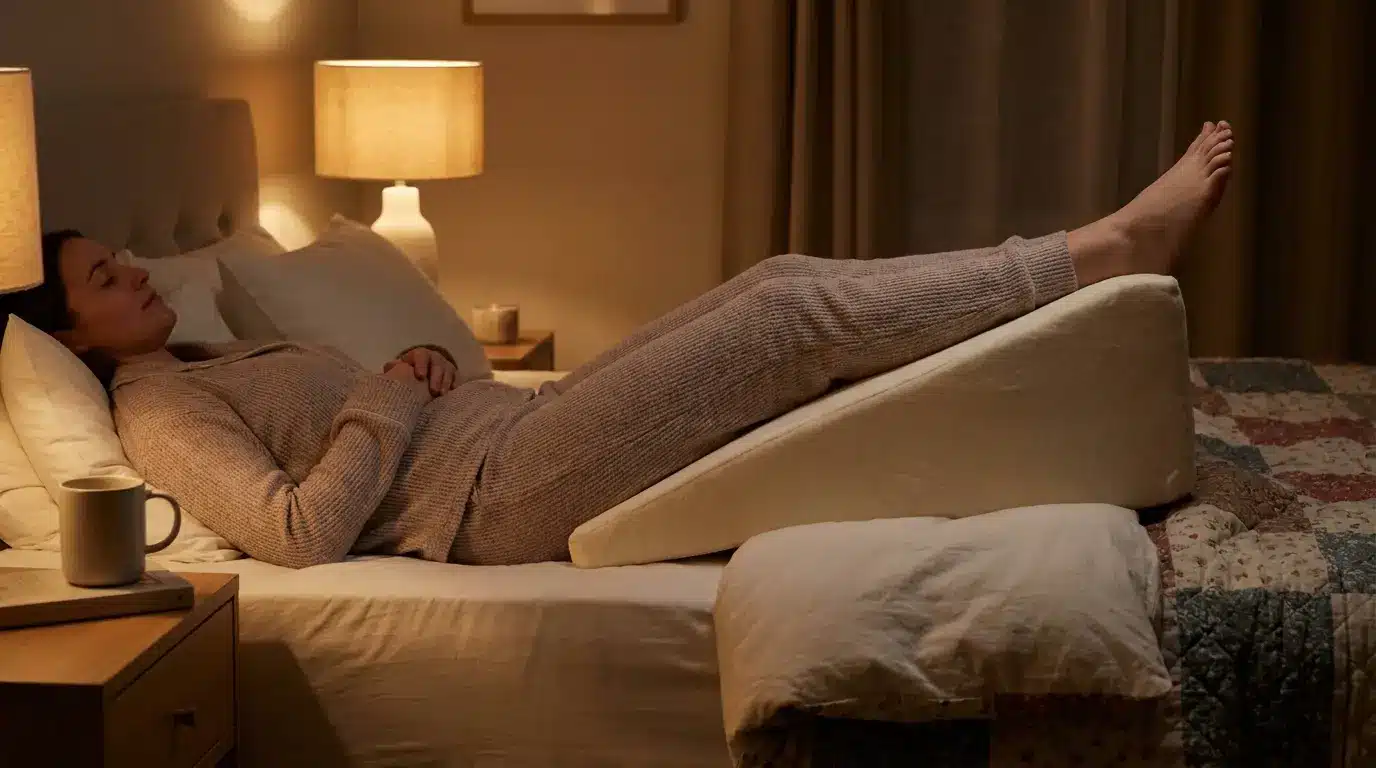
The benefits of this sleep position depend on the reason behind the discomfort, the height of the support, and overall health. When used correctly, it can help in many ways.
1. Improves Blood Circulation
Raising the legs can help blood travel back toward the heart with less effort. This may be useful for people who feel heaviness after standing, sitting, or traveling for long hours.
The position can reduce pressure in the lower-leg veins during rest. For ongoing circulation problems, it should support medical care rather than replace it.
2. Reduces Swelling and Edema
Feet and ankles often swell when fluid settles in the lower body throughout the day. A steady raised-leg position can help that fluid move away from the ankles during sleep.
This may be helpful for mild, temporary swelling caused by heat, long-standing, or limited movement. Sudden or lasting swelling still needs medical attention.
3. Relieves Varicose Vein Discomfort
Varicose veins can feel heavy, sore, or achy after long hours on the feet. Elevating the legs may reduce pressure inside weakened veins while the body rests.
This can make the legs feel calmer at night. It does not remove visible veins, so painful or worsening symptoms should be checked by a healthcare provider.
4. Eases Lower Back Pain
A raised-leg setup can relax the lower back when the knees are slightly bent and the spine stays neutral. This position may reduce strain around the lumbar area for some back sleepers.
The height should feel gentle, not forced. If it causes hip tightness, numbness, or back arching, the setup needs to be adjusted.
5. Speeds Up Injury Recovery
After a mild sprain, strain, or soft tissue injury, elevation is often used to manage swelling around the affected area. It works best with rest, gentle care, and proper support.
Severe pain, deep bruising, loss of movement, or swelling that keeps getting worse should be evaluated rather than managed only at home.
6. Supports DVT Risk Management
Leg elevation is not a treatment for deep vein thrombosis and should not be used as one. During bed rest or recovery, doctors may suggest positioning, movement, compression, or medication based on clot risk.
Raising the legs can support comfort and blood flow, but suspected DVT symptoms need urgent medical care.
7. Helps With Restless Leg Symptoms
Some people notice that nighttime leg discomfort feels less intense when the legs are supported. A stable position may reduce tension and help the body settle before sleep.
Restless leg syndrome can have many causes, including iron levels or nerve-related issues. If symptoms occur frequently, seeking medical advice is preferable to relying solely on elevation.
8. Decreases Muscle Soreness
After exercise, the legs can feel tight, heavy, or tired because the muscles have worked hard. Elevating them during rest may feel soothing and help the body relax.
It should be paired with hydration, light movement, stretching when safe, and enough sleep. Sharp pain or swelling after activity should not be ignored.
9. Needs Caution With PAD Symptoms
Peripheral artery disease is different from vein-related swelling. Some people with PAD feel worse when the legs are raised because blood flow to the feet may already be reduced.
A flat or slightly supported position may feel better for some, but full elevation should be discussed with a doctor before using it regularly.
10. Improves Overall Sleep Quality
When leg pressure, swelling, or discomfort feels lower, sleep may become easier for some people. The benefit comes from better comfort, not from directly treating sleep problems.
A steady angle, full leg support, and relaxed spine make the position more useful. If pain or numbness appears, the setup should be changed.
These benefits are most helpful when symptoms are mild and the position feels natural. If swelling, pain, warmth, redness, numbness, or one-sided symptoms persist, seek medical advice first.
Who Should Sleep With Their Legs Elevated?
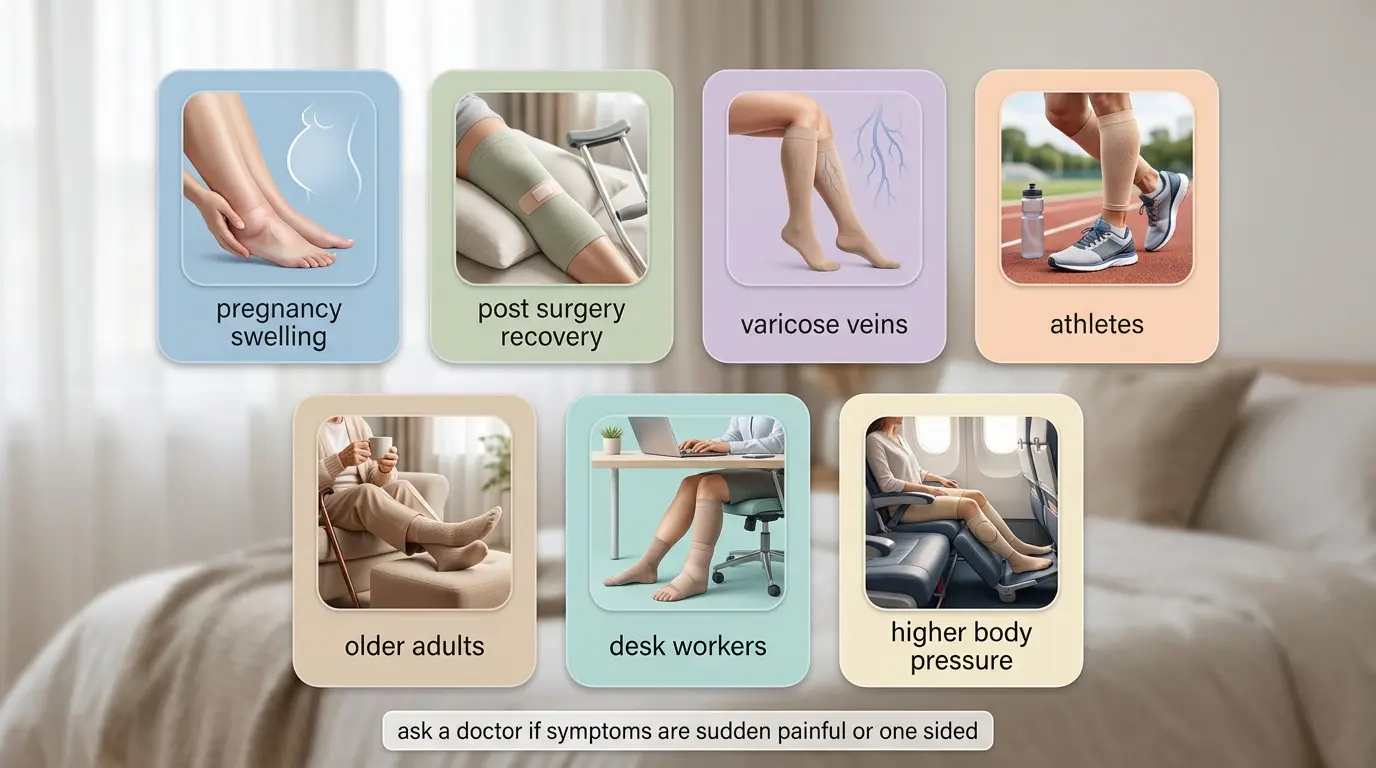
Leg elevation can be useful for people whose lower-body discomfort is linked to prolonged sitting or standing, swelling, or recovery needs. It is not necessary for everyone, but certain groups may find it helpful when the position feels comfortable and matches their health situation.
| Who may benefit | Why it helps | What to watch for |
|---|---|---|
| Pregnant women | Supports comfort when mild ankle swelling or leg heaviness appears in later months | Sudden swelling, headache, vision changes, or swelling in one leg |
| Post-surgery patients | Helps manage swelling when elevation is part of the recovery plan | Any position that goes against the surgeon’s instructions |
| People with varicose veins | Lowers pressure in the leg veins during rest | Pain, skin changes, worsening swelling, or warmth in the leg |
| Athletes | Helps tired legs feel more relaxed after training | Sharp pain, swelling after injury, or soreness that does not improve |
| Elderly individuals | Supports comfort when leg heaviness comes with slower circulation | Numbness, tingling, or discomfort from staying in one position too long |
| Office workers | Helps counter lower-leg heaviness after sitting for long hours | Swelling that returns daily or does not improve with movement |
| People with obesity | May ease leg pressure linked with added lower-body strain | Ongoing swelling, breathlessness, or one-sided leg symptoms |
Leg elevation works best as a supportive habit, not a cure. If symptoms are new, painful, one-sided, or persistent, it is better to get medical advice before making it part of a nightly routine.
Who Should Be Cautious or Avoid It?
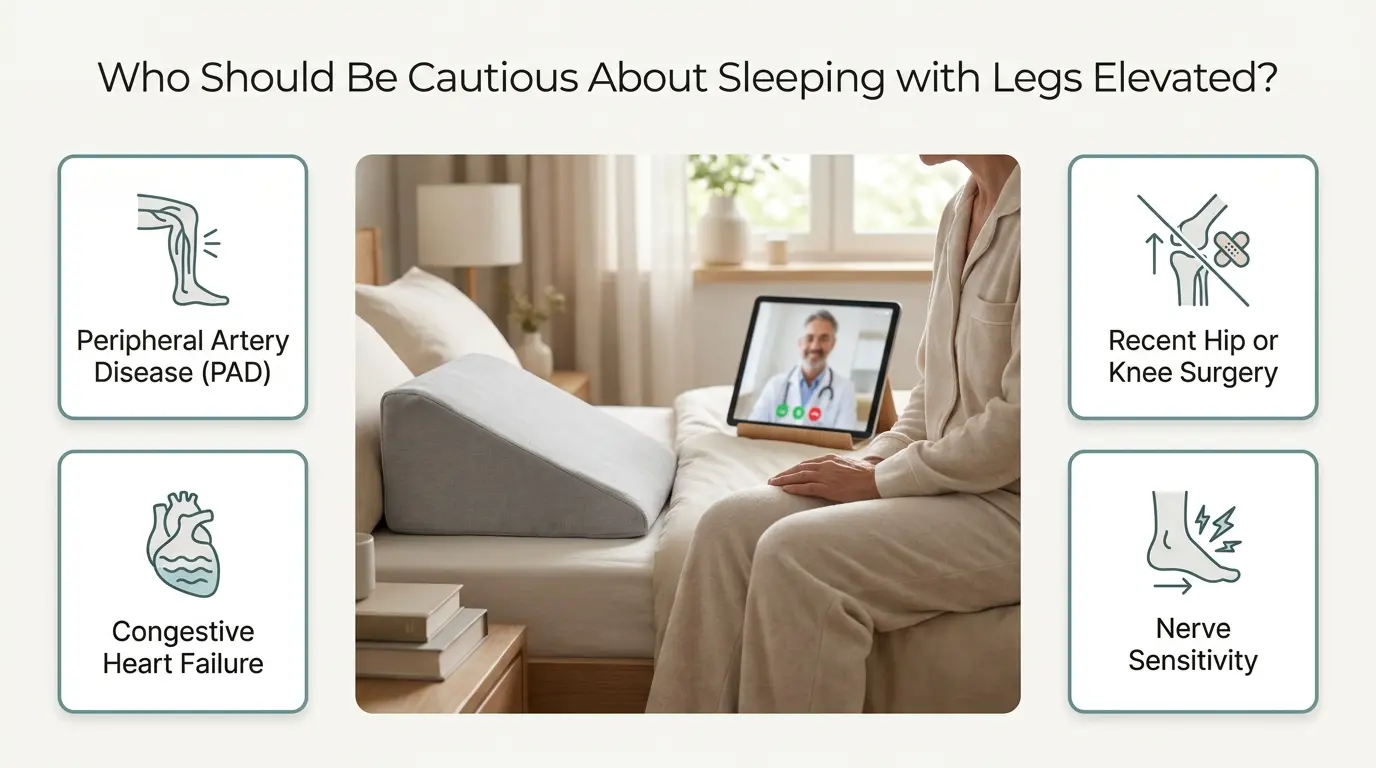
Leg elevation can feel helpful for many people, but it is not safe for everybody or every condition. Some health conditions require medical guidance before regularly changing sleep position overnight.
- Peripheral Artery Disease: People with peripheral artery disease may feel worse when the legs are raised too high. This condition affects blood flow through the arteries, so full elevation may increase cramping, coldness, or foot discomfort.
- Congestive Heart Failure: Raising the legs can help return more fluid toward the upper body. For someone with congestive heart failure, that shift may increase strain on the heart or worsen breathlessness.
- Recent Hip or Knee Replacement: After joint replacement surgery, sleep position is often part of the recovery plan. Raising the legs without guidance may affect joint alignment, strain healing tissues, or go against post-surgery instructions.
- Certain Nerve Conditions: People with nerve sensitivity, numbness, sciatica, or neuropathy may not tolerate the same position for long hours. Pressure under the knees, calves, or heels can trigger tingling or burning.
| Medical caution: If you have heart disease, PAD, recent surgery, nerve pain, sudden swelling, breathlessness, or one-sided leg symptoms, ask a doctor before sleeping with your legs elevated every night safely. |
If any position causes pain, numbness, shortness of breath, or worsening swelling, stop using it and speak with a clinician. A quick check can prevent small symptoms from becoming bigger concerns.
How to Sleep With Legs Elevated the Right Way
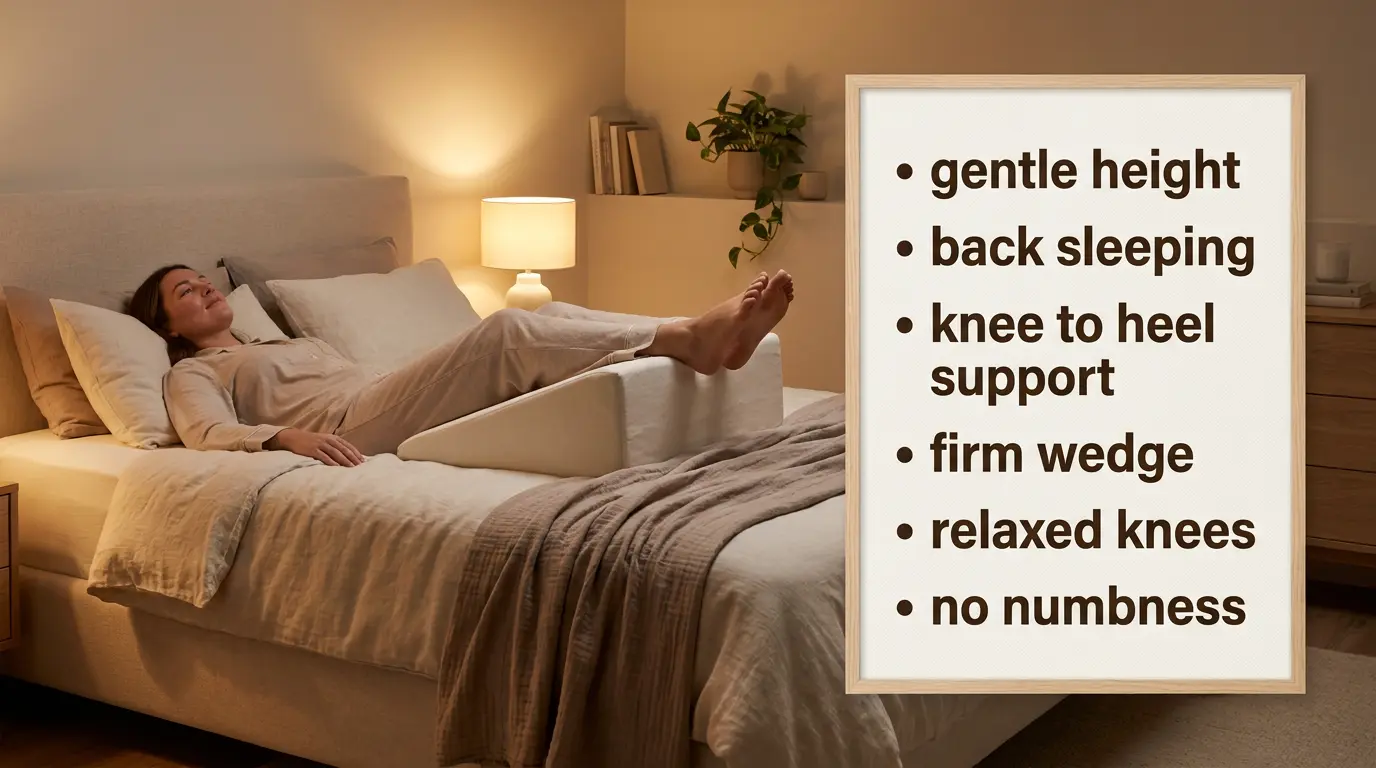
Getting the position right matters because poor support can lead to back strain, knee pressure, or numbness during the night. The goal is not to lift the feet as high as possible.
It is to create a steady angle that supports the legs, keeps the spine relaxed, and feels comfortable enough to maintain while sleeping. Use these steps to set it up properly:
- Set a gentle angle: Raise the legs about 6 to 12 inches to a 15 to 30-degree angle. The height should feel natural, not forced.
- Sleep on your back: Back sleeping usually works best because both legs stay evenly supported and the spine remains easier to align.
- Support knee to heel: Place support under the full lower leg, not just the ankles. This keeps pressure more evenly spread.
- Use firm support: A wedge pillow holds its shape better than soft, stacked pillows, which can flatten or shift overnight.
- Keep knees relaxed: A slight bend behind the knees can reduce pulling and make the position feel easier to hold.
- Try an adjustable base carefully: A zero-gravity setting can support the upper body and legs together, but a firm wedge is enough for many people.
A good setup should feel steady, relaxed, and easy to maintain. Start with a low height, notice how the legs and back feel in the morning, and adjust only if the position feels uncomfortable.
Common Mistakes People Make With Leg Elevation
Leg elevation looks simple, but small setup errors can make it less comfortable or less useful. The goal is to keep the legs steady, the spine relaxed, and pressure evenly spread through the lower body.
| Mistake | Why does it cause problems | Better approach |
|---|---|---|
| Lifting only the ankles | It leaves the knees unsupported and can strain the joint during sleep. | Support the legs from knees to heels. |
| Using very soft pillows | They flatten or shift, which changes the height by morning. | Use a firm wedge or stable pillows. |
| Raising the legs too high | Too much height can cause hip strain, back tension, numbness, or tingling. | Start with a gentle 6 to 12-inch lift. |
| Sleeping on the stomach | It can twist the hips and strain the lower back and neck. | Sleep on the back, or use side support if needed. |
| Changing the setup often | Random height changes make it hard to know what helps. | Keep one setup for several nights. |
| Ignoring body alignment | Poor support can make the spine, hips, or knees feel pulled. | Keep the body relaxed and neutral. |
| Pushing through discomfort | Pain or numbness means the position is not right. | Stop, lower the height, or adjust support. |
Most mistakes happen when only the feet are lifted, rather than the whole lower leg. A good setup should feel steady and easy to hold through the night. If pain, swelling, or numbness continues after small adjustments, medical advice is the safer next step.
How Long Before You See Results?
Results from sleeping with legs elevated can vary because the cause of swelling, the height of support, and sleep position all matter. Some people may notice less morning puffiness in the feet and ankles after the first night, especially when swelling comes from long sitting or standing.
Over 1 to 2 weeks, mild heaviness may feel more manageable, and lower-back tension can ease if the knees and spine are well supported.
By 3 to 4 weeks, people with vein-related discomfort may notice a steadier pattern, but this is not guaranteed for every condition.
Long-term use for 2 to 3 months may support improved leg comfort when paired with movement, hydration, and medical guidance, if needed. If swelling is painful, one-sided, warm, red, or persistent, do not wait for results. Seek medical advice.
Frequently Asked Questions
Can sleeping with raised legs affect blood pressure?
Raising the legs can shift more blood toward the upper body, which may affect pressure for some people. Most healthy adults tolerate this well, but anyone with blood pressure concerns should ask a healthcare provider before using this position nightly.
Is it better to elevate the legs before bed or all night?
Some people prefer raising the legs for 15 to 30 minutes before sleep instead of keeping them elevated overnight. This can feel easier if full-night elevation causes stiffness, hip pressure, or trouble changing positions during normal sleep.
Can a recliner work for leg elevation during sleep?
A recliner can raise the legs, but it may not keep the spine, hips, and knees well aligned for long-term sleep. It may work for short rest, but regular overnight use should feel fully supported and pain-free.
Should the feet stay warm while the legs are elevated?
Feet should feel comfortable, not cold or numb. Light socks may help if the room is cool, but coldness, color change, tingling, or loss of feeling can signal poor circulation or pressure that needs medical review.
Can leg elevation cause frequent urination at night?
For some people, moving fluid out of the lower legs can increase nighttime urination. This may happen when fluid returns to circulation while resting. If it becomes frequent, sudden, or disruptive, a doctor should check the cause.
Is morning stiffness normal after elevating the legs?
Mild stiffness can happen if the position is new or the support is too firm. It should improve after moving around. Strong stiffness, joint pain, or numbness means the height, angle, or support placement needs adjustment.
Final Thoughts
Small changes in sleep position can make a real difference when your legs feel heavy, swollen, or tired at night. I like this habit because it is simple, but it still needs the right setup.
Sleeping with legs elevated works best with steady support, a gentle height, and a position that keeps your back, hips, and knees relaxed.
You also know when to be careful, especially with sudden swelling, nerve pain, pregnancy, surgery, or heart and circulation issues. Use the tips as a safe starting point, then notice how your body responds.
If something feels wrong, get medical advice instead of guessing. Share your experience in the comments, or read related blog posts for more simple sleep tips.