
A career in sleep technology can be rewarding, but choosing the right training path is often the hardest part.
With A-STEP courses, college programs, clinical requirements, and certifications to compare, the process can feel unclear at first.
This blog explains what a sleep technologist does, training options, A-STEP courses, and the steps required to enter the field.
It also compares common education routes so readers can make a more informed choice. Read the full blog to learn which path best fits your career goals and training needs.
What Does a Sleep Technologist Do?
Sleep technologists work under clinical supervision to perform sleep studies and provide patient care related to diagnostic and therapeutic sleep services.
This position is also called a polysomnography technologist or sleep study technologist.
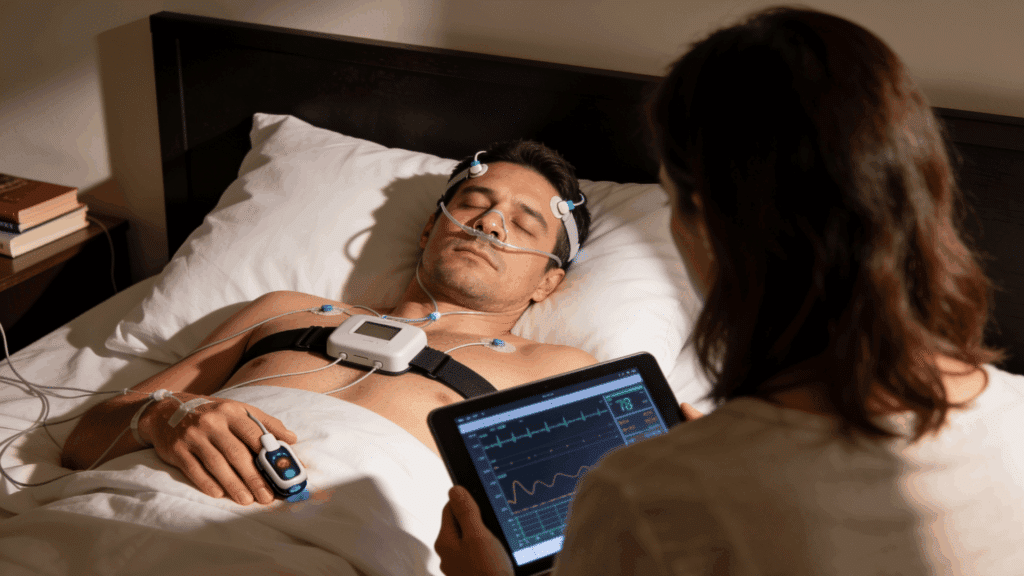
During a sleep test, the technologist sets up sensors to monitor brain activity, eye movement, breathing, heart rate, and oxygen levels.
They also observe the patient to ensure that the data obtained during the process is accurate.
This job entails both technical and patient care aspects. Given that most sleep studies are done overnight, this job usually involves flexible hours.
Types of Sleep Technologist Certificates
Sleep technologist credentials vary based on education, clinical experience, and career level.
Certified Polysomnographic Technician (CPSGT)
CPSGT is an entry-level credential for people new to sleep technology. Eligibility can be met through clinical experience and STAR education or through an approved polysomnography education program.
It is essential for the candidates to fulfill the educational and experience requirements before sitting for the exam.
Registered Polysomnographic Technologist (RPSGT)
The RPSGT has multiple eligibility pathways based on clinical experience, healthcare credentials, approved education, and focused training. Some pathways require at least 960 hours of clinical experience.
There are various options that one can follow to become eligible for the same.
State License or Registration
Sleep technologists in some states must be licensed or registered before being employed. The requirements differ from state to state and could involve obtaining a certification.
The candidate needs to find out about the state regulations before making a decision.
Sleep Technologist Training and A-STEP Courses

Several training routes can prepare candidates for sleep technology work, including A-STEP education, college programs, and supervised clinical training.
A-STEP Intro to Sleep Medicine
The AASM’s A-STEP introductory course is structured around 80 hours of instruction and follows a curriculum aligned with BRPT certification blueprints.
- Format of The Course: Structured lectures for candidates who have not previously learned about sleep technology.
- Subjects to be Taught: Patient preparation, sensors’ installation, sleep tests, devices usage, safety and basics of sleep medicine.
- Practical Knowledge: Enables students to learn the responsibilities usually performed in the process of conducting overnight sleep tests.
- Professional Significance: May serve as a basis for subsequent training and certification programs of sleep technologists.
A-STEP Self-Study Modules
These self-study courses enable learners to gain more sleep medicine knowledge in addition to their clinical practice experience.
- Learning Mode: Learners go through online course materials and tests independently.
- Major Subjects: The subjects can range from sleep stages, breathing disorders, patient care, testing procedures, and sleep study monitoring.
- Who Will Benefit Most: Trainees who require learning on a flexible schedule in addition to practical experience.
- Certification Considerations: Prospective candidates should check whether the modules align with their certification goals before embarking on the course material.
CAAHEP and CoARC Accredited Programs
Graduating from a CAAHEP or CoARC-accredited polysomnography program can provide an eligibility route for the CPSGT or RPSGT examination.
- Training Program Choices: The training could be offered via certificate and degree programs in polysomnography and related disciplines.
- Courses: Typical courses include anatomy, physiology, sleep disorders, patient care, test administration, and sleep scoring.
- Practical Aspect: Certain programs offer placements in sleep laboratories.
- Before Enrollment: Students must verify the program’s accreditation, placement, and eligibility requirements for their desired credentials.
Supervised Clinical Training
The clinical training allows the learners to get hands-on exposure to patients, equipment, and laboratory practices.
- Preparation of Patient: The trainees are taught the methods to properly prepare the patient and place monitoring sensors.
- Skills in Using Equipment: Signal analysis and operation of sleep study equipment are part of the training process.
- Clinical Experience: Learners acquire practical skills through the practice in the sleep laboratory.
- Documentation: It is important that the learners maintain documentation of their clinical hours since some certification programs require verified experience.
How to Become a Sleep Technologist
Becoming a sleep technologist usually involves education, clinical experience, certification, and meeting any state-specific work requirements.
1. Complete an Approved Training Program
Choose A-STEP training or an accredited polysomnography program that matches the requirements for the credential being pursued.
2. Gain Supervised Clinical Experience
Work in a sleep lab under supervision to build skills in patient setup, monitoring, equipment use, and documentation.
3. Meet Certification Requirements
Review the eligibility rules for CPSGT or RPSGT certification and complete the required education and clinical experience.
4. Maintain Required BLS Certification
Obtain the required CPR/BLS certification and confirm that it meets the current requirements of the credentialing organization.
5. Pass The Certification Exam
Apply for the appropriate certification exam and prepare using coursework, clinical knowledge, and approved study materials.
6. Check State Licensing Requirements
State requirements vary, so candidates should check the licensing or registration rules that apply where they plan to work.
Choosing Between A-STEP and College Training
A-STEP and college programs offer different training formats, so compare structure, clinical access, and credential requirements before enrolling.
| Factor | A-STEP | College Program |
|---|---|---|
| Best for | New trainees, working adults | Students seeking formal study |
| Format | Courses and self-study | Certificate or degree |
| Clinical training | Often arranged separately | May be included |
| Time | Usually shorter | Usually longer |
| Check first | Credential eligibility | Accreditation and eligibility |
Note: Program requirements vary, confirm current details with the training provider and credentialing body.
Practical Tips Before Choosing Sleep Technologist Training
A few checks can help candidates choose training that fits their certification goals, schedule, and state requirements.
- Check the credentialing requirements for CPSGT or RPSGT certification before selecting a training program.
- Find out how the program will provide and document sleep laboratory experience.
- Check the accreditation status of the educational institution or program based on individual educational needs.
- Review any state-specific requirements that may apply to sleep technologists.
- Check all program costs including tuition, textbooks, examination fees, and clinical experience expenses.
- Consider job schedules, since many sleep laboratories require late-night work, weekends, or rotating shifts, not unlike the schedule patients themselves keep during an overnight sleep study.
Conclusion
Choosing a sleep technologist training route depends on a candidate’s education, clinical background, career goals, and preferred learning format.
Some candidates may benefit from focused A-STEP training while others may prefer a formal college program with structured coursework.
Understanding the eligibility requirements before enrolling can help candidates avoid choosing a program that does not support their intended certification path.
Clinical experience and state requirements should also be considered early in the process.
Which training path would work best for your career goals? Share your thoughts or questions in the comments below.
Frequently Asked Questions
Can Respiratory Therapists Become Sleep Technologists?
Yes. Respiratory therapists may move into sleep technology and can have useful experience with breathing-related patient care.
Is Computer Knowledge Useful in Sleep Technology?
Yes. Technologists regularly use specialized software for monitoring signals, recording studies, documentation, and reviewing patient data.
Is Math Important for Sleep Technologists?
Basic math is useful for measurements, calculations, equipment settings, and accurately understanding sleep study data.