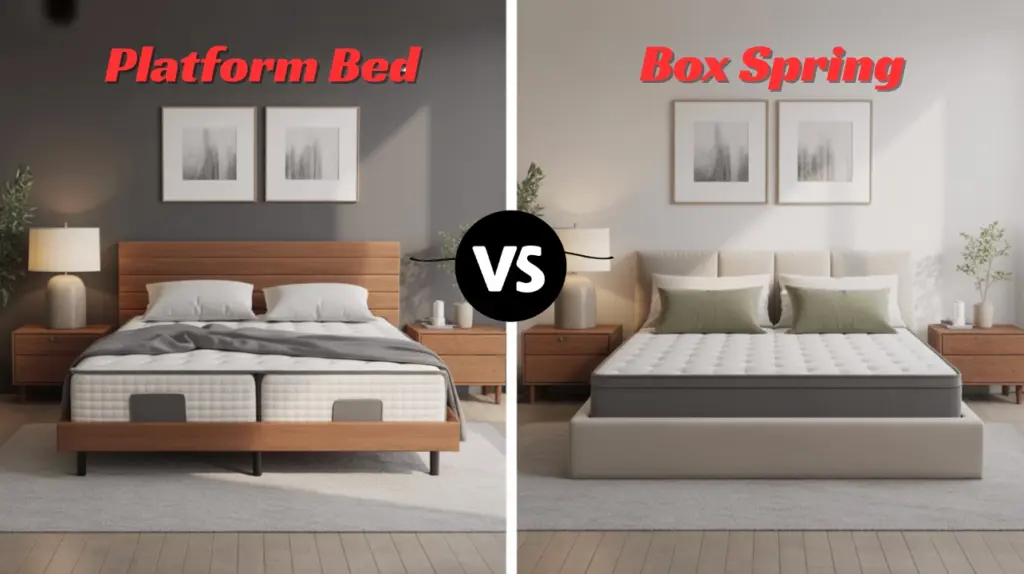
If you’ve been looking at your old bed setup, thinking there has to be a better option, welcome to the platform bed vs. box spring debate.
If you’re settling into a new apartment, buying a fresh mattress, or simply fed up with what you’ve got, I know this decision matters.
This choice affects everything from how well you sleep to how your bedroom looks and how much you spend. You want something that pairs perfectly with your mattress, fits your space, and stays within your budget.
Once you know what sets these options apart, choosing becomes easier. I’m going to walk you through the pros and cons of each and help you figure out the right fit for your bedroom and sleeping needs.
What is a Platform Bed?
A platform bed is essentially an all-in-one solution for your sleeping setup. Instead of needing a separate foundation, it comes with built-in slats or a solid base that supports your mattress directly.
You just plop your mattress on top, and you’re done, no extra purchases required. These beds work incredibly well with foam, latex, or hybrid mattresses, providing firm, even support without gaps or sagging.
Style-wise, they’re sleek and modern, think clean lines and minimalist vibes that fit perfectly in contemporary spaces.
The best part? Many platform beds come with under-bed storage drawers or open space underneath, which is a game-changer if you’re dealing with limited closet space or a smaller bedroom. It’s practical, stylish, and budget-friendly all in one package.
What is a Box Spring?
A box spring is the traditional route; it’s basically a wooden frame filled with metal coils that sits between your mattress and bed frame. You’ve probably seen these in older homes or traditional bedroom setups, and they’ve been around for decades.
They’re specifically designed for innerspring mattresses, providing that bouncy feel and extra cushioning that makes the bed more responsive. One thing you’ll notice immediately is the height gain.
Box springs lift your bed significantly higher off the ground, making it easier to climb in and out, especially if you have mobility concerns or joint issues.
They also absorb shock when you sit or lie down, extending the life of your innerspring mattress and making it feel more comfortable overall. It’s a classic setup that still works well for many people.
Key Differences Between Platform Beds and Box Springs

Now that you know what each option brings to the table, let’s compare them head-to-head. Understanding these differences will help you make a decision that actually works for your situation.
Here are the seven key factors you should consider:
1. Support Style
Platform beds use solid wood slats or a continuous flat surface to distribute weight evenly across the mattress. The slats provide firmer, more consistent support without any movement, creating a stable sleeping foundation.
Box springs rely on metal coils that compress and rebound, providing a softer, more flexible foundation. This creates a classic, bouncy mattress feel with cushioning and traditional support.
2. Compatibility with Mattresses
Platform beds provide the firm, flat support that foam and latex mattresses need to maintain their warranty and structural integrity. Hybrid mattresses also work well with platform beds, making them versatile for modern mattresses.
Box springs were specifically designed to work with innerspring mattresses, providing the complementary support system these traditional mattresses need. Using foam mattresses on box springs can void warranties.
3. Height of the Bed
Platform beds sit lower to the ground, typically 18-24 inches tall. This lower profile creates a modern, space-efficient look that works well in contemporary bedrooms and smaller spaces where visual openness matters.
Box springs add approximately 8-10 inches of height to your overall bed setup, creating a taller sleeping surface. Higher beds are often easier for older adults or people with joint issues to get in and out of comfortably throughout the day.
4. Storage Options
Platform beds often include built-in drawers or use the under-bed space for storage. This storage capacity can replace the need for additional bedroom furniture, such as dressers, making it highly practical for apartments and smaller homes with limited space.
Box springs are solid units that offer zero storage possibilities beneath them. They sit directly on bed frames, leaving no space underneath and eliminating the opportunity to use that area to organize clothing, linens, or seasonal items.
5. Style Comparison
Platform beds feature cleaner lines and simpler profiles that suit modern, minimalist, or contemporary décor styles perfectly. Their streamlined design creates a clean, refined look that complements current interior design trends.
Box springs create a more substantial, layered bed appearance that fits traditional, classic, or farmhouse interior styles beautifully. They provide the height and visual weight that complement vintage furniture and established bedroom vibes.
6. Durability and Longevity
Platform beds feature solid construction that is typically more durable over time and requires minimal maintenance throughout their lifespan. The sturdy materials and simple design maintain their support quality for many years.
Box springs can sag and lose their supportive capabilities after approximately 5-8 years of regular use. The internal coils weaken over time, especially with heavier weights, and may eventually require replacement.
7. Cost Considerations
Platform beds eliminate the need to purchase a separate box spring, with prices ranging from $150 to $1000. Since you’re buying a single integrated piece, the overall investment is more cost-effective.
Box springs require purchasing both the spring unit and a separate bed frame, with combined costs typically $300 to $800 or more. This multi-piece purchase increases both upfront and replacement costs.
Note: These are estimated price ranges and may vary based on brand, materials, quality, and where you purchase your bed.
Choosing the Option that Will Work Best for You
Understanding your specific needs makes this decision much easier. I’m going to help you match your situation to the best option so you can stop second-guessing yourself and make a confident choice.
When You Choose a Platform Bed
Understanding your specific needs makes this decision much easier. I’m going to help you match your situation to the best option so you can stop second-guessing yourself and make a confident choice. Choose a Platform Bed if you:
- Foam/Hybrid Mattress: Provides firm, flat support without flexing or sagging
- Small Bedroom: Built-in storage maximizes space without extra furniture
- Tight Budget: One piece costs less than a separate box spring and frame
- Back Pain: Firmer support maintains proper spinal alignment
Choose based on what matters most in your daily life and bedroom setup. Prioritize the factors that will make the biggest difference in your comfort and satisfaction.
When You Choose a Box Spring
A box spring might be the better choice for you depending on your mattress type, aesthetic preferences, and practical needs. Here’s when I recommend going with a box spring over a platform bed. Choose a Box Spring if you:
- Innerspring Mattress: Designed specifically for coil mattresses, providing proper support and bounce
- Traditional Style: Creates a classic, elevated look with timeless sophistication
- Want a Higher Bed: Adds 8-10 inches of height for easier access and commanding presence
Choose based on what matters most in your daily life and bedroom setup. You might find that multiple factors apply to you, so prioritize the ones that will make the biggest difference in your comfort and satisfaction.
Community Discussions on Platform Bed vs. Box Spring
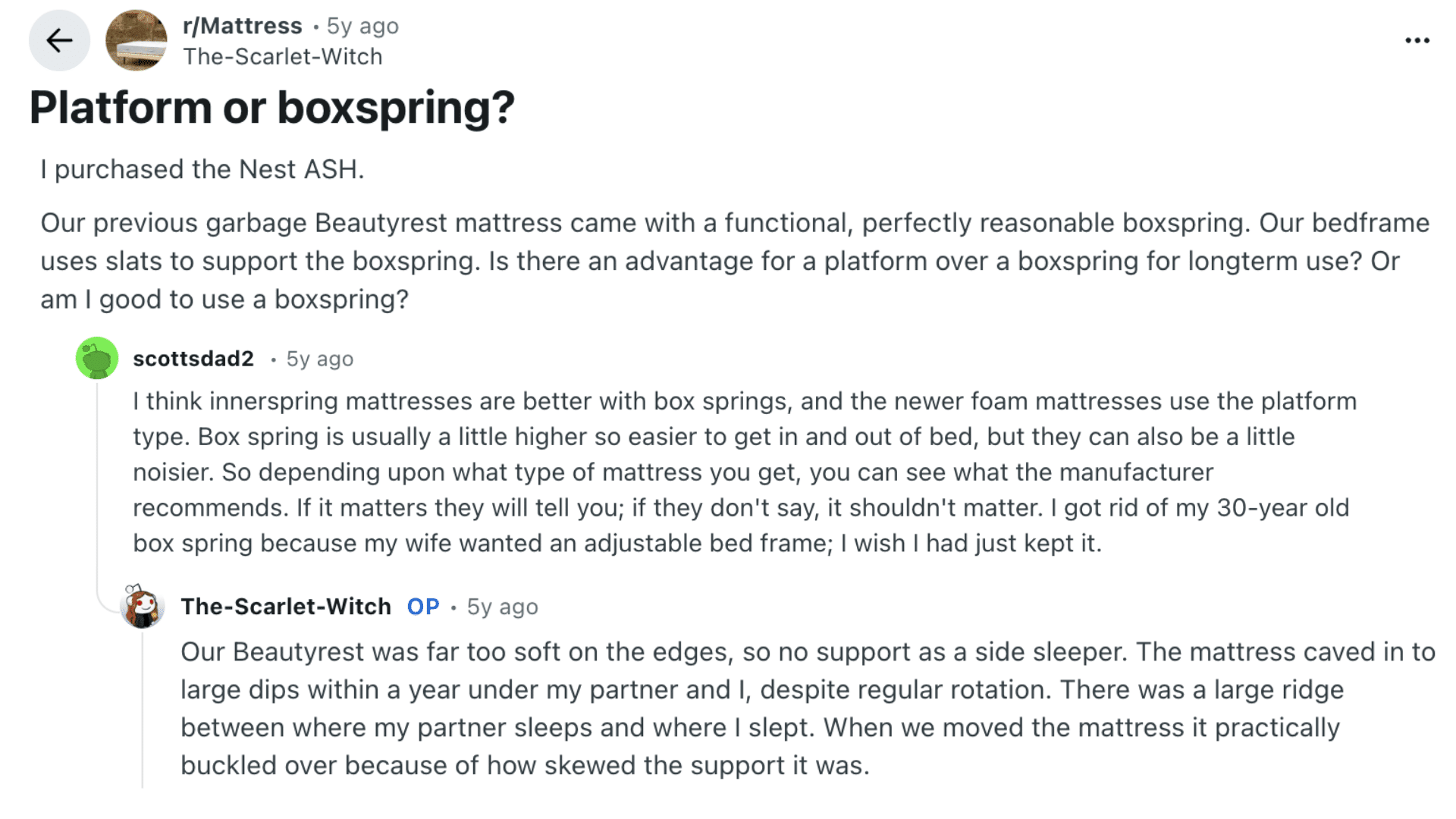
The debate between platform beds and box springs has sparked strong opinions among Reddit users. Platform beds are gaining popularity, especially among younger people, for their modern look and under-bed storage.
They work particularly well with foam mattresses, offering solid support without needing a box spring. Box springs still have a dedicated following, especially for innerspring mattresses and traditional bedroom setups.
One user said, “I think innerspring mattresses are better with box springs, and the newer foam mattresses use the platform type. Box spring is usually a little higher so easier to get in and out of bed, but they can also be a little noisier.”
Note that pairing a foam mattress with a box spring can void your mattress warranty.
Frequently Asked Questions
Can I Put a Foam Mattress on a Box Spring?
Usually no. Foam mattresses need a flat, stable base to perform properly. Traditional box springs can bend and create uneven support, which may affect comfort, durability, and warranty coverage.
Do Platform Beds Need a Box Spring?
No. Platform beds include built-in slats or a solid foundation designed to support a mattress directly. Adding a box spring is unnecessary and may make the bed higher than intended.
How Long Does a Box Spring Last Compared to a Platform Bed?
A box spring generally lasts around 5 to 8 years before showing signs of wear. A well-built platform bed often lasts 10 years or longer because of its stronger frame and support structure.
Is a Platform Bed Good for Back Pain?
Yes. A platform bed offers a stable and even surface that helps support the mattress properly. When matched with a suitable mattress, it can help maintain healthy spinal alignment during sleep.
What Is the Best Bed Height for Older Adults or People with Joint Issues?
A total bed height of about 24 to 30 inches is often considered comfortable. This range makes it easier to sit down, stand up, and get in or out of bed with less strain.
Final Words
So, platform bed vs. box spring? It really comes down to your mattress type, space needs, and personal preferences. If you’ve got a foam or hybrid mattress, limited space, or a tight budget, I’d say platform beds are your answer. They’re durable, practical, and look great in modern spaces.
Box springs still make sense if you’re using an innerspring mattress, want a higher bed, or prefer traditional bedroom vibes. Either way, you can’t go wrong as long as you choose something that fits your specific needs; trust me on this.
Take your time, consider what matters most to you, and pick the option that’ll give you the best sleep for years to come. Drop a comment below and let me know which option worked best for you. I’d love to hear about your experience.