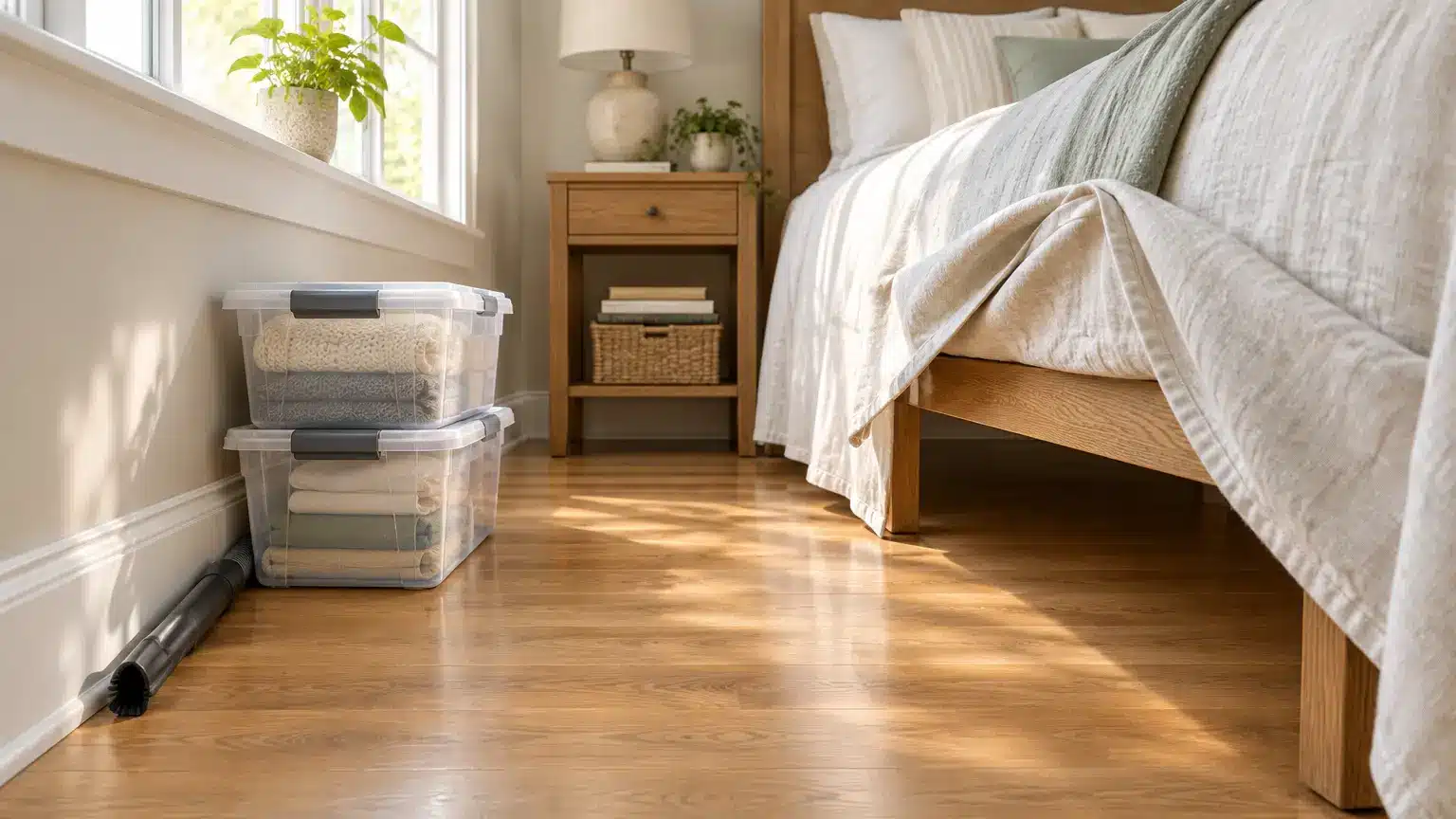


Most people are sleeping with more light than they think. Streetlights. Charging cables. The gap between your neighbor’s blind and the window frame. Even low levels of light exposure can disrupt sleep quality.
None of it is bright by any normal definition, but your brain doesn’t need bright; it just needs enough. And “enough” turns out to be almost nothing.
This isn’t a fringe sleep hygiene claim. The mechanisms are well-documented.
Light hits the retina, the pineal gland backs off melatonin, and your sleep either doesn’t come or doesn’t go deep.
The human body produces melatonin only in the dark, so blackout curtains help create the darkness needed for faster sleep onset and longer, uninterrupted sleep.
The only interesting question is whether your bedroom is actually dark, and most bedrooms aren’t, making blackout curtains essential for promoting restful sleep.
What Blackout Curtains Actually Do?
Blackout curtains are thick curtains, often made as multi-layer curtain panels, designed to stop light, including the sun, from coming through the window.
The fabric itself blocks 85–99% of incoming light, making these light-blocking curtains highly effective for improving sleep, reducing glare, and regulating indoor temperature by keeping rooms warm in winter and cooler in summer.
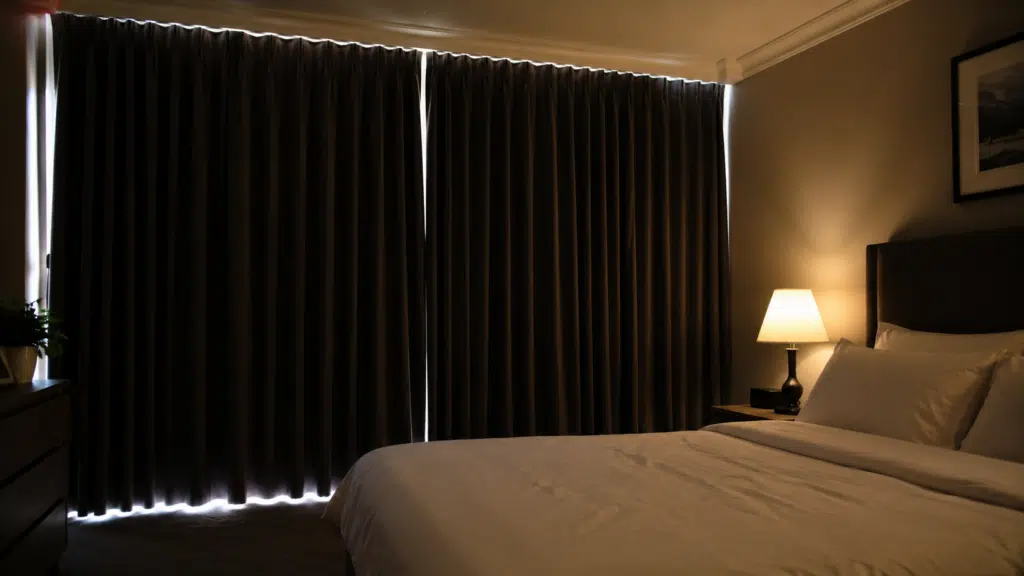
Done well, with minimal gaps at the edges and top, blackout curtain panels can bring a room close to 0 lux during daylight, which is roughly what you want. Thick curtains also provide superior insulation and soundproofing compared to standard options.
Types of Blackout Curtains
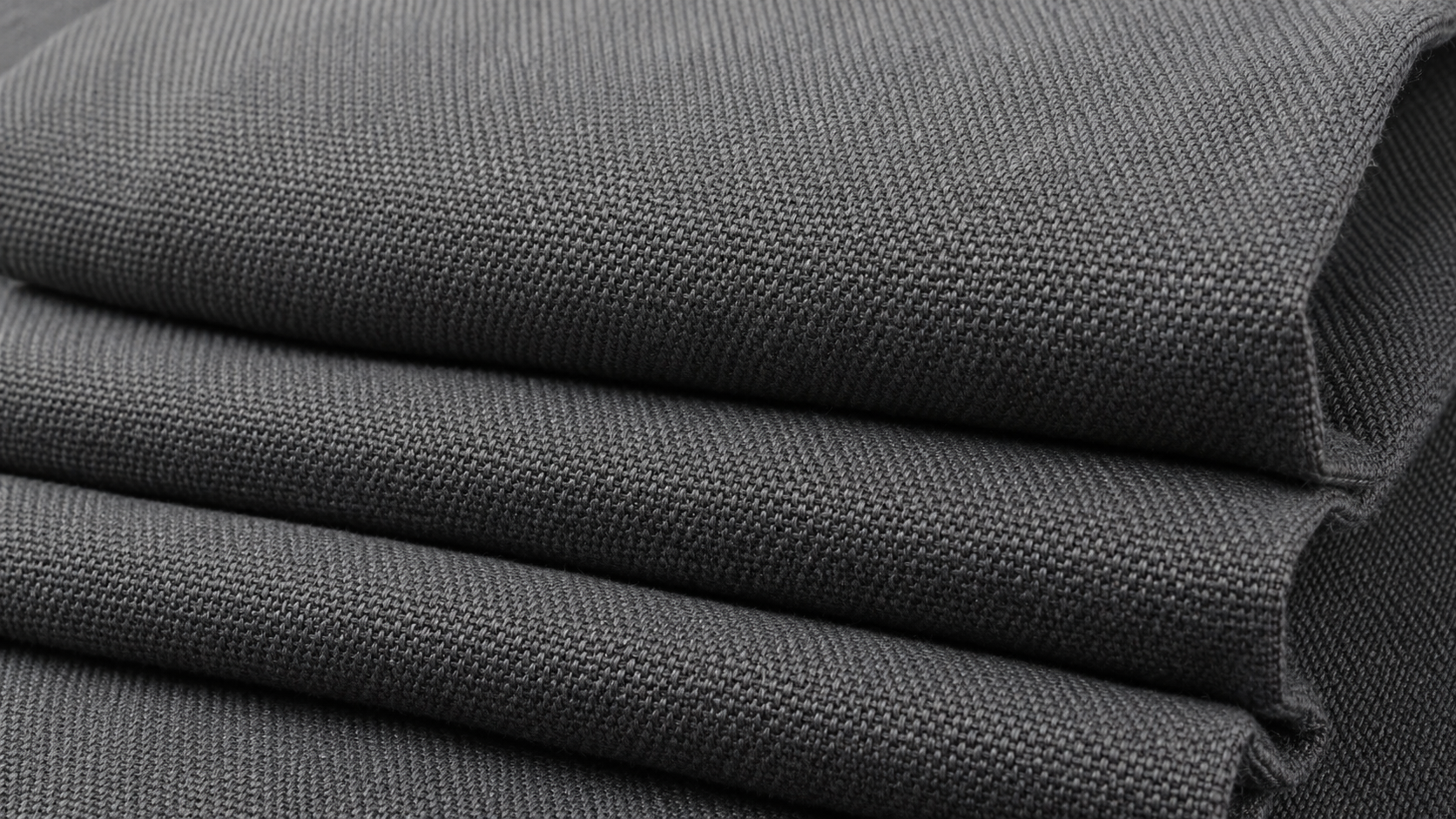
Blackout curtains come in different styles and light-blocking levels.
- Linen blackout curtains give a soft, natural look while using a light-blocking backing to darken the room. They work well in bedrooms and living rooms.
- Velvet blackout curtains are heavier and better for maximum darkness, noise reduction, and extra insulation. They suit bedrooms and media rooms.
- Room-darkening curtains block most light, but not all of it. True blackout curtains use thicker layers or special backing to create near-total darkness.
For unusual windows, custom-size blackout curtains can help reduce gaps and improve light control.
Who Actually Needs This?
Not everyone is equally affected, but a few groups see the most obvious improvement. Blackout curtains help most when light is directly affecting sleep.
- Shift workers benefit the most because daytime sleep means fighting strong outdoor light. Properly installed blackout curtains reduce that light at the source.
- City dwellers also need them. Streetlights, signs, headlights, and building lights can keep a room from ever feeling dark.
- People with insomnia or delayed sleep schedules may also benefit. Blackout curtains will not fix every sleep issue, but they remove one common barrier.
- Babies and young kids can sleep better in darker rooms too. Around 9 to 12 weeks, infants begin responding more to light cues, so a darker room may support longer naps and better rest.
How Blackout Curtains Compare to the Alternatives?
There are a few ways to manage bedroom light, and the tradeoffs are real.
Option | Light blocked | Installation | Downsides |
|---|---|---|---|
Blackout curtains | 85–99% (fabric) + gaps | Easy, renter-friendly | Edge gaps without proper mounting |
Blackout blinds/shades | Up to 100% (sealed track) | Moderate | Higher cost, less flexible |
Sleep masks | 100% (eyes only) | None | Discomfort, falls off |
Tinted window film | 50–80% | Permanent | Blocks daylight too |
Why Good Curtains Still don’t Work for Some People?
A few patterns come up constantly.
The most common is hanging them flush with the window frame. It looks clean, but it creates light channels along the edges.
Extending the rod 6 to 12 inches beyond the window frame on each side fixes most of this. The same principle applies vertically, floor-length panels that touch or slightly stack on the floor close the bottom gap.
The second is treating the curtains as the only thing to fix. Charging cables, router LEDs, TV standby lights, smoke detector indicators, all of it adds up.
A room that’s 98% of the way there can still be noticeably lit if half a dozen small lights are on. Cover them, tape over them, or move them out.
The third one is counterintuitive: people sometimes expect blackout curtains to help with waking up, too. They don’t, and shouldn’t.
Morning light is actually useful for resetting your circadian clock, but the problem is when it shows up at 5 am in June and wakes you an hour early.
A sunrise alarm clock handles the waking side: it gradually brightens at a set time, so you get a simulated dawn without the room light deciding when that happens.
Materials and Maintenance
Blackout curtain material affects light blocking, style, and care.
- Polyester is the most practical choice. It is durable, affordable, often machine washable, and works well with a light-blocking liner.
- Linen gives a softer, more natural look, but it needs a blackout lining to block light properly. Check care labels since some are dry clean only.
- Velvet feels more luxurious and helps reduce noise, but it is heavier and usually needs dry cleaning.
To make blackout curtains last longer, avoid constant direct sunlight and follow the care instructions.
What to Look for when Buying

The “blackout” label does not always mean full light blocking. Some curtains marketed as blackout still let in a lot of light, so look at construction, size, and fit.
Triple-weave and foam-backed fabrics usually perform better than thin single-layer curtains. Heavier curtains are also more reliable.
Size matters just as much as fabric. Choose curtains that extend 4 to 6 inches beyond each side of the window and reach the floor. Most light leaks happen because the curtains are too small.
Color does not decide performance. White blackout curtains can block light as well as dark ones if the fabric is built properly.
For care, follow the label. Use low heat or a steamer only if allowed, and avoid damaging the synthetic blackout layer.
Conclusion
If you’re already doing the reasonable stuff, consistent bedtime, less screen time in the evening, keeping the room cool, and sleep is still a problem, light is worth looking at seriously.
It’s one of the more correctable environmental factors, and the fix is usually just hanging something better on your windows and extending the rod past the frame.
Hang them wide. Hang them long. Test the room in daylight. It’s not complicated once you stop treating it like a decorating decision.
Frequently Asked Questions
Will Blackout Curtains Make it Harder to Wake Up?
Possibly, if you normally rely on morning light. The fix is a sunrise alarm clock , it mimics dawn at a set time, so you still get the light-based wake signal without it being at the wrong hour or earlier than you wanted.
Do they Help with Naps?
More than most people expect, actually. Daytime light is much brighter than nighttime light, and even a short nap is easier to fall into when the room is genuinely dark. If you nap badly, this is one of the first things worth testing.
Any Noise Benefit?
Some. Heavier fabric has a minor dampening effect, but it’s not dramatic. If noise is your main issue, you need acoustic panels or better windows. That said, cutting down on any stimulus during sleep tends to help at the margins.