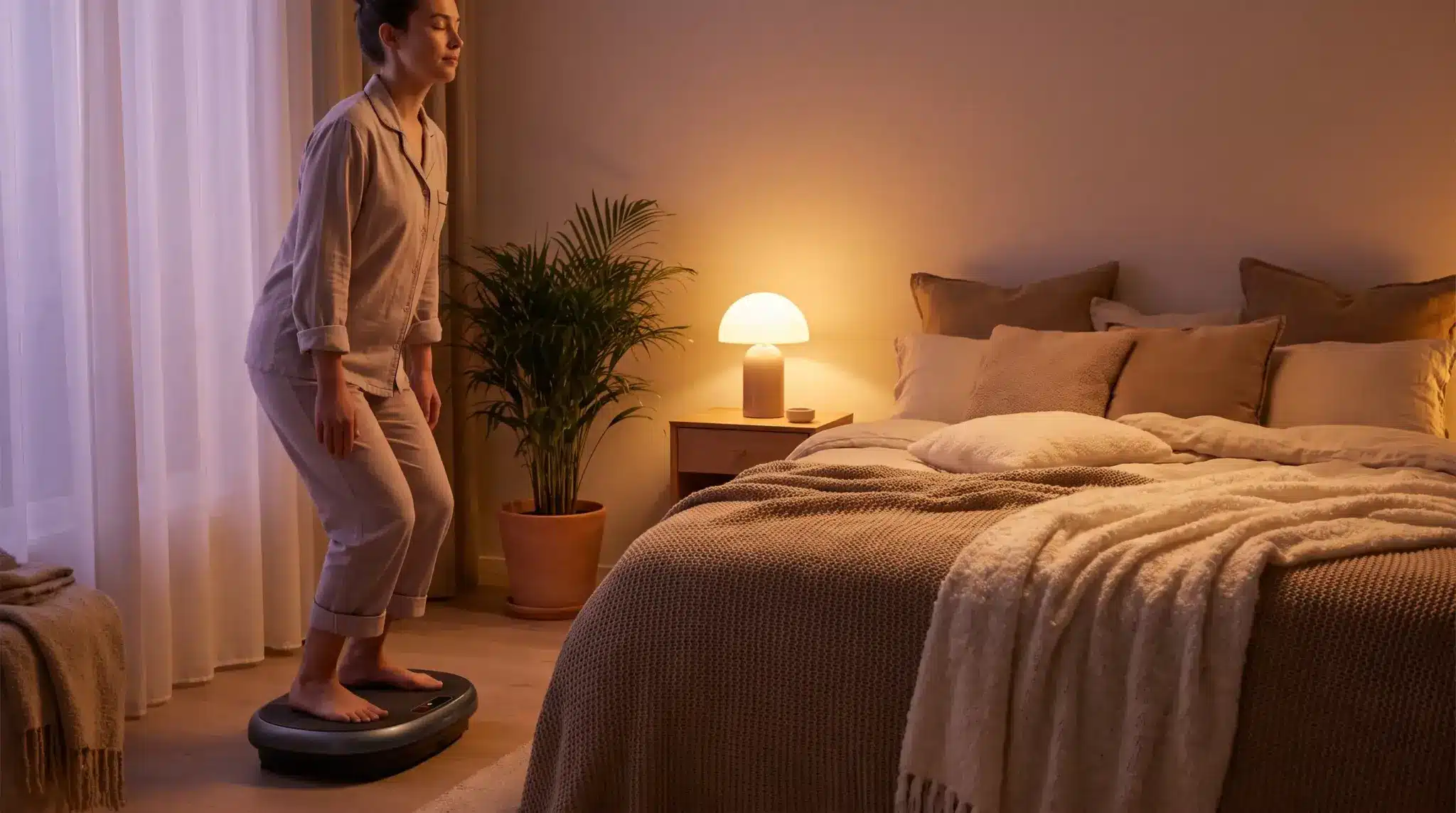

Exam season is the one time students actually care about sleep – right when it becomes hardest to get. Your brain is running at full speed, your evenings feel short, and shutting down at a reasonable hour feels almost impossible. But here’s the thing: sleep during exams isn’t time lost. It’s when your brain actually locks in what you studied.
Memory consolidation happens during deep sleep. What you reviewed before bed sticks better when you sleep after it. That’s not motivation talk – that’s how the brain works.
Why Your Evening Decides Your Morning
The morning starts the night before. How you spend your last two hours before bed directly affects how sharp you feel when the exam starts. A calm bedtime routine creates the right conditions for deep sleep – and deep sleep is what makes information retrieval fast and reliable under pressure.
The evening routine for better sleep doesn’t need to be complicated. It needs to be consistent. Even a 20-minute wind-down done the same way each night trains your nervous system to start switching off on cue.
Managing the Mental Load Before Bed
Studying hard all day leaves a residue. Your brain keeps running even when you want it to stop. Building a clear stopping point into your study night routine – a defined moment where work ends and evening begins – makes the transition into sleep much smoother.
When the academic load gets heavy, finding ways to lighten it before bedtime matters. Students who delegate written work during high-pressure periods sometimes turn to the PapersOwl site for support with complex written projects. That frees up mental space in the hours before sleep. A quieter mind at bedtime means falling asleep faster. And faster sleep onset means more time in the deep stages that actually restore you. Starting your wind-down from a calmer baseline makes every relaxation technique work better.
Simple Relaxation Techniques That Actually Help
Relaxation techniques before bed work best when they’re simple enough to do consistently. These five take under 15 minutes combined and make a real difference:
- Box breathing – inhale 4 counts, hold 4, exhale 4, hold 4. Three minutes activates your parasympathetic nervous system fast.
- Progressive muscle relaxation – tense and release each muscle group from feet to shoulders. Releases tension built up from hours of sitting.
- 5-minute journaling – write down everything still on your mind. Getting it on paper clears mental space before sleep.
- Light stretching – 5 to 10 minutes of gentle movement after a long study day makes a noticeable difference in how quickly you fall asleep.
- Reading fiction – something completely unrelated to your exams. It shifts your brain out of problem-solving mode faster than anything on a screen.
What Nobody Tells You About Studying in Bed
Most advice says never study in bed. That’s easy to say and hard to follow during exam season. The real issue isn’t studying in bed – it’s the physical strain that comes with it. Propping yourself up on pillows for two hours puts real pressure on your lower back and neck.
You raise the upper section to a proper reading angle, study without strain, then lower it flat when sleep time starts. The transition from study mode to sleep mode becomes physical – and that cue actually helps your brain switch off faster.
Setting Up Your Sleep Environment
Where you sleep during exam season deserves real attention. Small environmental adjustments compound into noticeably better rest over a two-week exam period.
Temperature matters more than most students realize. The body needs to cool slightly to enter deep sleep. A room between 65 and 68°F (18-20°C) supports that process. Easy Rest mattresses regulate temperature passively through the night – your body stays in the right range without waking up overheated at 3am.
Relieving Physical Tension Before Sleep
Hours at a desk build tension in the shoulders, neck, and lower back. That tightness carries into sleep and reduces how deeply you rest. Some mattresses have a built-in therapeutic massage function that targets exactly this. A few minutes on the shoulders and lumbar area before sleep helps the body release what sitting all day builds up.
Staying Comfortable Through the Night
Restless sleep during exams is often just a comfort problem. Easy Rest guides on mattresses choose individually encased coil technology – each coil moves independently, so shifting positions doesn’t disturb your support or transfer movement across the mattress. You settle faster and stay settled longer.
The One Habit That Ties Everything Together
Consistency beats optimization every time. A decent routine done every night outperforms a perfect routine done twice a week. Pick a wind-down time, stick to it even on the evenings you feel fine, and your body will start responding to it within a few days. By the time your hardest exam arrives, falling asleep quickly will feel automatic.
Final Thoughts
A healthy night routine during exam season isn’t about adding more structure to an already packed schedule. It’s about being intentional with the two hours before sleep. Clear stopping points, simple relaxation habits, and a sleep environment that actually supports rest – those three things make exam season feel noticeably more manageable. Start with one change tonight.