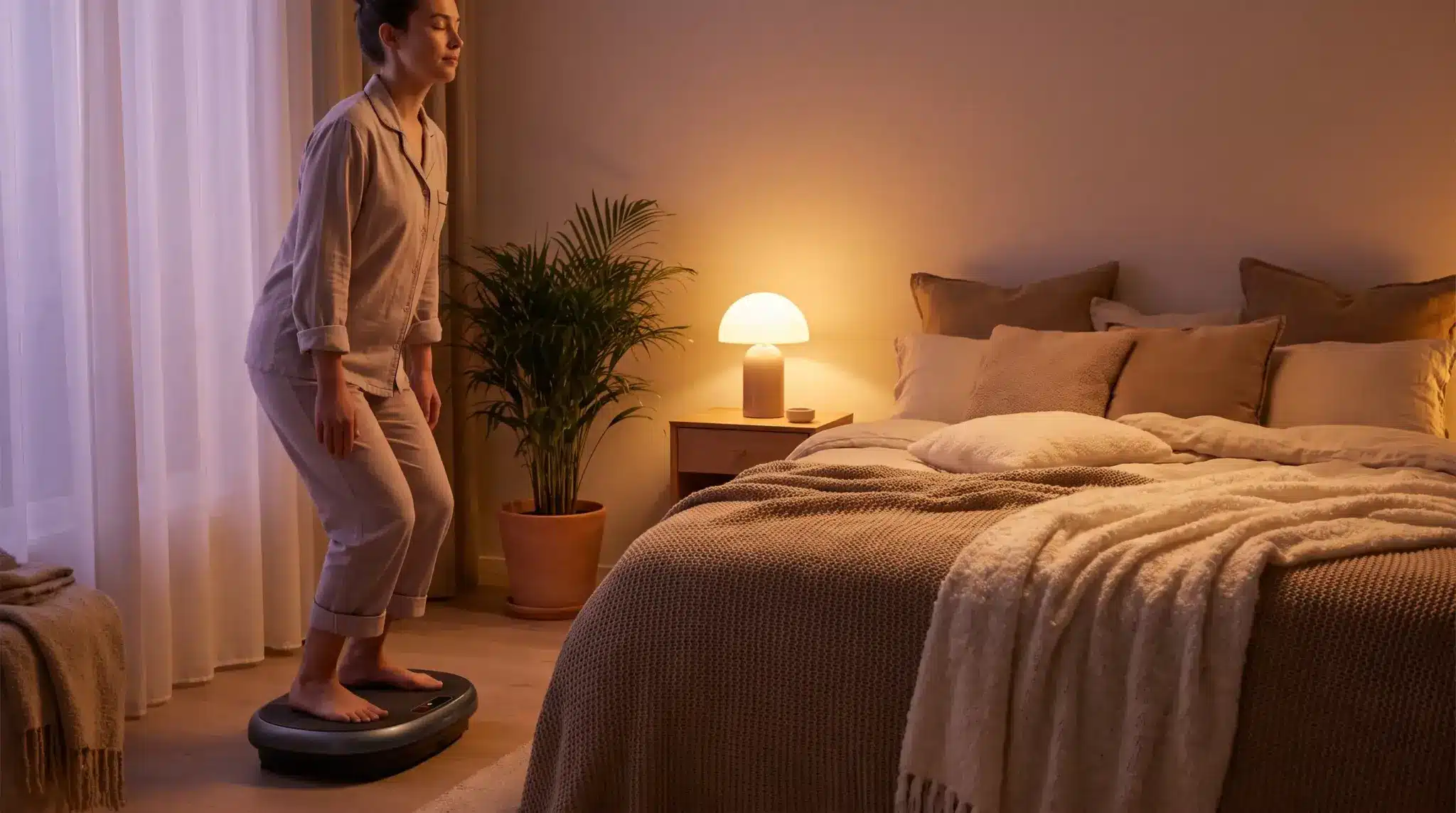
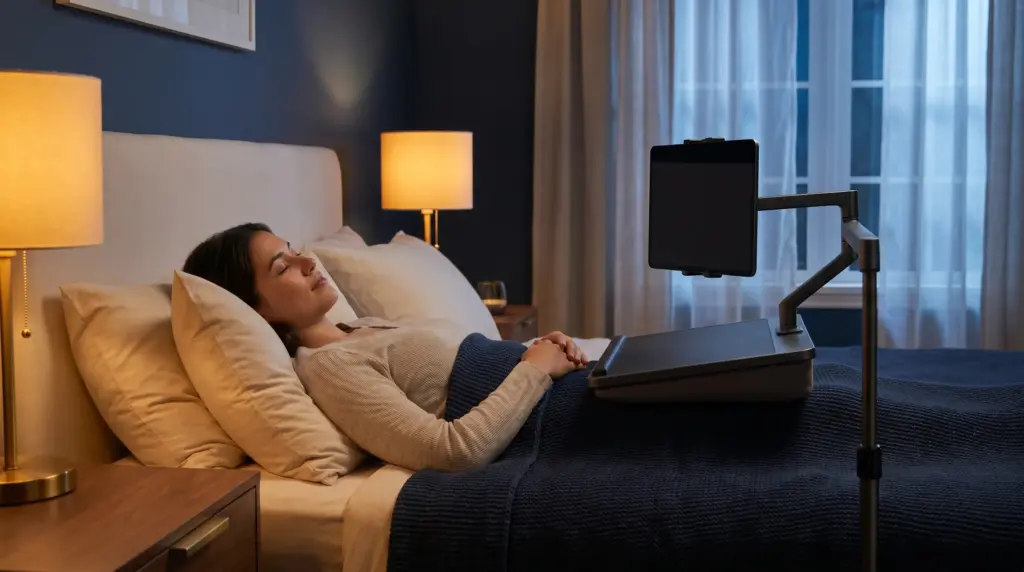
The modern bedroom has undergone a massive identity crisis. What used to be a dedicated space for recovery and sleep has morphed into a multi-purpose digital hub—a movie theater, a library, and occasionally, a late-night office. While the classic advice from sleep experts is to banish screens entirely, that ship has largely sailed for the average person. Most of us find comfort in a final chapter of an eBook or a guided meditation before drifting off.
However, the real problem with our late-night tech habit isn’t just the light; it’s the physical toll of how we use these devices. We spend hundreds of dollars on orthopedic mattresses and high-end pillows to align our spines, only to spend an hour “hunching” over a tablet, undoing all that structural support before we even close our eyes.
The Unseen Strain of the “Bedside Hunch”
When you’re propped up in bed, your body is in a vulnerable state. Unlike a dedicated ergonomic desk setup, a bed offers no natural support for holding a three-pound device at eye level. Most people end up in the “C-shape” posture: chin tucked toward the chest, shoulders rounded, and the tablet resting flat on their lap or a soft duvet.
This position puts a staggering amount of pressure on the cervical spine. Research into “tech neck” suggests that for every inch your head tilts forward, the effective weight on your neck muscles doubles. By the time you’ve finished a few chapters of a book, you’ve essentially spent an hour performing a strenuous neck workout. This physical tension is the antithesis of the relaxation required for deep, restorative sleep. If your muscles are tight and your nerves are compressed, your body stays in a state of low-level “alert,” making it much harder to transition into REM cycles.
Reimagining the Ergonomic Bedside
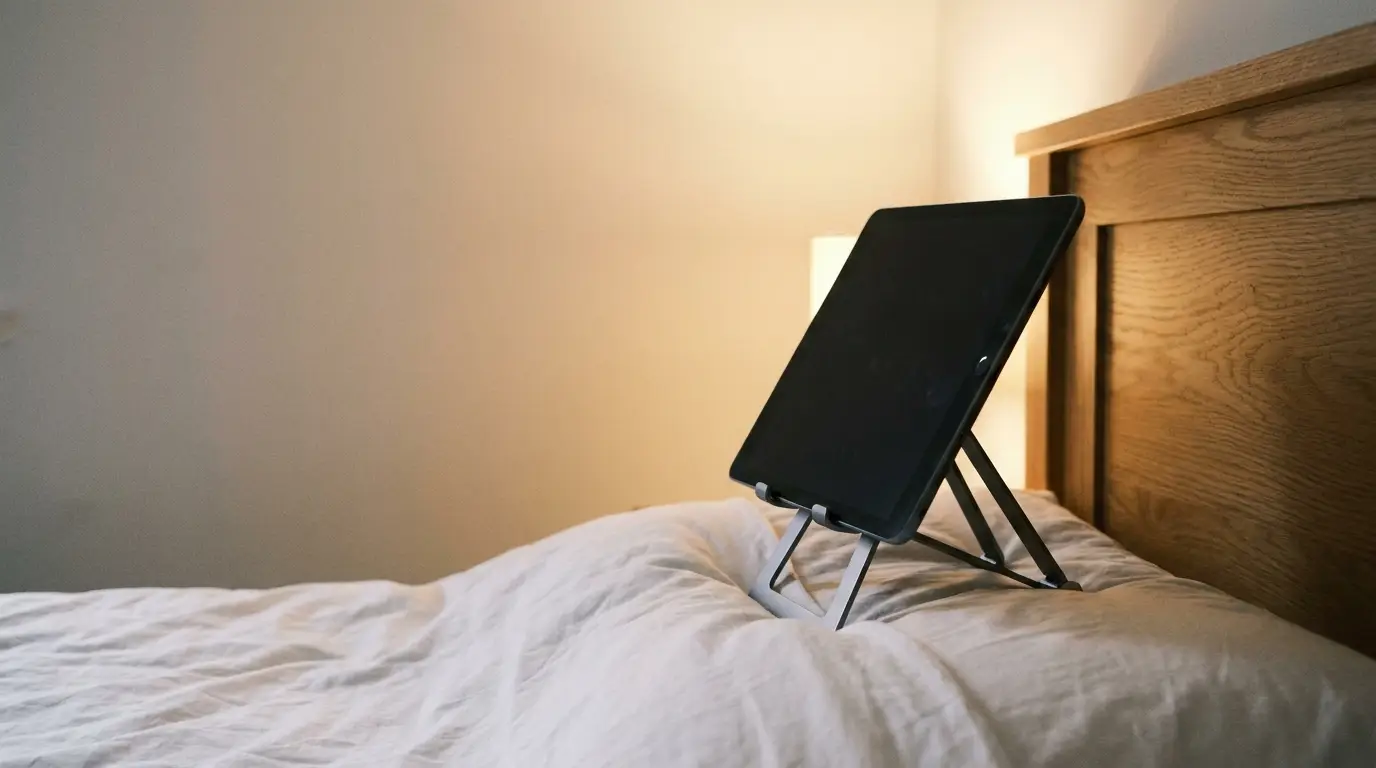
To fix the bedroom-tech relationship, we have to treat the tablet as a piece of medical equipment rather than just a toy. The goal is to bring the screen to the user, not the user to the screen. This is where the choice of an ipad case becomes a genuine health decision.
Standard covers usually offer only one or two low viewing angles, which might work on a coffee shop table but are useless on a mattress. For a bedside setup, you need height. Hardware designed with ergonomics in mind, such as the ESR Shift Magnetic Case, changes the game by allowing the tablet to be raised significantly higher than a traditional fold-over stand. By elevating the iPad closer to eye level, you allow your head to rest back against the headboard or pillow, keeping your airway open and your neck in a neutral, relaxed position.
For those who use their devices for more than just passive watching—perhaps for evening journaling or light correspondence—the stability of the setup is paramount. A flimsy stand on a soft bed is a recipe for frustration. A robust ipad keyboard case provides a solid base that won’t tip over on an uneven surface like a comforter. This stability allows you to keep your arms at a comfortable 90-degree angle, preventing the shoulder fatigue that often leads to tossing and turning once the lights finally go out.
Intentionality Over Prohibition
If we accept that technology is staying in the bedroom, we must become more intentional about its boundaries. “Digital detox” doesn’t have to mean throwing your tablet out the window; it can mean optimizing the interaction so it doesn’t leave you with a morning “tech hangover” of stiff muscles and a foggy brain.
A few practical adjustments can bridge the gap:
- Fix the Height: Never rest a tablet flat on your lap in bed. Use a magnetic stand or a raised case to keep your gaze horizontal.
- Support the Base: If you’re typing or scrolling, ensure your ipad keyboard case is on a stable lap desk or a firm pillow to avoid wrist strain.
- The 20-Minute Transition: Once you’ve finished your specific task—be it reading or a meditation app—use the magnetic versatility of your case to quickly detach and stow the device.
The relationship between our devices and our sleep doesn’t have to be antagonistic. By focusing on ergonomic support and spinal alignment, you can enjoy your digital library without sacrificing the physical health of your neck and back. After all, the best mattress in the world can’t fix the damage done by sixty minutes of poor posture before the lights go out. Reclaim your sanctuary by making sure your tech fits your body, not the other way around.