


Do you ever wake up with a stiff neck or a sore upper back and wonder what happened overnight? I’ve felt that same ache and frustration, too.
The truth is, your sleeping position has a huge impact on how your back and neck feel in the morning. When your spine isn’t properly supported, your muscles work overtime, leaving you sore and tense before your day even begins.
The good news? You can fix it with a few simple changes.
In this blog, I’ll walk you through the best sleeping positions for upper back and neck pain, explain how to choose the right pillow and mattress for better support, and share easy bedtime habits that help you relax and wake up refreshed.
Let’s make mornings pain-free again, starting with how you sleep tonight.
What Causes Upper Back and Neck Pain While Sleeping
Before we talk about solutions, let’s understand what’s going wrong. Upper back pain during sleep usually comes from a few common problems:
- Poor posture during the day that carries over into sleep
- An unsupportive mattress that’s too soft or too firm
- Wrong pillow height throws your neck out of alignment
- Awkward sleeping positions that twist your spine
Think about how much time you spend hunched over a computer or looking down at your phone. All that tension builds up in your neck and upper back.
When you sleep in a position that doesn’t support proper spinal alignment, those tight muscles never get a chance to relax and recover.
The key to pain-free sleep is maintaining what doctors call “neutral spine alignment.” This means your spine keeps its natural curves, not too flat, not too curved, from your neck down to your lower back.
Sleeping Positions For Upper Back Pain and Neck Pain Support
Finding the right sleeping position can make all the difference. The goal is to keep your spine aligned, reduce pressure, and help your body fully relax overnight.
Sleeping on Your Back: The Best Choice for Upper Back Pain
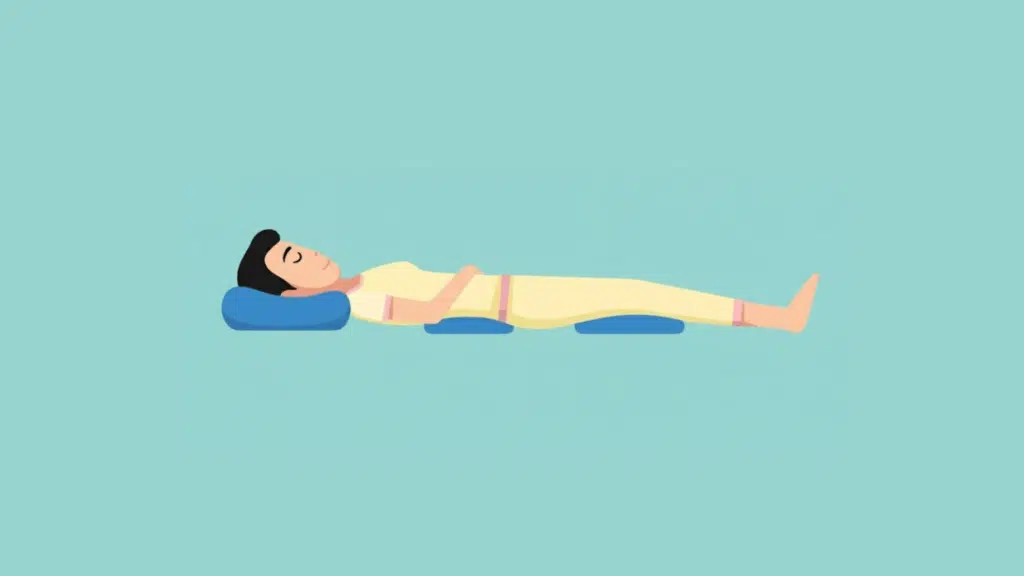
Sleeping on your back is the winner when it comes to upper back pain relief. This position keeps your spine in a neutral position and distributes your body weight evenly across your frame. No twisting, no awkward angles, just natural alignment.
Why back sleeping works so well:
- Reduces pressure on upper back muscles
- Keeps your neck aligned with your spine
- Minimizes morning stiffness and tension
- Prevents your face from pressing into the pillow (bonus: fewer wrinkles)
How to do it right:
Place a pillow under your knees. This small change helps maintain the natural curve of your lower back and takes pressure off your spine.
Your head pillow should be thick enough to support your neck without pushing your head forward. A medium-firm mattress works best for most back sleepers.
Your neck should stay in line with the rest of your spine, not tilted up or down. If you wake up with neck pain, your pillow is probably too high or too low.
Side Sleeping: A Solid Alternative for Neck and Back Pain Relief
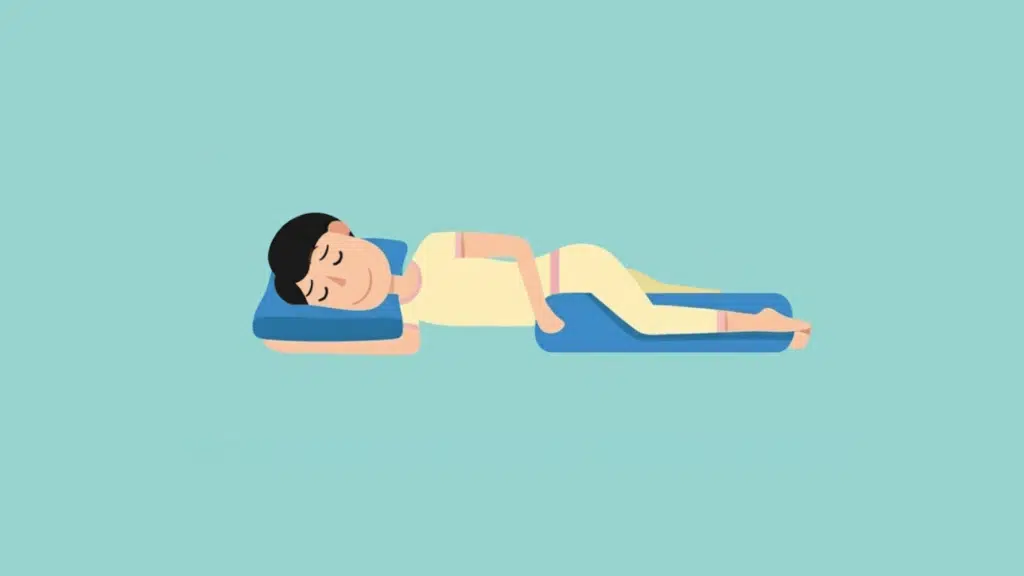
Side sleeping ranks second for upper back pain. When done correctly, it reduces strain on your spine and can actually feel more natural for many people. The trick is getting the support right.
How to sleep on your side without pain:
- Use a pillow between your knees. This keeps your hips, pelvis, and spine properly aligned. Without this support, your top leg pulls your spine out of position all night long.
- Keep your spine straight. Look at your body from behind; your spine should form a straight line, not a curve. Don’t curl up too tightly into a ball.
- Choose the right pillow height. Your pillow should fill the space between your shoulder and head. Too thin, and your head tilts down. Too thick, and it tilts up. Either way causes neck strain.
- Switch sides occasionally. Sleeping on the same side every night can create muscle imbalances. Try alternating sides to keep things even.
Sleeping Position to Avoid: Sleeping on the Stomach
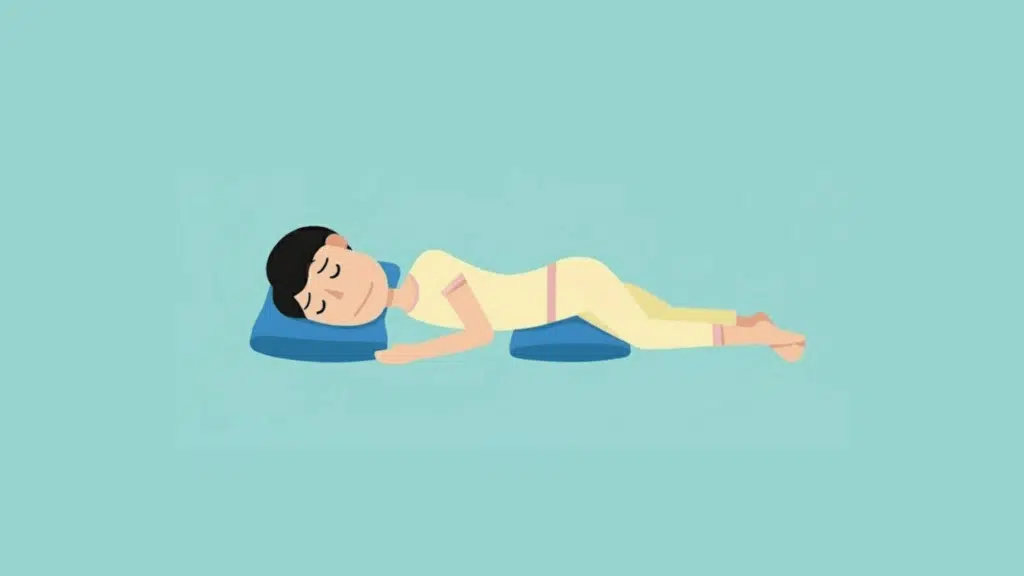
Here’s the tough truth: stomach sleeping is the worst position for upper back and neck pain. When you sleep face down, you have to turn your head to one side to breathe.
This twists your neck for hours on end and flattens the natural curves of your spine.
If you’re a dedicated stomach sleeper who can’t break the habit, here are some damage-control tips:
- Use the thinnest pillow possible (or no pillow at all) under your head
- Place a small pillow under your pelvis to reduce lower back strain
- Try to gradually transition to side sleeping instead
Keep in mind that stomach sleeping can also worsen snoring and sleep apnea by putting pressure on your airways. If you can switch to another position, your body will thank you.
How to Support Your Spine While You Sleep
The right position is just the start. The tools you use, pillows, mattress, and bedtime habits, matter just as much.
Pillow Placement Makes a Difference
Pillows play a crucial role in how your spine aligns during sleep.
For back sleepers:
- One pillow under your head (medium thickness)
- One pillow under your knees
For side sleepers:
- One pillow under your head (thicker, to fill the shoulder gap)
- One pillow between your knees
General pillow rules:
- Replace pillows every 1-2 years
- Choose materials that maintain their shape (memory foam, latex)
- Your pillow should support your neck, not just your head
Mattress Guide: Finding Your Match
Your mattress has a huge impact on upper back pain. Here’s a simple breakdown:
| Mattress Type | Best For |
|---|---|
| Soft Mattress | Lighter individuals (under 130 lbs) Side sleepers who need pressure relief |
| Medium-Firm Mattress | Most people (130–230 lbs) Those with upper back pain |
| Firm Mattress | Heavier individuals (over 230 lbs) Back sleepers who need solid support |
If your mattress is over 7-8 years old and sagging, it’s probably contributing to your pain. A mattress topper can extend its life temporarily, but eventually you’ll need a replacement.
Before-Bed Habits That Help

A few small changes before bedtime can make a big difference in how your back and neck feel when you wake up in the morning.
- Stretch Gently for 5–10 Minutes Before Bed: Focus on your neck, shoulders, and upper back with light stretches. This helps loosen tight muscles, improve blood flow, and prepare your body for restful sleep.
- Limit Screen Time in The Hour Before Sleep: Looking down at your phone or laptop strains your neck and shoulders. Turn off devices early, relax your eyes, and let your body unwind naturally.
- Stay Aware of Your Posture During the Day: Good posture during the day reduces the tension that builds up while you sit or stand. When your muscles are balanced, nighttime pain becomes much less likely.
- Keep Your Bedroom Cool (around 65–68°f): A cooler room helps your muscles relax and promotes deeper sleep. Combine it with gentle lighting and quiet surroundings for the best rest.
Tips for Transitioning to a Healthier Sleep Position
Changing how you sleep takes time. Your body is used to its old patterns, and it might resist at first. Here’s how to make the switch easier:
Start small. Try the new position for naps first. This helps your body get used to it without committing to a full night.
Use strategic pillows. If you’re trying to stop rolling onto your stomach, place pillows on either side of your body to keep you in position.
Reposition when you wake. If you wake up in the middle of the night in your old position, gently move back to the better one. Don’t stress about it, just reset and go back to sleep.
Be patient. It can take 2-3 weeks to adjust to a new sleeping position. Stick with it. The pain relief is worth the temporary discomfort of change.
When to See a Doctor or Specialist
Sometimes upper back pain needs more than a better sleeping position. You should talk to a healthcare provider if:
- Pain lasts longer than 2 weeks despite sleep changes
- You feel numbness, tingling, or weakness in your arms or hands
- Stiffness gets worse instead of better
- Pain wakes you up at night regularly
- You have trouble with daily activities because of the pain
These symptoms might point to underlying issues like herniated discs, spinal stenosis, or arthritis. A chiropractor, physical therapist, or orthopedic doctor can help identify the root cause and create a treatment plan.
Don’t ignore persistent pain. Early treatment prevents small problems from becoming big ones.
Summing Up
I know how frustrating it feels to wake up sore and stiff, but the good news is, you can change that. The right sleeping position, pillow, and mattress can make a big difference in how your body feels each morning.
I’ve learned that small adjustments, like keeping my spine aligned and using the right support, help me wake up feeling refreshed instead of achy.
Remember, your body needs time to adjust, so be patient and give it a couple of weeks. Once you find what works best for you, restful, pain-free sleep becomes your new normal.
If you’re ready to wake up without neck or back pain, start by trying one of these sleep positions tonight. You might feel the difference by morning!