Peptides for sleep are short chains of amino acids studied for how they affect sleep depth, stress, growth hormone, or the body clock. With one in three US adults short on sleep and one in seven facing chronic insomnia, they have become a common target for anyone hunting past melatonin for something that works.
The four studied most often are Ipamorelin with CJC-1295, Selank, DSIP, and Epithalon. Each one is discussed for a different sleep problem, and each carries a different level of proof.
Key Takeaways
- The best peptides for sleep are research compounds. None is an approved medicine, so treat every option as experimental.
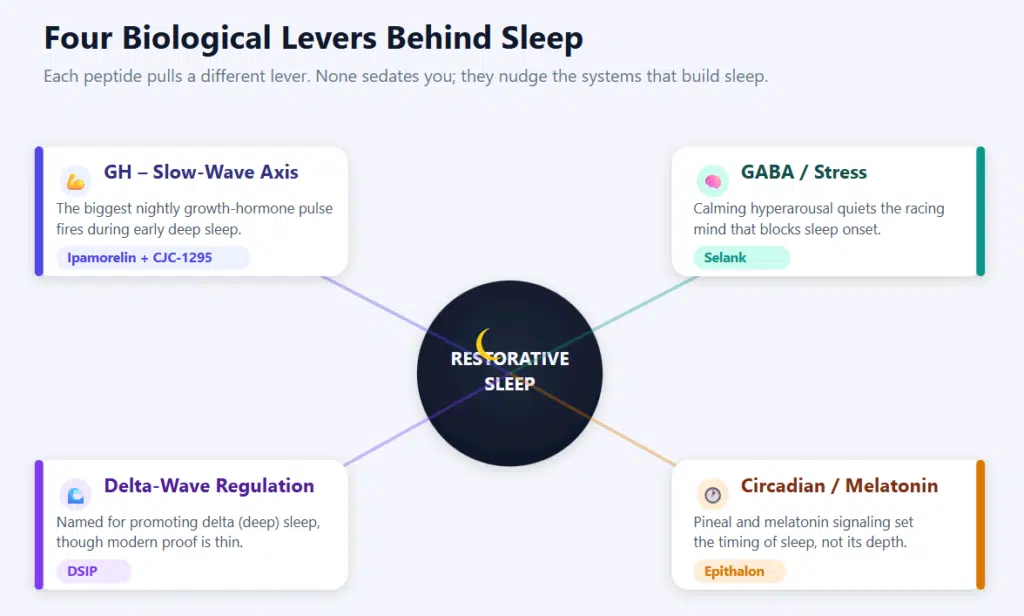
- Each peptide works on a different pathway: deep sleep, stress, delta-wave regulation, or the body clock.
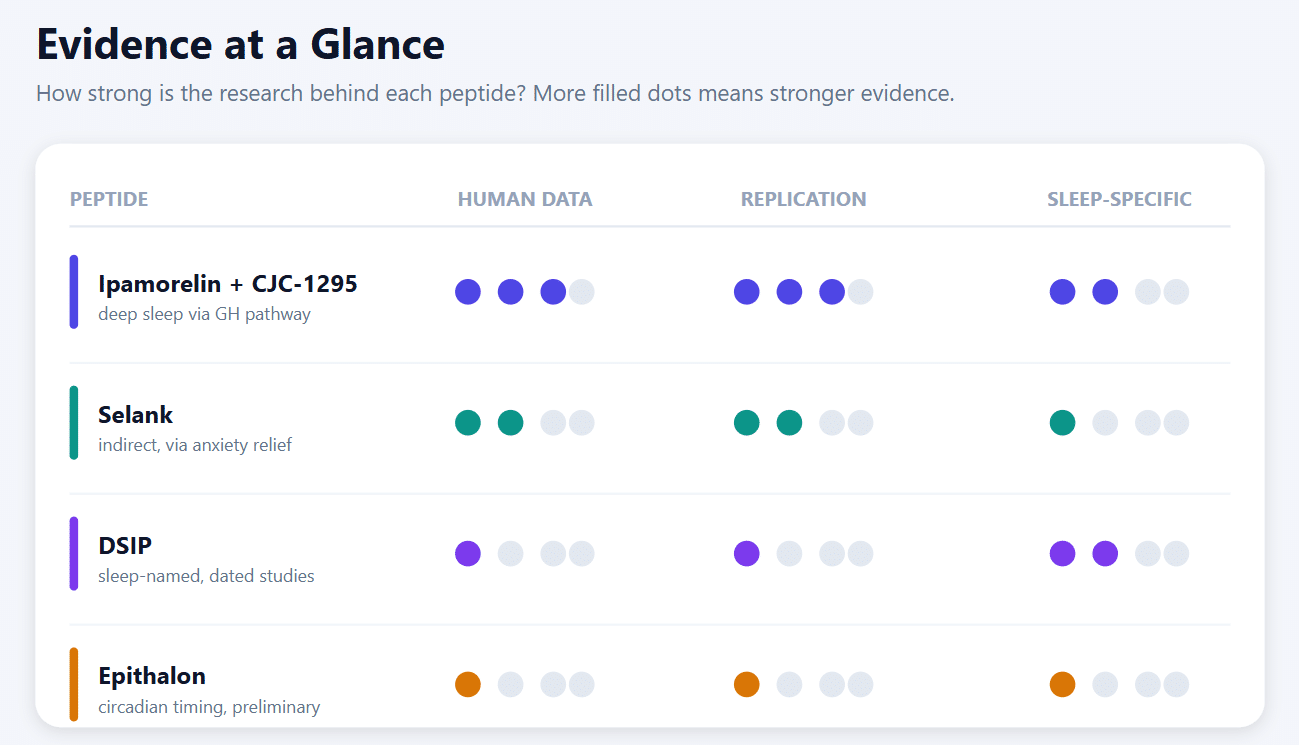
- Ipamorelin with CJC-1295 has the clearest link to deep, slow-wave sleep through growth hormone.
- DSIP is the most sleep-specific by name. Its modern evidence is the thinnest of the group.
- Sleep peptides should support finding a cause. A medical check-up still comes first.
How We Ranked These Peptides for Sleep
Our ranking here reflects the strength and relevance of the research. We scored each compound on three factors, and evidence quality carried the most weight.
First comes mechanism. A peptide earns a place if it plausibly touches sleep biology, such as the growth hormone axis, GABA signaling, or the body clock. A clear mechanism starts the conversation, but on its own it proves very little.
Next comes evidence. We favored human studies over animal work, controlled trials over casual reports, and findings that other teams have repeated. Sleep outcomes such as sleep onset, duration, and deep-sleep quality were scored separately.
Last comes safety. We noted known side effects, the near-total lack of long-term data, and the fact that none of these compounds has FDA approval or has moved beyond research use.
1. Ipamorelin + CJC-1295: Best for Sleep Architecture and Deep Sleep
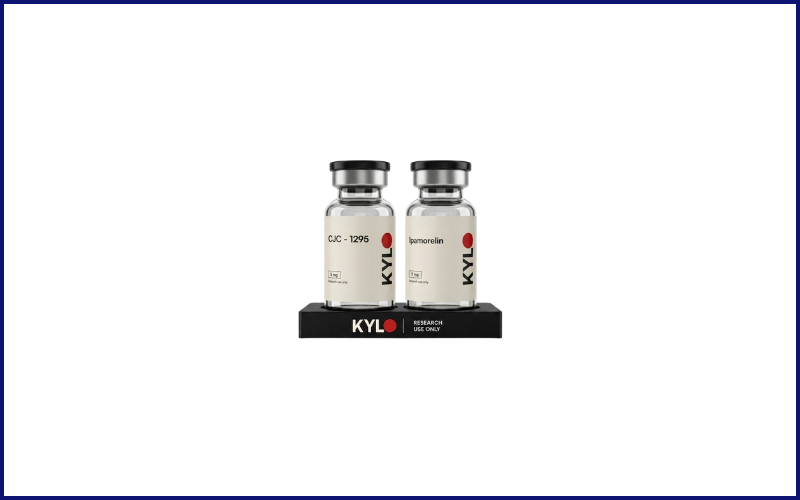
For deep sleep, Ipamorelin sleep research is the strongest of the group. This pair works by raising the body’s own growth hormone, which provides the clearest link to slow-wave sleep.
Ipamorelin tells the body to release more of its own growth hormone. CJC-1295 is a related compound that helps that release last longer. Used together, they aim for a stronger, steadier growth hormone signal.
The body’s biggest nightly growth hormone pulse fires during early deep sleep, and research links deep sleep and growth hormone in a two-way loop. Supporting that signal is relevant to restorative sleep.
The limits are real. Few human trials measure sleep as the primary outcome in this pair, so the deep-sleep benefit remains largely theoretical. Growth-hormone compounds carry their own risks, and both sit on sport anti-doping banned lists.
This pairing is best suited for research into sleep depth, feeling unrested after a full night, and recovery-related sleep concerns.
2. Selank: Best for Stress- or Anxiety-Related Sleep Problems
Selank sleep interest comes from an indirect route, because the peptide targets anxiety and a racing mind. When stress is what keeps you awake, easing it may help you drift off.
Selank is a lab-made peptide based on a natural immune peptide called tuftsin. Researchers built it mainly to lower anxiety.
Its possible sleep link runs through calming signals in the brain, including GABA pathways. Quieting an overactive, anxious mind can make it easier to fall asleep as a knock-on effect.
Human research on Selank centers on anxiety, where small studies report calming effects. Better sleep appears only as a side observation, so a direct effect on sleep has not been proven. Insomnia research is limited, long-term safety is unknown, and the compound remains for research use only.
It is best suited for racing thoughts, stress-driven trouble falling asleep, and anxiety-linked sleep problems.
3. Epithalon: Best for Circadian Rhythm Research
Epithalon sleep interest blends with the timing system behind sleep, because this peptide is studied for the body clock more than for a single night. It focuses on the timing of sleep. Depth is a separate question.
Epithalon is a small, lab-made peptide derived from a natural pineal gland compound. The research links it mainly to aging and the body clock.
The sleep link runs through the pineal gland. Studies look at whether Epithalon supports that gland and its melatonin output, which help set your circadian rhythm. Melatonin is the hormone that signals night to your body.
The evidence is early. Some human and animal studies suggest body-clock effects, though few independent teams have repeated them; there is no FDA approval, and long-term safety is unclear.
It is best suited for body-clock research and age-related shifts in sleep timing.
4. DSIP: The Sleep-Specific Peptide With Limited Evidence
DSIP sleep research is the most sleep-focused of the four, because this is the only compound here defined by sleep. Even so, its evidence base is the weakest in the group, placing it last on our list.
DSIP stands for delta sleep-inducing peptide. Scientists first found it in the 1970s in the blood of sleeping rabbits. The name comes from early signs that it boosted deep, delta-wave sleep.
Proposed mechanisms involve brain chemicals and stress hormones tied to sleep. The appeal is clear, since it maps so neatly onto deep sleep on paper.
The research is more cautious. A 1992 study of patients with chronic insomnia reported improved sleep efficiency and faster sleep onset. The wider literature disagrees with itself, though, since the studies are small, old, and modern trials are largely missing.
It is best suited for research focused on delta sleep and the regulation of deep sleep.
How to Choose the Right Peptide for Sleep
Match each peptide to its sleep problem, since each works through a different pathway. Choosing peptides for sleep starts with naming the issue you want to study. This grid pairs a common concern with the peptide under study and its main caveat.
Sleep concern | Peptide to research | Primary rationale | Evidence limitation |
|---|---|---|---|
Poor sleep depth | Ipamorelin + CJC-1295 | Growth hormone and slow-wave sleep link | Few sleep-specific trials |
Trouble falling asleep from stress | Selank | Anxiety-related pathways | Sleep effects are largely indirect |
Sleep-regulation research | DSIP | Historical delta-sleep findings | Inconsistent evidence |
Body-clock disruption | Epithalon | Pineal and melatonin research | Limited independent replication |
For deep or restorative sleep, the growth hormone link makes Ipamorelin with CJC-1295 the natural pick. For stress-related sleep, Selank is the best fit. For body-clock problems, Epithalon’s tie to melatonin is the right angle.
When the cause of poor sleep is unknown, hold off on any peptide. Ongoing poor sleep can come from sleep apnea, thyroid trouble, medication, or low mood. A peptide doesn’t fix any of those, so finding the cause with a clinician comes first.
Peptide Stacking for Sleep
Stacking peptides for sleep is common in online discussion forums and thin in the actual clinical record. People chase bigger results by combining compounds, yet the studies rarely follow. The most discussed pair is Ipamorelin with CJC-1295.
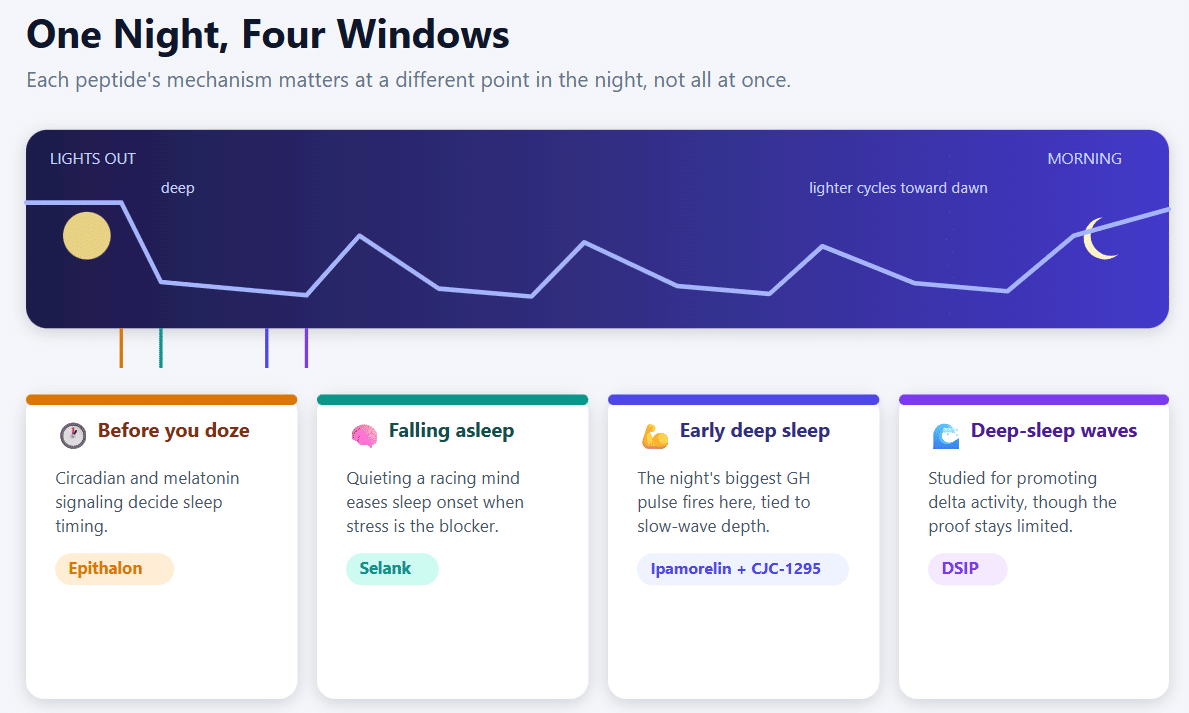
People combine those two because their pathways complement each other, aiming for a steadier growth hormone release. Even so, formal sleep studies of the combination are lacking.
Some people pair Selank with a growth hormone peptide to address two problems at once, calming sleep onset while supporting sleep depth. The logic holds up. Controlled combination trials to confirm it are missing.
Epithalon is different from others, since its mechanism is the body clock. Growth hormone is not part of how it works, and pairing it with others is supported by almost no evidence.
Before stacking anything, remember that more compounds mean more unknowns. Testing one at a time tells you far more.
Safety and Regulatory Status
Does any sleep peptide have FDA approval? No. None of these compounds is cleared for insomnia, and all are sold for research use only. Research-grade status is only a legal label. It says nothing about whether a compound actually works.
Safety concerns fall into two groups. Some risks are specific, such as growth hormone effects from the Ipamorelin-CJC-1295 pair. On top of that, there are unknown long-term effects and the risk of impure or contaminated products from lightly regulated suppliers.
Some people should skip self-experiment entirely. The group includes anyone with ongoing unexplained sleep problems. It also includes people on medications that could interact and anyone with a health condition, who should check trusted NIH health guidance and see a clinician first.
What the Evidence Shows and Does Not
The settled science here concerns sleep biology itself. Research firmly links deep, slow-wave sleep to the body’s release of growth hormone. The link is well established across decades of sleep studies.
Body-clock signals set sleep timing. Stress drives much poor sleep. Those facts are why the four peptides get studied at all.
What stays unclear is whether these compounds truly help clinical insomnia. Long-term safety, dosing, and treatment length are unproven. It is also unclear whether reported benefits hold up in controlled settings.
Much of the online buzz rests on mechanism and small studies more than on large trials. Such gaps are common in early peptide science. Treating these peptides as research tools keeps expectations honest, because none of them is a cure.
Conclusion
Based on the current evidence, Ipamorelin with CJC-1295 ranks first for its clear association with deep sleep. Selank ranks second for stress-related sleep onset, and Epithalon third for body-clock timing. DSIP lands fourth despite its sleep-specific name, since its modern data is thin.
Each peptide works on a different pathway, so the right research target depends on your sleep problem. The sleep-specific evidence for all four is limited, and none is an established insomnia therapy. Use them as a lens on biology, and check ongoing sleep problems with a qualified clinician first.
Disclaimer: This content is for informational and educational purposes only and is not medical advice. The peptides discussed are research compounds and are not cleared by the FDA for diagnosis, treatment, cure, or prevention of any condition, including insomnia. Speak with a qualified healthcare provider before making decisions about sleep or any health concern.
Frequently Asked Questions
What Is the Best Peptide for Sleep?
There is no single best sleep peptide, since each targets a different pathway and problem. For deep-sleep research, Ipamorelin with CJC-1295 has the clearest mechanism of action. For stress-driven sleeplessness, Selank is the usual focus.
How Long Do Peptides Take to Affect Sleep?
There is no reliable timeline, because the research does not establish one. Any reported changes vary by compound, dose, and person, and almost none of it comes from large controlled trials. Treat any exact timeframe you see online with real caution.
Can Peptides Help with Insomnia?
No peptide is approved or proven in clinical trials for insomnia. Some show relevant mechanisms and early signals in small studies. The evidence still falls well short of treatment status, so none of them should be used as a cure for insomnia.
Is Selank Useful for Sleep?
Selank is studied mainly for anxiety, so any sleep benefit tends to be indirect. It may ease sleep onset when stress and a racing mind are the cause. Its effect on sleep itself stays unproven.
Does Any Sleep Peptide Have FDA Approval?
No. Every peptide here is research-use only. The FDA clears none for insomnia or any sleep use, and you can confirm current approvals through official consumer health resources before trusting any product claim.
Can You Stack Peptides for Sleep?
People do discuss stacks, most often Ipamorelin with CJC-1295. Controlled combination studies are missing, so the practice rests on theory alone. Stacking also introduces more unknowns, making individual responses harder to read.