
I spent my first Lake Zurich winter shoveling a path to the back fence at seven in the morning, coffee going cold in my other hand, wondering why nobody had explained that a dog turns a suburban yard into a second job.
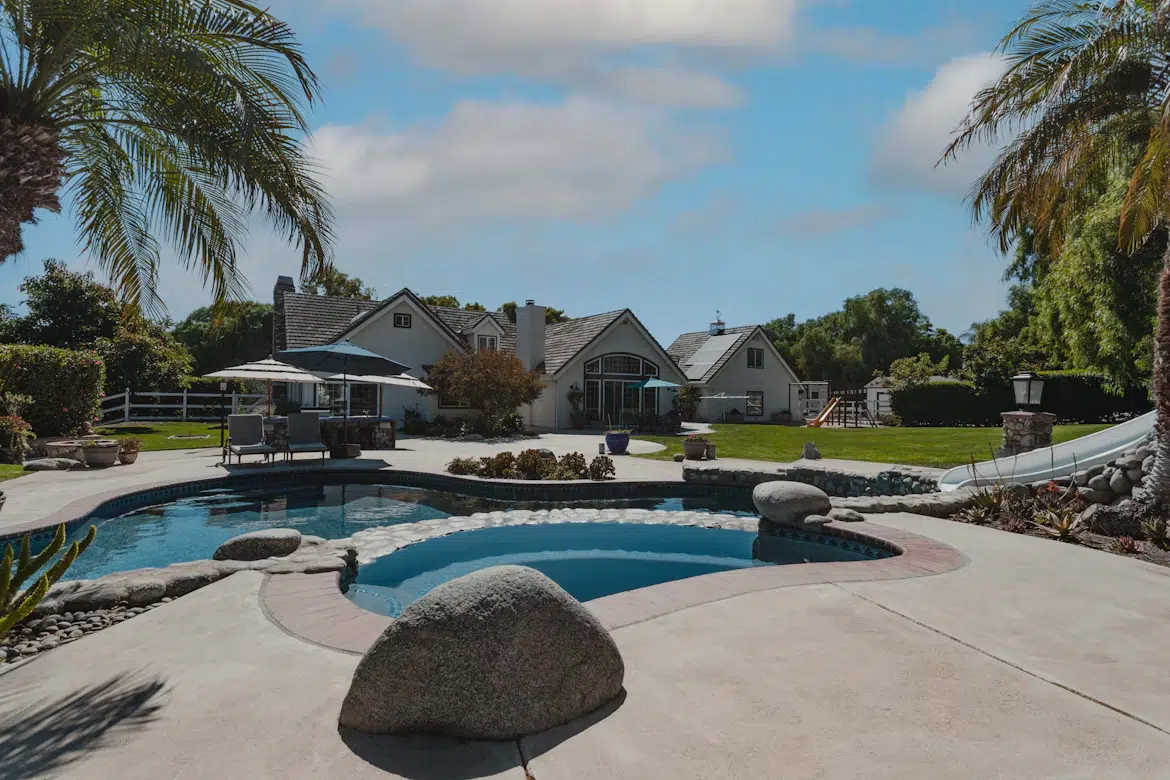
Here’s the deal. Lake Zurich sits in Lake County, gets real winters, real spring mud, and a stretch of summer where the backyard becomes your living room.
If you own a dog here, your yard needs a system, not good intentions. That system covers four things: drainage, turf protection, odor control, and waste removal.
Get those right and you’ll actually enjoy your yard. Skip one and you’ll spend the season apologizing to guests. I learned this the hard way, and I’ve since watched plenty of neighbors do the same. Some of them hand the last piece off entirely, which is how a lot of households around here end up booking pet waste pickup in Lake Zurich and calling it the best money they spend each month.
Why Lake Zurich Yards Take a Beating
You get four seasons with real teeth. Long stretches below freezing, a thaw that turns the whole yard into pudding, then a humid July that bakes whatever the dog left behind. That cycle is brutal on grass.
University extension programs have been saying for decades that compacted, saturated soil grows weak turf. Everyone nods at that and then does nothing. I get it. When the ground is frozen at 6:30 in the morning, “soil structure” is not the thought running through your head.
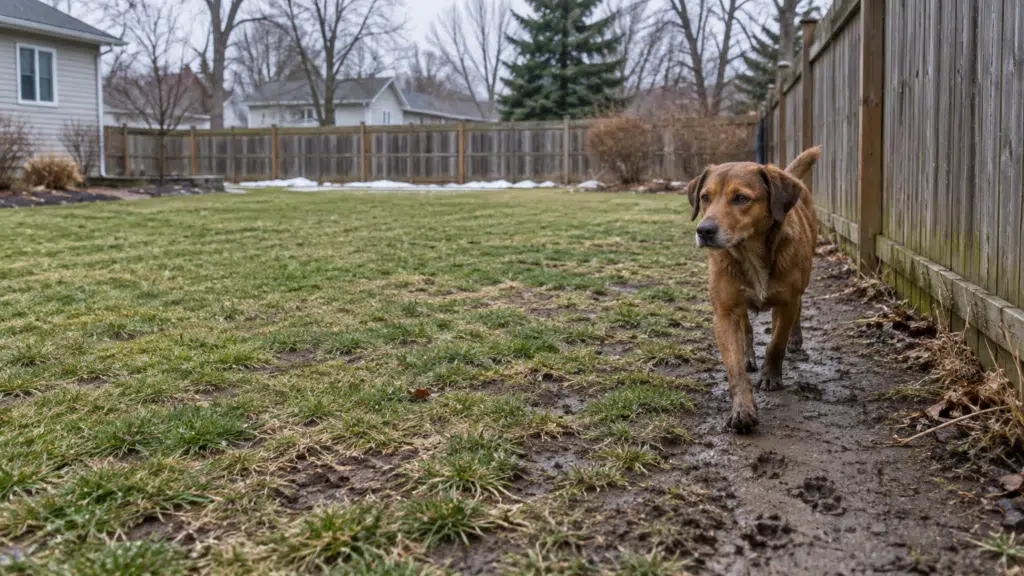
But yours is the yard that gets the traffic. Same dog, same path along the fence, day after day. Water pools in the low spots, the grass thins, bare soil shows up, and mud ends up on your kitchen floor. Understanding stormwater runoff helps here, because your yard is part of a bigger system and the fixes overlap.
Mud season is the real enemy
Late February through April is when most dog owners give up for a few weeks. The yard looks like a hog pen and every paw that crosses the threshold tracks in a fresh mess. Two cheap fixes, and they work.
First, stop walking the same line. Shift the route through the yard by a few feet every week or so and give the worn strip time to recover.
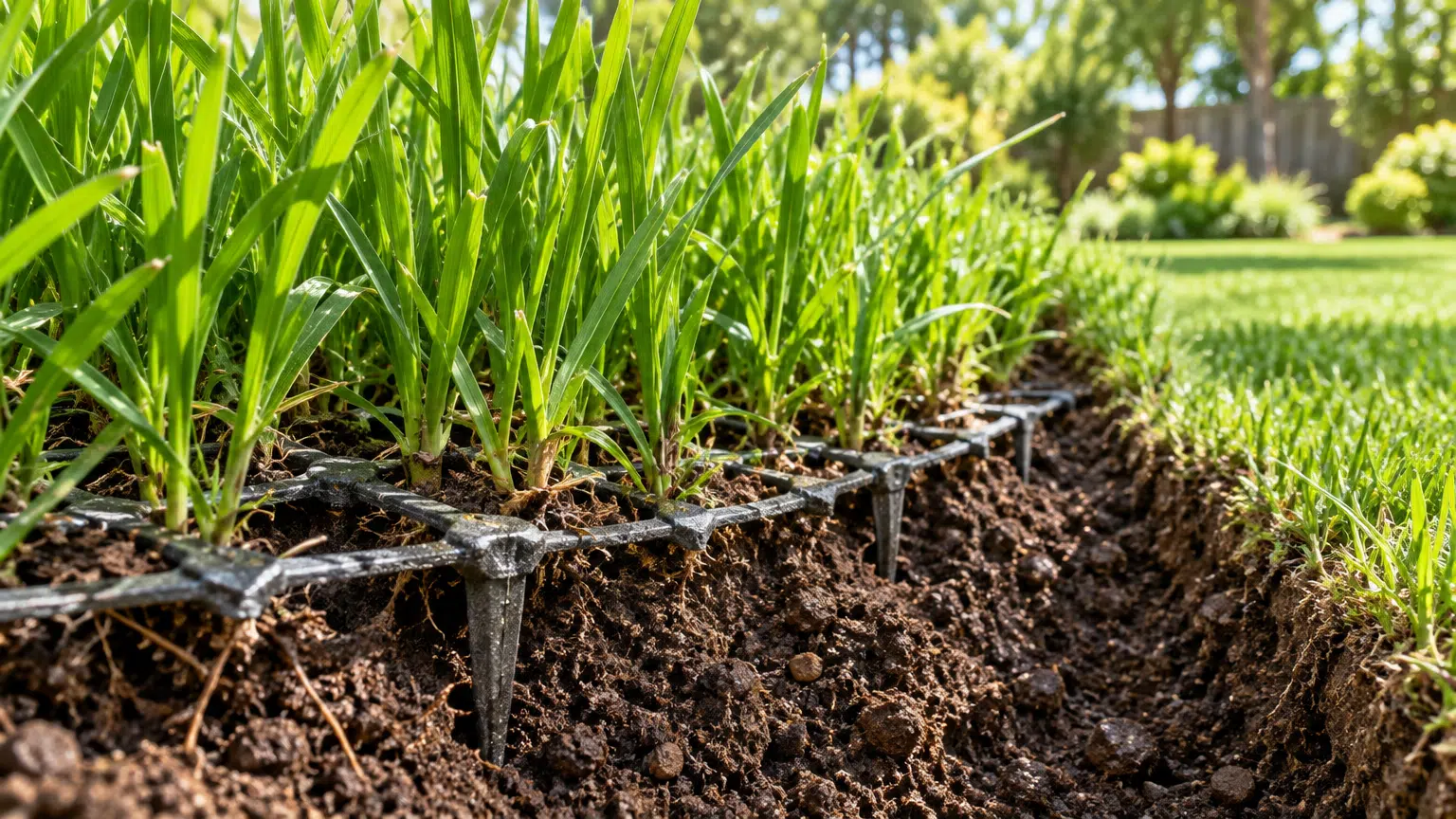
Second, put down something that holds up: mulch across the high-traffic zone, a flagstone path to the gate, or a patch of clover, which handles foot traffic better than bluegrass and needs less water.
Don’t underestimate a Lake Zurich winter
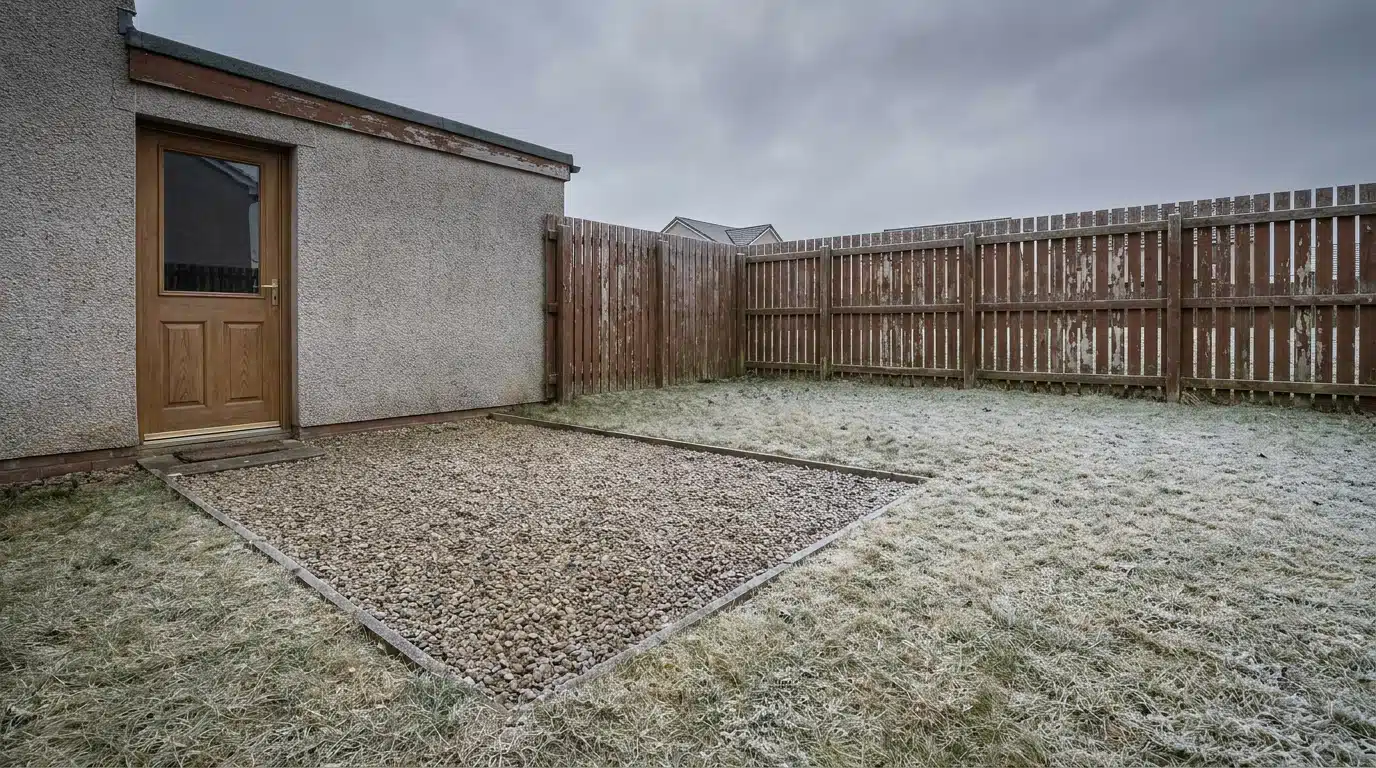
Rock salt and chemical de-icers are rough on paws and rough on your lawn’s edge.
If you want the specifics for your own property, NOAA tracks local patterns at the National Weather Service, and it is worth knowing what you’re actually dealing with before you decide anything about your yard. One thing I would do differently if I could start over: set up a winter relief zone in the fall.
A small gravel patch near the back door gives your dog a spot that stays usable when the grass is buried and saves the lawn from getting torn up. Two bags of pea gravel in October and you’re done.
I would also keep the winter cleanup habit going. It’s tempting to let the yard “rest” under the snow. But the January thaw always comes, and it comes with a smell. You want that stuff off the lawn before it melts into it, not after.
A quick word on the Illinois yard waste rules
Bagging and disposing of pet waste the wrong way is a nuisance and, in most Illinois municipalities, a rule problem. If you’d rather read the rules for yourself than take my word for it, the state publishes them at the State of Illinois. It’s a short read. My take: just bag it and put it in the trash.
Composting pet waste for a vegetable garden is a bad idea, and nobody needs a lecture to figure that out.
The Three-Layer Yard Check
This is the routine I run every Saturday morning, top to bottom, five minutes per layer. It’s the thing I wish someone had handed me when we moved in.
- Layer one, the surface: what you can see. A slow walk along the fence line, the gate, along the foundation, and the back corner behind the shed. Those four spots hold more waste than the entire center of the yard. I know because I skipped them for a month and found out the hard way.
- Layer two, the texture: what you can smell and step on. Press a heel into the grass near the gate. If it sinks an inch and stays, you have a drainage problem and the waste situation is about to get worse. Fix it now, before summer.
- Layer three, the edge: what you can read from your own back door. Stand at your door and look at the whole yard the way a guest would. That’s the check that catches what you’ve stopped noticing after a long winter.
The thing about layer three is that it also tells you what your yard says to a buyer, a landlord, or the neighbor whose property line touches yours. Curb appeal in the broadest sense. I don’t think that’s a stretch, given how much of your yard a passerby can see over a fence.
When to call someone instead of doing it yourself
I’ll pick a side here. If you have one dog, a fenced yard, and 20 spare minutes a week, you can probably handle this yourself with a good rake and a bucket. But if your yard has more than one dog, or the grass has gone long, or you’re away on weekdays, the math flips fast. A weekly visit runs less than what most people spend on coffee in a month.
I’ve watched both versions play out on our street, and the households that stay on top of it are the ones that aren’t trying to do it all alone. The yard gets cleaned whether you’re home or not. No negotiation, no lost Saturday.
What actually keeps a Lake Zurich yard clean
Three habits carry most of the weight. Clean up more often than you think you need to, pick up after each rain, and check the high-traffic corners before you mow. That’s it.
- Walk the fence line first, every time.
- Bag it and trash it, don’t compost it.
- Fix the low spots before spring, not after.
- Set a seasonal reminder for the first thaw.
None of this is glamorous. But a clean yard is a yard you use, and you paid good money for this property.
Put it on the calendar
Your yard doesn’t need heroics. It needs a routine. Pick a day, run the three layers, and let it become the kind of chore you stop thinking about. What’s the one corner of your yard you haven’t looked at since last November?