
Have you ever stood in the middle of your bedroom, tape measure in hand, trying to figure out if a new bed will really fit? This is one of those decisions that sounds simple until it suddenly isn’t.
You scroll, you search, and one question keeps popping up: how wide is a queen bed, and will it work for your space? I get why this matters to you. A bed is not just furniture.
It affects how you move around the room, how you sleep, and how comfortable your everyday routine feels. You might be sharing the bed, upgrading from a smaller size, or moving into a new place where every inch counts.
Small details start to feel big when trying to get it right. Here, I’m walking you through what you actually need to know so you can feel confident, not confused.
By the end, you’ll know exactly how to judge if a queen bed fits your room and your life, without second-guessing your choice.
What is a Queen Bed?
A queen bed is a popular mattress size that measures 60 inches wide by 80 incheslong, offering comfortable sleeping area for couples or individuals who prefer extra room.
It’s one of the most sought-after bed sizes in homes, hotels, and apartments due to its ideal balance between spaciousness and practicality. The queen bed provides approximately 30 inches of personal area per person when shared, making it suitable for couples without dominating smaller bedrooms.
It’s also perfect for single sleepers who enjoy stretching out or sharing their bed with pets. Queen beds fit well in most master bedrooms and larger guest rooms, typically requiring a room size of at least 10 by 10 feet for comfortable movement.
They accommodate standard queen bedding, which is widely available and affordable compared to king-size options.
Standard Queen Bed Dimensions
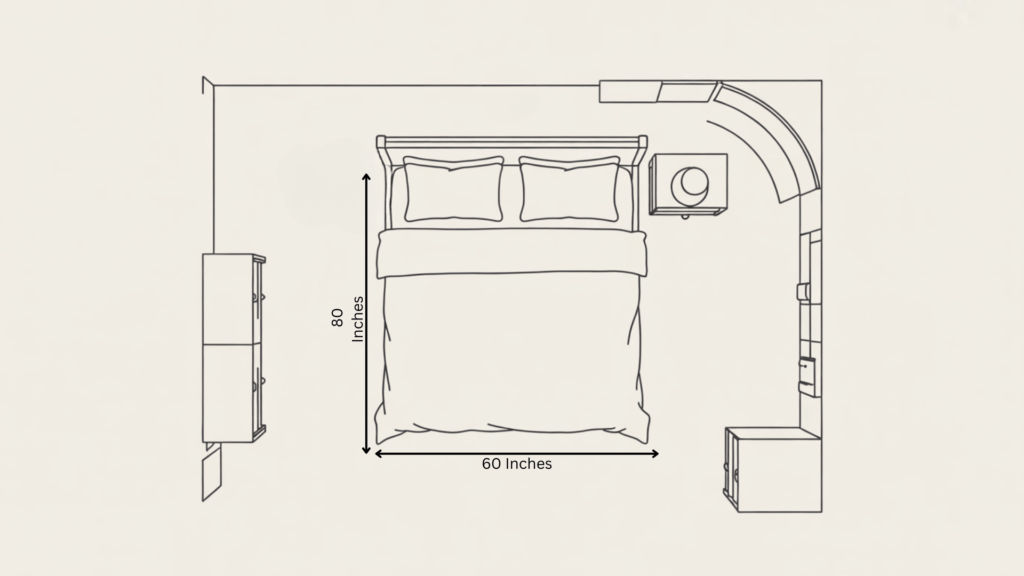
Understanding the exact measurements of a queen bed helps you determine if it’s the right fit for your bedroom and sleeping needs. Here are the standard dimensions you should know:
Width 60 inches (5 feet): This is the standard width of a queen mattress, providing ample area for couples. (Sleep Foundation)
Length 80 inches (6 feet 8 inches): Standard mattress length that comfortably accommodates most adults. (Sleep Foundation)
Metric Equivalents 152 cm x 203 cm: These measurements make it easier for international readers to visualize the bed’s size and compare with local standards.
Queen Bed vs Other Bed Sizes
Choosing the right bed size requires understanding how a queen compares to other options. A queen bed strikes an excellent balance between area and practicality, but it’s essential to see how it measures up against full, king, and twin beds.
This comparison helps you make an informed decision based on your room size, sleeping partners, and comfort preferences.
Queen vs Full Bed
A full bed is narrower than a queen, making the upgrade worthwhile for couples or individuals who value extra sleeping area. The additional width provides better comfort and reduces sleep disturbances from movement.
| Feature | Full Bed | Queen Bed |
|---|---|---|
| Width | 54 inches | 60 inches |
| Length | 75 inches | 80 inches |
| Width Difference | N/A | 6 inches wider |
| Best For | Single sleepers, small rooms | Couples, master bedrooms |
| Area Per Person | 27 inches | 30 inches |
The extra 6 inches of width in a queen bed translates to more shoulder room and freedom of movement, making it a superior choice for shared sleeping arrangements.
Queen vs King Bed
A king bed offers significantly more width than a queen, making it ideal for couples who want maximum personal area. However, the queen’s more compact footprint makes it better suited for average-sized bedrooms.
| Feature | Queen Bed | King Bed |
|---|---|---|
| Width | 60 inches | 76 inches |
| Length | 80 inches | 80 inches |
| Width Difference | 16 inches narrower | N/A |
| Best For | Standard bedrooms, couples | Large master bedrooms, spacious sleepers |
| Area Per Person | 30 inches | 38 inches |
While both beds share the same length, the king provides substantially more side area, though it requires a larger room and costs more for bedding and frames.
Queen vs Twin Bed
A twin bed is designed for single sleepers and children, offering minimal width compared to a queen. The size difference makes twin beds unsuitable for couples or adults seeking spacious comfort.
| Feature | Twin Bed | Queen Bed |
|---|---|---|
| Width | 38 inches | 60 inches |
| Length | 75 inches | 80 inches |
| Width Difference | N/A | 22 inches wider |
| Best For | Kids, single sleepers, guest rooms | Couples, master bedrooms |
| Available Area | Compact | Spacious |
The queen bed’s 22 additional inches of width provides nearly double the sleeping surface, making it far more comfortable for adults and offering room for movement throughout the night.
Does a Queen Bed Width Include the Bed Frame?
When planning for a queen bed, it’s crucial to understand that the mattress and bed frame have different dimensions. The 60-inch width refers only to the mattress itself, while the complete bed frame extends beyond this measurement, requiring additional floor area for proper placement.
Queen Mattress vs Queen Bed Frame Width
Mattress width is fixed at 60 inches: This is the standard sleeping surface dimension that remains consistent across all queen mattresses regardless of brand or style.
Bed frames can range from 60.5 to 70 inches wide: The frame extends beyond the mattress edges to provide support, with variations depending on design, material, and construction style.
Upholstered and wood frames add bulk: Padded headboards, footboards, and side rails increase the overall width, with upholstered frames typically adding 4-6 inches and substantial wood frames adding up to 10 inches to the total bed width.
Plan your room accordingly: Always account for the frame’s additional width when arranging furniture placement and ensuring adequate walking area around the bed.
Check manufacturer specifications: Frame dimensions vary by style, so review exact measurements before purchasing to ensure proper fit in your bedroom.
Headboard and Footboard Width Considerations
Headboards and footboards are often overlooked when planning bed dimensions, yet they significantly impact the total width of your queen bed setup. These decorative elements extend beyond the mattress edges and can affect furniture placement, especially in smaller or narrow bedrooms.
Headboards often extend 1–3 inches wider: Decorative styles typically overhang the mattress on both sides for a polished, finished appearance.
Critical for tight rooms: Extra inches matter in smaller bedrooms, potentially affecting furniture arrangement and movement area around the bed.
Wingback and panel designs add more width: Ornate headboards can add 4-6 inches to overall bed width, requiring careful pre-purchase measurement.
Footboards follow similar patterns: Traditional footboards also extend beyond mattress width and should be considered in planning.
Wall-mounted headboards save area: Attaching directly to the wall eliminates additional width and maximizes floor area in compact rooms.
Always check before buying: Review exact dimensions in product specifications to ensure proper fit within your bedroom.
How Much Space Does a Queen Bed Need in a Room?
Proper room sizing is essential for comfortable bedroom functionality and flow. A queen bed requires adequate clearance on all sides to allow easy movement, access to storage, and a balanced layout.
While the mattress itself is 60 inches wide, you must account for walking area, nightstands, dressers, and other furniture. Cramming a queen bed into a too-small room creates a cluttered, claustrophobic environment.
Understanding minimum and ideal room dimensions helps you determine the right choice for your area, or if you should consider a full or twin size instead for better proportions and comfort.
1. Minimum Room Size for a Queen Bed
The bare minimum room dimensions ensure you can fit the bed with basic functionality, though the area may feel tight. This sizing allows for essential movement but limits furniture options and decorative flexibility.
Recommended minimum: 10 ft × 10 ft: This provides just enough room to fit the bed with minimal walking area on the sides and foot.
Allows basic walking clearance: You’ll have approximately 24 inches of clearance, which is adequate for moving around the bed but feels confined.
2. Ideal Clearance Around a Queen Bed
Generous clearance creates a comfortable, functional bedroom where you can move freely, make the bed easily, and access storage without feeling cramped or restricted by tight areas.
24–30 inches on each side: This clearance allows comfortable walking, bed-making, and access to nightstands without squeezing through tight gaps.
36 inches at the foot of the bed: Provides ample room to walk past the bed, open dresser drawers, and move freely without obstruction.
3. Queen Bed Width With Nightstands
Nightstands are essential bedroom furniture but significantly increase the overall width your queen bed setup occupies. Planning for their placement prevents overcrowding and maintains proper room flow and balance.
Nightstands add 18–24 inches per side: Standard nightstands range from 18-24 inches wide, doubling the area needed beyond the mattress edges.
Total wall-to-wall width may exceed 9 feet: When you factor in the 60-inch mattress, frame width, and two nightstands, the complete setup requires substantial wall area.
Consider room layout carefully: Check your available wall area to ensure nightstands fit without blocking doors, windows, or walkways.
Common Mistakes When Choosing a Queen Bed Width
Avoiding these common errors ensures your queen bed fits perfectly and functions well in your bedroom.
| Mistake | Why It Matters | Solution |
|---|---|---|
| Forgetting frame width | Frames add 0.5-10 inches beyond mattress | Check complete frame, not just mattress |
| Ignoring nightstand area | Nightstands add 18-24 inches per side | Account for furniture in room planning |
| Not checking doorways | Frame must fit through during delivery | Check doorways before purchasing |
| Assuming all queens are identical | Frame styles vary in dimensions | Review exact manufacturer specifications |
Taking accurate measurements of your room, doorways, and furniture prevents costly returns and ensures a comfortable, well-proportioned bedroom layout.
Final Thoughts
By now, you should feel clear about how wide is a queen bed and why that number matters in real life. Once you know the size, it gets much easier to visualize how the bed fits into your room, your routine, and your comfort needs.
No more guessing or relying on rough estimates. You can plan with confidence and avoid those “I wish I had checked this earlier” moments. If you’re still deciding, take a moment to think about how you use your area every day.
Where do you walk? Where does storage go? How much open floor do you want to keep? These small choices shape how your bedroom feels long after the bed is set up.
If you found this helpful, check out my other blogs too. I cover bed sizes, bedroom layout tips, mattress comparisons, and planning ideas that make choosing easier.
Take a look around and keep building a bedroom that works for you, not against you.