

A refrigerator not making ice can be frustrating, especially when the appliance still keeps food cold but produces no ice. This issue may result from several problems, including an incorrect freezer temperature, a clogged water filter, a blocked water supply, or faulty ice maker components. Fortunately, some basic checks can help identify the cause before you consider replacing any parts. This guide covers five common reasons and practical ways to address them.
1. Incorrect Freezer Temperature
The freezer temperature plays an important role in ice production. If it is too high, the ice maker may not get cold enough to freeze water properly. As a result, ice production can slow down or stop completely.
How to fix it:
- Step 1: Check the freezer temperature using the control panel or a suitable thermometer.
- Step 2: Adjust the temperature to around 0°F (-18°C), following the manufacturer’s recommendations.
- Step 3: Make sure the freezer door closes properly and that no food packages block the door.
- Step 4: Allow the freezer temperature to stabilize before checking whether the ice maker starts producing ice again.
If the temperature remains too high, inspect the door seal and cooling performance. Persistent cooling issues may require professional diagnosis. If your refrigerator is not making ice despite maintaining the correct freezer temperature, further troubleshooting may help identify other possible causes.
2. Clogged Water Filter
A refrigerator water filter removes impurities from the water supply. However, over time, the filter can become clogged and restrict water flow to the ice maker. This may result in small or hollow ice cubes, slow ice production, or no ice at all.
How to fix it:
- Step 1: Check when the water filter was last replaced and inspect it for signs of damage.
- Step 2: Replace the filter if it is clogged or has reached the recommended replacement interval.
- Step 3: Check whether the refrigerator’s water dispenser has reduced water flow, which may indicate a filter issue.
- Step 4: Follow the manufacturer’s instructions to flush the new filter and check ice production again.
Using a compatible replacement filter and following the recommended maintenance schedule can help maintain proper water flow.
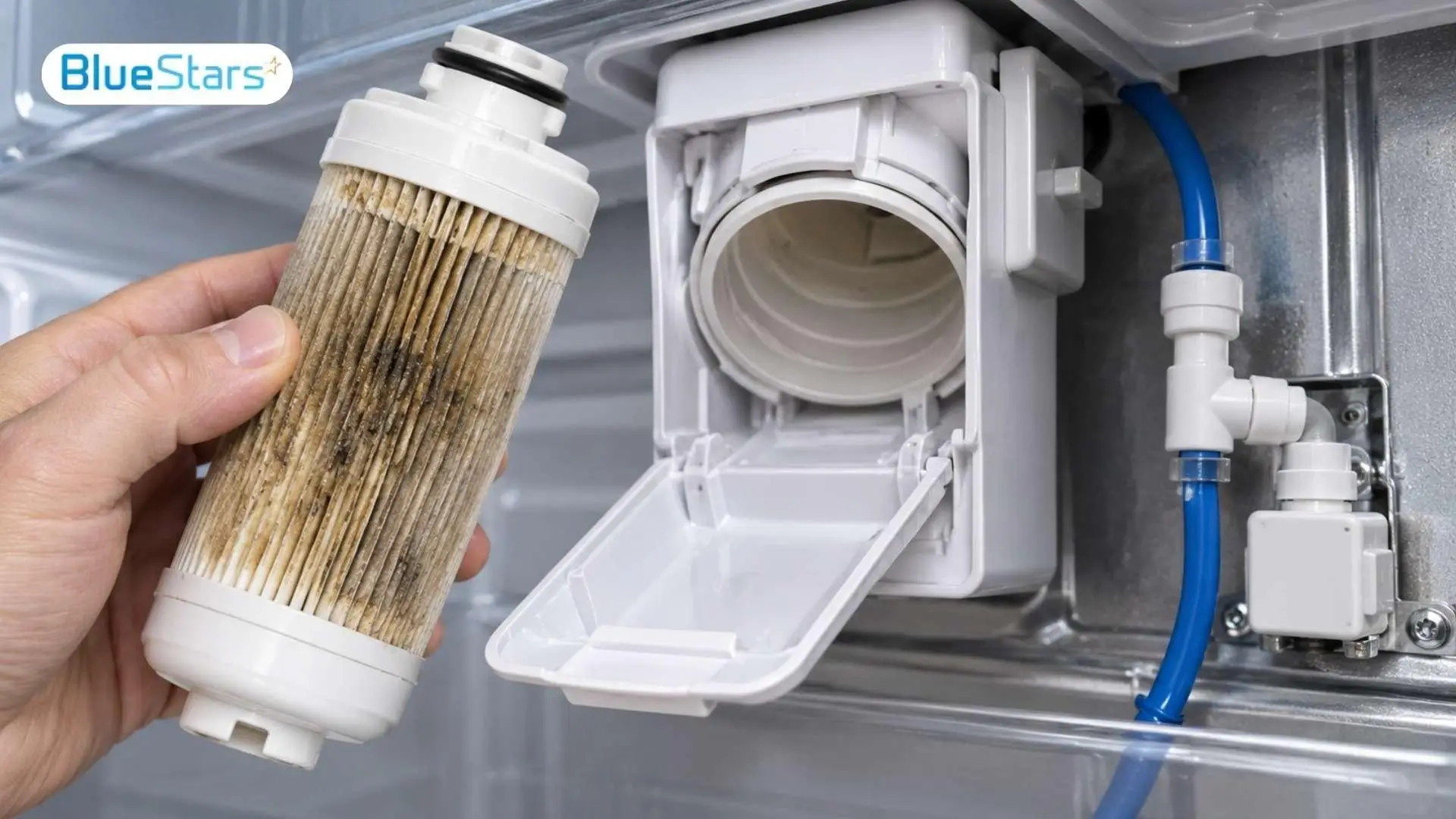
A clogged water filter can restrict water flow and cause small or hollow ice cubes or stop ice production (Source: BlueStars Parts)
3. Blocked Water Supply Line
A blocked water supply line is another common reason why a refrigerator stops making ice. If the water supply valve is closed or the water line becomes kinked, frozen, or clogged, water may not reach the ice maker. As a result, the ice maker cannot produce ice even when the freezer temperature is normal.
How to fix it:
- Step 1: Check that the refrigerator’s water supply valve is fully open.
- Step 2: Inspect the visible water supply line behind the refrigerator for kinks, bends, or signs of leakage.
- Step 3: Make sure the water line is properly connected and not compressed against the wall.
- Step 4: If you suspect a frozen or internally blocked water line, contact a qualified technician for further inspection.
Keeping the water supply line clear and properly connected helps ensure consistent water flow to the ice maker.
4. Ice Maker Is Turned Off or Jammed
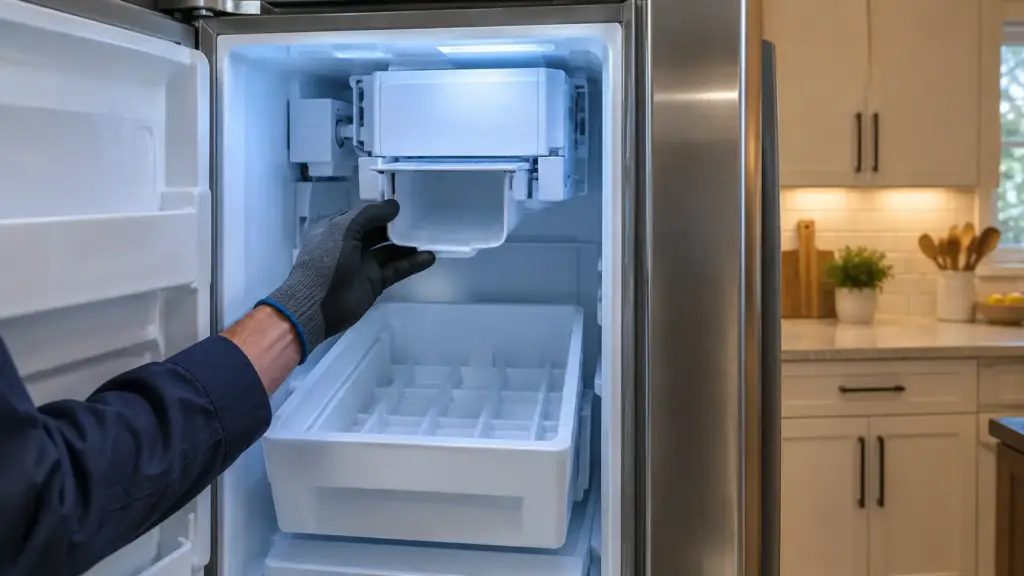
Sometimes, the ice maker stops producing ice simply because it has been switched off or its operation is interrupted. A misplaced ice bin, jammed ice cubes, or an incorrectly positioned shutoff arm may prevent the system from continuing its ice-making cycle.
How to fix it:
- Step 1: Check the ice maker switch or control panel to make sure the ice-making function is turned on.
- Step 2: Remove and reposition the ice bin to ensure it is properly aligned and seated.
- Step 3: Look for ice cubes stuck in accessible areas of the ice maker and remove them only as directed by the manufacturer.
- Step 4: Check that the shutoff arm, if your model has one, can move freely.
If the ice maker remains inactive after these checks, its internal components may need further inspection.
5. Faulty Water Inlet Valve or Ice Maker Assembly
A faulty water inlet valve may restrict or stop water from reaching the ice maker. Similarly, a damaged ice maker assembly can disrupt the filling, freezing, or ice-releasing process, preventing normal ice production.
How to fix it:
- Step 1: Confirm that the freezer temperature, water filter, water supply line, and ice maker settings are working properly.
- Step 2: Check whether water is reaching the ice maker. If the water supply is normal but the ice maker does not fill, the water inlet valve may need inspection.
- Step 3: Look for visible signs of damage or unusual operation in the ice maker assembly without disassembling electrical components.
- Step 4: Contact a qualified technician to diagnose the water inlet valve and ice maker assembly before replacing any faulty components.
Replacing a damaged component with a compatible part can help restore normal ice production.
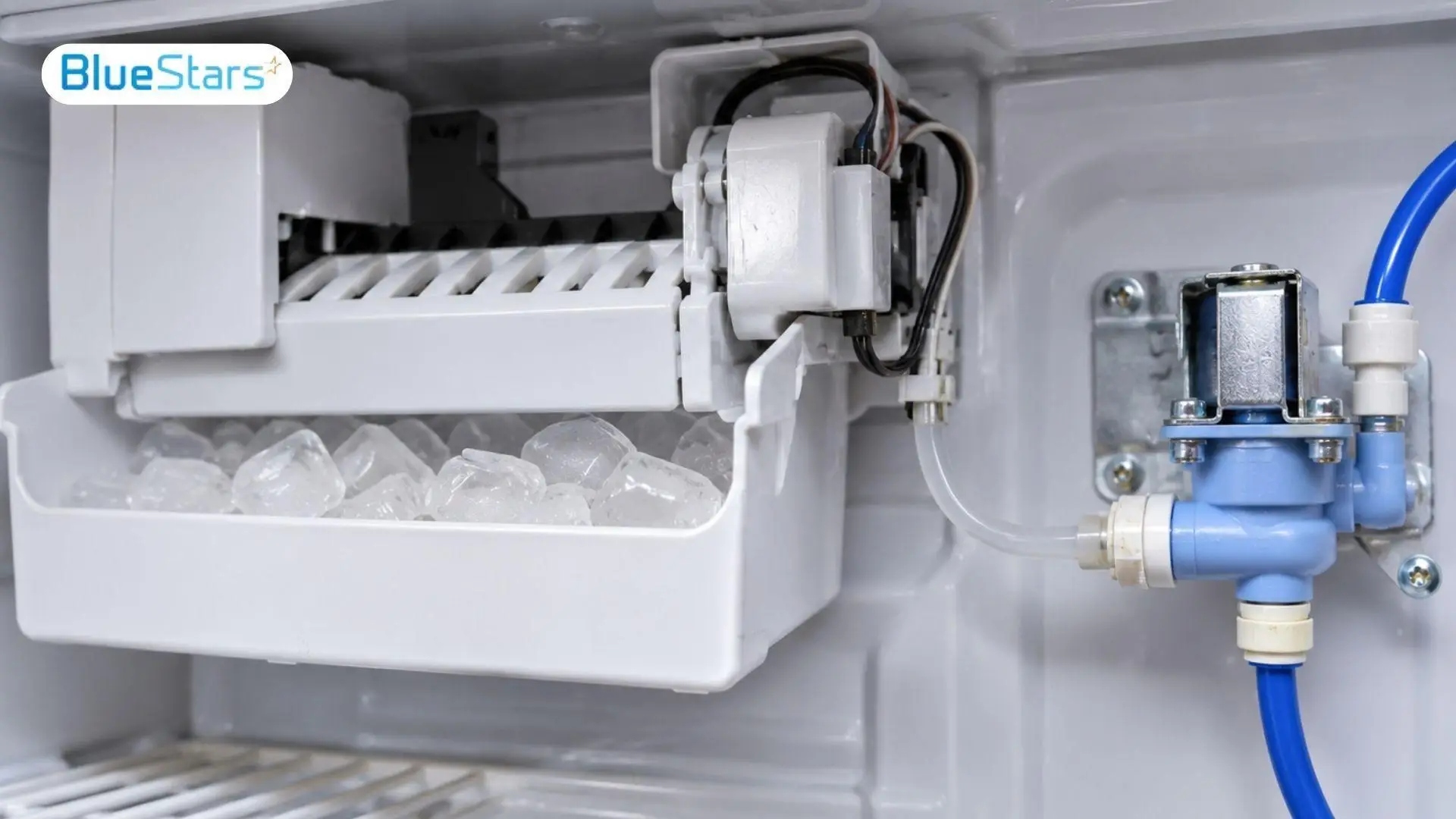
A faulty water inlet valve or ice maker assembly can prevent the refrigerator from producing ice properly (Source: BlueStars Parts)
6. When to Replace Refrigerator Parts
If basic troubleshooting does not restore ice production, one or more components may be worn or damaged. Hence, you should replace the faulty part to help the ice maker return to normal operation. There are common components to inspect include:
- Water filter: Replace it when clogged, damaged, or due for routine maintenance.
- Water inlet valve: A faulty valve may prevent water from reaching the ice maker.
- Ice maker assembly: A damaged assembly may stop the ice-making cycle.
- Ice maker control components: Faulty controls may interrupt the system’s operation.
Note: Before purchasing replacement components, you should check your refrigerator’s model number and the original part number. Compare the specifications and compatibility information carefully, as similar-looking parts may not fit every model.
If you’re looking for replacement components, BlueStars Parts offers a range of refrigerator parts including water inlet valves, ice maker assemblies, and water filters. These components help restore proper water flow and ice production when original parts become worn or faulty.
To conclude, a refrigerator not making ice may be caused by an incorrect freezer temperature, a clogged water filter, a blocked water supply, or faulty ice maker components. Before replacing any parts, check the temperature, filter, water supply, and ice maker settings. If a component is damaged, you can look for a compatible replacement at BlueStars Parts to help restore normal ice production.
Contact information:
8 The Green, Ste A, Dover, Delaware 19901-3618, United States
Website: https://bluestarsparts.com/