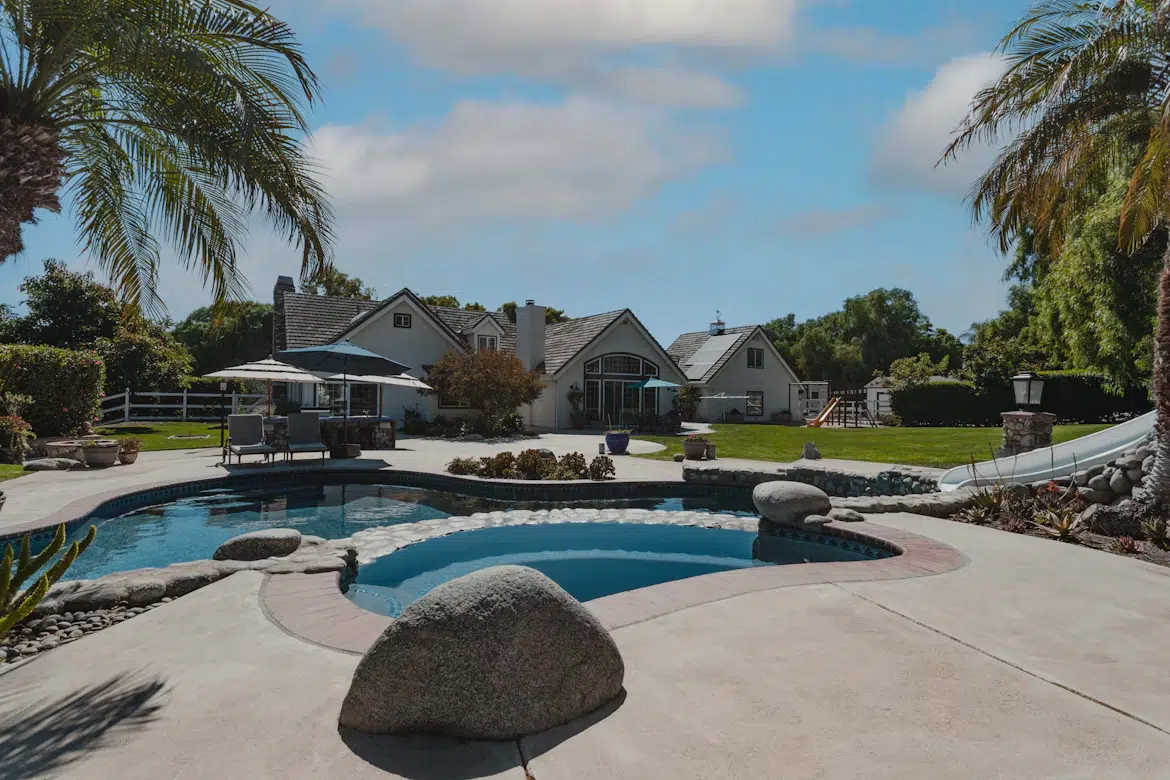


Closing your pool properly can save you from unpleasant surprises when swimming season returns. A swimming pool company can help homeowners understand what needs attention before the cover goes on for the colder months. Taking care of each step now can protect the water, equipment, and pool itself until it is time to swim again.
Give the Pool a Thorough Cleaning
Start by removing leaves, insects, and other debris floating on the surface or sitting on the bottom. Brush the walls and floor to loosen dirt and buildup that may have collected during the swimming season. Finish by vacuuming the pool so you don’t leave months of dirt underneath the cover.
Remember to empty skimmer baskets and clean around steps, ladders, and other areas where debris tends to collect. Dirt left behind for several months can make opening the pool much more frustrating in the spring. Spending extra time cleaning now should mean less work later.
Test and Balance the Water
Don’t assume the water is ready for closing just because it looks clean and clear. Test the chemistry so you know the pH, alkalinity, sanitizer, and other important levels before covering the pool. Balanced water helps protect pool surfaces and equipment when the pool is not in use.
Make adjustments gradually and give chemicals enough time to circulate through the water. Follow the directions for your particular pool products rather than adding extra chemicals in hopes of providing more protection. Too much chemical can create problems just as easily as too little.
Take Care of the Pool Equipment
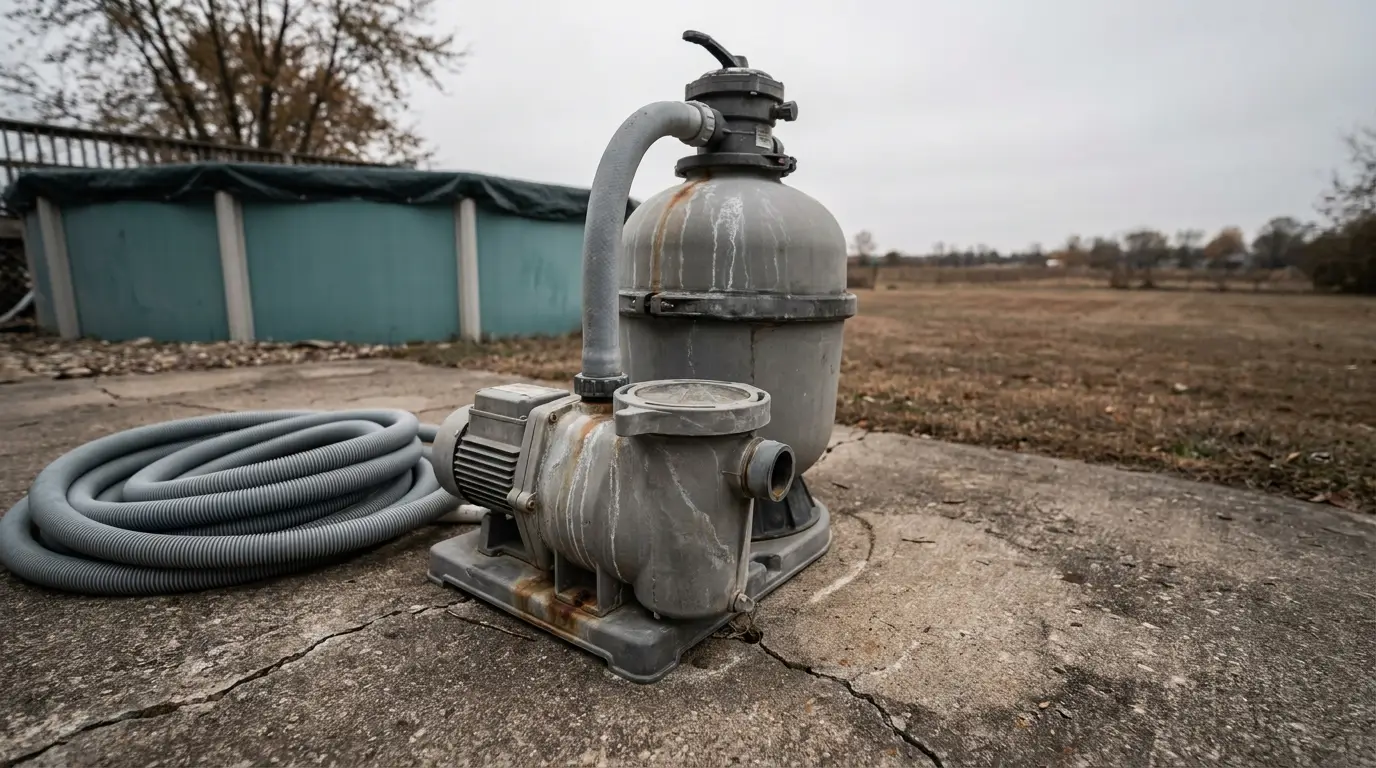
Pool equipment also needs attention before temperatures start to drop. Clean the filter according to the manufacturer’s instructions and inspect the pump, hoses, fittings, and other components for obvious wear or damage. Finding a small problem now gives you time to deal with it instead of discovering it when you reopen the pool.
Winterizing procedures depend on your pool, equipment, and climate, so follow the instructions for your system. An experienced inground pool builder or pool professional can explain how plumbing and equipment should be prepared for freezing conditions in your area. Proper winterization matters because water left in vulnerable plumbing can freeze and cause expensive damage.
Lower the Water When Necessary
You may need to lower the water before closing the pool, but emptying it completely is usually not part of the process. How much water to remove depends on your pool type, the cover you use, your plumbing setup, and the winters where you live. Check your pool’s instructions before you start draining any water.
Removing too much water can cause problems with some pools, so don’t guess your way through this step. If you are not sure where the water should sit for winter, check with a pool professional first. Leaving it at the proper level helps protect the pool and prepares it for the months when it will not be in use.
Remove and Store Accessories
Take out removable ladders, toys, floats, cleaning tools, and other accessories before installing the winter cover. Wash everything before storing it so chlorine residue, dirt, and moisture do not sit on the items for months. Allow accessories to dry thoroughly before placing them in a protected storage area.
This is also a convenient time to inspect accessories for cracks, rust, loose parts, or other damage. Add items that need replacement to your spring shopping list instead of letting them become a last-minute surprise. Keeping everything together also makes setup easier when warm weather returns.
Inspect and Install the Pool Cover
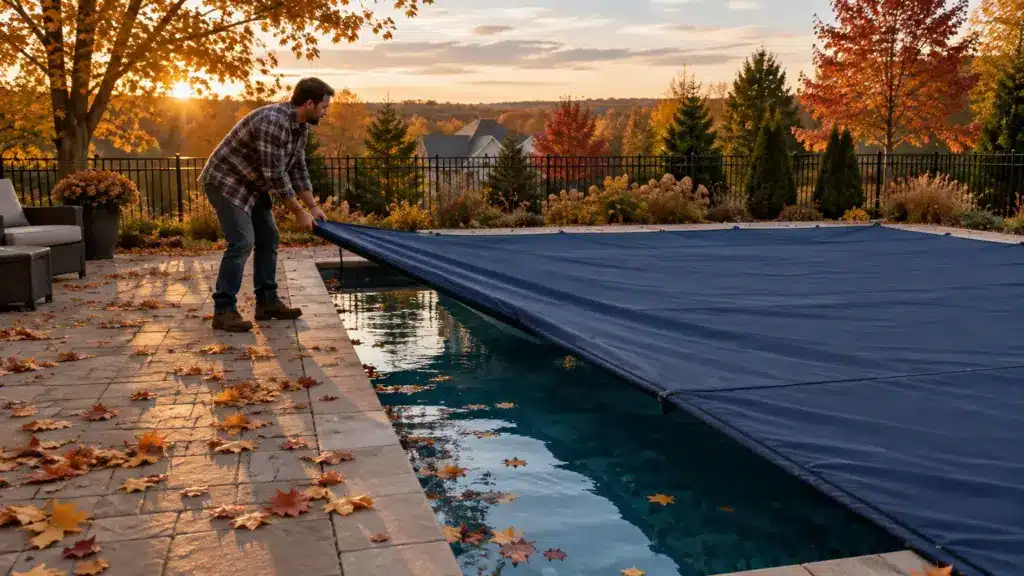
Before putting the cover on, inspect it carefully for tears, damaged straps, worn areas, or other problems. A damaged cover may allow leaves, rainwater, and debris into the pool throughout the colder months. Repair or replace a worn cover before relying on it for an entire season.
Install the cover according to its specific instructions and make sure it fits securely across the pool. The cover should stay properly positioned as weather conditions change over the coming months. Check it periodically through the winter rather than assuming it will remain exactly as you left it.
Do One Final Walk Around
Before considering the job finished, walk around the pool and review everything you have done. Look for forgotten accessories, unsecured equipment, loose cover components, or anything else that might cause trouble later. This final check only takes a few minutes but can catch an easily overlooked step.
Keep any winterizing instructions and notes somewhere you can find them again next year. Writing down what worked can make the process faster and easier next time. You can also note repairs or improvements you want to handle before the next swimming season begins.
Final Thoughts
Pool closing is easier when you work through the process carefully instead of trying to finish everything in one afternoon. A swimming pool company can provide guidance when you are unsure about water levels, equipment, chemicals, or winterizing requirements. A little extra care before closing can make reopening your pool much easier when warm weather finally returns.