

The house settles, the lights go off, and every small sound seems louder. A faint whine near the pillow, a dark shape crossing the baseboard, a line of ants at the nightstand: pests often reveal themselves after dark, and they do it in the rooms where people are least able to ignore them.
In Raleigh, where summers are warm and humid and the growing season is long, that pressure lasts for much of the year. The encouraging part is that nighttime activity follows predictable patterns. Once homeowners know what draws pests toward bedrooms and living areas, a few modest changes can interrupt those patterns.
Why Pests Seem to Appear After Dark
Many household pests are simply more active at night. Cockroaches are the classic case. They avoid light, spend the day in wall voids, under sinks, and behind appliances, then forage once a room is dark and quiet. Culex mosquitoes, a group that commonly bites indoors in the Southeast, feed mostly from dusk into the night. They are drawn by the carbon dioxide in exhaled breath and by body heat, and a sleeping person supplies both without moving.
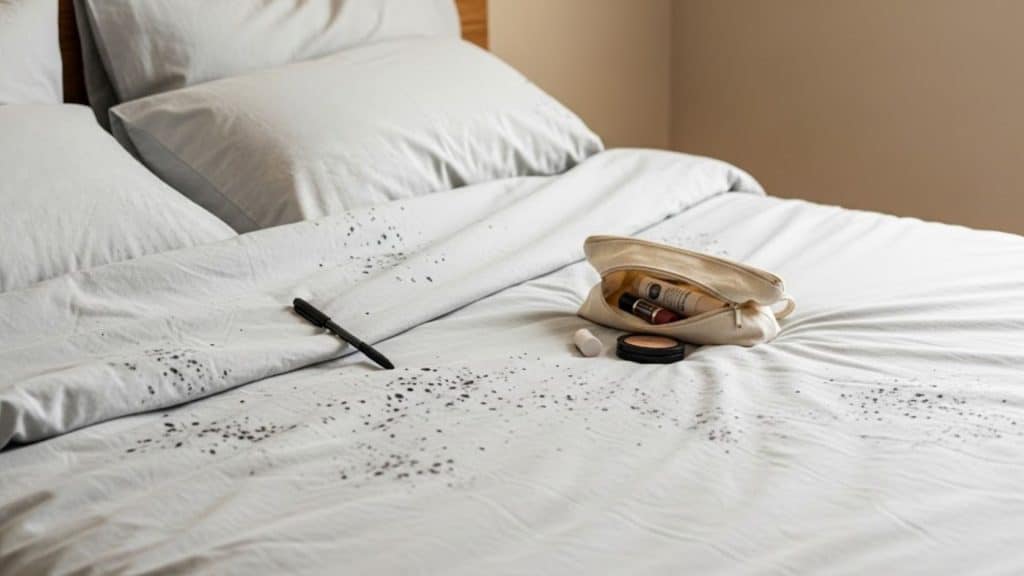
Other pests follow something else. Spiders build webs and hunt where flying insects gather, so a window that attracts moths and midges will often attract spiders as well. Ants forage at any hour, yet a trail across a dark bedroom floor gets noticed only when someone switches on a lamp. Bites that appear overnight with no flying insect in sight deserve a closer look, because bed bugs also feed at night and are frequently mistaken for mosquito bites. Proper identification beats guessing.
Open Windows, Torn Screens, and Weak Seals Near Sleeping Areas
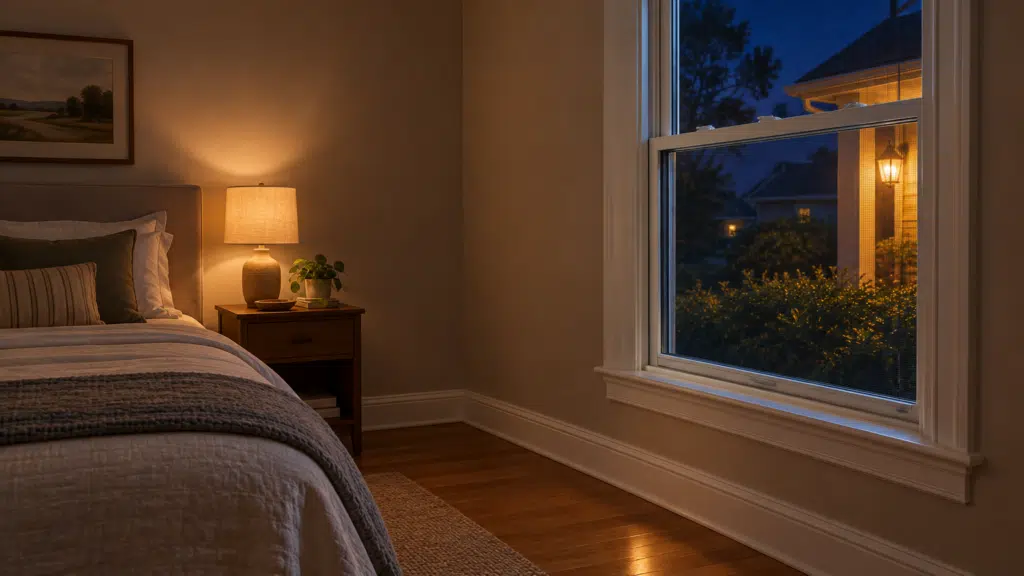
Fresh air on a mild evening is appealing, but an open window with a damaged screen is really an open door. Standard screen mesh is fine enough to stop mosquitoes and most flying insects, yet a tear the size of a fingernail, a bent frame, or a loose corner lets them through. Running a hand along the edges and shining a flashlight from outside after dark will show where light leaks around the frame. Small holes can be patched with adhesive repair kits, and brittle or warped screens are better replaced.
Closed windows and doors need the same attention. Cracked caulk, worn weatherstripping, and gaps under door sweeps give ants and cockroaches an easy route indoors, and daylight visible beneath a shut door means small insects can pass. Sliding door tracks collect debris that hides bugs. A window air conditioner with loose side panels leaves narrow openings around the unit. Ground-floor bedrooms and rooms that open onto patios deserve the first inspection, since insects reach them soonest.
Moisture, Pet Areas, and Crumbs Close to the Bed

Moisture drives more nighttime pest activity than most people expect. Cockroaches and silverfish need water, so a dripping trap under a bathroom sink, a damp closet, or a poorly ventilated laundry room can sustain them for months. Indoor humidity is generally recommended to stay between 30 and 50 percent, and a dehumidifier or a bathroom exhaust fan helps a great deal in humid weather.
Outdoors, mosquitoes breed in water that stands for several days, so flowerpot saucers, clogged gutters, and bird baths should be emptied or refreshed every week. Homes across the Triangle deal with these moisture-driven pests for much of the year, and a Raleigh pest control provider will often begin an inspection with plumbing, crawlspaces, and drainage rather than the bedroom itself.
Food is the other draw. Pet bowls left out overnight feed ants and roaches, and open bags of kibble are an invitation. Feeding pets at set times, washing water dishes, and storing food in sealed containers removes that supply. In bedrooms, sugary drinks, snack wrappers, and crumbs in bedding attract ants quickly, so eating elsewhere and clearing dishes before bed keeps the room unappealing.
When Nighttime Activity Keeps Coming Back
Some pest problems outlast good habits. Cockroaches that reappear after thorough cleaning, ant trails that return within days of being wiped away, and scratching noises inside walls all suggest a source the homeowner cannot easily reach. The cause may be a colony nesting in a wall void, a hidden leak, or an entry point behind trim or under flooring.
Store-bought sprays and foggers can make matters worse. Foggers may scatter cockroaches deeper into the structure, and spraying a visible ant trail can split a colony into several smaller ones. When sleep is being disrupted or the living space no longer feels comfortable, a licensed pest control company can identify the species, find where it shelters, and separate the pests that need treatment from those that only need better exclusion.
That distinction saves time, because the right response to a mosquito problem looks nothing like the right response to a roach infestation.
Managing Outdoor Lights and Evening Routines
Outdoor lighting quietly shapes what gathers near the house. Bright white and bluish bulbs attract flying insects from a wide area, and spiders settle nearby to feed on them. Warm yellow or amber bulbs draw noticeably fewer insects.
Fixtures mounted on posts or walls a short distance from the door, aimed toward the yard, pull insects away from the entrance instead of toward it. Motion sensors cut the hours a light stays on, and closing blinds keeps indoor light from acting as a lure through windows.
A short evening routine covers most of what remains:
- Close windows, or confirm the screens are intact, before dusk.
- Clear cups, wrappers, and pet dishes from bedrooms and living areas.
- Wipe kitchen counters and sweep up crumbs.
- Run bathroom exhaust fans and check under sinks for drips.
- Switch entrance lights to warm bulbs or motion-activated settings.
Five minutes of this habit, repeated nightly, takes away most of the reasons pests have to come inside.
Key Takeaways
Nighttime pests are usually responding to a handful of simple conditions: an opening to slip through, moisture to drink, food to find, and light to follow. Repairing screens, sealing gaps around windows and doors, keeping humidity down, clearing food residue from sleeping areas, and choosing warmer outdoor bulbs all reduce those attractions.
None of these steps guarantees a pest-free home, and stubborn or unidentified activity deserves a professional assessment. Even so, a bedroom that is dry, sealed, and free of food gives insects and rodents little reason to visit, and it tends to be a much quieter place to sleep.