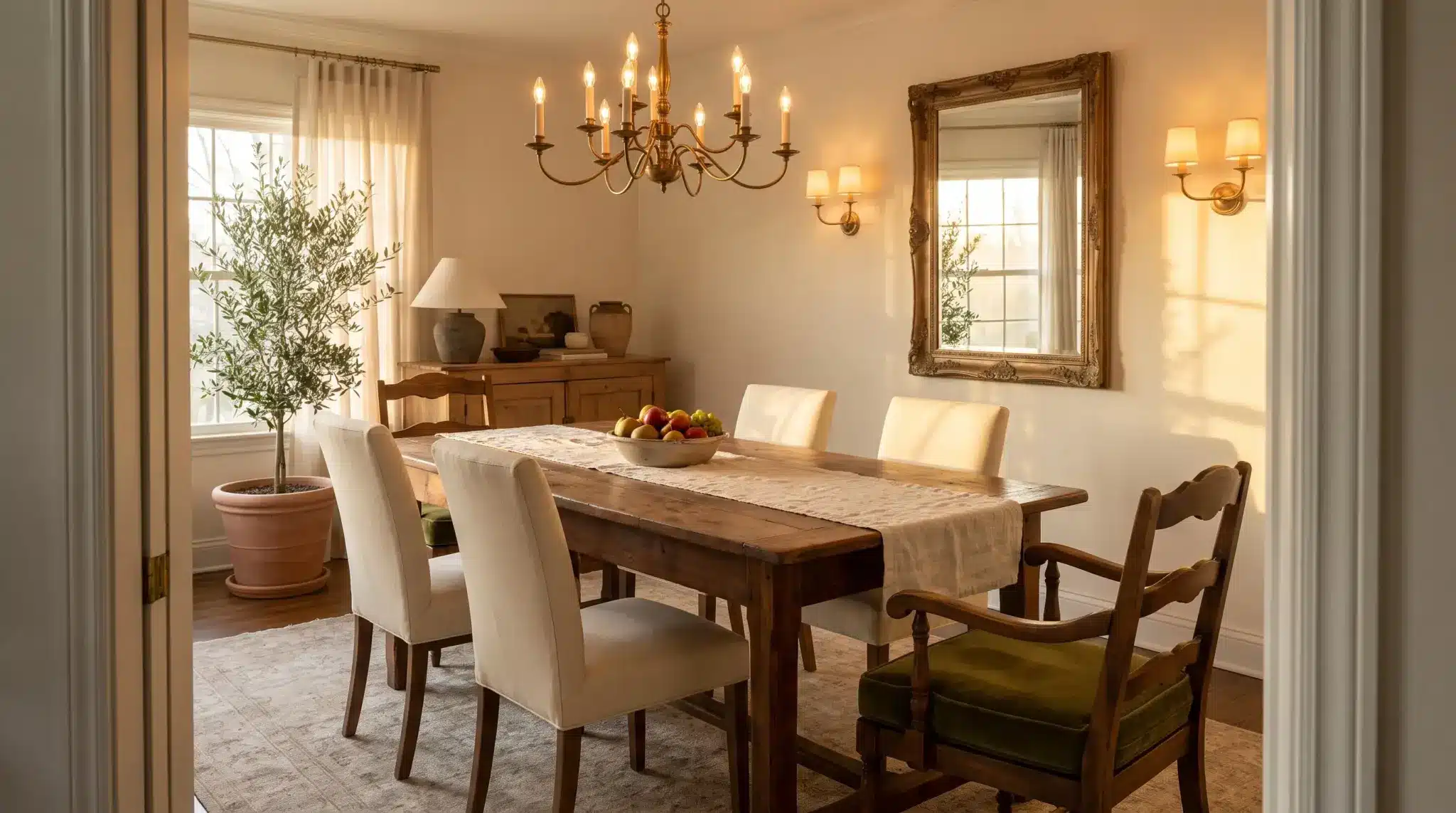


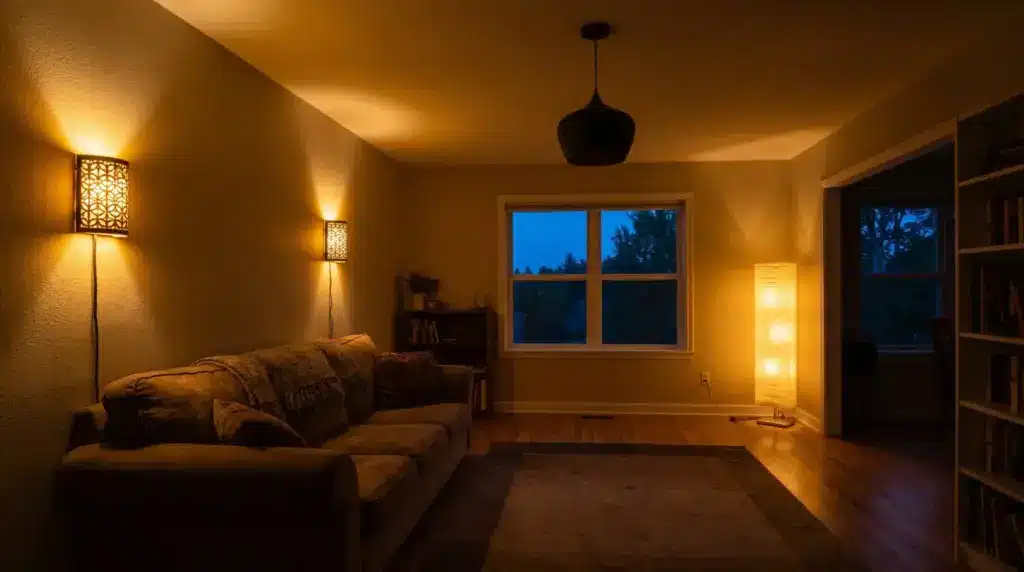
Most people repaint before they ever touch a light switch. That’s almost always the wrong order.
Lighting is the single biggest variable in how a room actually feels to live in. It can make a generous bedroom feel like a hotel suite or a generous living room feel like a waiting area. Swapping out a single overhead fixture for layered lighting has changed more rooms than any paint color ever will, and yet it’s consistently the last upgrade homeowners think about.
This guide breaks down exactly how lighting affects your mood and your space, room by room, so you can stop guessing and start making deliberate choices.
Why Lighting Does More Than Help You See
Your brain does not treat light as a neutral utility. Research published in Building and Environment and indexed by ScienceDirect found that the warmth and intensity of light in residential spaces directly conditions emotional states, with neutral warm light and bright cool light producing measurably different mood outcomes in the same physical room.
That means the lamp you grabbed on clearance is not just illuminating your sofa. It’s shaping whether you feel calm, restless, cheerful, or vaguely irritated while you sit on it. Color temperature and brightness work together in ways that override everything else in the room.
There are two kinds of lighting effects at play. The first is visual: how well you can see determines how easy it is to read, cook, or work. The second is non-visual: lighting alters your mood, your arousal level, and your hormone balance. That second category is the one most homeowners never account for, and it’s where most lighting mistakes live.
The Room Job Framework: Match Light to What Each Space Is For
Here is how I think about it. Every room has a primary job. Your kitchen’s job is focus and function. Your bedroom’s job is rest and transition. Your living room has two jobs, which is why it’s the hardest to light. Once you name the job, the lighting choices get obvious fast.
The problem with most homes is that every room is lit the same way: a single ceiling fixture, usually positioned in the center, producing one flat layer of light. That approach fails all three jobs because it’s too harsh for rest, not directed enough for focus, and too static to shift between moods in a multi-use room.
The fix is layering: ambient light for general visibility, task light for focused activities, and accent light for atmosphere. None of those three layers should be doing another’s job.
The Kitchen: Where Lighting Earns Its Keep
Under-cabinet LED strips at your countertops are not a luxury. They’re the difference between safe prep work and squinting at a cutting board under the shadow cast by your own body. Position task lighting so it hits the work surface directly, not the back of your head.
Pendants over an island add warmth and define the space visually. Keep them on a separate switch from the overhead so you can drop the ambient level during dinner without going dark on the counter.
The Living Room: Two Jobs, Three Layers
Your living room needs to shift from a bright, active afternoon space to a calm evening environment without you moving a stick of furniture. The only way to pull that off is dimmer switches on at least two separate circuits and a lamp or two on the floor or table that you control independently.
Wall sconces work here too. They push light upward and sideways, which feels warmer and more human than a downward ceiling flood. If you have the wall space and the outlets, a pair of sconces flanking a sofa or fireplace will transform that wall more dramatically than any art piece.
The Bedroom: Start With the End in Mind
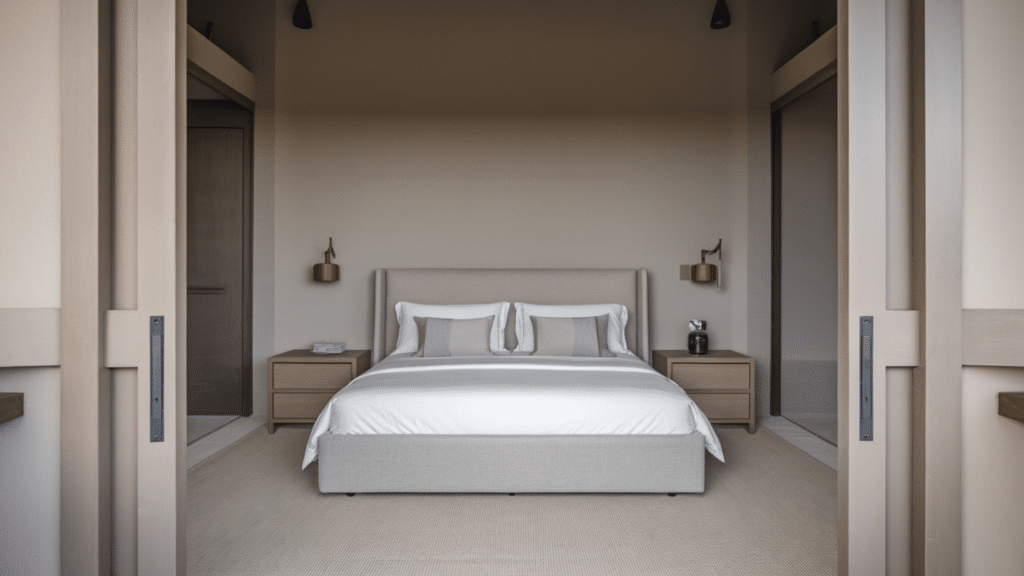
The bedroom’s job is to wind you down, and lighting is the primary tool for that. Overhead fixtures in bedrooms are almost universally wrong unless they’re on a deep dimmer. A bright overhead light at 9 p.m. tells your brain it’s noon.
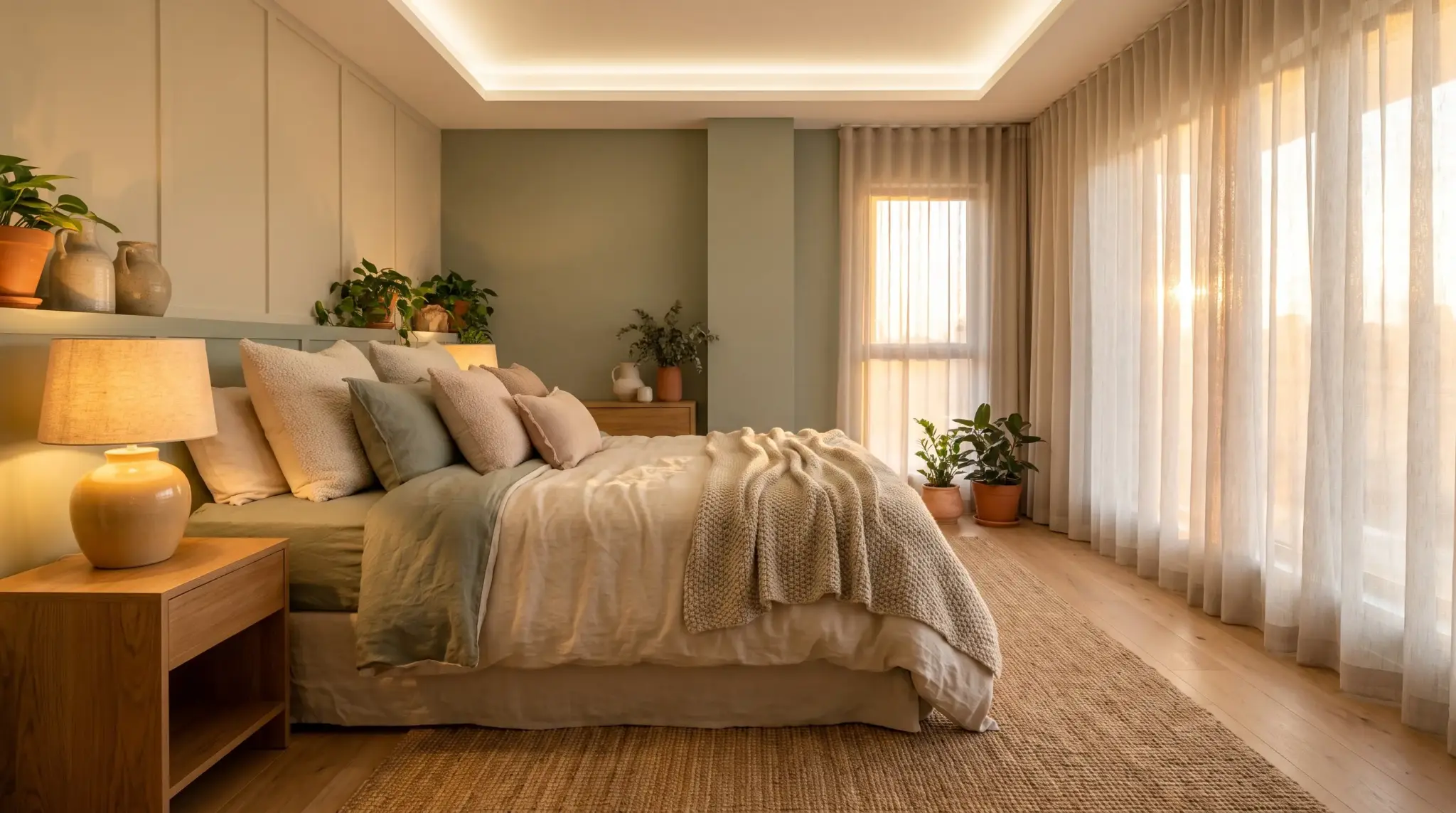
Bedside lamps with warm bulbs in the 2700K range are the standard move for good reason. If your room has one overhead and nothing else, your most impactful upgrade is not a new headboard. It’s a pair of table lamps and a smart switch that lets you dim the ceiling to 10% for winding down.
Smart Lighting Is Not Just a Gadget
The 2025 Smart Home Technology Trends Survey, conducted by Harbor Research for the Association for Smarter Homes and Buildings and published by LightNOW in November 2025, found that smart lights and lighting controllers were present in 31% of smart homes surveyed, making them one of the top four most adopted smart home categories.
That adoption rate makes sense once you use a system for a week. Scheduling a living room to drop to warm, dim light at 8 p.m. every night without touching an app removes a friction point and genuinely changes your evening routine. Circadian-tuned lighting, which shifts from cooler tones in the morning to warmer tones by evening, mirrors the natural arc of daylight. Your body responds to that arc whether you set it intentionally or not.
Smart bulbs are the easy entry point. Govee, Philips Hue, and LIFX all work without a hub for basic use. If you want whole-room scene control, budget an extra $50 to $100 for a bridge device, and you’ll have the ability to set lighting scenes that tie into time of day, occupancy, or a single voice command.
The Energy Angle You Probably Underestimate
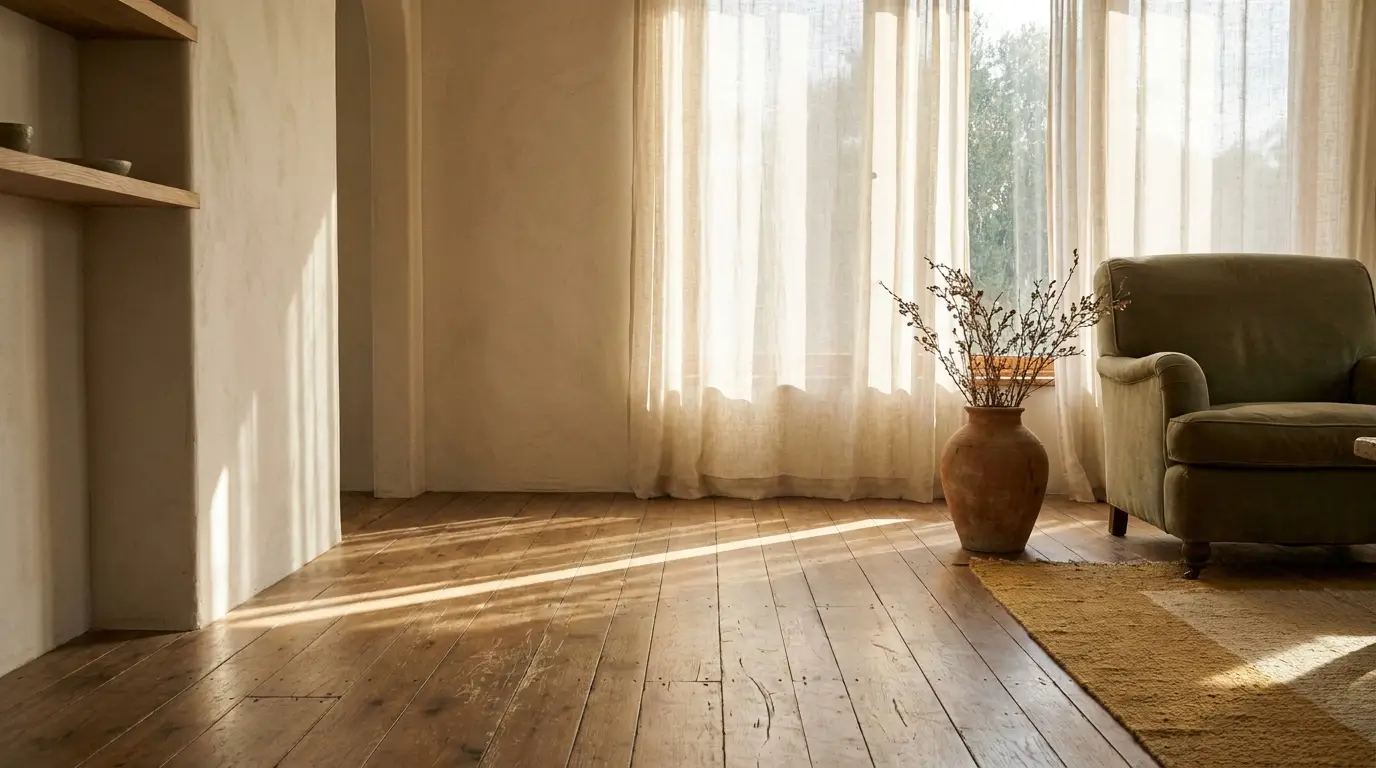
Better lighting is not just a mood story. According to ArchDaily’s analysis of HMG’s daylighting research, natural light and thoughtful artificial lighting design both reduce reliance on energy-intensive overhead systems while producing better comfort outcomes. Maximizing daylight through window treatments and mirror placement before you add fixtures keeps your electricity load down and your rooms feeling alive rather than lit.
LED replacements for incandescent or halogen fixtures also cut energy draw significantly. Most homeowners who switch an entire floor to LED dimmer-compatible bulbs notice the savings within two billing cycles. That’s a real payoff for what amounts to an afternoon of work.
The Code Behind Your Lighting
Every design choice in this guide eventually becomes a wiring decision, and wiring is where the NEC takes over. The NEC is the safety standard that governs how residential lighting circuits, switches, dimmers, and fixtures are installed, and some version of it is adopted in every U.S. state. It is the reason a lighting plan that looks simple on paper can still call for a permit and an inspection.
A few of its rules shape lighting projects directly. Lighting runs on general-purpose circuits, kept separate from the dedicated kitchen and bathroom receptacle circuits, so your layout cannot quietly borrow capacity from the counter. New lighting circuits in living areas generally need arc-fault protection at the panel, and many switch locations now require a neutral wire, which is exactly what a smart switch or dimmer needs to work. Fixtures over a tub or shower have to be rated for a damp or wet location, and every junction box has a legal limit on how many wires it can hold before another fixture goes in. None of this changes how a room should feel. It changes what has to be true behind the wall for that feeling to be safe and permanent.
When to Call in a Professional
Swapping bulbs and adding floor lamps is DIY territory. Rewiring for new circuits, moving junction boxes, or installing in-wall dimmers on older wiring is not. Hiring a licensed electrician means the work is done to code and your insurance stays valid. A bad DIY dimmer install on aluminum wiring is not a cosmetic problem; it’s a fire risk.
For a full lighting redesign, a licensed electrician can run a new circuit to a room that currently has one outlet, install ceiling medallion fixtures where none exist, and put multiple circuits on smart switches that integrate with your existing devices. The labor cost is almost always less than people assume, and it eliminates years of working around a bad layout.
A Room-by-Room Lighting Checklist
| Room | Primary Job | Key Lighting Move | Color Temp Target |
|---|---|---|---|
| Kitchen | Focus and function | Under-cabinet task lighting | 3000K to 4000K |
| Living Room | Social and relaxation | Three-layer setup with dimmers | 2700K to 3000K |
| Bedroom | Wind-down and rest | Bedside lamps, dim overhead | 2700K max |
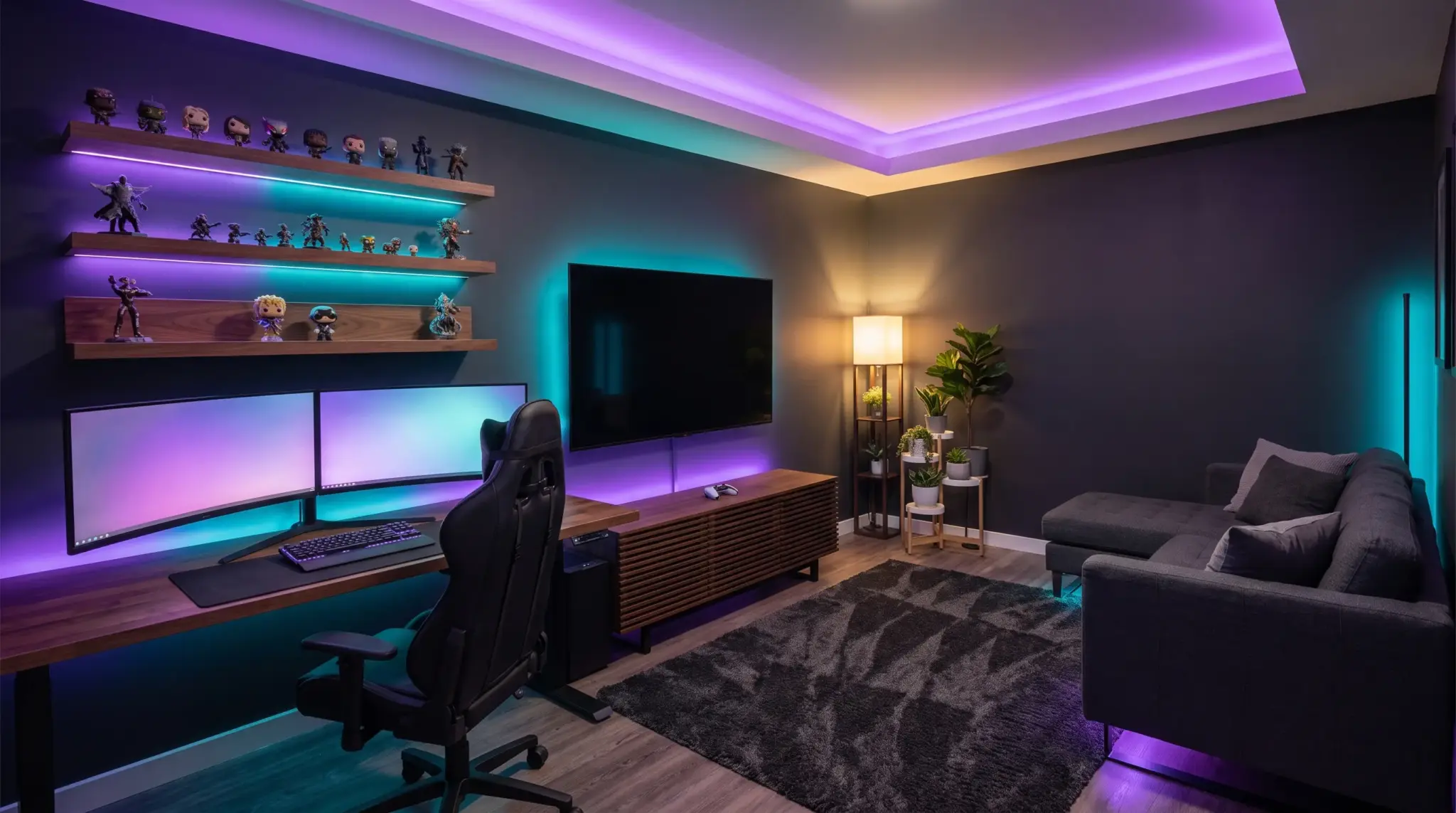
| Home Office | Alertness and focus | Daylight bulb, no overhead glare | 4000K to 5000K |
| Bathroom | Grooming and transition | Vanity side lighting, not top-down | 3000K to 3500K |
Start with one room. Pick the one that feels the most wrong to you right now, name its primary job, and audit whether the current lighting supports that job at all. Most of the time you’ll find that it doesn’t, and that the fix costs less than a new throw pillow.
Light is not decoration. It’s the condition everything else in your home happens inside of. Getting it right is the single highest-leverage change most rooms will ever get.