
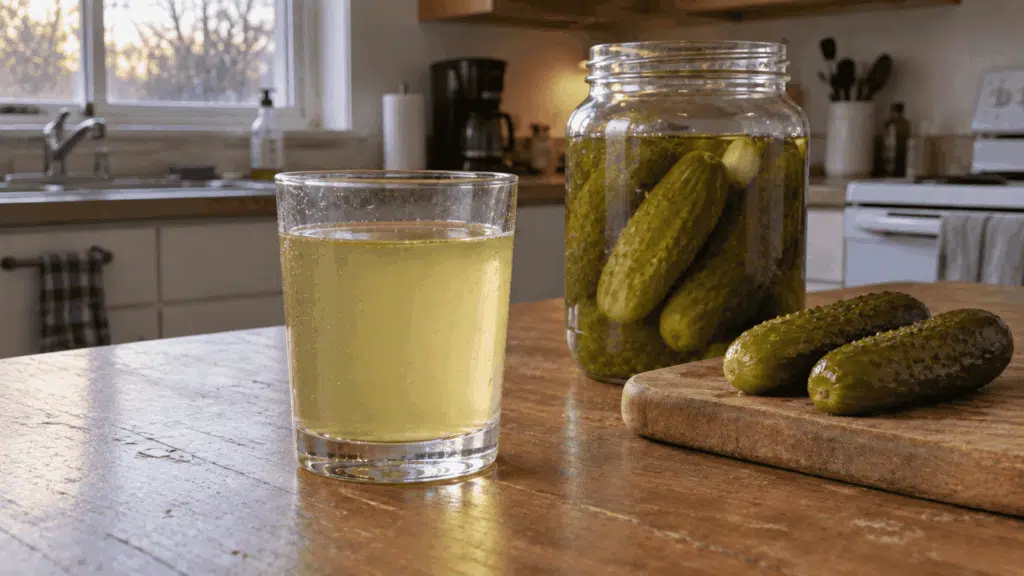
A painful leg cramp can quickly ruin a peaceful night and make it hard to fall back asleep. Pickle juice has become a popular home remedy for cramps, especially after exercise or heavy sweating.
But can drinking it before bed really help, or could the salt and acidity cause more discomfort? The benefits of drinking pickle juice before bed may include relief from certain muscle cramps and support after heavy sweating.
However, it is not a proven remedy for better sleep, relaxation, or nightmares. Knowing the possible effects, safe amounts, and side effects can help you decide if a small serving fits into your nighttime routine.
What is Pickle Juice Made Of?
This is the liquid used to preserve the cucumber and give it the salty-sour taste. Pickle juice has the components such as water, vinegar, salt, herbs, spices, and sugar or preservatives in some cases.
Fermented pickle juice skips vinegar entirely, since the bacteria ferment natural sugars into lactic acid instead. Fermented pickles that are not pasteurized can also have probiotic bacteria.
Pickle juice that uses vinegar does not have any probiotics; however, the sodium and acetic acid are present. Some minerals, like potassium and magnesium, may also be present in small quantities.
Ingredient amounts vary from one product to another, and it is important to read the label before taking it, especially at bedtime.
Benefits of Drinking Pickle Juice Before Bed
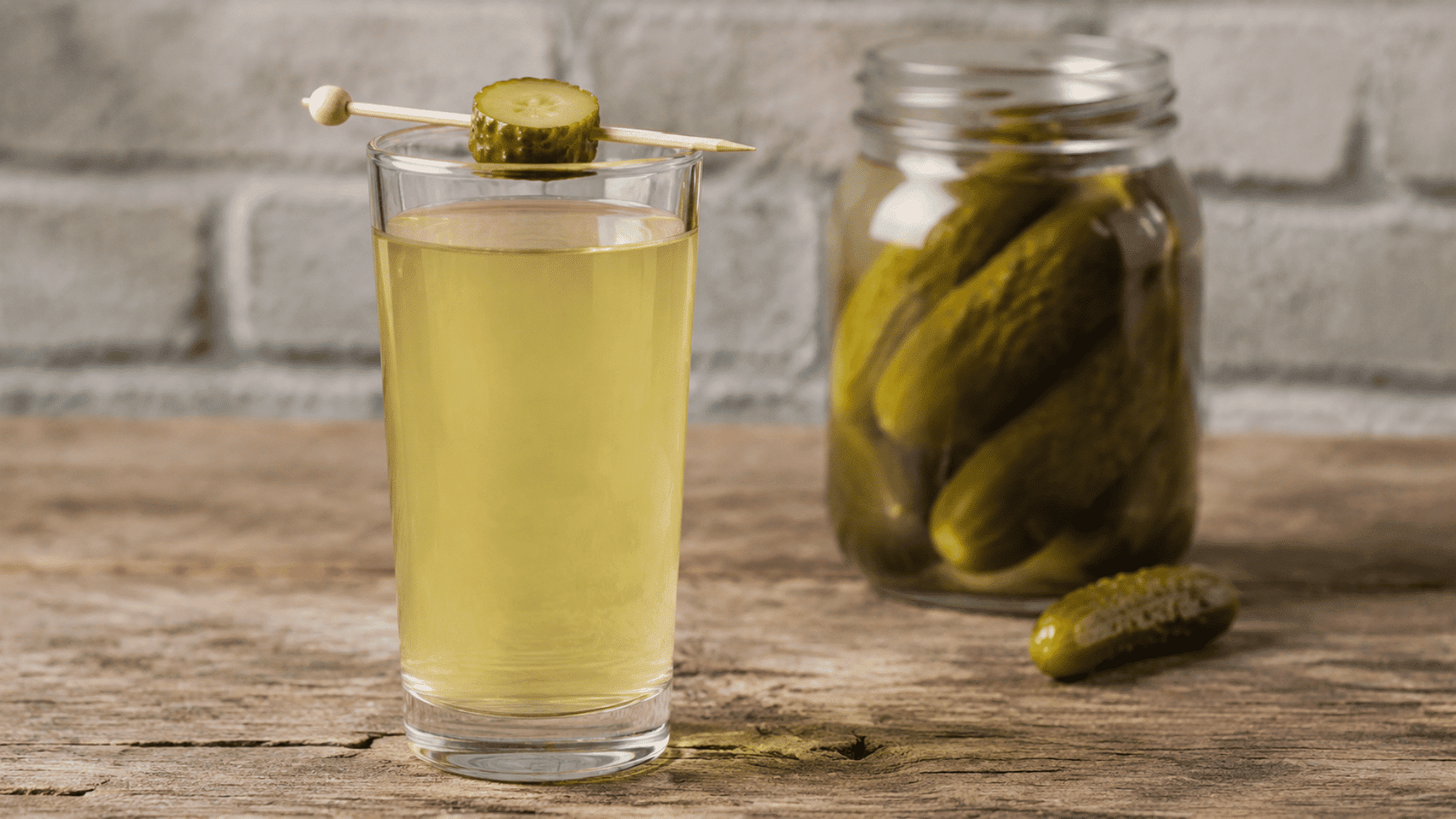
These potential benefits vary in strength, and several relate to exercise recovery rather than directly improving sleep quality or nighttime relaxation.
1. Ease Certain Sudden Muscle Cramps
Pickle juice may shorten certain cramps after evening exercise, one of many triggers for nighttime leg cramps. Its sharp taste activates nerves inside the mouth and throat.
This response appears faster than electrolyte absorption, suggesting nerve stimulation may matter more than replacing minerals during an active cramp.
Evidence remains limited, so recurring nighttime cramps call for medical assessment rather than repeated self-treatment with salty brine alone.
2. Support Recovery After Heavy Sweating
Pickle juice provides sodium, an electrolyte lost through prolonged exercise, outdoor work, and heavy sweating in hot conditions.
A measured serving with water may support fluid retention after considerable sweat loss, but concentrated brine should never replace proper hydration.
Sodium varies greatly between products, so check the Nutrition Facts label and include each serving within the recommended daily intake.
3. Moderate Blood Sugar After an Evening Meal
Vinegar in some pickle juices may moderate the rise in blood sugar after an evening meal containing a considerable amount of carbohydrates.
Available studies usually examine vinegar rather than pickle juice specifically, so this possible effect cannot prove better or less interrupted sleep.
People managing diabetes should never replace medication, balanced meals, blood sugar monitoring, or professional healthcare advice with pickle juice before bed for routine nighttime blood sugar control.
4. Support Digestion Through Fermented Cultures
Naturally fermented, refrigerated, and unpasteurized pickle juice may contain live microorganisms produced during fermentation, unlike standard vinegar-based brine.
The NCCIH explains that probiotic effects differ by microorganism, product, and individual health condition, so benefits cannot be assumed.
This source does not establish immediate digestive improvement from one bedtime serving, making fermented brine a food option rather than a treatment.
5. Satisfy Late-Night Salty Cravings
A small serving of pickle juice may satisfy a late-night craving for something salty or sour without requiring a larger snack.
Avoiding a heavy meal close to bedtime could reduce uncomfortable fullness, although pickle juice provides little protein, fiber, or lasting nourishment.
Frequent servings may also add excessive sodium, increase thirst, or cause bloating, so consider overall hunger and dietary needs before making it a nightly habit.
6. Provide Small Amounts of Antioxidants
Dill, garlic, mustard seeds, pepper, and other pickling ingredients contain natural plant compounds that may provide some antioxidant activity.
Small amounts can enter the surrounding brine, although their concentration depends on ingredients, processing, storage conditions, and serving size.
Pickle juice should not become a main antioxidant source because fruits, vegetables, whole grains, and legumes provide greater nutrient variety and fiber.
7. Offer a Low-Sugar Savory Option
Unsweetened pickle juice offers a strong savory flavor with little sugar, setting it apart from soda, sweet tea, and many sports drinks.
This option may suit someone who wants a small, flavorful drink after an evening activity without consuming another heavily sweetened beverage before sleep.
However, low sugar does not automatically mean healthy because many commercial brines contain considerable sodium, preservatives, or added coloring.
8. Provide Vinegar in a Measured Serving
Vinegar-based pickle juice provides diluted acetic acid for people who already tolerate acidic foods and want a carefully measured serving.
This makes it a milder alternative to apple cider vinegar for anyone easing into acidic tonics. A small portion may feel easier than plain vinegar, which should not be swallowed directly without proper dilution.
This practical feature is not a proven sleep benefit, and acidic brine may worsen reflux, nausea, dental sensitivity, or stomach discomfort near bedtime.
Does Drinking Pickle Juice Before Bed Help You Sleep?
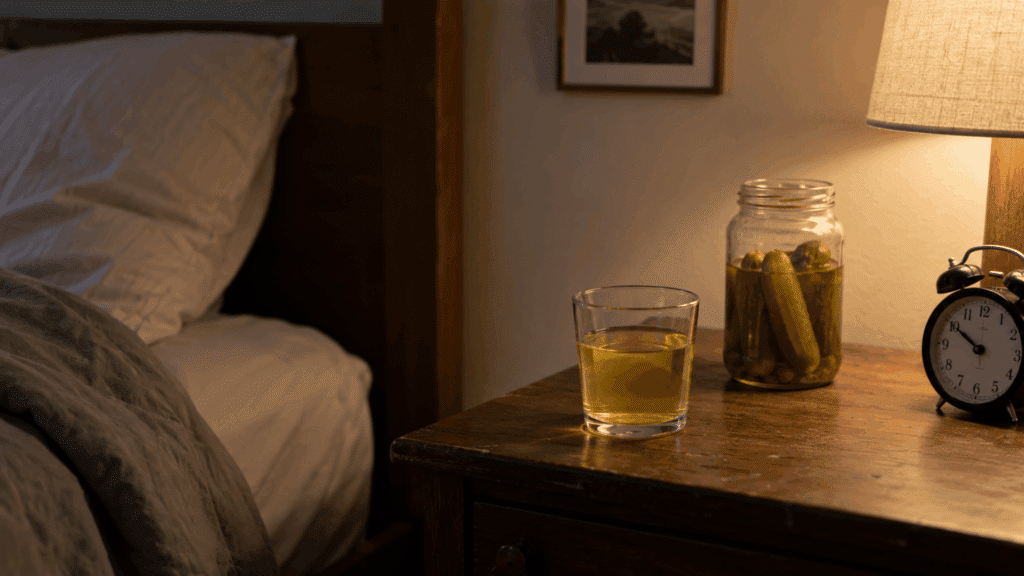
Claims about pickle juice helping to avoid nightmares and relax for sleep are controversial, as the scientific studies do not provide evidence for this specific effect on healthy people.
- Nightmares: There is no evidence that pickle juice prevents nightmares, induces good dreams, or affects dream content.
- Relaxation: Pickle juice does not have a known sedative effect, but alleviating cramps might make the person feel more relaxed.
- Sleep Quality: The effect might be indirect, through reduced cramping, but it may not improve sleep quantity or quality.
- Potential Disruption: Sodium and acidity can undercut any relaxation benefit for sensitive individuals.
- Expert Input: Frequent nightmares or nightmares related to trauma should be diagnosed by a professional.
Safe Amount and Timing Before Bed
No evidence-based bedtime dose exists, so serving size, sodium content, personal tolerance, and the reason for drinking it require careful consideration.
Situation | Suggested Approach |
|---|---|
First Trial | Begin with one tablespoon as a cautious starting amount. |
Active Cramp | Take a small measured serving when an exercise-related cramp begins. |
Heavy Sweating | Pair a small serving with water after considerable fluid and sodium loss. |
Product Selection | Check serving size and sodium content on the nutrition label. |
Health Conditions | Seek medical advice for high blood pressure, kidney disease, heart conditions, reflux, or sodium restrictions. |
Unwanted Effects | Stop and check the Risks and Side Effects section if you develop discomfort. |
Risks and Side Effects of Drinking Pickle Juice Before Bed
Concentrated brine carries real risks alongside its potential benefits. The same sodium and acidity that ease cramps can also disrupt digestion and sleep.
Watch for these effects before making pickle juice a nightly habit:
- Thirst and increased urination from the sodium load
- Acid reflux or heartburn, especially on an empty stomach
- Bloating or stomach discomfort from the acidity
- Nausea or diarrhea in sensitive individuals
- Disturbed sleep if sodium or acid triggers a reaction
Note: People with high blood pressure, kidney disease, heart conditions, or a sodium-restricted diet should talk to a doctor before adding this to a bedtime routine. Stop drinking pickle juice before bed if any of these symptoms appear, and see a doctor if they persist.
Choosing Suitable Pickle Juice for Bedtime
Choosing the right pickle juice requires initially reading the ingredient list and nutrition label. Vinegar-based brine may suit someone looking for occasional cramp relief, while naturally fermented, refrigerated brine may contain live probiotic cultures.
Pick a product with ingredients you understand, no unnecessary added sugar, and a sodium level that fits the rest of the daily diet.
Do not drink brine from a jar that smells strange, shows mold, or has not been stored properly. Instead of drinking from the jar, it is better to take a small measured serving.
Personal taste, digestion, and individual health needs should ultimately determine the final choice before regularly sleeping with brine is considered.
Disclaimer: This blog provides general information and does not replace medical advice. Anyone with recurring cramps or health conditions should consult a qualified healthcare professional first.
Final Thoughts
The benefits of drinking pickle juice before bed may be helpful for some people, especially when dealing with certain muscle cramps or recovering after heavy sweating.
Still, pickle juice is not a proven sleep aid and has not been shown to prevent nightmares or directly improve relaxation.
Its high sodium content and acidity may also cause thirst, reflux, or stomach discomfort in some people. A small serving may be worth trying if it fits your health needs and diet, but don’t ignore frequent cramps.
Have you tried pickle juice before bed? Share your experience or thoughts in the comments below!
Frequently Asked Questions
Is Homemade Pickle Juice Better Than Store-Bought Brine?
Store-bought pickle juice may contain preservatives, coloring, added sugar, or flavorings, while homemade recipes let you control the ingredients.
How Can Someone Tell if Pickle Juice Has Spoiled?
Cloudiness can be normal in fermented brine, but mold, unpleasant odors, leaking containers, or unusual colors suggest you should discard it.
Can Children Drink Pickle Juice?
Children should not use pickle juice as a routine health drink. Parents should consider sodium, acidity, age, medical needs, and pediatric advice.