
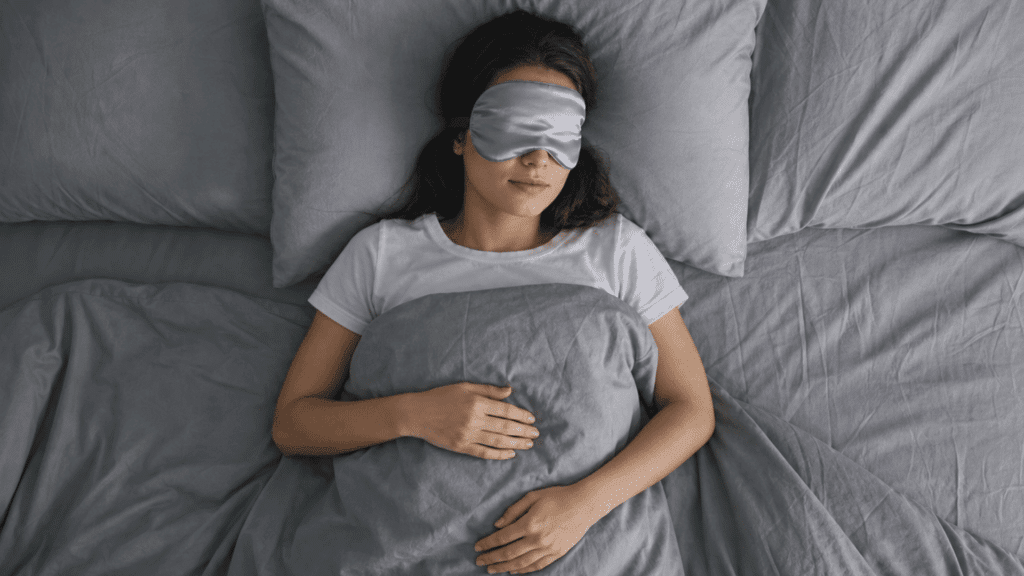
Sleep plays an important role in how the body feels, functions, and responds throughout the day.
However, understanding sleep quality can become confusing when different terms appear on sleep trackers and reports.
Words like REM, Core, and Deep sleep often raise questions about what they mean and how they relate to everyday rest.
Knowing the differences can help make sleep information easier to understand and use. A clearer view of sleep patterns allows people to make more informed choices about their routines.
Keep reading to explore how these sleep terms connect and what they mean.
What is Core Sleep?
Core Sleep is a term some sleep trackers use to describe light stages of non-REM sleep.
Unlike REM sleep and deep sleep, which are separate phases of sleep, Core Sleep is a term and an approach to help you understand sleep better.
During Core Sleep, the body relaxes; breathing and heart rate become slower, and the brain works on its recovery process.
This sleep phase occupies a significant amount of time during the sleep at night and provides easy movement between different sleep phases. An effective sleep cycle includes Core, REM, and Deep phases.
Understanding REM, Core and Deep Sleep

REM, Core, and Deep sleep represent different parts of the sleep cycle, each supporting unique functions for physical and mental well-being.
REM Sleep
REM sleep is a stage where brain activity increases while the body remains relaxed. It supports brain functions and usually becomes longer later in the night.
Key Features
- Stage 1 (N1): Transition phase between being awake and asleep
- Stage 2 (N2): Light sleep stage where the body relaxes, and sleep becomes more stable
- Stage 3 (N3): Deepest NREM sleep stage that supports physical recovery and restoration
Aspect | Details |
|---|---|
Why it is Important | Helps process information, support focus, and maintain emotional balance |
When it Occurs | More common during the later part of the night |
Main Function | Supports brain activity, memory, and learning |
Core Sleep
Core sleep is a term sleep trackers use for lighter non-REM sleep stages. It helps maintain regular sleep cycles and supports overall rest.
Key Features
- Represents lighter non-REM sleep
- Makes up a large part of sleep time
- Helps the body move between stages
Aspect | Details |
|---|---|
Why it is Important | Helps maintain stable sleep cycles and supports relaxation |
When it Occurs | Appears throughout most of the night |
Main Function | Supports sleep balance and recovery between deeper stages |
Deep Sleep
Deep sleep is the deepest stage of non-REM sleep, during which brain activity slows, and the body focuses on physical recovery.
Key Features
- Supports physical restoration
- Usually occurs earlier in the night
- Harder to wake during this stage
Aspect | Details |
|---|---|
Why it is Important | Supports tissue repair, immune function, and body recovery |
When it Occurs | Mostly during the first half of the night |
Main Function | Helps restore physical energy and recovery processes |
Does Core Sleep Overlap With Standard Sleep Stages?
Core sleep overlaps with standard sleep stages but is not an authoritative sleep stage on its own.
In sleep science, sleep is principally divided into non-REM and REM stages. Some wearable devices use core sleep to label lighter non-REM sleep, often linked to Stage 2 sleep.
It does not replace the traditional sleep classification system. Instead, it simplifies complex sleep data for ordinary users.
Deep sleep remains an individual non-REM stage, while REM sleep is another distinct phase.
Therefore, Core sleep differs from standard sleep stages but relates closely to lighter non-REM sleep.
Why is Each Sleep Stage Important for Overall Health?
Each sleep stage supports different functions in the body and brain. REM, Core, and Deep sleep work together to support mental performance, physical recovery, and a balanced sleep cycle.
1. How REM Sleep Supports Brain Function
REM sleep is very significant in brain activity while the body rests. REM sleep allows for proper memory processing, learning, and emotion regulation.
It is at this point that the brain organizes information that it has accumulated during the day. Too little REM sleep can affect concentration, judgment, and the processing of new information.
2. How Core Sleep Supports Sleep Stability
Core sleep is an important factor in keeping the sleep cycle balanced because it helps facilitate light non-REM sleep cycles.
This stage allows the body to remain calm, manage its breathing, and shift from one phase of sleep to another.
Because core sleep makes up most of the time spent sleeping, it helps the body prepare for deep sleep stages.
3. How Deep Sleep Supports Physical Recovery
Deep Sleep is a stage of sleep in which the body performs a crucial recovery function.
For the Deep Sleep stage, there is a reduction in the brain activity level, and thus the body gets a chance to undergo the process of recovery.
The stage of Deep sleep is very important for tissue recovery, immune response, muscle recovery, and regulation of energy levels after all the activities throughout the day.
4. How Balanced Sleep Cycles Support Overall Health
A single sleep stage cannot carry the full workload on its own. The body relies on the repeated cycling between REM, Core, and Deep sleep across the night to get the full range of benefits each stage provides.
When one stage is cut short, such as through frequent waking or an irregular schedule, the others cannot fully make up for it.
This is why total sleep time alone does not tell the whole story, and why the balance among stages matters as much as the number of hours
How Much REM, Core, and Deep Sleep Does a Person Need?
The quantity of REM sleep, core sleep, and deep sleep may be determined by personal attributes, like age, way of life, physical state, actions, and the quality of the sleep itself.
However, when we consider just one number, the consistency of the sleep should be taken into account to ensure that all the stages of sleep occur.
Core sleep usually accounts for the largest share of total sleep time and may comprise about 40-60%, providing a calm sleep cycle.
Disturbed sleep accounts for 10-25% of total sleep and aids physical recovery and regeneration. REM sleep constitutes 20-25% of total sleep time and aids in memory consolidation and learning.
What Factors Affect REM, Core, and Deep Sleep?
Several factors can influence the amount and quality of REM, core, and Deep sleep a person gets each night. These factors can affect how smoothly the body transitions between sleep cycles.
- Sleep Schedule: Irregular bedtimes and wake-up times can disrupt the body’s natural sleep rhythm and affect sleep stages.
- Stress Levels: High stress or emotional strain can make it harder to achieve balanced sleep cycles.
- Age: Sleep patterns naturally change with age, including differences in REM and Deep sleep duration.
- Lifestyle Habits: Caffeine, alcohol, exercise, and screen use before bedtime can influence sleep quality.
- Sleep Environment: Noise, light, room temperature, and comfort levels can affect uninterrupted sleep.
- Health Conditions: Certain health issues or sleep disorders can influence sleep quality and change the amount of time spent in different sleep stages.
Tips to Support Healthy REM, Core, and Deep Sleep
Healthy sleep habits can support a balanced sleep cycle by creating the right conditions for the body to naturally move through different stages.
1. Maintain a Consistent Sleep Schedule: Following a regular bedtime and wake-up routine helps support the body’s natural sleep rhythm.
2. Create a Comfortable Sleep Environment: Reducing noise, limiting light and keeping the bedroom comfortable can help prevent sleep disruptions.
3. Limit Sleep Disruptors: Reducing caffeine, alcohol and screen exposure before bedtime may support smoother sleep cycles.
4. Stay Physically Active: Regular physical activity can support better rest and encourage healthier sleep patterns.
5. Manage Stress Levels: Relaxation techniques and calming bedtime routines can help prepare the body for quality sleep.
6. Focus on Overall Sleep Quality: Instead of targeting a single sleep stage, healthy daily habits can help the body naturally cycle through all sleep phases.
Disclaimer: This article is for informational purposes only and should not be considered medical advice. Sleep patterns can vary from person to person, and anyone experiencing ongoing sleep concerns or health-related issues should consult a qualified healthcare professional.
Conclusion
Understanding REM, Core and Deep sleep can make sleep data easier to interpret by avoiding a focus on a single measurement.
Each stage contributes differently to the body’s natural sleep process, and changes between nights are normal.
Building consistent sleep habits, maintaining a healthy routine, and examining overall patterns can help you better understand sleep quality.
Sleep trackers can offer useful insights, but they are only one part of the bigger picture.
Do you have thoughts or experiences with your sleep patterns? Share them in the comments and join the conversation.
Frequently Asked Questions
Can Sleep Stages Change from Night to Night?
Yes, sleep stages naturally change because stress, habits, routines and lifestyle factors affect overall sleep patterns.
Does Getting More Deep Sleep Mean Better Sleep?
Not always. Healthy sleep depends on a balance among REM, Core and Deep sleep stages.
Can Sleep Trackers Improve Sleep Habits?
Sleep trackers can reveal patterns that help users understand their routines, but they should not replace professional sleep assessments.