

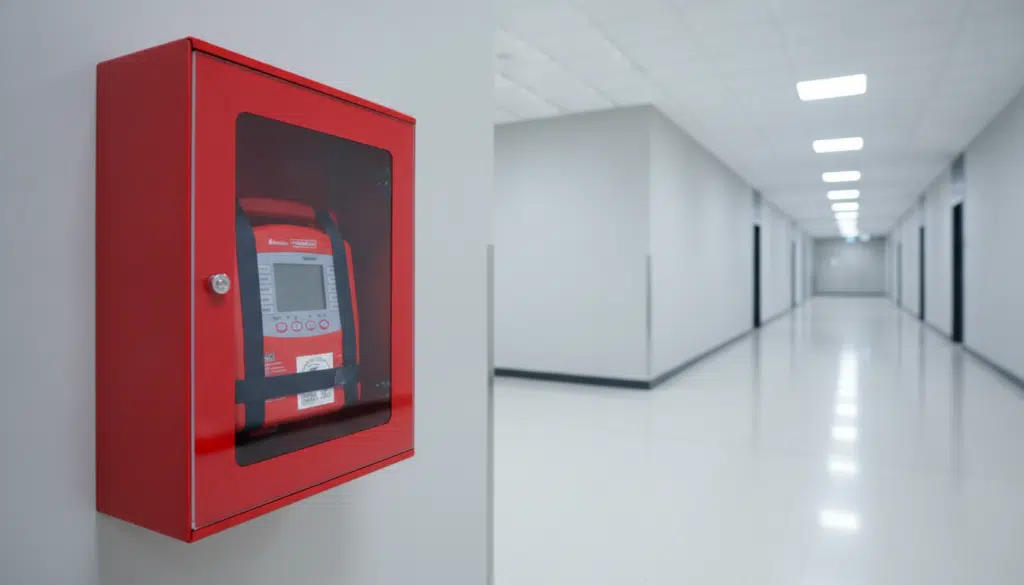
A commercial safety plan must address sudden cardiac arrest alongside fire, severe weather, and security incidents. The heart can stop pumping without warning in an office, school, gym, clinic, warehouse, or public facility. An automated external defibrillator may restore a viable rhythm, but only if someone can reach it quickly. Proper storage protects the device, identifies its location, supports regular checks, and gives trained responders a practical starting point during a medical crisis.
A Visible First Response
An automated external defibrillator should never sit inside an unmarked closet, locked supply room, or crowded cabinet. AED cabinets for commercial buildings provide a recognizable location near people who may need rapid access. Clear positioning reduces hesitation during cardiac arrest, while protective construction limits exposure to dust, impact, and casual handling. A properly fitted enclosure can also hold a rescue kit, spare batteries, or replacement pads.
Location Shapes Response Time
Placement should reflect normal movement through each facility. Reception areas, main corridors, gym entrances, employee gathering spaces, and lobby zones usually offer strong visibility. Larger properties may require several units across separate floors, wings, or assembly areas. A site review should assess walking distance, stair access, secured doors, elevators, operating hours, and visitor traffic. Floor plans can show coverage gaps before installation work begins.
Access Without Confusion
Retrieval must remain straightforward for trained staff and nearby occupants. Large lettering, familiar symbols, and adequate lighting help people identify the enclosure during panic. Some models include audible alarms, strobe alerts, keyed controls, or theft deterrents. Those features should protect the device without creating an avoidable barrier. Facility leaders need to balance security with emergency access, particularly in schools, clinics, and buildings with controlled entrances.
Match the Cabinet to the Building
Wall construction affects the appropriate enclosure style. Recessed models suit new construction or walls with sufficient cavity depth. Surface-mounted versions work well during renovations, especially where wall penetration could disturb existing systems. Semi-recessed designs provide a middle option. Before ordering, installers should confirm trim dimensions, door swing, mounting hardware, clearance, and nearby electrical or plumbing routes. Accessibility paths must remain unobstructed after installation.
Protect Valuable Equipment
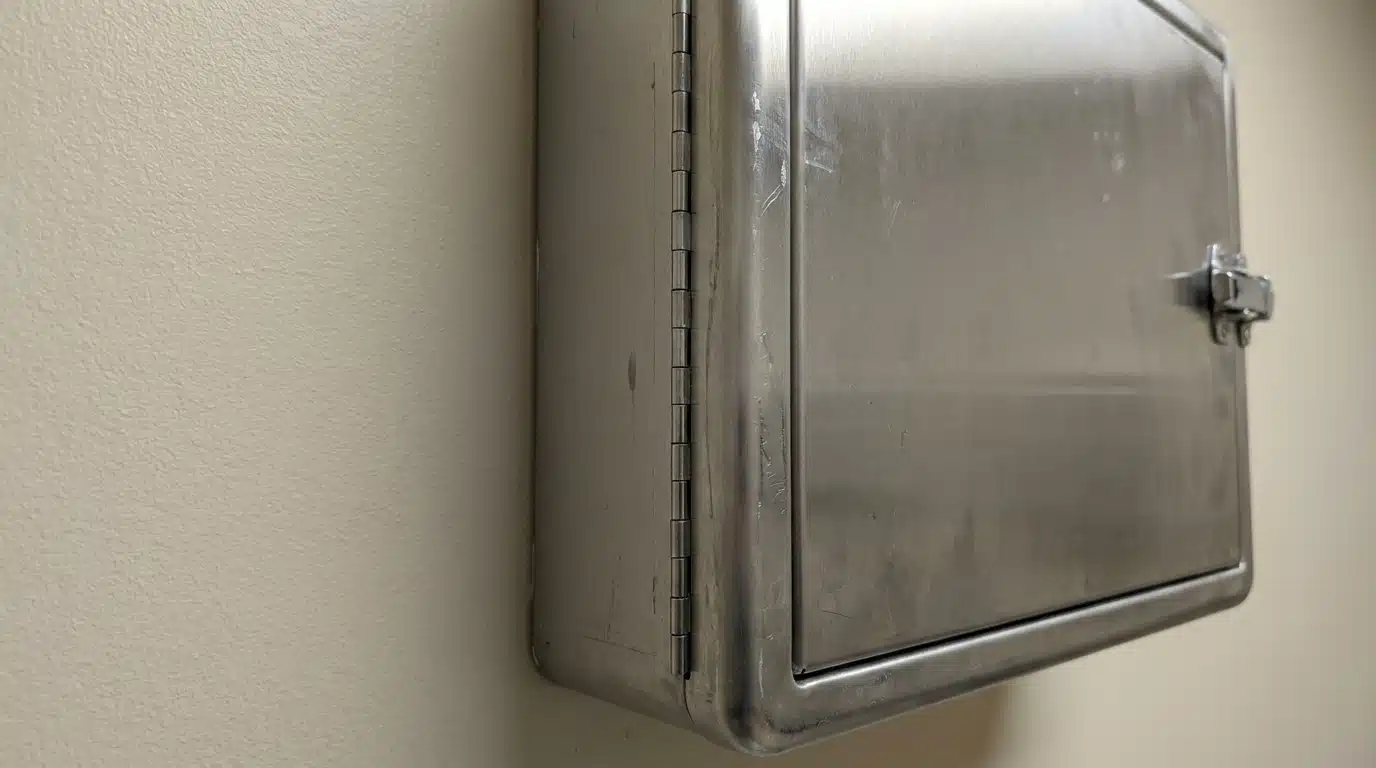
Material choice affects durability, maintenance, and visual fit. Stainless steel offers corrosion resistance and a professional appearance in busy interiors. Clear anodized aluminum provides a lighter alternative for suitable locations. Powder-coated steel can coordinate with other emergency fixtures. A formed door, dependable latch, continuous hinge, and door stop help preserve operation over repeated use. Exterior installations require protection against moisture, temperature variation, and direct sunlight.
Support a Complete Safety Program
An enclosure is one component of a broader medical response plan. Property operators should record the device model, location, battery condition, pad expiration date, and service contact. Training should cover cardiac arrest recognition, emergency communication, chest compressions, and equipment retrieval. Practice sessions must use training units rather than active devices. Clear roles allow employees to call emergency services, begin care, guide responders, and document the incident.
Include Cabinets in Inspections
Routine checks can reveal faults before a crisis occurs. Inspection personnel should confirm visibility, unobstructed access, secure mounting, door operation, alarm performance, and sign condition. Also review battery dates, electrode packaging, rescue scissors, gloves, and breathing barriers. A dated checklist assigns responsibility across shifts and departments. Maintenance records should show corrective action, completion dates, and the person who verified the repair.
Plan for Different Occupants
Commercial facilities serve people with varied mobility, hearing, vision, language, and training needs. Signs should use readable lettering, familiar symbols, strong contrast, and adequate illumination. Placement must consider reach range, hallway width, furniture changes, and wheelchair movement. Visual alerts can assist people who may not hear an alarm. Emergency instructions should use direct language, identify local emergency numbers, and provide clear directions to the device.
Measure Readiness Over Time
Safety managers can track inspections, training attendance, battery changes, alarm tests, and response exercises. These records show whether procedures remain consistent across departments and shifts. Repeated missed checks may point to unclear ownership, inadequate staffing, or an impractical schedule. Review meetings should assign each correction to a named person with a due date. Recorded results can guide future purchases, renovations, and coverage decisions.
Conclusion
AED cabinets deserve a defined place in every commercial building safety plan because rapid access depends on more than owning a defibrillator. Proper placement, clear identification, physical protection, staff preparation, and documented inspections all support an effective response to cardiac arrest. Building owners and facility teams can strengthen readiness by reviewing floor plans, accessibility needs, operating hours, and maintenance duties. A practical storage plan gives occupants and responders a clearer path to urgent care.