

A rug can look perfect online and still feel completely wrong once it reaches the living room. Size changes how connected, balanced, and comfortable the entire seating area feels.
When deciding how big a rug should be, the best choice depends on the furniture layout, walking space, and room proportions.
A well-sized rug can pull sofas and chairs together without swallowing the floor. It also helps the seating area feel more balanced and visually connected.
The sections below cover sizing rules, measuring steps, homeowner opinions, budget considerations, and shape advice. Keep reading to choose a rug that truly fits your space.
How Big Should a Living Room Rug Be?
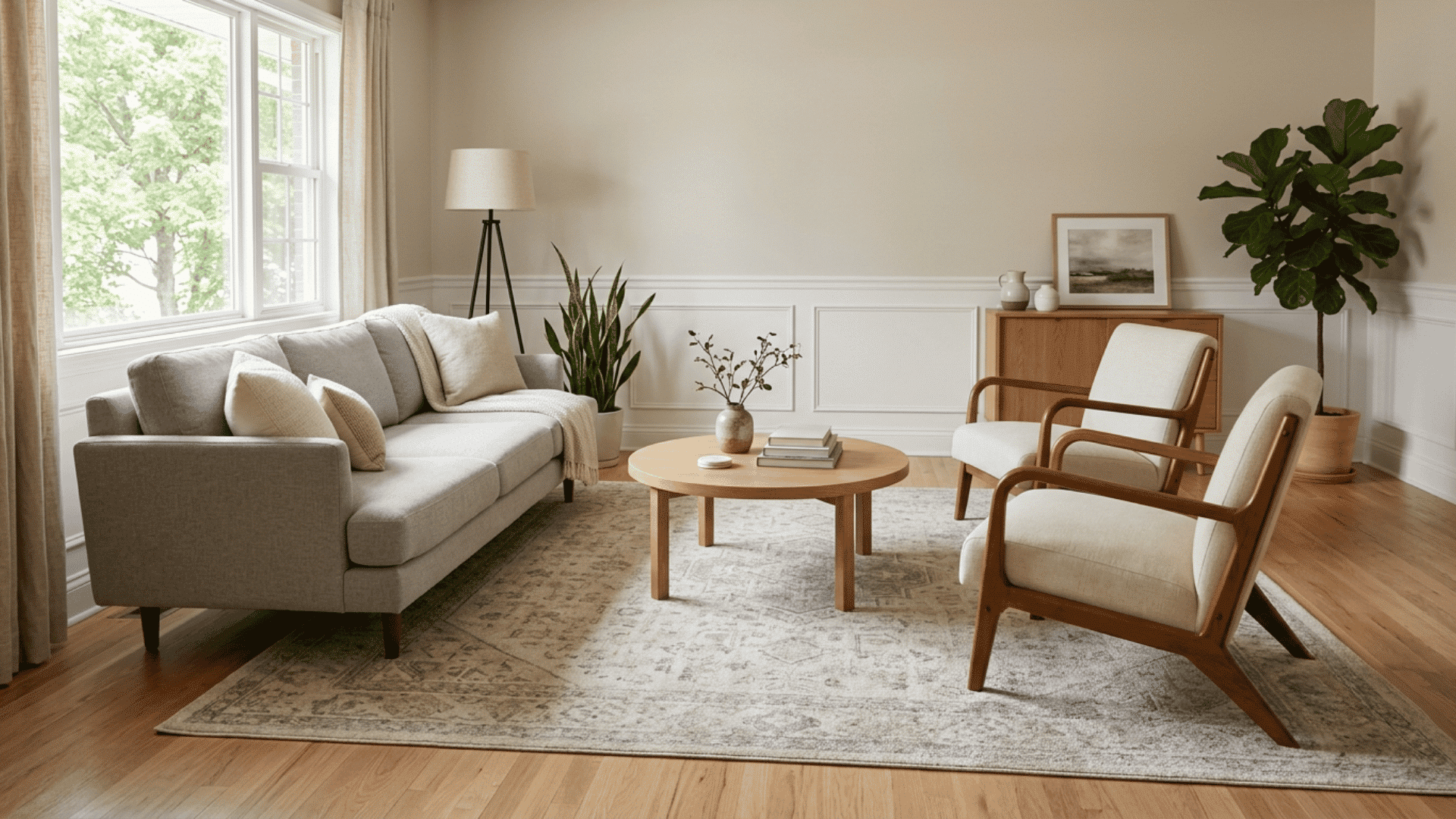
A living room rug should be large enough to connect the seating pieces. In most rooms, this means placing at least the front legs of the sofa and chairs on the rug.
Smaller rugs can work beneath a coffee table in compact spaces, while larger rugs suit open layouts or floating furniture groups. Start with the seating area rather than the room.
Measure the sofa, chairs, and space between them, then check how much floor should stay visible around the rug.
A good rule is to leave 12 to 18 inches of exposed flooring between the rug edge and the nearest wall. This border keeps the rug from looking wall-to-wall while still anchoring the furniture group.
Rug Size Quick Reference by Room Size
Each rug size works best within a specific room dimension range. The table below pairs common rug sizes with minimum room dimensions and typical placement style.
| Rug Size | Minimum Room Size | Best For | Typical Placement |
| 4×6 | 7×9 | Apartment living rooms | Under coffee table, front legs off rug |
| 5×7 | 8×10 | Compact seating areas | Beneath coffee table and chair fronts |
| 6×9 | 9×12 | Small to medium living rooms | Front sofa legs may reach the rug |
| 8×10 | 11×13 | Medium to large living rooms | Front legs of main seating on rug |
| 9×12 | 12×15 | Large living rooms | Most seating connects to the rug |
| 10×14 | 13×17 | Large open layouts | Furniture sits largely or fully on rug |
Disclaimer: These are starting points, not fixed rules. Ruggable recommends 5×7 or 6×9 rugs for smaller spaces and 8×10 or 9×12 rugs for larger seating areas.
Three Placement Styles: Which One Fits?
Rug placement is not one-size-fits-all. The three most common approaches each create a different feel in the room.
1. All Legs on The Rug: Every piece of furniture sits fully on the rug. This creates the most unified, polished look and suits formal living rooms and open-concept spaces where the seating zone needs clear definition. It works best with 9×12 or larger rugs in spacious rooms.
2. Front Legs Only on The Rug: Only the front legs of the sofa and chairs rest on the rug. This is the most popular modern approach because it connects furniture without requiring an oversized rug. It works well with 8×10 and 9×12 sizes in most standard living rooms.
3. No Legs on The Rug (Coffee Table Only): The rug sits beneath the coffee table without touching any seating. This suits compact rooms, tight budgets, or spaces where attractive flooring should stay visible. A 5×7 or 6×9 rug usually fits this style.
How to Measure a Living Room for a Rug?
Accurate measurements prevent a rug from looking lost or crowding the room. Focus on the furniture arrangement first, then check the surrounding floor space.
Step 1: Measure The Seating Area First
Measure the area formed by your sofa, chairs, and coffee table before measuring the entire room.
The rug should help connect this seating group, so note the widest and longest points of the arrangement. Decide whether all furniture legs, only the front legs, or just the coffee table will sit on the rug.
This gives you a more useful target than wall-to-wall dimensions and helps narrow your choices before comparing standard rug sizes.
Step 2: Measure The Sofa and Chairs
Measure the full width of the sofa and note where nearby chairs sit in relation to it. Also measure the distance between each seating piece.
A rug should generally feel wide enough to support the furniture arrangement rather than ending abruptly beneath the center of the sofa.
Also record the distance between furniture pieces so the rug can connect the seating area without blocking normal movement through the room.
Step 3: Mark The Rug Size With Painter’s Tape
Before ordering, use painter’s tape to mark the corners and edges of the rug on the floor. If your space allows, test more than one standard size, such as 6×9, 8×10, or 9×12.
Walk around the taped outline and view it from nearby doorways. This helps you judge how the rug will look from different angles before buying it.
This simple test makes it easier to see whether the rug feels too narrow, extends awkwardly beyond furniture, or leaves enough visible flooring around the seating zone.
Step 4: Check Walkways, Doors, and Floor Space
Check the taped rug outline against doors, floor vents, fireplace hearths, cabinets, and the main paths people use through the room.
A rug that fits the sofa perfectly can still be inconvenient if it interrupts a walkway or prevents a door from opening freely. Leave enough exposed flooring where circulation matters.
In awkward layouts, adjusting the rug orientation or choosing a slightly smaller size may work better than forcing the largest option into the room.
Common Rug Sizing Mistakes to Avoid
Even small errors in rug selection can throw off the balance of a room. These are the most frequent problems and how to fix them.
| Mistake | Why It Happens | How to Fix It |
| Rug too small for the seating area | Choosing by price instead of measurement | Measure the seating group first, then find the closest standard size that covers it |
| Rug pushed flush against the wall | Trying to maximize coverage | Leave 12-18 inches of exposed floor between the rug edge and the wall |
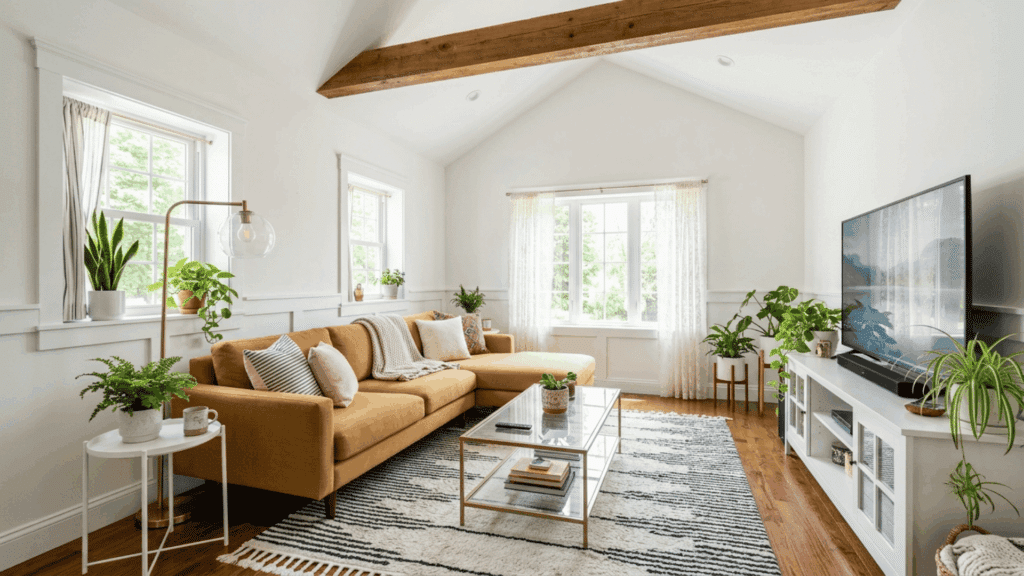
| Only one side of the sectional on the rug | Using a standard-size rug with an L-shaped sofa | Size up to a 9×12 or 10×14 so both sections of the sectional connect to the rug |
| Centering the rug in the room instead of under the furniture | Treating the room’s center as the anchor point | Align the rug with the seating layout, not the room’s midpoint |
| Blocking a walkway or door swing | Not checking circulation paths before ordering | Tape the rug outline on the floor and test door clearance and foot traffic |
What Real Homeowners Say About Living Room Rug Size
Reddit discussions show that there is no single answer for every room. Many users favor larger rugs, while others prefer more visible flooring or a less crowded layout.
“The 9×12 is the right size for your room. Go for it!!” Reddit
Several users in this thread preferred 9×12, but the homeowner also noted that larger rugs became noticeably more expensive.
“I honestly would take the smaller rug to expose some of the nice flooring.” Reddit
Bigger is not always better. Attractive hardwood floors, nearby furniture, and tighter layouts may justify choosing a smaller rug and repositioning it carefully.
“8×10 gives you a more airy look” Reddit
One homeowner comparison found that 8×10 balanced openness and coverage, while 9×12 created a cozier, more clearly defined seating zone.
Budget-Friendly Rug Sizing Tips that Still Look Good
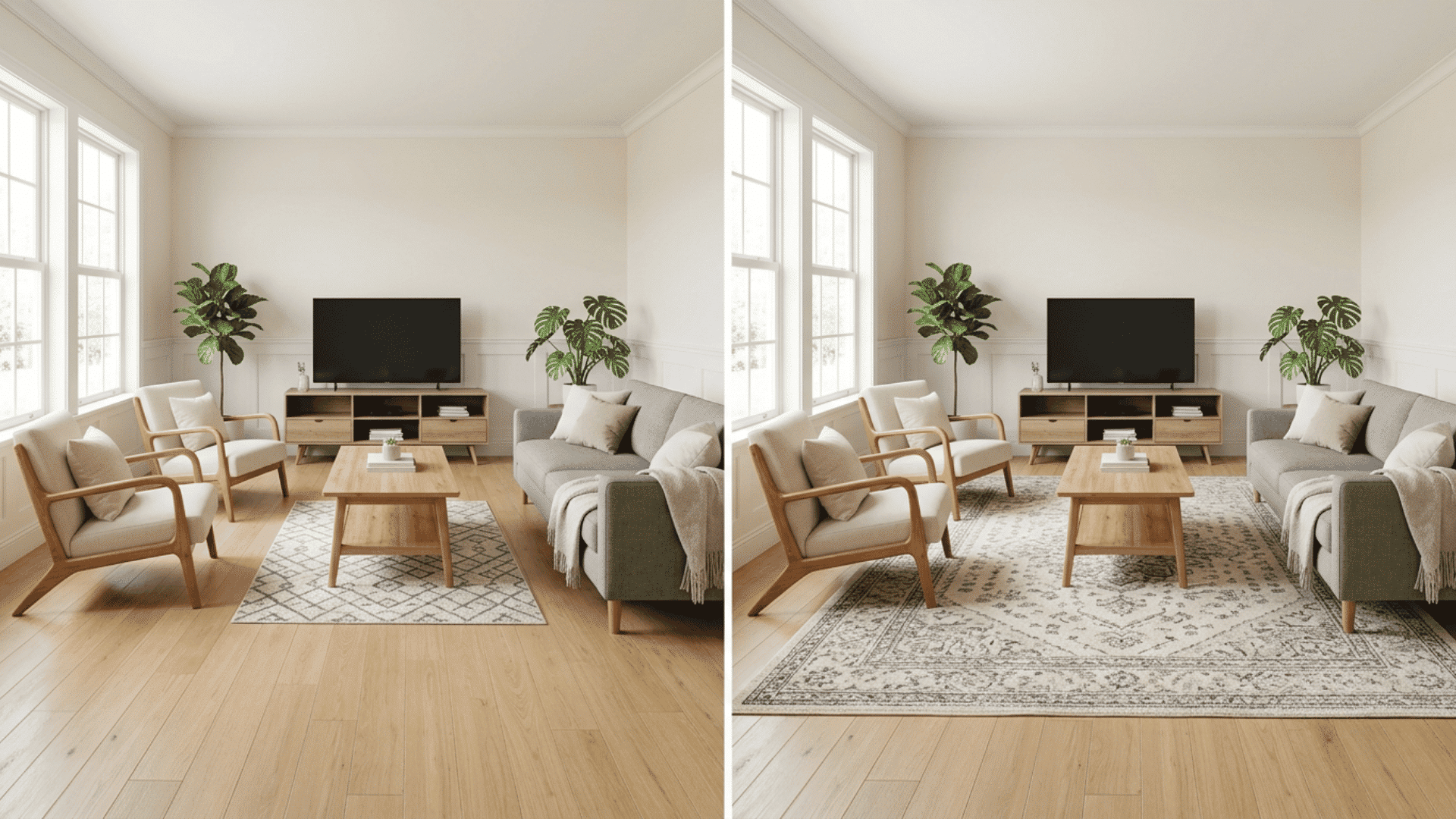
A larger rug creates a more connected seating area, but it can also raise the price quickly. Start by measuring the smallest size that still supports your furniture placement.
If an 8×10 keeps the sofa and chair fronts on the rug, a 9×12 may not be necessary. Compare standard sizes because unusual dimensions can cost more and offer fewer choices.
Another option is layering a smaller decorative rug over a larger neutral rug. Always tape the dimensions on the floor first.
When choosing a rug, also check for relevant carpet and rug safety information.
Spending less on the wrong size is not a bargain if the room feels disconnected and you replace the rug later.
How Does Rug Shape Affect Rug Size?
Rug dimensions are only part of the decision. Shape can change how large a rug feels and how naturally it connects the furniture.
- Rectangular Rugs: Rectangular rugs suit most standard living rooms because they follow the shape of sofas and seating groups. Choose dimensions that extend beyond the main furniture arrangement.
- Square Rugs: Square rugs work best in square rooms or balanced seating layouts. They can look awkward in long spaces, so measure the room shape before choosing one.
- Round Rugs: Round rugs soften rooms filled with straight lines and can suit compact seating areas. Choose a diameter large enough to connect nearby chairs or furniture.
- Oval Rugs: Oval rugs add softer curves while still covering more length than a round rug. They can work well in narrow rooms with lighter furniture arrangements.
- Irregular Rugs: Irregular rugs work best as accent pieces rather than primary anchors. Use them when the furniture layout is simple, and the unusual shape will not disrupt circulation.
Conclusion
The right rug should make the room feel settled the moment you walk in, not leave you wondering why the furniture still looks disconnected.
Size matters, but the best choice comes from seeing how the rug works with your sofa, chairs, walkways, and visible flooring.
Use measurements as your starting point, then test the outline before spending money. A few minutes with painter’s tape can prevent an expensive sizing mistake.
Start with room measurements, compare the best-fit options, and choose a rug that makes the seating area feel intentional.
Frequently Asked Questions
Should a Rug Pad Match The Rug Size?
A rug pad should normally be slightly smaller than the rug so its edges remain hidden underneath.
Does Rug Thickness Affect Placement?
Yes. Thick rugs can create clearance problems near doors and may feel less practical in busy living room walkways.
Can Two Rugs Work in One Living Room?
Yes. Separate rugs can define different zones in a large room, but their sizes and styles should still feel visually connected.