Small bedrooms often need smart layouts that make every corner count. Built-in bunk beds offer a practical way to add sleeping space while creating room for storage and daily comfort.
These built-in style designs can fit kids’ rooms, shared spaces, and guest areas with the right planning and materials.
From simple DIY projects to creative storage ideas, the right setup can add function without taking up extra floor space.
Keep reading for useful tips, build ideas, and real examples that help plan a better bunk bed design.
What are Built-in Bunk Beds?
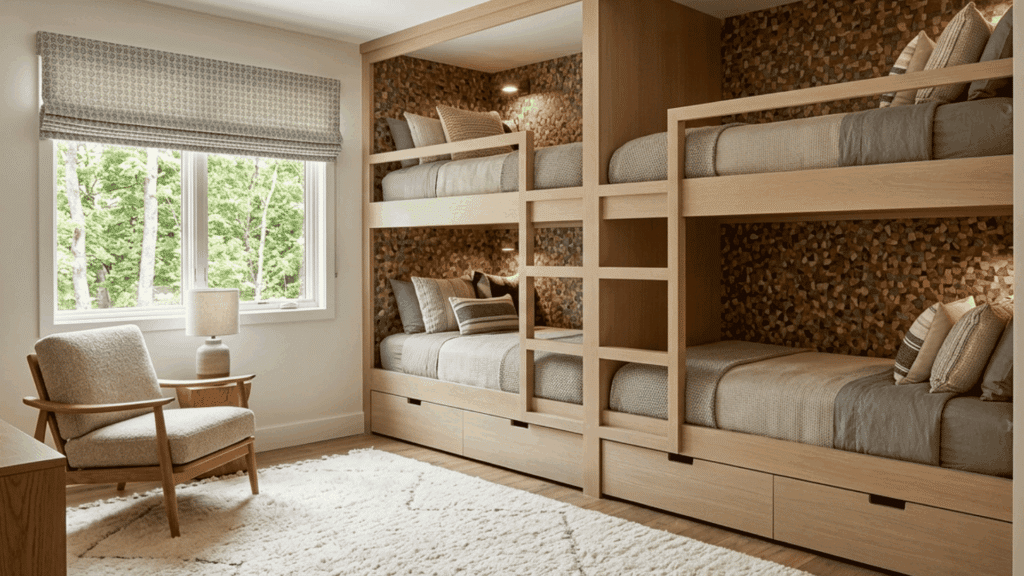
Built-in bunk beds are sleeping setups designed to fit into a room instead of using a separate freestanding frame.
These beds are often attached to walls, cabinets, or other fixed structures to create a clean and space-saving layout.
Many designs include extra features like drawers, shelves, stairs, or study areas. They are a popular choice for kids’ rooms, shared bedrooms, or small homes where every inch matters.
Unlike regular bunk beds, built-in versions can be planned around the room size and storage needs.
With the right materials and careful planning, they can become a useful part of the bedroom for many years.
How to Build Built-In Bunk Beds
Building built-in bunk beds requires careful planning, accurate measurements, and strong construction methods.
1. Plan The Space and Take Measurements

Before starting the build, measure the room size, ceiling height, and available space. Decide the bunk bed location, mattress size, and height of each level.
Leave enough room to climb, sit, and move around safely. A proper layout plan helps prevent size issues later.
Mark the wall and floor areas where the bed will be placed to create a clear building plan before cutting any materials.
2. Choose Materials and Tools
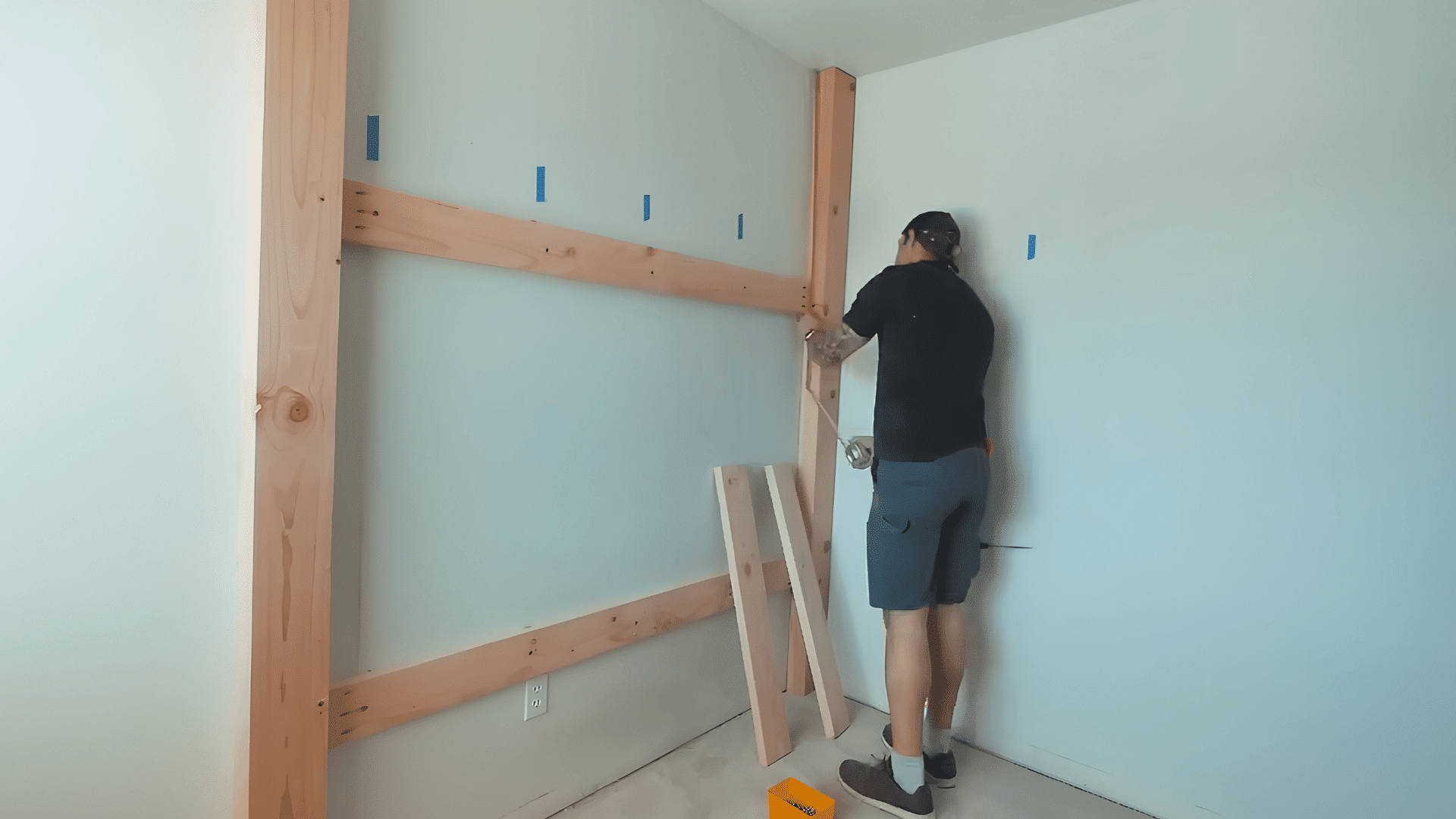
The right materials help create a strong and long-lasting bunk bed structure. Most DIY builds use materials like solid wood, plywood, screws, brackets, and support beams.
Prepare tools such as a drill, saw, measuring tape, level, and sandpaper before starting. Choosing quality materials and having all tools ready can make the building process smoother.
It also helps reduce mistakes while cutting, joining, and securing different parts. It keeps measurements accurate and ensures each piece fits together properly.
3. Build The Frame and Support Structure
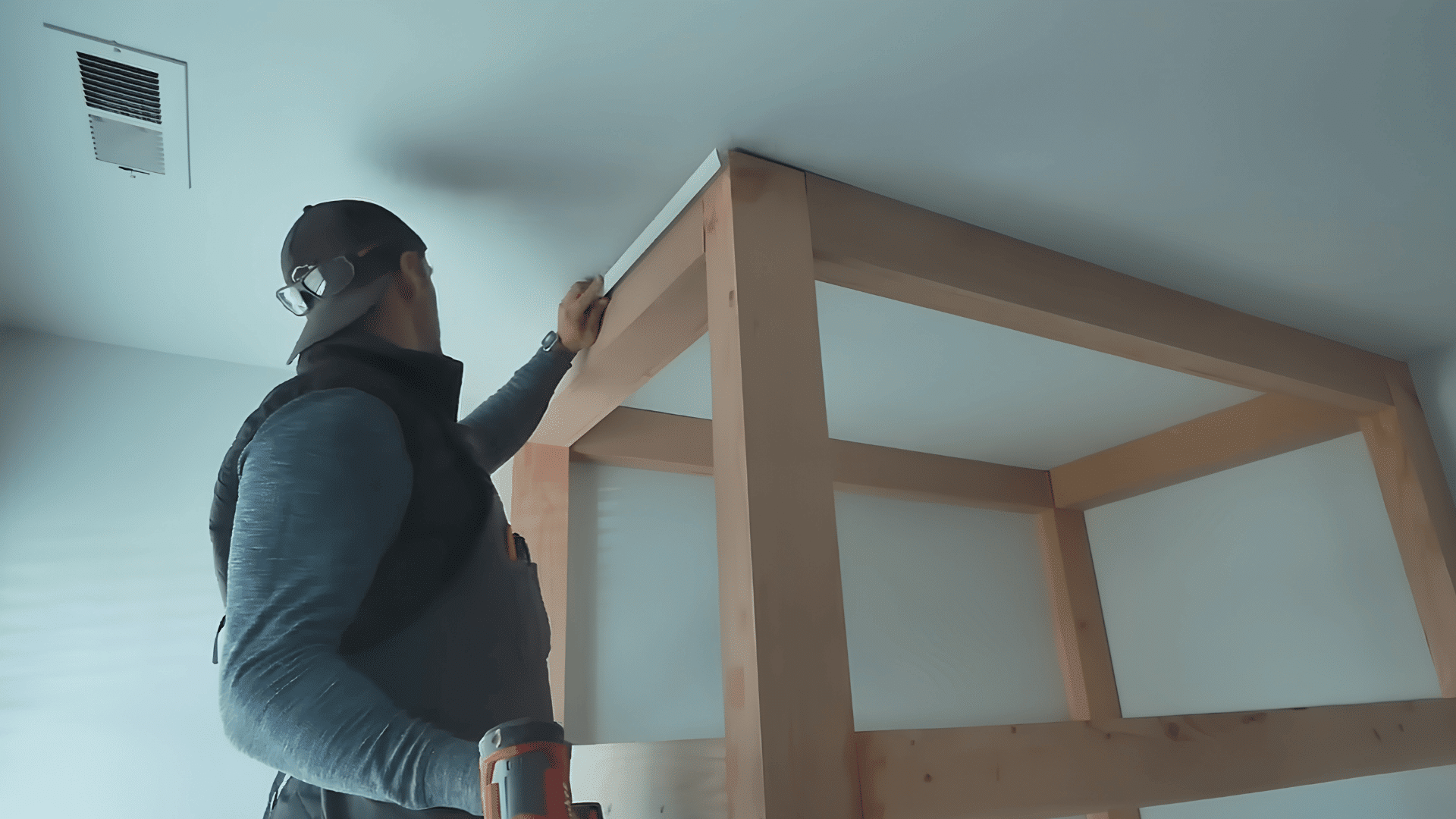
Start by building the main frame based on the measurements from the planning stage. Securely attach the side rails, base supports, and beams to create a stable structure.
Make sure each connection is tight and the frame stays level. Add extra support points where needed, especially under the sleeping areas.
A strong frame is important for safety and helps the bunk bed handle regular use over time. It also creates a stable base that keeps the bed secure and comfortable.
4. Add Storage and Finishing Touches
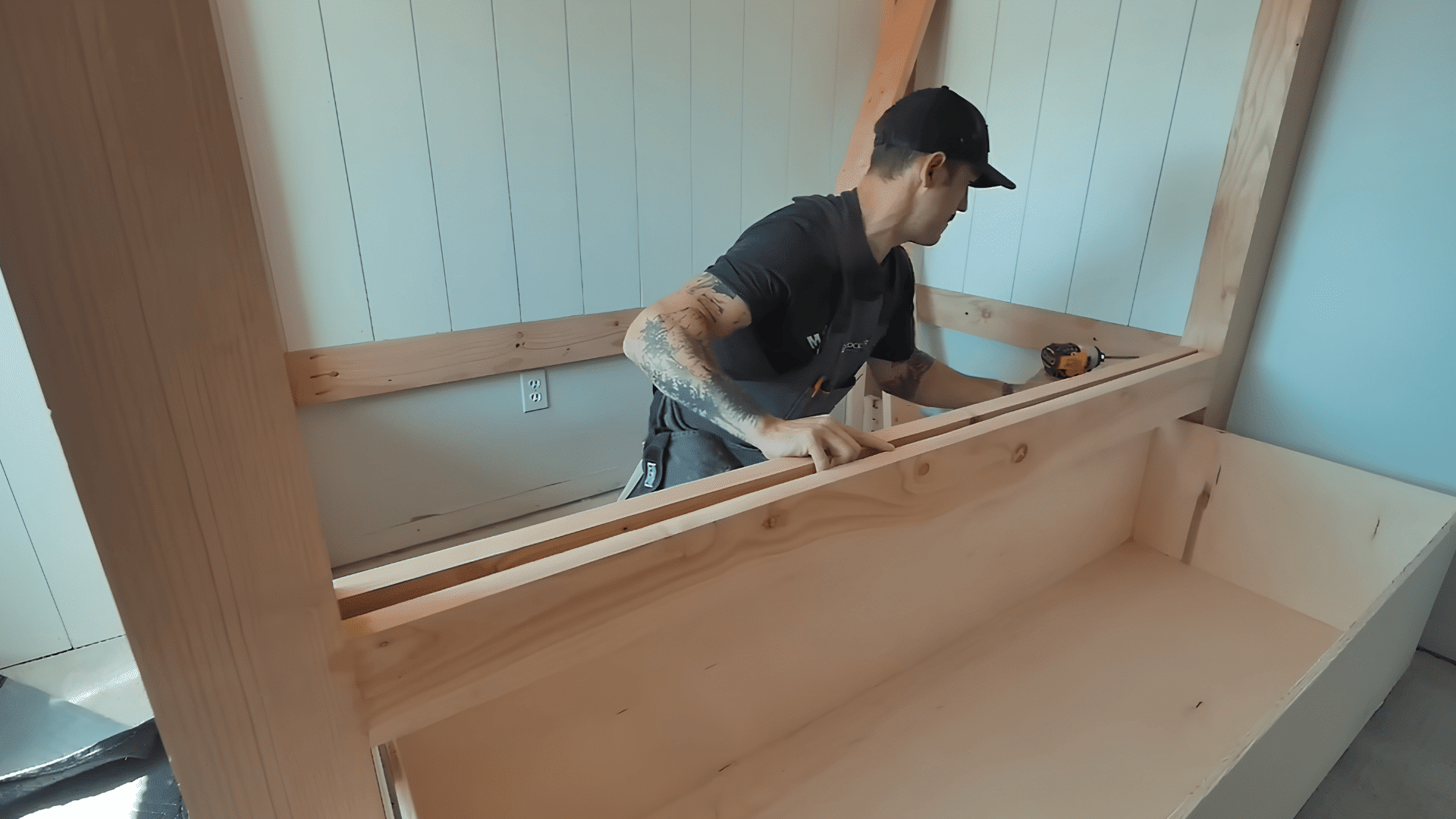
Once the main structure is complete, add features that improve function and comfort. Drawers, shelves, cabinets, and storage steps can help save space in smaller rooms.
Sand the wood to create smooth surfaces, then apply paint or a protective finish if desired. Carefully install guardrails, ladders, and other final parts.
These finishing details help create a practical bunk bed setup that matches the room’s needs. They also add comfort, storage, and a cleaner look to the overall bedroom design.
5. Paint The Wood
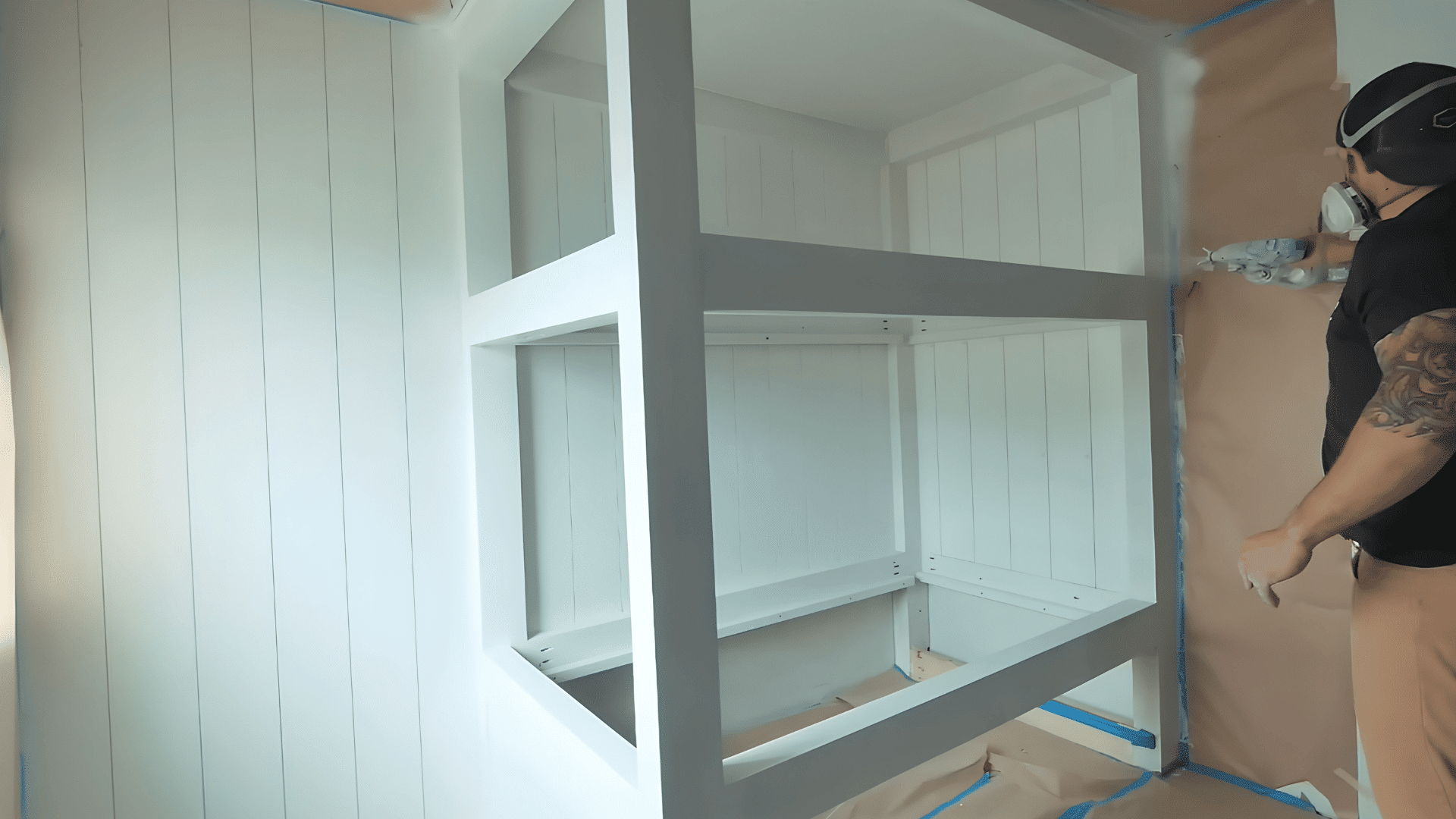
Sand all wooden surfaces before painting to remove rough spots, sharp edges, and uneven areas. Wipe away dust so the surface is clean before applying paint.
Apply a suitable primer if needed, followed by an even coat of wood paint. Allow each coat to dry properly before adding another layer.
Pay attention to corners, rails, steps, and visible joints. A clean paint finish helps protect the wood and gives the bunk bed a neat, finished appearance.
6. Add The Final Touches
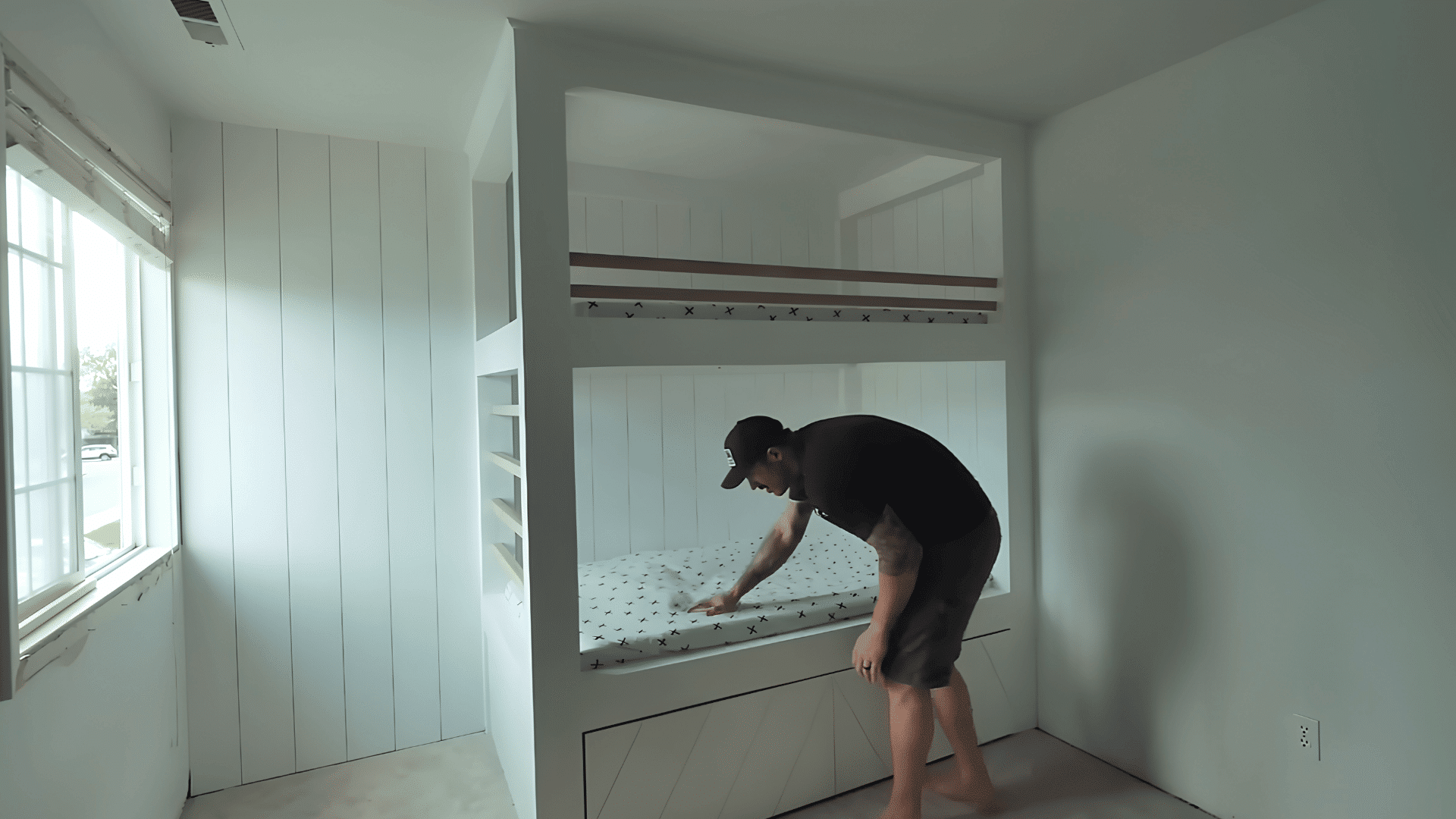
After the paint has dried completely, install the remaining parts of the bunk bed. Attach the guardrails, ladder, handles, storage hardware, and any other small fittings.
Check every screw, bracket, joint, and support to make sure everything is secure. Test the ladder and storage sections before placing the mattresses.
Add the mattresses, bedding, pillows, and a few simple bedroom accessories. These final details complete the bunk bed setup and make the sleeping area ready for regular use.
For more detailed steps, watch the video on the Mr. Build It YouTube channel
Renter-Friendly Built-In Bunk Bed Alternatives
Renter-friendly built-in bunk bed alternatives help create a custom look without making permanent changes to the room.
Since fixed structures may not be allowed in rental homes, freestanding bunk beds with smart additions can offer a similar feel.
A standalone bunk bed frame can be paired with storage drawers, removable shelves, or under-bed organizers to improve function.
Wall-safe hooks, temporary storage units, and modular furniture can also add more space without damaging walls.
These options make it easier to adjust the setup later when moving to a new home. With careful planning, renters can create a comfortable and organized bunk bed area that fits their needs.
Built-In Bunk Bed Ideas with Storage
Built-in bunk beds can offer more than a sleeping area. Adding storage features helps keep rooms organized while making better use of available space.
1. Built-In Bunk Beds with Drawers Underneath: Drawers below the bed provide hidden storage for clothes, toys, books, and bedding. This option keeps items easy to access without taking extra floor space.
2. Built-In Bunk Beds with Storage Stairs: Storage stairs add a safer way to reach the top bunk while creating extra space for cabinets, shelves, or pull-out compartments.
3. Built-In Bunk Beds with Shelves: Built-in shelves near the sleeping area provide space for books, lamps, and personal items. They help reduce clutter and keep essentials within reach.
4. Built-In Bunk Beds with Desk Space: A desk under or beside the bunk bed creates a useful study area. This layout works well for small bedrooms with limited space.
5. Built-In Bunk Beds with Cabinets: Cabinets around the bunk bed can store larger items like clothes, bags, and seasonal belongings. They help create a cleaner and more organized room.
Safety Tips for Building Built-In Bunk Beds
Safety should be a key part of any built-in bunk bed project. Proper planning, strong materials, and regular checks help create a secure sleeping space.
- Use Strong Materials and Supports: Choose durable wood, strong screws, and reliable support beams to create a stable frame that can handle regular use and keep the bed secure.
- Install Proper Guardrails: Add guardrails around the top bunk to reduce the risk of falls. Make sure they are firmly attached and placed at the correct height.
- Check Ladder Safety: Build a strong ladder with secure steps and enough grip. A stable ladder makes climbing easier and helps prevent slips or accidents.
- Leave Enough Space Around The Bed: Keep proper clearance between the top bunk, ceiling, lights, and nearby furniture. This helps create a safer and more comfortable sleeping area.
- Inspect The Bed Regularly: Check screws, joints, and support parts from time to time. Tightening loose connections helps maintain the bed’s strength and stability.
Conclusion
A well-planned bunk bed setup can change the way a room feels and functions. Built-in bunk beds bring together smart storage, comfort, and practical design in one useful addition.
From DIY builds to renter-friendly ideas, the right choices can help create a bedroom that works better for everyday needs.
This type of setup can make small rooms feel more organized while giving every corner a clear purpose. With the right layout and features, a bunk bed can become a lasting part of the home.
Small details like strong supports and smart storage can make a big difference. Share your favorite bunk bed idea in the comments and let others find inspiration for their next project.
Frequently Asked Questions
Can Built-in Bunk Beds Increase Home Value?
A well-made built-in feature can make a room more useful and appealing to future buyers or renters.
What Mattress Size Works Best for Built-in Bunk Beds?
Twin mattresses are common, but some designs can fit full-size mattresses based on room size and frame measurements.
Can Adults Use Built-in Bunk Beds?
Yes, many designs can support adults when built with strong materials and proper weight support.