
Changing a familiar sleep position can feel awkward, especially when the body naturally returns to old habits during the night.
Back sleeping may feel comfortable for some people, while others need time, patience, and a supportive setup before the position feels natural.
Small adjustments, regular practice, and attention to comfort can make each attempt easier to assess. Anyone considering this change can begin with realistic expectations and a flexible approach.
Keep reading for practical guidance to support a calmer, more comfortable transition to bedtime tonight.
Is Back Sleeping Right for You?
Before learning to sleep on the back, a person should check whether the position fits their current health needs.
Back sleeping may distribute body weight and keep the ears, shoulders, and hips aligned, as long as the bedding offers enough support.
The position is not right for everyone. Lying on your back may worsen snoring or obstructive sleep apnea. People in later pregnancy are often advised to sleep on one side.
Anyone with sleep apnea, breathing trouble, pregnancy concerns, or pain that worsens on the back should speak with a health care professional.
How to Train to Sleep on The Back
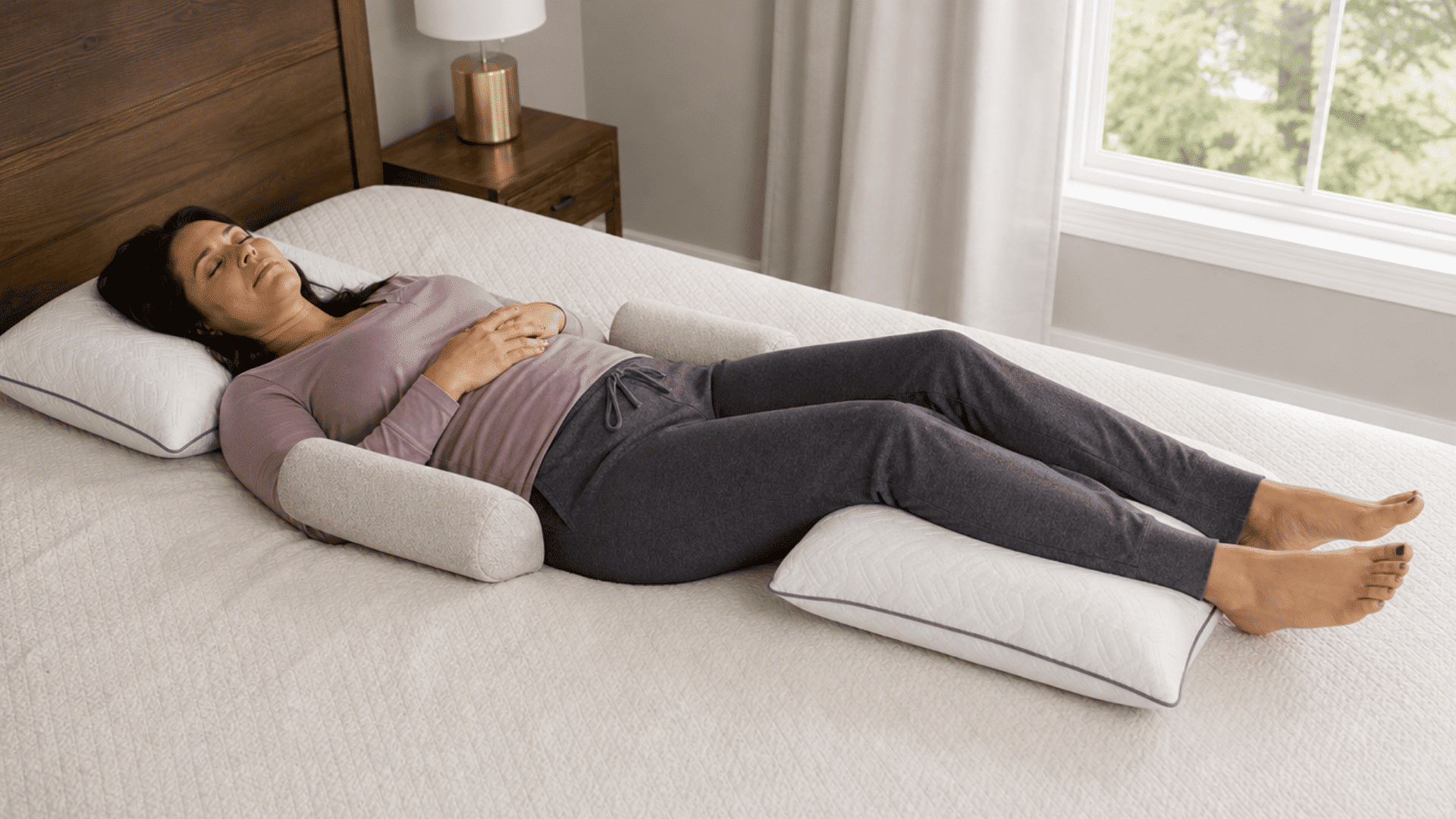
These seven steps combine positioning, bedding support, and habit-building methods for safer back-sleep training.
1. Practice While Awake
A sleeper can start with five to ten minutes on the back during the day. The knees should remain slightly bent while the shoulders rest against the mattress.
Slow breathing may help the body relax. A few minutes can be added every two or three days.
During back-sleep training, awake practice often connects knowledge of the position with comfort and ease.
2. Support The Neck
A pillow should fill the space behind the neck without pushing the chin toward the chest. A pillow that is too tall may leave the neck bent forward.
One that is too flat may let the head tip back. The setup can be tested by keeping the face level and aligned with the ceiling.
The Department of Veterans Affairs advises supportive head and neck placement to help maintain spinal alignment while lying on the back.
3. Put a Pillow Under The Knees
One regular pillow or a folded blanket can go under both knees. A small bend in the knees may reduce tension in the lower back and help its natural curve rest comfortably.
The VA guidance on sleeping positions also suggests support under the knees, legs, or lower back.
This is one of the easiest back-sleep training methods to test with common household items.
4. Build Soft Side Barriers
Place a pillow along each side of the hips or torso. The pillows should provide a gentle cue when rolling begins. They should not restrict movement.
A body pillow can serve the same purpose on one side. Leave enough room for arm movement and an easy exit from bed.
Remove the barrier if discomfort or overheating occurs. The aim is to guide movement while keeping sleep safe.
5. Choose a Comfortable Mattress
A comfortable mattress should support the shoulders, hips, and lower back without allowing one area to sink too deeply.
No single firmness level works for every sleeper. Body weight, pain, and personal comfort can affect the choice.
The Department of Veterans Affairs recommends asking a health care professional about an appropriate mattress firmness when experiencing back problems.
6. Use The Same Cue Each Night
Back sleeping can be linked to a short action in an existing bedtime routine. After brushing teeth, pillows can be arranged, the body can be placed face-up, and five slow breaths can be taken.
Repeating the same order gives the brain a clear signal to sleep. The room should remain dark, quiet, and comfortably cool.
Routine matters because back-sleep training is as much a habit as a bedding setup.
7. Reset Without Self-Criticism
If a sleeper wakes on their side or stomach, they can return to their back when comfortable.
No need to check the clock or treat the change as a mistake. Brief waking and position changes are normal during sleep.
If resetting causes alertness, use the position that supports rest instead. The goal of back-sleep training is better sleep, not perfect control over every movement.
Follow a Seven-Night Back-Sleeping Plan
This seven-night plan helps a sleeper gradually test their return to sleep while tracking comfort, pain, and overall rest quality each morning.
The VA sleep education page supports following a regular pre-sleep ritual.
| Nights | Action | Morning Check |
|---|---|---|
| 1–2 | Use a normal head pillow, add knee support, and spend ten minutes face-up before sleep. | Record pressure points and rest quality. |
| 3–4 | Change one item. Lower the head pillow if the chin feels tucked, or raise the knee support if the lower back feels tight. | Note whether the adjustment improves comfort. |
| 5–7 | Repeat the most comfortable setup and follow a regular pre-sleep ritual. | Stop the test if pain appears or sleep worsens. |
Benefits of Sleeping on The Back
Back sleeping may support body alignment, distribute pressure evenly, and reduce strain when you use suitable pillows and bedding correctly.
- Spinal Alignment: Proper pillow and mattress support may keep the head, neck, and spine in a neutral position.
- Even Pressure Distribution: Body weight is spread over a wider surface area, which may reduce pressure on the shoulders and hips.
- Reduced Facial Pressure: The face remains away from the pillow, limiting overnight pressure and friction.
- Lower Shoulder Strain: Neither shoulder carries the body’s full weight, which may improve comfort for some sleepers.
- Balanced Body Position: The arms, legs, and torso can rest evenly without twisting to one side.
Common Problems and Simple Fixes
Small adjustments can improve back-sleep training without reducing sleep quality. Soft pillows near the hips may limit rolling, while brief practice can reinforce the position.
Avoid hard objects, tight wraps, and restrictive barriers to allow safe movement.
Stop back sleeping if snoring, gasping, breathing pauses, headaches, or daytime sleepiness increase.
These symptoms may point to a breathing problem. Possible sleep apnea signs from the National Heart, Lung, and Blood Institute should be reviewed.
Disclaimer: Continuing symptoms require medical advice, especially after an existing sleep apnea diagnosis.
Conclusion
Back-sleep training takes patience, supportive pillows, and a steady routine. Small nightly adjustments can help the position feel more natural over time.
Progress does not require staying perfectly still throughout the night. Rest quality should remain the main measure of success.
If pain, breathing difficulties, or poorer sleep develop, the process should pause until appropriate guidance is available.
Back sleeping remains a personal choice, not a requirement. A calm, flexible approach can make the change easier to manage. Readers can share experiences, pillow setups or bedtime habits in the comments.
Frequently Asked Questions
What Does Supine Sleeping Mean?
Supine sleeping means lying flat on the back, face upward, with the body in a neutral position.
Can a Weighted Blanket Support Back-Sleep Training?
A weighted blanket may reduce movement for some sleepers, but it should never restrict breathing, movement, comfort or safe exits.
Can Back Sleeping Worsen Heartburn?
Lying flat on the back may worsen nighttime heartburn for some people. Persistent symptoms should receive prompt professional medical attention.