

Why do some people stay composed during conflict while others react and regret it later?
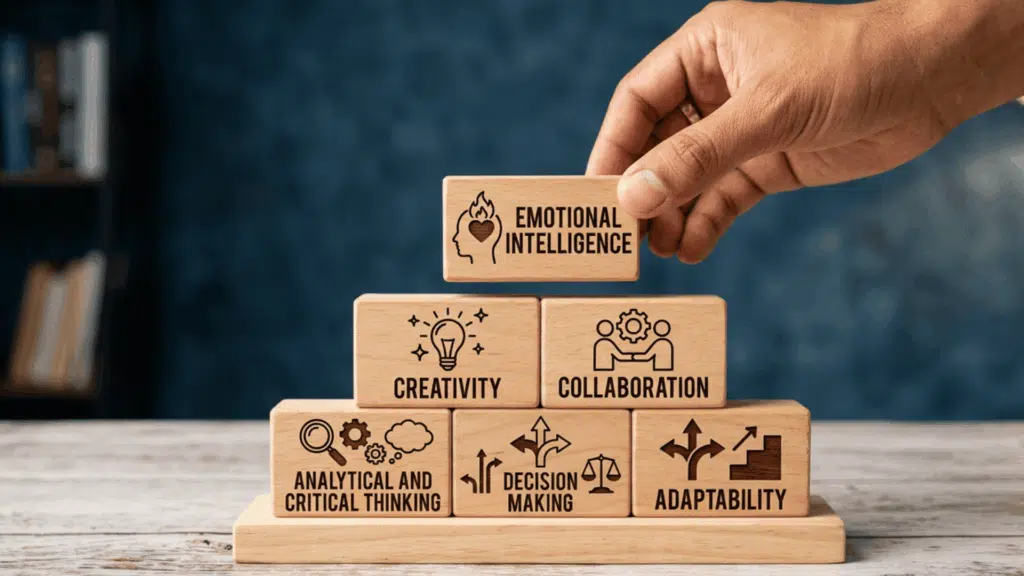
The answer often lies in emotional intelligence: the ability to recognize feelings, control reactions, and understand what others may be experiencing.
These skills affect daily decisions, workplace discussions, and personal relationships. They can also be strengthened through focused practice.
Learning how to improve emotional intelligence helps a person respond with greater awareness instead of acting on impulse.
The blog provides practical tips on dealing with one’s emotions, listening properly, and communicating during difficult times. Try out the tip today and use it in your conversation.
What is Emotional Intelligence?
Emotional intelligence is the ability to notice, understand, and manage emotions in yourself and other people.
A person with strong emotional intelligence still experiences anger, worry, and disappointment.
According to The Mental Health America, it includes self-awareness, emotional control, empathy, and relationship management.
The individual is able to recognize the emotion and think about why it occurred before reacting. The foundation for improving one’s emotional intelligence is recognizing that emotions are useful data.
Feelings can reveal unmet needs, personal concerns, social pressure or problems that require attention.
Can Emotional Intelligence Be Learned?
Emotional intelligence includes several abilities that can develop through reflection, training, feedback and repeated practice.
There is proof that training may help people develop their emotional competencies.
These results are dependent on how well the training is done and how much one exercises empathy beyond the training process. One can read all they want about empathy, but that would not be enough.
People must practice listening, check their assumptions, review their reactions, and apply different responses during real conversations.
How to Improve Emotional Intelligence Through Daily Practice

The following methods turn emotional intelligence into clear actions you can practice at home, at work, and in social situations.
Improve Emotional Intelligence by Naming Emotions
Pause several times during the day and identify what you are feeling. Use a precise word instead of a broad label such as “good” or “bad.”
Next, identify the event, thought, and physical sensation connected to the emotion.
For example, tight shoulders and fast breathing may appear when you expect criticism. Precise labels help separate the emotion from the action you might take.
Pause Before Responding Under Pressure
When tension rises, stop for a few seconds, breathe slowly, and consider the result you want from the conversation.
Suppose a manager questions your work during a meeting. An immediate denial may increase the tension.
Perhaps you might consider asking about what should be clarified instead. For those seeking ways to develop their emotional intelligence, the delay allows one to replace a reflexive response with a measured one.
Check the Assumptions Behind Your Feelings
Emotions can be valid even when your first explanation is incomplete.
Ask yourself, “What facts do I have?” and “Could there be another explanation?” These questions help prevent quick conclusions.
Improving emotional intelligence includes separating confirmed facts from personal interpretations before starting a difficult conversation.
Practice Active Listening and Empathy
Listen to the speaker completely without formulating your answer in advance. Observe the choice of words, the tone used, the speed, and the context.
For example, say, “It sounds as though the changed deadline left you without enough preparation time.”
Do not claim to know exactly how the person feels. Learning how to improve emotional intelligence requires curiosity about another person’s experience without making unsupported assumptions.
Request Specific Feedback About Your Conduct
Ask a trusted coworker, friend, or family member about one behavior they can observe.
Questions such as “Do I interrupt when we disagree?” usually produce clearer answers than “Am I emotionally intelligent?”
Listen without defending your actions. Thank the person and review the response later. Look for patterns across several conversations rather than treating one opinion as a complete judgment.
Repair Relationships After a Poor Response
Emotional intelligence does not require a perfect response in every situation. It also means accepting responsibility and repairing harm after a mistake.
A useful apology names the action, recognizes its effect, and explains what will change.
Blaming stress or someone else weakens the apology. Repairing the interaction guides future conversations more effectively.
Build a Simple Daily Routine
Use a short routine to practice improving emotional intelligence without adding a large task to your schedule.
In the morning, name your mood and identify one situation that may test your patience.
During the day, use one deliberate pause before answering under pressure.
At night, review one interaction. Write down what happened, what you felt, what you assumed and how you responded.
Then choose one adjustment for a similar situation. Repeating this process helps connect emotional awareness with observable changes in conduct.
Measure Emotional Intelligence Progress

An online score cannot show every form of progress. Track specific behaviors instead.
Useful signs include noticing emotions sooner, interrupting less often, asking clearer questions and repairing disagreements more quickly.
Review your notes every four weeks. Identify repeated triggers and compare your recent responses with earlier ones.
Ask someone you trust whether they have noticed a change in your communication.
If emotional reactions regularly disrupt work, relationships, or daily responsibilities, consider seeking guidance from a qualified mental health professional.
Habits That Can Limit Emotional Intelligence
Improvement becomes harder when repeated habits prevent honest reflection. Watch for these patterns while practicing emotional intelligence:
- Reacting Immediately: Quick replies leave little time to examine facts, emotions or possible effects on others.
- Suppressing Feelings: Ignoring an emotion can delay understanding and allow tension to appear in later conversations.
- Assuming Intentions: Treating guesses as facts may create conflict before the other person explains their position.
- Rejecting Feedback: Defensiveness can hide useful information about behavior that affects coworkers, friends, or family members.
- Expecting Rapid Change: Emotional skills improve through steady practice, reflection and repeated correction in real situations.
Final Verdict
Learning how to improve emotional intelligence requires regular action rather than one major change.
Begin with a single habit, label one emotion, pause during one tense exchange or summarize another person’s concern before sharing your view.
Practice that behavior for one week and record what happens. Then add another skill.
Can emotional intelligence be learned? It can develop when people examine their reactions, accept useful feedback, and test better responses.
Which emotional intelligence habit will you practice first? Share your choice or experience in the comments.
Frequently Asked Questions
What is The Difference Between Emotional Intelligence and Empathy?
Emotional intelligence covers self-awareness, emotional control, empathy and relationships, while empathy focuses on accurately understanding another person’s feelings and viewpoint.
How Long Does it Take to Improve Emotional Intelligence?
The time varies because each person’s habits, practice frequency, feedback quality and willingness to change affect the rate of improvement.
Can Low Emotional Intelligence Affect Work Performance?
A person with weak emotional skills may misread feedback, react poorly under pressure and struggle to resolve workplace disagreements calmly.