
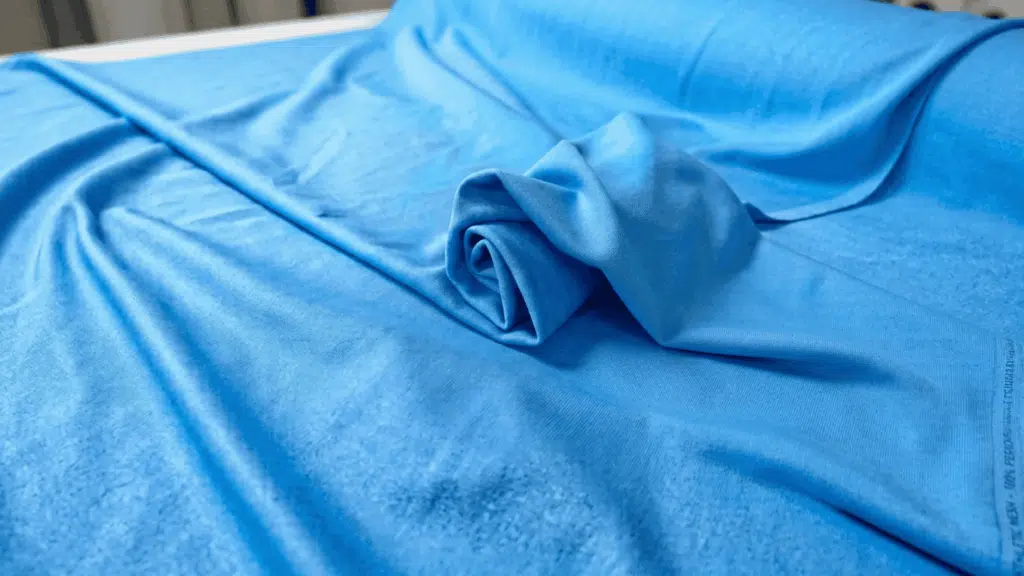
Polyamide and polyester are common synthetic fabrics found in activewear, everyday clothing, and outdoor products. Although they can appear similar, their softness, flexibility, moisture handling and shape retention differ.
Polyamide, often referred to as nylon, is valued for its smooth feel and wear resistance. Polyester stands out for fast drying and reliable shape retention.
Understanding these differences makes it easier to see why each fabric is suited tos certain applications.
This blog compares polyamide and polyester based on their properties, performance, and common uses, and explains the relationship between polyamide and nylon.
What is Polyamide Fabric?
Polyamide fabric is a synthetic material made from polyamide fibers. In clothing, the term usually refers to nylon, which is one of the most common polyamide fibers.
This fabric is known for being strong, lightweight and wear-resistant. It works well for clothing that needs stretch and regular movement.
Polyamide often feels smooth and soft on the skin. It is also used in fitted clothing because it can move with the body.
Common uses of polyamide fabric include:
- Leggings and tights
- Swimwear
- Sports bras
- Socks
- Outdoor clothing
- Bags
Nylon is a type of polyamide, but the two terms are not always identical. Polyamide is the larger fiber group, while nylon is one specific type.
Polyamide and polyester are common synthetic fabrics found in activewear, everyday clothing, and outdoor products.
Polyamide vs Polyester: Main Differences
Polyamide and polyester may look similar, but they behave differently when used in clothing. The right option depends on comfort, care needs, and the product’s purpose.
| Feature | Polyamide | Polyester |
|---|---|---|
| Fiber type | Synthetic polyamide fiber | Synthetic polyester fiber |
| Common name | Nylon | Polyester |
| Feel | Soft and smooth | Slightly firmer |
| Stretch | More flexible | Less flexible |
| Durability | Strong resistance to rubbing | Strong and long-lasting |
| Drying speed | Dries quickly | Dries very quickly |
| Shape retention | Good | Excellent |
| Common uses | Swimwear, leggings, activewear | Shirts, jackets, sportswear |
Key Differences Between Polyamide and Polyester
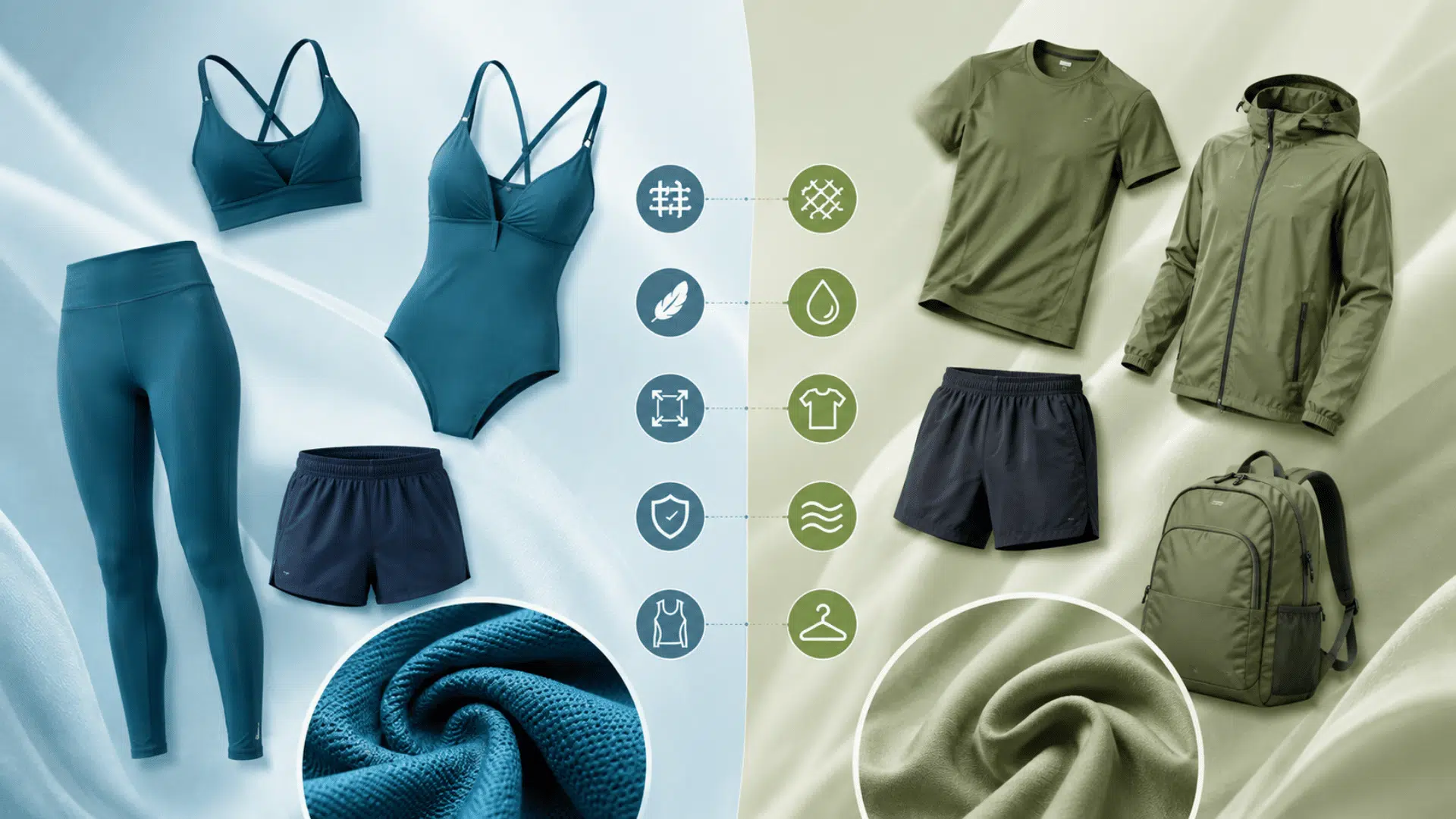
Polyamide feels softer and offers better stretch, while polyester dries faster and holds its shape well. Both are durable, but each suits different clothing needs and uses.
Durability and Strength
Both polyamide and polyester are strong fabrics. They are made to handle regular use and repeated washing.
Polyamide is especially useful for items that face a lot of rubbing. This is why it is common in swimwear, leggings, and outdoor clothing.
Polyester is also durable and keeps its shape well. It is often used for everyday clothing because it handles frequent washing and regular wear.
The quality of the fabric, thickness, and weaving method also affect how long a garment lasts.
Comfort and Feel
Polyamide usually feels softer than polyester. This makes it a popular choice for clothes that touch the skin directly.
Polyester has a slightly firmer feel, but modern polyester fabrics can also feel soft. Fabric blends can change the final texture and comfort.
Clothing made with a mix of polyester, polyamide, and elastane can offer a balance of softness, stretch, and support. Polyester has a slightly firmer feel, but modern polyester fabrics can also feel soft.
Moisture Control and Drying Speed
Polyester is widely used in sports clothing because it dries very fast. The fiber absorbs very little water, which helps clothes dry after sweat or washing.
Polyamide also handles moisture well but can hold more water than polyester. This means it may take slightly longer to dry.
Both fabrics are common in activewear because fabric design plays a major role in how well clothing manages sweat.
Stretch and Shape Retention
Polyamide has better natural flexibility than polyester. It works well for clothing that needs movement and a close fit.
Items like leggings, swimwear, and fitted workout clothes often use polyamide because it feels comfortable during movement.
Polyester is known for keeping its shape. It is less likely to lose its form after washing and regular use.
Many brands combine these fabrics with elastane to create stretchy clothing that fits better.
Polyamide vs Nylon: Are They the Same?
Polyamide and nylon are related, but they are not always the same. Polyamide is a broad class of synthetic fibers, and nylon is one type within it.
| Point | Polyamide | Nylon |
|---|---|---|
| Meaning | A group of synthetic fibers | A type of polyamide |
| Use on labels | Common on clothing tags | Often used as a fabric name |
| Common products | Clothing, carpets, and industrial items | Tights, sportswear, bags, and swimwear |
| Main difference | Covers several fiber types | Refers to one specific fiber type |
Common Uses of Polyamide and Polyester Fabrics
Different fabrics are selected based on how a product needs to feel and perform.
Polyamide is commonly used for:
- Leggings
- Swimwear
- Hosiery
- Sports bras
- Outdoor clothing
- Backpacks
Polyester is commonly used for:
- T-shirts
- Sports jerseys
- Jackets
- Bedding
- Curtains
- Home textiles
Some products use a blend of both fabrics. These blends can offer softness, strength, quick drying, and better shape control.
How to Care for Polyamide and Polyester
Polyamide and polyester are easy to maintain, but gentle washing helps protect their shape and finish. Use cold or warm water with a mild detergent. Choose a low spin cycle to reduce stress on the fabric.
Avoid hot water, strong bleach, and high dryer heat, as these may weaken fibers or cause damage.
Air drying is usually the safest option. A low tumble-dry setting may be suitable when the care label allows it.
Wash activewear soon after use to limit sweat and odor buildup. Always read the garment label before washing, drying, ironing, or using stain-removal products at home.
Which Fabric is Better: Polyamide or Polyester?
The better fabric depends on the type of clothing and how it will be used.
Polyamide works well for clothing that needs:
- A soft feel
- Flexible movement
- Stretch
- Resistance to rubbing
Polyester works well for products that need:
- Fast drying
- Easy care
- Shape retention
- Wrinkle resistance
Many activewear products use fabric blends because combining fibers can create a better balance for daily use.
Conclusion
Polyamide and polyester offer different advantages depending on the intended use. Polyester dries quickly, retains its shape well, and appears widely in sportswear and everyday clothing.
Polyamide is generally soft, flexible, and abrasion-resistant, making it common in fitted clothing, swimwear, and activewear.
Nylon is also closely related to polyamide because it is a type of polyamide, not an entirely separate fiber family.
Understanding this relationship, along with the performance differences between polyamide and polyester, can make fabric selection easier for different clothing and textile applications.
Frequently Asked Questions
Does Polyamide Hold Color Well?
Polyamide can absorb dyes well, so colors may look rich. Colorfastness still depends on the dye, finish, and washing method.
Can Polyamide and Polyester Cause Pilling?
Both fabrics may pill with frequent rubbing, especially in lower-quality knits. Turning clothes inside out before washing can reduce surface friction.
Do Polyamide and Polyester Trap Odors?
Synthetic fibers can hold sweat odors, especially after workouts. Washing soon after use and drying fully can help reduce buildup.
Can Polyamide and Polyester Be Recycled?
Some versions can be recycled, including those made from recycled nylon and recycled PET polyester. Local recycling options vary, and blended fabrics are harder to process.