


Hearing someone speak while fast asleep can be surprising, amusing, or even concerning.
Although many people assume sleep talking only happens during distinct dreams, it can occur for several reasons and is not always linked to dreaming.
Medically known as somniloquy, sleep talking is a common sleep behavior that affects both children and adults and is usually harmless.
However, frequent or unusual episodes may sometimes be associated with stress, poor sleep habits, or an underlying sleep disorder.
Continue reading to find what causes sleep talking, when it may require medical attention, and practical ways to reduce such episodes naturally.
What is Sleep Talking?
Sleep talking, medically known as somniloquy, is a common sleep behavior that ranges from a single mumbled word to a full, often nonsensical, conversation.
| Quick Fact | Details |
|---|---|
| Medical term | Somniloquy |
| Classification | A parasomnia (a group of unusual sleep behaviors) |
| Sleep stage | Can occur during both non-REM and REM sleep, but is more common during light non-REM sleep. |
| Typical episode length | Usually lasts a few seconds, though some episodes may be longer |
| Awareness | Most people are unaware that they are talking and do not remember it afterward. |
| Who is affected? | More common in children, but adults can experience it too |
| Is it harmful? | Usually harmless and does not require treatment unless accompanied by other concerning symptoms |
What Causes Sleep Talking?
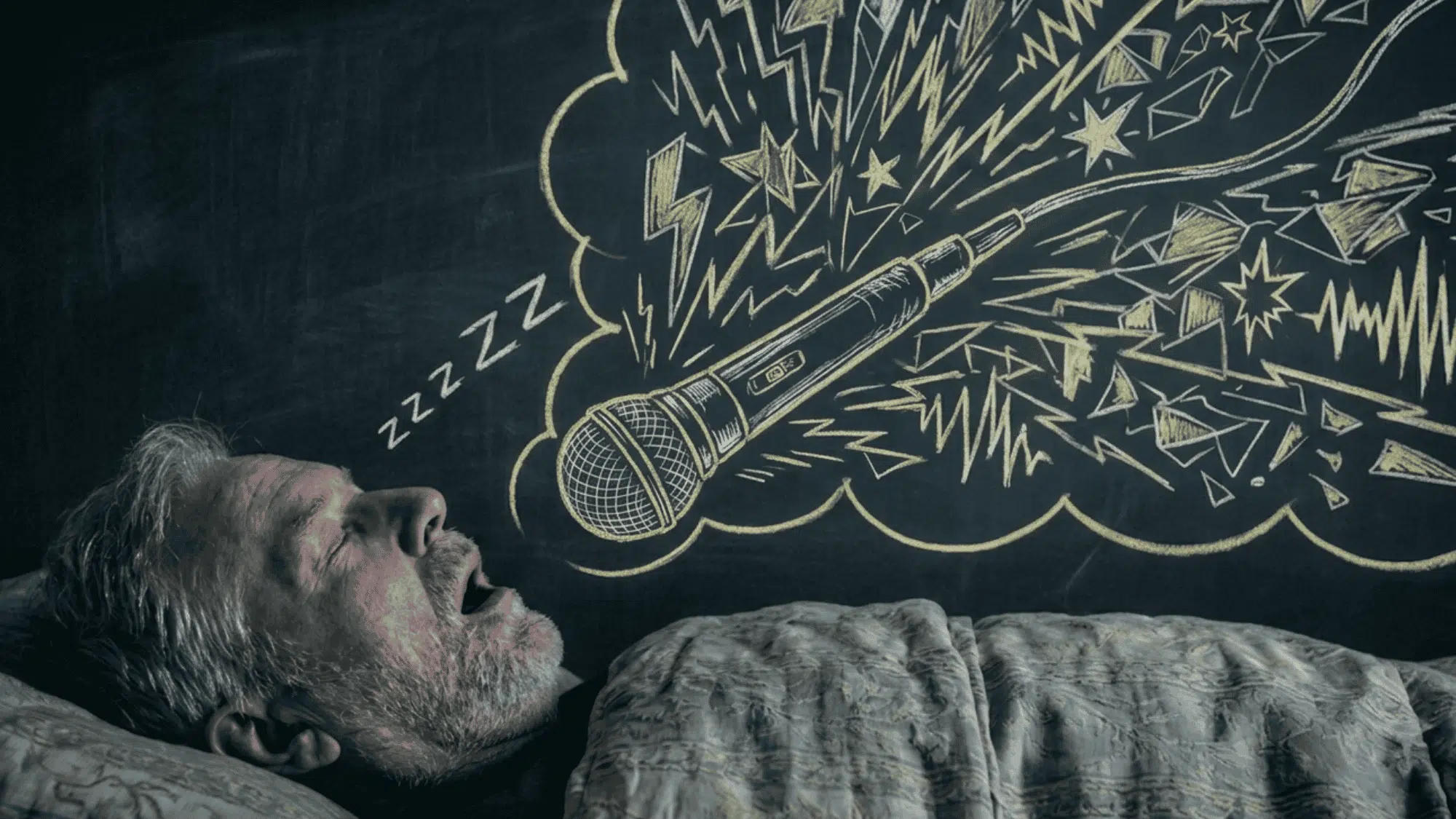
Sleep talking does not have one single cause. In many cases, several physical, emotional, and lifestyle factors work together to trigger episodes during the night.
Stress and Emotional Pressure
Stress can significantly affect the sleep cycle, making the brain more prone to nighttime arousals that trigger speech during sleep.
Stressful periods, such as exams, job changes, or family difficulties, tend to temporarily increase the frequency of episodes.
Once the stressful period passes and emotional balance returns, episodes typically settle back down to their normal, occasional pattern for most individuals.
Poor Sleep Habits
Inconsistent or insufficient sleep is one of the most common contributors to sleep talking.
Ongoing sleep deprivation disrupts normal sleep architecture, making transitions between sleep stages less stable and more likely to trigger vocal outbursts.
An irregular bedtime routine has a similar effect, confusing the body’s internal sleep-wake signals over time.
Shift workers, whose schedules constantly shift between day and night hours, often report more frequent episodes, and jet lag can produce the same disruption temporarily.
Family History
Genetics appear to play a meaningful role in who develops sleep talking, with the behavior often running in families across generations.
Children whose parents experienced sleep talking or sleepwalking as children are statistically more likely to develop similar behaviors themselves.
Researchers frequently observe sleep talking alongside sleepwalking in the same individual or family, suggesting a shared underlying mechanism in the brain’s regulation of arousal during sleep.
Alcohol and Certain Medications
Alcohol consumption, particularly close to bedtime, disrupts normal sleep architecture and increases the likelihood of sleep-talking episodes.
Certain medications, including some that affect the central nervous system, have also been associated with an increase in sleep talking for some individuals.
Anyone concerned that a prescribed medication may be contributing should raise the issue with a healthcare provider rather than adjusting or stopping it independently.
Fever and Illness
Sleep talking frequently increases during periods of fever or illness, and this pattern is especially common in children.
Illnesses that involve congestion, discomfort, or disrupted breathing may also fragment sleep enough to trigger episodes.
In most cases, this resolves on its own once the illness passes and normal sleep patterns are restored, requiring no specific treatment.
Other Sleep Disorders
Sleep talking can occur alongside other sleep disorders rather than as an isolated behavior.
It can also overlap with parasomnias such as sleepwalking and night terrors, which involve unusual behaviors during sleep.
In some cases, REM Sleep Behavior Disorder (RBD) may include talking, shouting, or other vocalizations while a person acts out dreams.
Treating the underlying sleep disorder often helps reduce the frequency of sleep talking episodes.
Common Sleep Talking Triggers
Certain everyday habits and situations may increase the likelihood of sleep talking, particularly when they interfere with normal sleep quality or cause repeated nighttime awakenings.
- Stress and sleep deprivation are the most frequently reported triggers
- Alcohol and fever follow closely behind.
- An irregular sleep schedule that disrupts circadian rhythm can also make episodes more likely.
- Certain medications that affect sleep architecture also play a role.
Recognizing these patterns is often the first step toward identifying what may be contributing to a person’s own sleep-talking episodes.
Ways to Reduce Nighttime Talking
There’s no guaranteed cure, but improving sleep quality and addressing common triggers can reduce how often episodes happen.
1. Keep a Consistent Sleep Schedule: Going to bed and waking up at the same time daily- weekends included – stabilizes the internal clock and makes sleep-stage transitions more predictable.
2. Manage Daily Stress: Meditation, deep breathing, calming reads, or gentle stretching before bed can ease the emotional tension linked to nighttime episodes.
3. Optimize the Sleep Environment: A cool, dark, quiet room with comfortable bedding reduces the disturbances that trigger arousals. Earplugs or white noise can help block sudden awakenings.
4. Limit Alcohol and Late Caffeine: Alcohol fragments deeper sleep stages later in the night, and late caffeine keeps the nervous system more alert than it should be during sleep. Cutting both a few hours before bed supports steadier sleep.
5. Address Underlying Sleep Disorders: If sleep talking co-occurs with sleep apnea or insomnia, treating the underlying condition, often with a healthcare provider’s help or a sleep study, tends to reduce the talking, too.
6. Keep a Sleep Diary: Logging bedtime, wake time, stress levels, alcohol intake, and medication use over a few weeks often reveals patterns worth discussing with a doctor.
When Should Someone See a Healthcare Provider?
Most sleep talking does not require any medical treatment and is considered a normal, harmless variation of sleep. However, a few signs may warrant a closer look from a healthcare provider:
- Sudden onset in adulthood, especially without any childhood history.
- Violent movements, screaming, or breathing pauses during sleep
- Excessive daytime sleepiness.
- Frequent nightly episodes or injuries linked to them.
- A consistently disturbed bed partner.
Sleep Talking Myths and Facts
Misconceptions about sleep talking are common, often shaped by movies, folklore, and casual assumptions rather than medical evidence.
Myth: “Sleep talking reveals a person’s secrets.”
Fact: Sleep talking is usually made up of random words, sounds, or disconnected phrases. It does not reliably reflect a person’s true thoughts, feelings, or hidden secrets.
Myth: “Only children talk in their sleep.”
Fact: Sleep talking is more common in children, but adults can experience it as well. Factors such as stress, sleep deprivation, certain medications, or underlying sleep disorders may contribute to episodes.
Myth: “Sleep talking always means someone is dreaming.”
Fact: Sleep talking can occur during both REM and non-REM sleep. Because of this, it is not always connected to dreaming.
Myth: “Sleep talking always needs treatment.”
Fact: Most cases are harmless and do not require treatment. Managing triggers and improving sleep habits is often enough unless sleep talking occurs alongside other concerning symptoms.
Myth: “Every sleep talking episode has a hidden meaning.”
Fact: Most episodes are random and have no specific meaning. The speech is typically unrelated to real-life events or subconscious messages.
Final Thoughts
Sleep talking is generally harmless and often improves once triggers such as stress, poor sleep habits, illness, or alcohol use are addressed.
Building a consistent sleep routine, creating a relaxing bedtime environment, and managing stress may help reduce episodes over time.
However, frequent sleep talking accompanied by breathing pauses, unusual movements, or excessive daytime sleepiness should be evaluated by a healthcare professional. Share your experiences in the comments below.
Frequently Asked Questions
Is Sleep Talking Hereditary?
Genetics appear to play a role, and the behavior often runs in families alongside related parasomnias such as sleepwalking.
Why Do I Talk in My Sleep?
Sleep talking may occur during stress, fever, sleep deprivation, vivid dreams, or disrupted sleep. It is usually harmless but can sometimes accompany sleep disorders.
What Causes Sleep Talking in Toddlers?
Toddlers often sleep talk due to fever, illness, developing sleep cycles, family history, or simply normal childhood parasomnia patterns during growth.
Does Sleep Talking Always Happen During Dreams?
Not necessarily. Episodes can occur during both REM and non-REM sleep stages, meaning active dreaming is not always involved.