

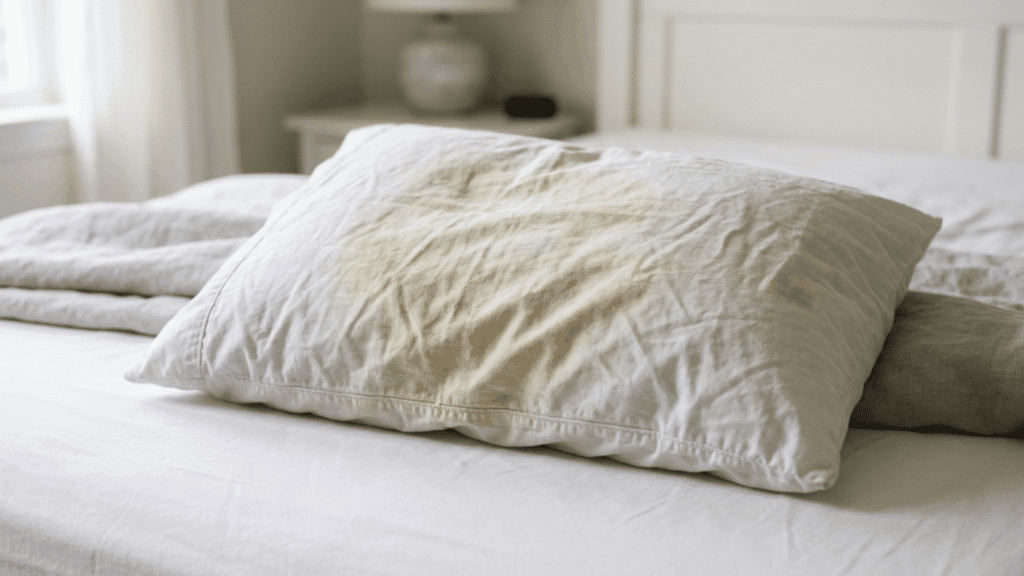
Pull off your pillowcase and check your pillow. There’s a good chance it has yellow spots or patches.
Most people do not think about why pillows turn yellow until the stains become noticeable. The discoloration usually develops as sweat and skin oils soak into the fabric over time.
But those stains don’t mean you need a new pillow. Many yellow stains can be reduced with mild detergent, careful pretreatment and the washing method approved on the pillow’s care label.
Read on to learn how to reduce yellow stains and keep pillows cleaner for longer.
Why Do Pillows Turn Yellow
Pillows often turn yellow because they absorb moisture and oils while you sleep. Sweat is the most common cause.
It can pass through the pillowcase and soak into the outer fabric and filling. Natural oils from the skin and hair also build up over time.
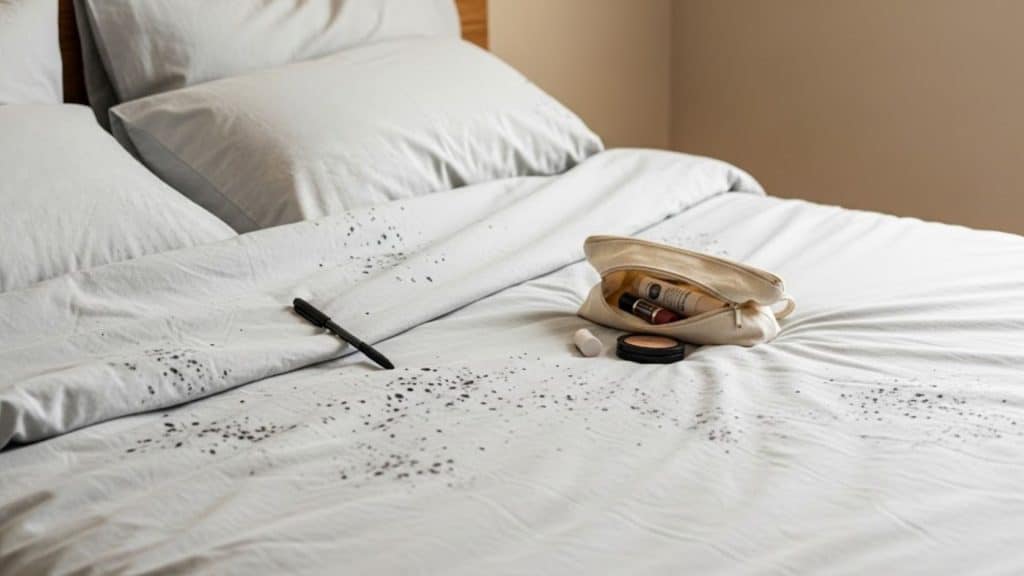
Drool, wet hair, makeup, face creams, and hair products can leave extra marks. Poor drying after washing may trap moisture inside the pillow, leading to deeper stains or a musty smell.
Dust and dirt can also stick to oily fabric, making the color look darker. Older pillows may yellow as their materials break down with age.
Using a pillow protector and washing pillowcases often can slow this buildup and keep pillows cleaner for much longer.
How to Clean Yellow Pillows
Yellow stains may fade with the right cleaning method. Always check the care label first, as washing rules differ by pillow type.
1. Read the Care Label
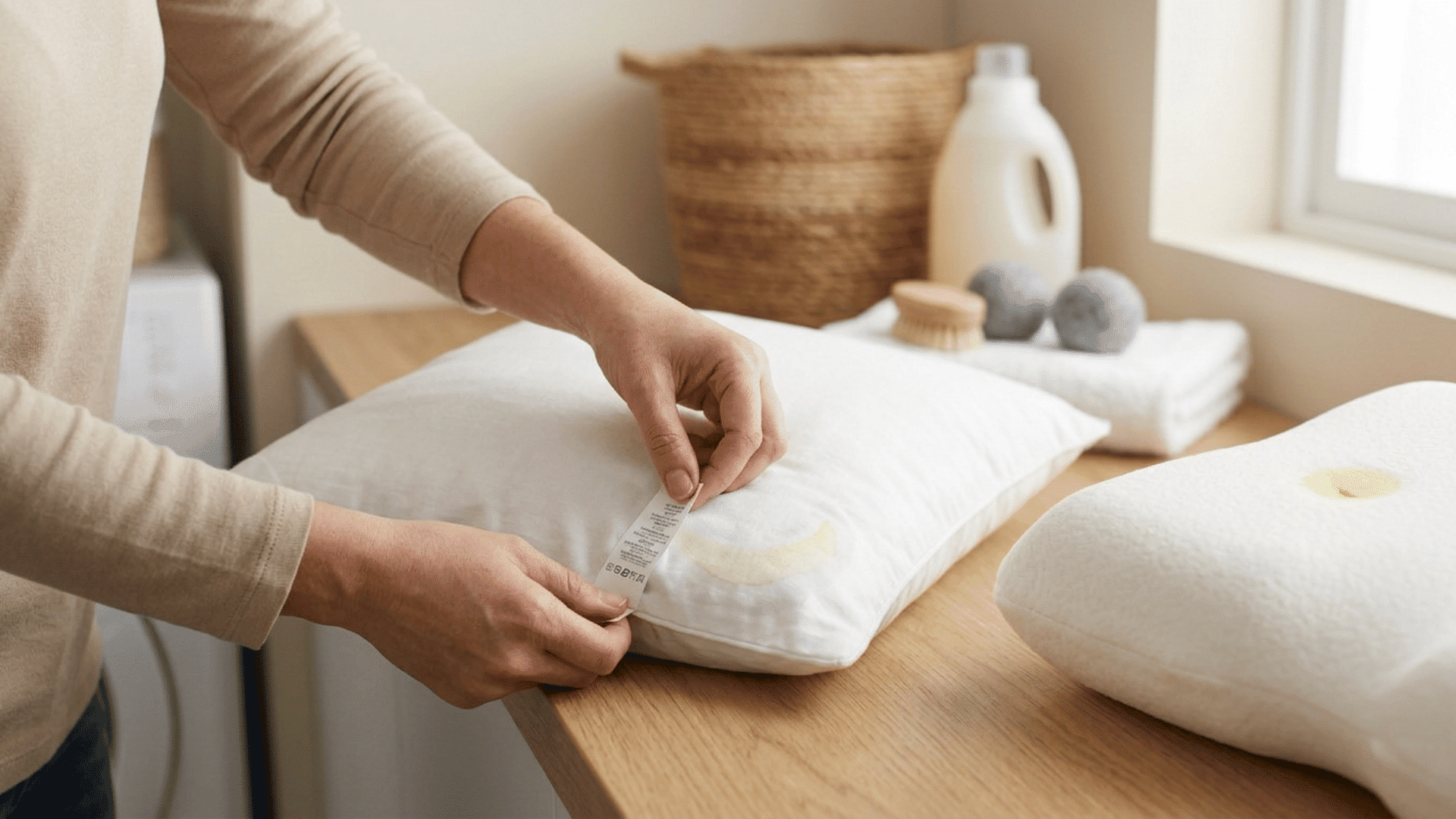
Check the pillow’s care label before using water or stain remover. The label tells you whether the pillow can go in the washing machine or needs hand washing.
Remove the pillowcase and protector, then inspect the yellow areas carefully. Test any cleaner on a hidden spot first.
Memory foam and latex pillows usually need spot cleaning, while many polyester, down, and feather pillows can be washed safely with proper care.
2. Pretreat the Yellow Stains
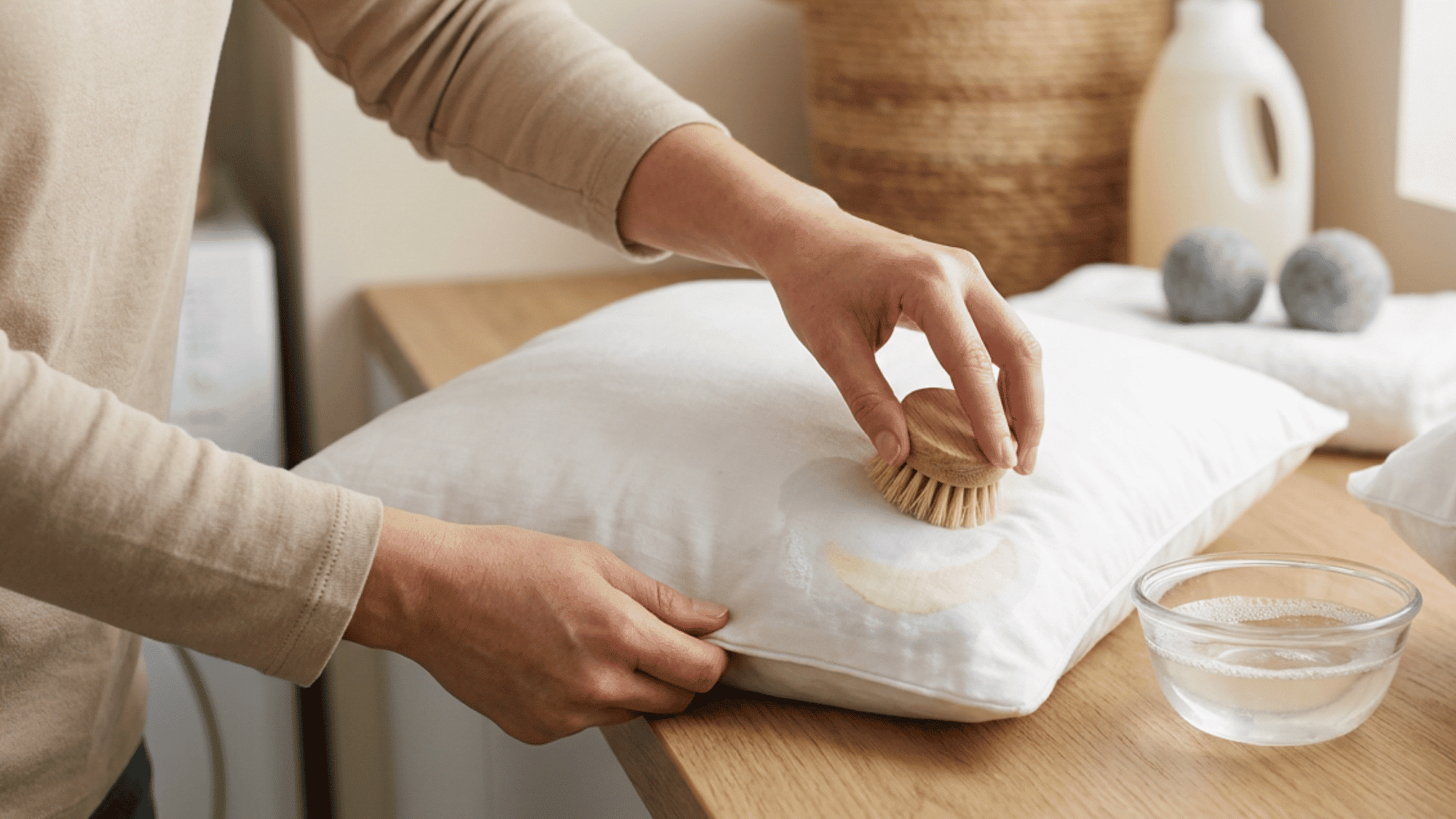
Mix a small amount of liquid laundry detergent with warm water. Apply the solution to yellow stains using a clean white cloth or soft brush.
Gently work from the outside of each mark toward the center. Let it sit for about fifteen minutes, but do not soak the pillow.
For stubborn stains, use an oxygen-based stain remover only when the care label clearly allows it for that specific pillow material.
3. Wash Machine-Safe Pillows
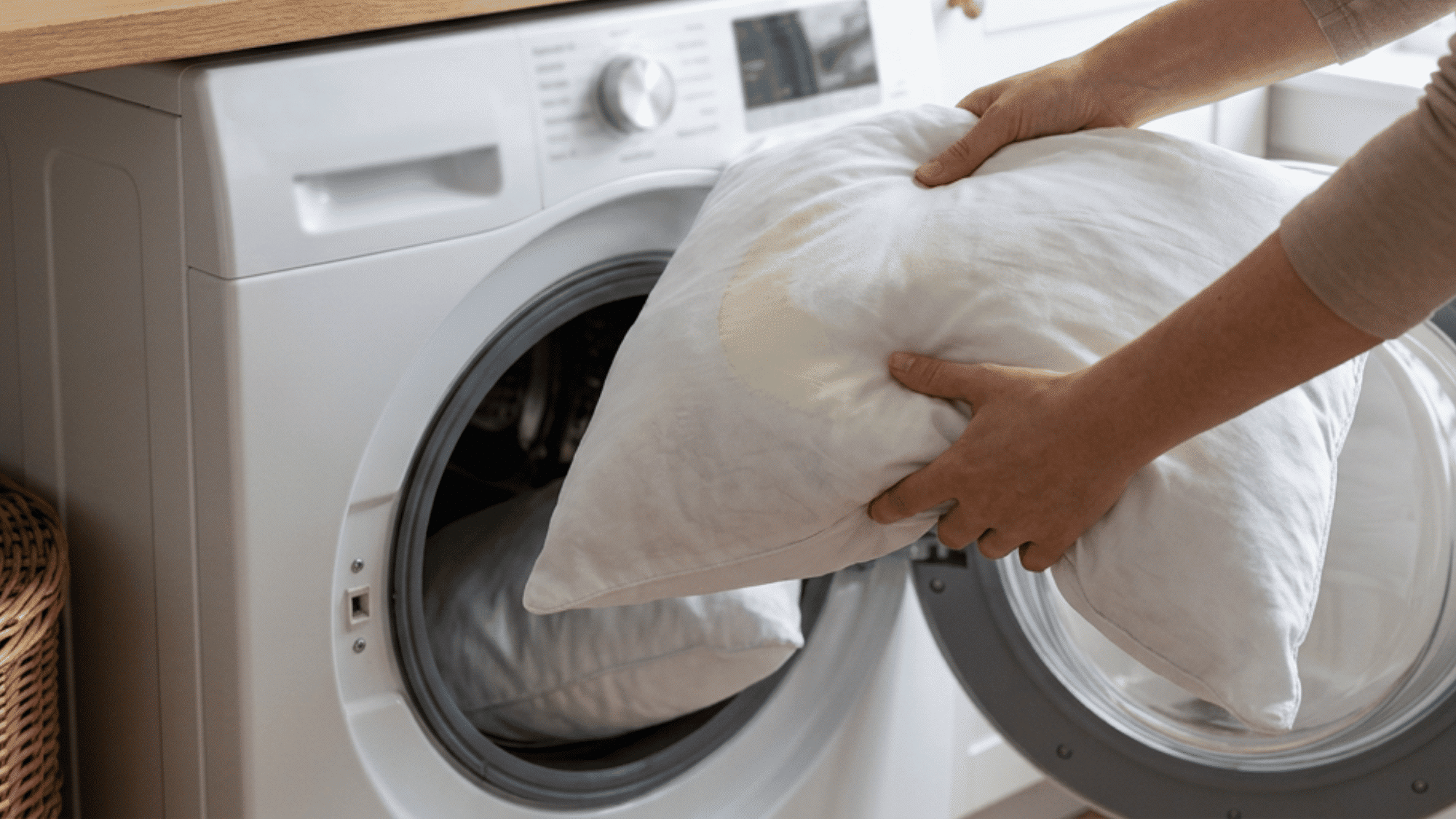
Place two machine-safe pillows in the washer to keep the load balanced. Use a gentle cycle, mild detergent, and the water temperature listed on the care label.
Avoid adding too much soap, as it can get trapped in the filling. Run an extra rinse cycle to remove leftover detergent.
Front-loading machines are often gentler, while top-loaders with agitators may damage some pillows during washing or leave the filling uneven afterward.
4. Spot-Clean Foam Pillows
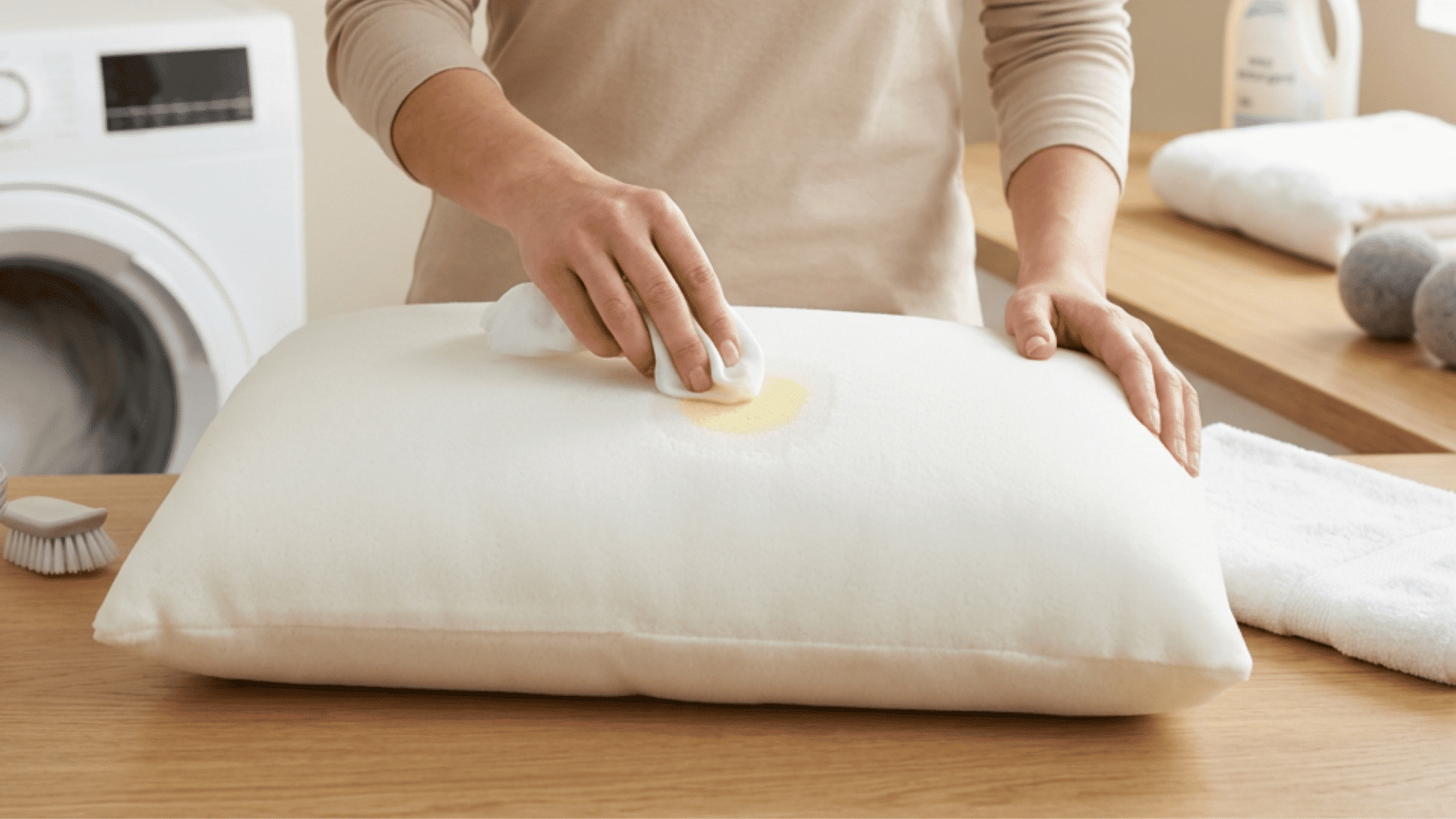
Memory foam and latex pillows should not be placed in a washing machine unless the label says otherwise.
Mix mild detergent with water, then lightly dab stained areas with a cloth. Avoid pouring water directly onto the foam. Wipe away the soap with another damp cloth, then press gently with a towel.
Keep the pillow flat in a well-aired room until it is completely dry all the way through before using.
5. Dry the Pillow Fully
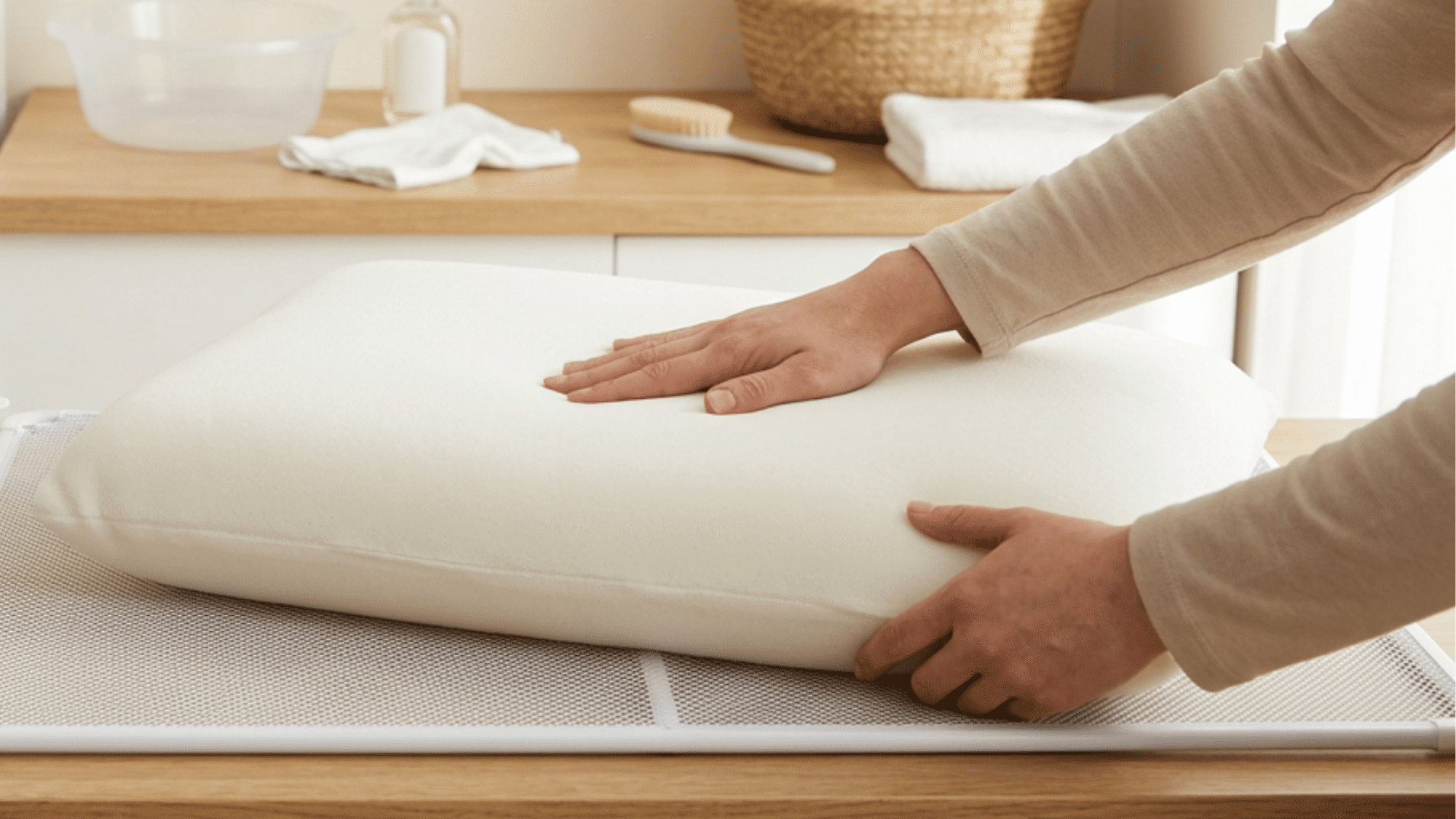
Fully drying the pillow is just as important as washing it. Machine-safe pillows may go in the dryer on low heat if the label allows.
Add clean dryer balls to help break up clumps and restore shape. Stop the dryer and check the center for dampness.
Foam pillows should air-dry flat away from direct heat. Never use a pillow that still feels cool, heavy, or damp deep inside after it has dried.
Effective Ways to Remove Yellow Pillow Stains
Different stains may need different treatments. Choose a method that matches the stain and pillow fabric.
- Use an Enzyme Cleaner: Apply it to sweat, saliva, or body oil marks. Enzyme cleaners break down organic residue on washable pillow fabrics.
- Try Hydrogen Peroxide: Dab a small amount on white pillows only. Test a hidden area first because it may fade colored fabric.
- Apply a Baking Soda Paste: Mix baking soda with a little water. Spread it over light surface stains, then wipe it away gently.
- Blot from the Outside In: Work from the outer edge toward the center. This helps stop the yellow mark from spreading farther.
- Repeat Mild Treatments: Treat old stains more than once instead of scrubbing hard. Rough rubbing can damage fabric and push residue deeper.
Hydrogen peroxide may lighten stains, while enzyme cleaners target protein and oil residue; always follow the label and patch-test first.
Best Cleaning Methods for Different Pillow Types
Cleaning needs depend on the pillow’s filling and fabric. Check the care label before using water, detergent, or heat.
| Pillow Type | Best Cleaning Method | Drying Method | What to Avoid |
|---|---|---|---|
| Polyester | Machine wash on a gentle cycle with mild detergent | Tumble dry on low heat or air-dry | Too much detergent or high heat |
| Down or Feather | Wash gently with a small amount of mild detergent | Dry on low heat with dryer balls | Fabric softener and strong heat |
| Memory Foam | Spot-clean with a damp cloth and mild soap | Air-dry flat in a ventilated room | Machine washing, soaking, and drying |
| Latex | Wipe stains gently with mild soap and water | Air-dry flat away from direct sunlight | Twisting, soaking, and direct heat |
| Buckwheat | Remove the hulls and wash only the outer cover | Dry the cover fully before refilling | Washing or wetting the buckwheat hulls |
Pillow Care Habits That Prevent Yellow Stains
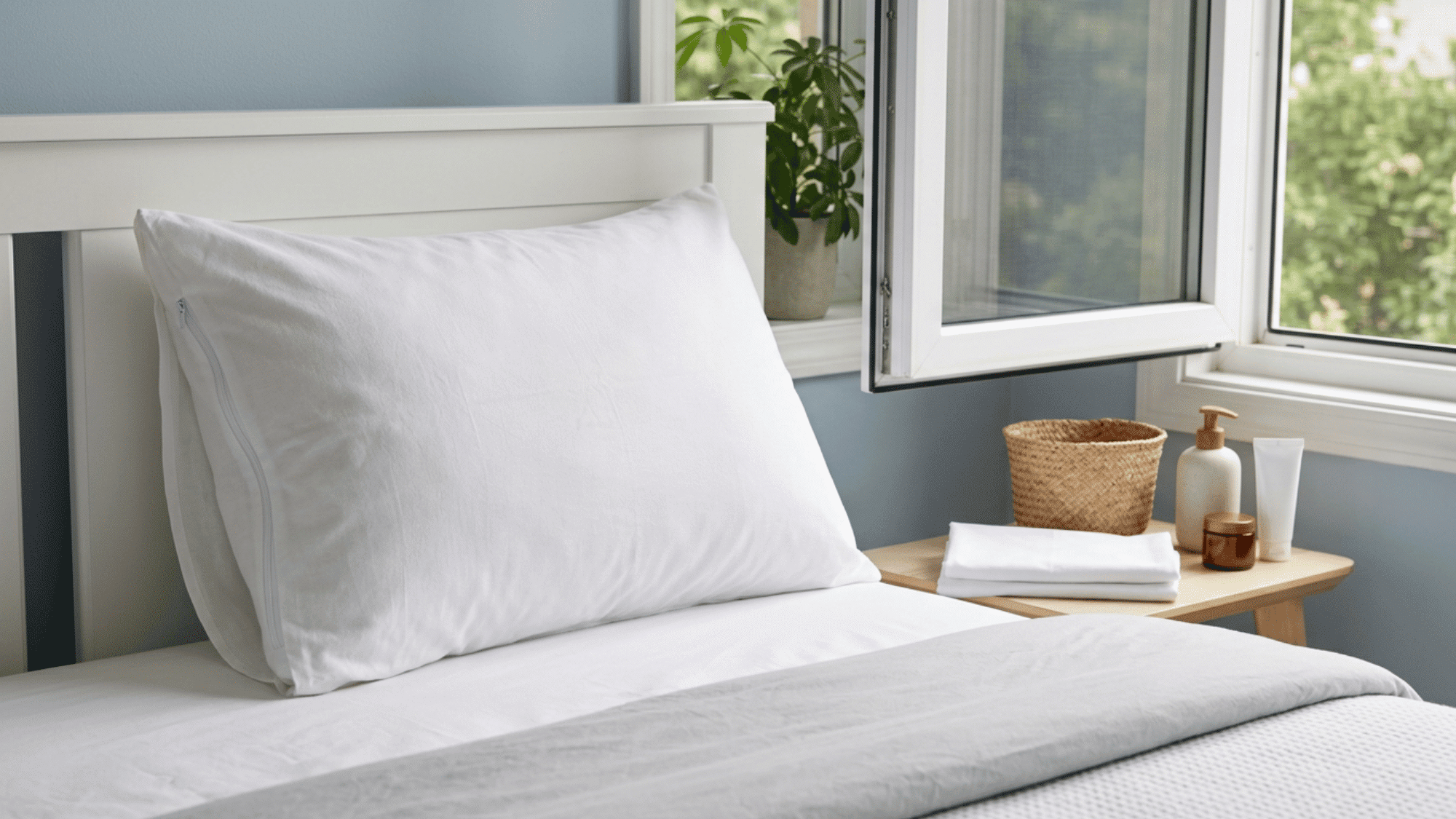
Regular care can slow down discoloration and keep pillows looking cleaner. Small daily and weekly habits make a clear difference over time.
- Use a Pillow Protector: Add a washable protector under the pillowcase. It creates an extra barrier against sweat, skin oils, drool, and beauty products.
- Wash Pillowcases Often: Clean pillowcases at least once a week, or more often during hot weather, illness, or periods of heavy sweating.
- Let Products Dry First: Allow face cream, hair oil, and leave-in products to dry before lying down. Wet products can quickly transfer onto fabric.
- Keep Hair Dry at Bedtime: Avoid sleeping with damp hair, as repeated moisture can leave marks, cause odors, and keep the pillow filling wet.
- Air Out Pillows Regularly: Remove bedding for a few hours and place the pillows in a dry, well-ventilated space to release trapped heat and moisture.
When Should You Replace a Yellow Pillow?
Replace a yellow pillow when cleaning no longer removes stains, odors, or buildup, or when the pillow has lost its shape and support.
A pillow that stays flat, feels lumpy, or does not spring back may no longer support your head and neck.
You should also replace it if the filling shifts, the cover tears, or moisture has caused mold or a musty smell.
Persistent yellowing alone does not always mean the pillow is unsafe, but heavy staining may show years of sweat, skin oils, and product buildup.
Many synthetic pillows need replacement every one to two years, while down or latex pillows may last longer with proper care.
Conclusion
A clean pillow can make the whole bed feel fresher and more inviting.
Learning why pillows turn yellow can help you spot the habits that cause stains and take action before they become harder to remove.
Very old stains may fade without disappearing completely because oils and moisture can oxidize or alter the fabric over time.
Using a protector, washing covers often, and keeping moisture away can help pillows stay cleaner for longer.
Try these tips during your next bedding wash, then share your favorite pillow-cleaning trick in the comments.
Frequently Asked Questions
Can Yellow Pillow Stains Attract Dust Mites?
Yellow stains do not directly attract dust mites. However, pillows can collect shed skin and moisture, while warm, humid conditions may support mite growth.
Why Does One Pillow Turn Yellow Faster Than Another?
Sleeping position, sweating, hair products and pillow material can cause one pillow to absorb more moisture and oils than another.
Do Silk Pillowcases Stop Pillows from Turning Yellow?
Silk pillowcases may reduce oil and product transfer, but they cannot fully block sweat or moisture from reaching the pillow.