

Choosing the right bed sheets might seem small, but it can change your sleep quality. I’ll never forget waking up at 3 a.m. too hot under my blanket, only to realize my sheets were trapping all the heat.
Have you ever had a similar experience? Picking the right fabric for winter warmth or summer coolness makes a huge difference.
It’s not just about sleep, it’s about comfort. Let’s look at different types of bed sheets, so you can find the perfect match for your needs, turning your bed into a cozy haven you’ll love every night.
Quick Pick: What Sheet Type Is Right for You?
|
Why Choosing the Right Bed Sheet Matters
The right bed sheets don’t just add to your room’s style; they can totally change the way you sleep. I learned this after too many restless nights with sheets that didn’t let my skin breathe.
In my experience redesigning bedrooms, sheets are the most underestimated element. Clients invest in the right mattress and then wrap it in whatever sheets were on sale.
The result is often disrupted sleep from overheating or skin irritation. Once I started guiding people toward fabrics that matched their sleep temperature, the difference was immediate.
I’ve come to realize how important it is to choose the right fabric. Whether you’re a warm sleeper like I used to be, looking for something cooling, or someone who loves extra warmth, the right sheets can make all the difference in how you rest.
Types of Bed Sheets: What Sets Them Apart
Before diving in, there’s one distinction worth understanding: fiber type and weave type are different things. Cotton, for instance, is a fiber. Percale and sateen are weaves that can both be made from cotton.
The combination of fiber and weave determines how a sheet feels, how breathable it is, and how long it lasts. I’ll flag where this matters for each type below.
1. Cotton
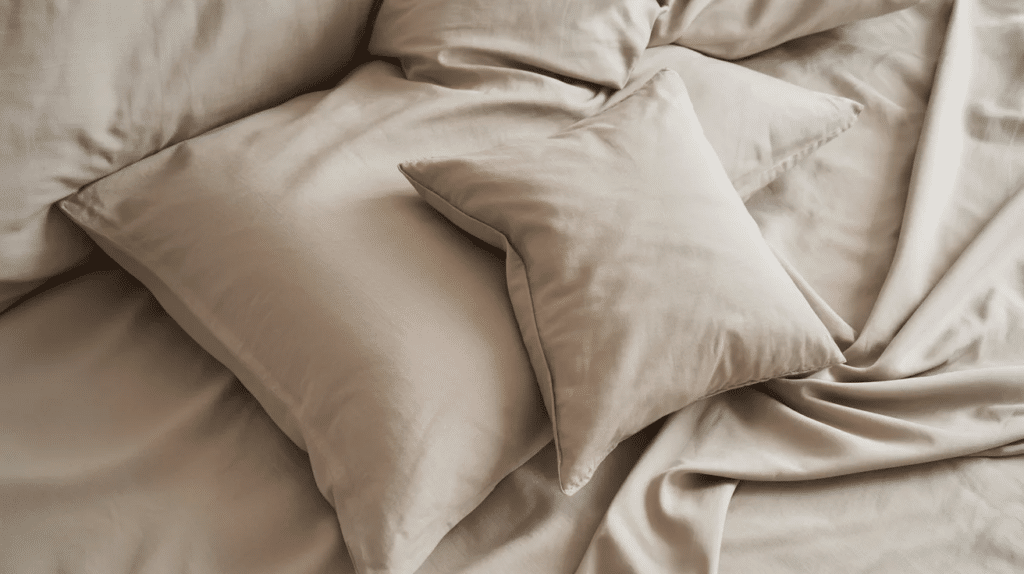
Cotton is a classic choice, soft, breathable, and durable. It works well in all seasons, and the more you wash it, the softer it gets. From budget-friendly options to luxurious Egyptian or Pima cotton, there’s something for everyone.
Know your cotton sub-types: Not all cotton is the same. Egyptian cotton uses extra-long staple fibers grown in Egypt’s Nile Valley, producing exceptionally smooth, durable sheets. Pima and Supima cotton are American-grown long-staple varieties with similar softness. Standard upland cotton is more affordable but less silky.
When shopping, look for GOTS-certified organic cotton if you want assurance that no synthetic pesticides were used in production.
Percale vs. sateen weave: Cotton sheets come in two main weaves. Percale and sateen weaves produce very different results from the same base fiber. Percale uses a one-over-one-under pattern for a crisp, matte, breathable feel, ideal for warm sleepers.
Sateen uses a four-over-one-under pattern, placing more fibers on the surface for a silky, slightly lustrous finish that retains warmth — better for cool sleepers or air-conditioned rooms. Egyptian cotton is a fiber, not a weave; you can find Egyptian cotton in both percale and sateen.
Ideal For: Those who want a reliable, comfortable option that works for almost any budget and sleep preference.
2. Linen
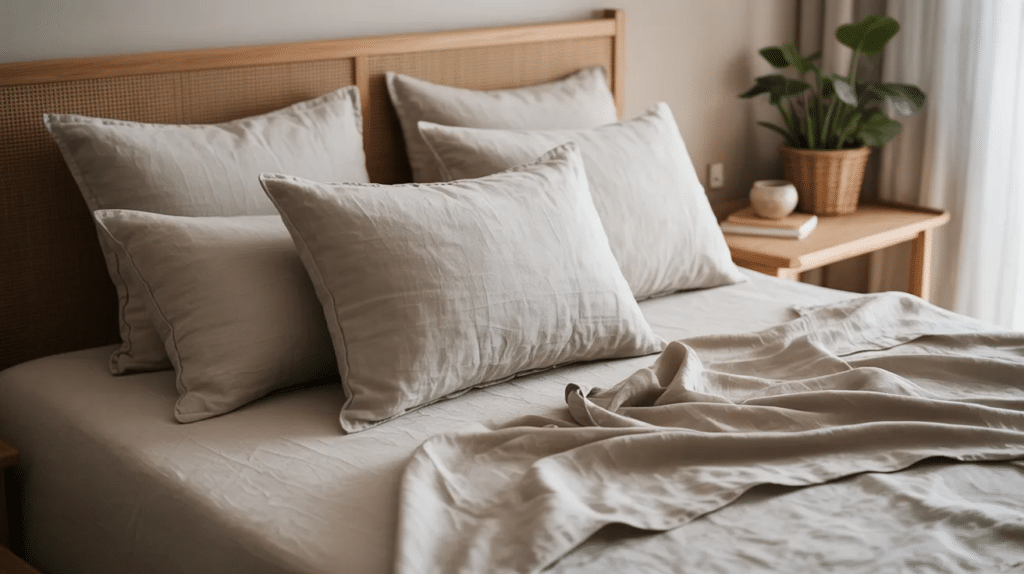
Linen sheets are made from flax fibers, and they have a relaxed, slightly textured feel. Over time, they get softer and even more comfortable. Linen also allows great airflow and absorbs moisture, making it perfect for warm sleepers.
Ideal For: People who tend to sleep hot or live in humid areas. If you like natural fabrics that get better with age, linen is for you.
3. Microfiber
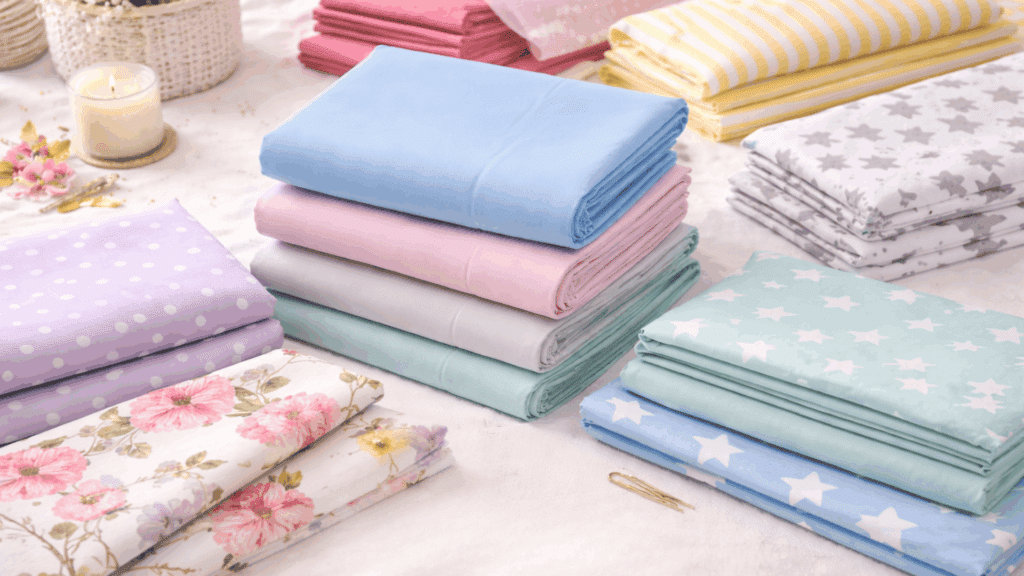
Microfiber is an affordable synthetic option. It’s wrinkle-resistant, easy to care for, and resists stains. Though it’s not as breathable as natural fabrics, it still offers comfort and comes in various colors and patterns.
One thing I always tell clients: microfiber is a fine short-term choice, but it tends to trap heat more than natural fibers. If you’re a warm sleeper on a tight budget, cotton jersey knit is a slightly more breathable alternative at a similar price point.
Ideal For: Anyone on a budget or those who want a durable, low-maintenance sheet that doesn’t need much care.
4. Bamboo
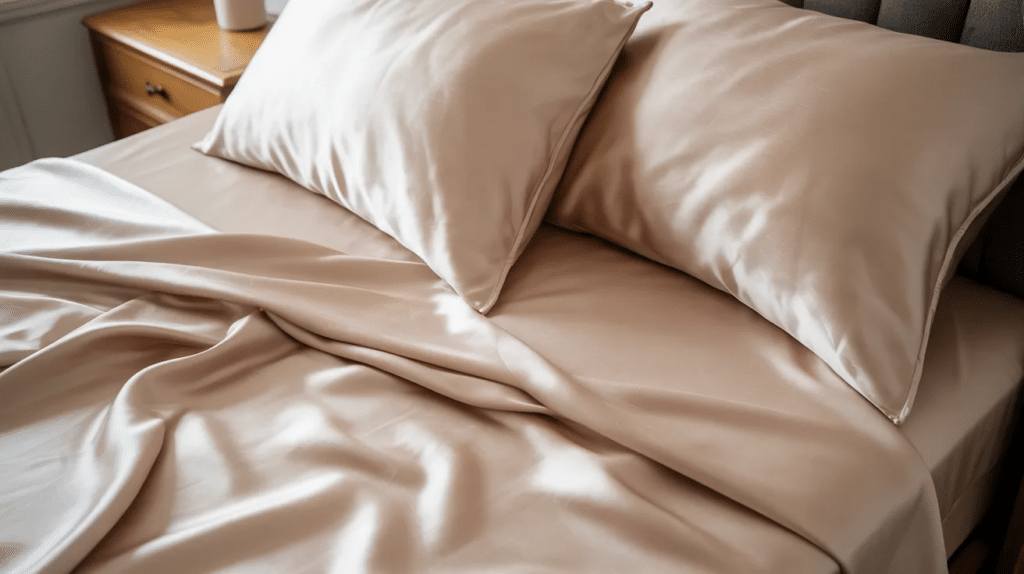
Bamboo sheets are eco-friendly and feel incredibly smooth. They naturally wick away moisture, resist odors, and are hypoallergenic. Plus, bamboo fabric is gentle on the environment, as it grows quickly without pesticides.
Bamboo is available in a viscose (rayon) form, which is the most common and softest, and in a less-processed lyocell form, which is more environmentally sound in production.
If sustainability matters to you, look for bamboo lyocell sheets over standard bamboo viscose. Thread counts of 200–300 are typically sufficient for bamboo; you don’t need to chase high numbers here.
Ideal For: Anyone looking for sustainable, soft sheets that are also great for sensitive skin.
5. Silk
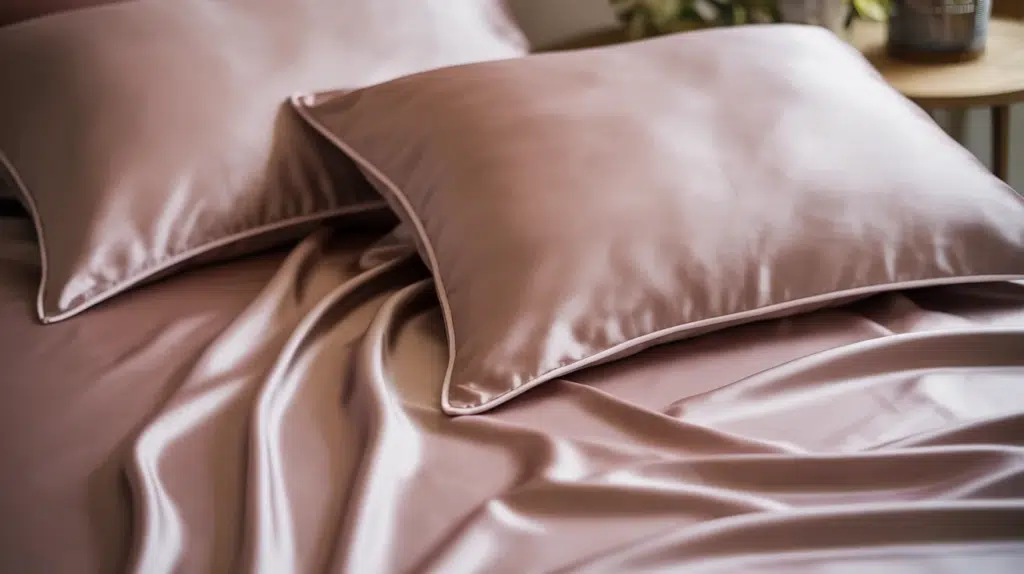
Silk is the ultimate luxury when it comes to sheets. Its smooth texture feels cool in summer and warm in winter. Silk also helps reduce friction on your skin and hair, which is great if you want to prevent breakouts or hair damage.
Momme weight is the silk equivalent of thread count. Look for 19–25 momme for durable, high-quality sheets. Below 17 momme tends to be too delicate for regular use. Mulberry silk is the highest-grade variety. Silk requires hand-washing or a delicate machine cycle in a mesh laundry bag; it’s genuinely high-maintenance, so factor that into your decision.
Ideal For: Those who want a touch of luxury and are willing to invest in high-maintenance sheets for an incredibly comfortable sleep experience.
6. Flannel
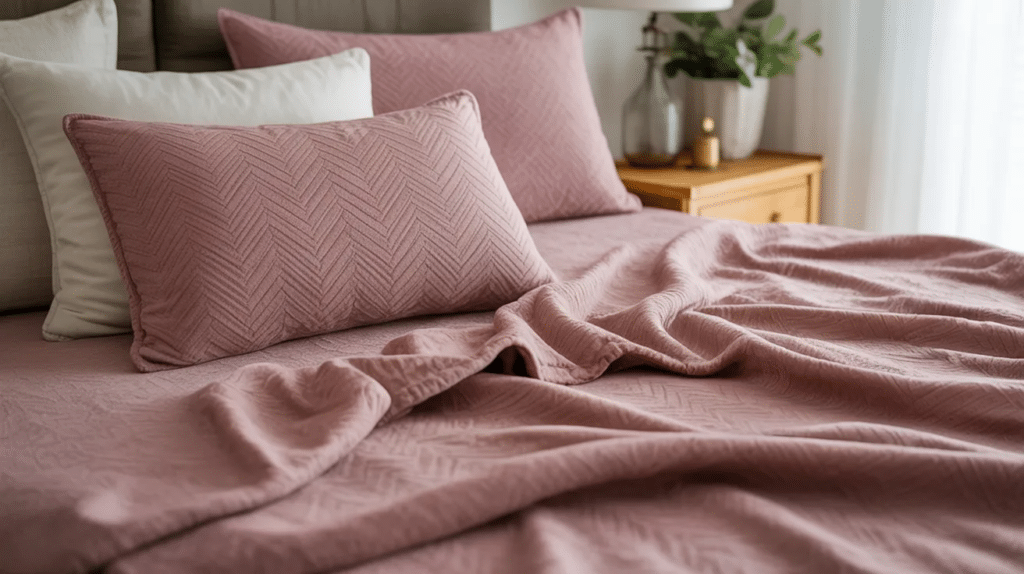
Flannel is perfect for cold weather. It’s soft and warm, trapping body heat effectively. Flannel gets even cozier after a few washes, making it ideal for chilly nights.
Flannel is measured in grams per square meter (GSM) rather than thread count. A GSM of 170–200 is considered good quality for sheets. Below 150 GSM tends to feel thin and pill quickly.
I’ve found that flannel also works well as a transitional layer in spring. Pair a flannel fitted sheet with a lighter cotton top sheet and skip the heavy comforter until temperatures drop further.
Ideal For: Cold sleepers or anyone who lives in a cold climate and wants extra warmth during the winter months.
7. Tencel (Lyocell)
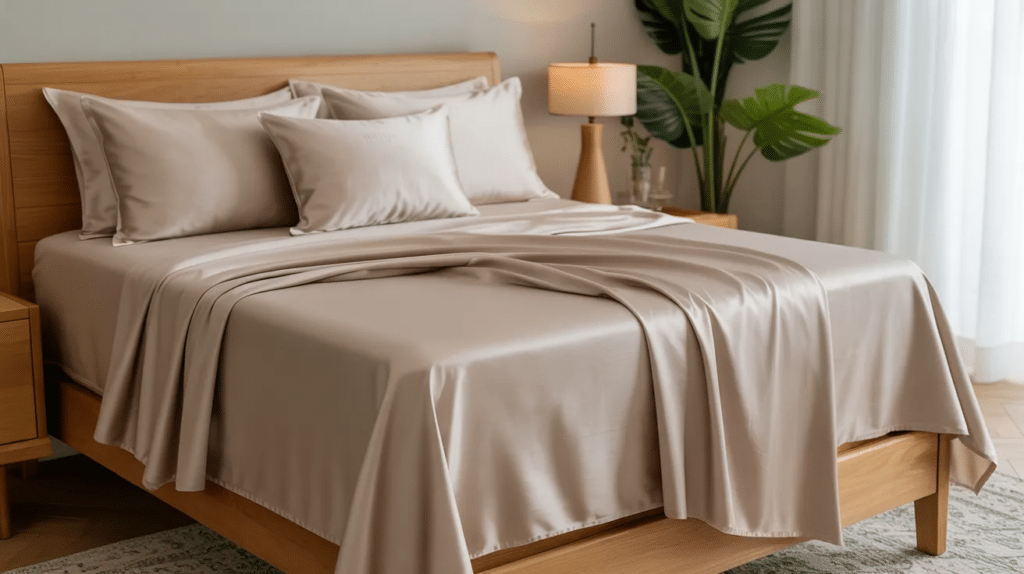
Tencel sheets are made from sustainably sourced wood pulp. They feel smooth and silky, are naturally moisture-wicking, and are more environmentally friendly than many other fabrics.
Tencel is produced in a closed-loop manufacturing process that recycles 99% of the solvent used, making it one of the more genuinely eco-friendly fabrics on the market, not just marketed as green. It’s a good middle ground between the luxury feel of silk and the breathability of cotton percale.
Ideal For: Those who want a modern, eco-friendly sheet that’s also great for sensitive skin.
8. Jersey Knit
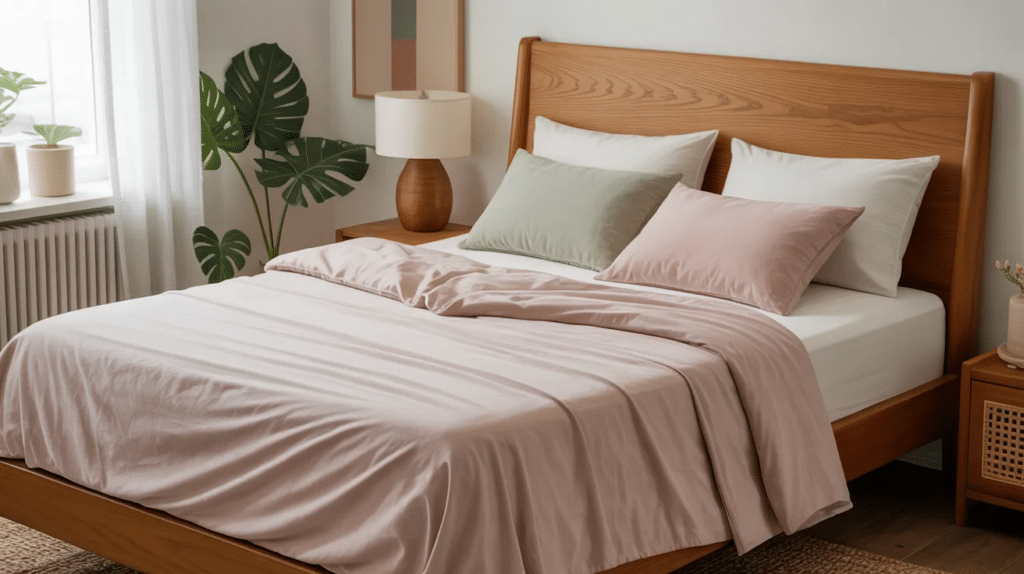
Jersey knit sheets have a relaxed, t-shirt-like feel. They’re soft, stretchy, and don’t require ironing. They offer minimal care and stay soft after each wash.
Ideal For: Anyone who likes low-maintenance, cozy sheets that feel casual and comfortable.
9. Sateen
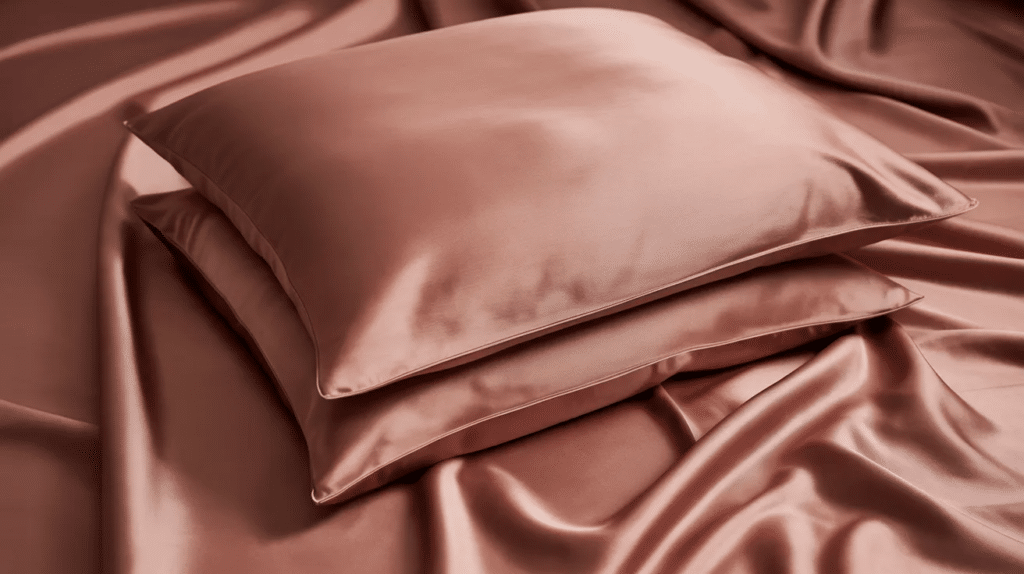
Sateen sheets have a smooth, shiny finish thanks to the way they’re woven. They feel soft and warm, with a luxurious drape. They’re perfect for those who love a silky feel but want to stay warm.
As noted above, sateen is a weave, not a separate fabric. Most sateen sheets are made from cotton. The four-over-one weave puts more fibers on the surface, which creates the silky feel but also makes them slightly more prone to snagging than percale. They’re also less breathable, so warm sleepers should be cautious.
Ideal For: People who prefer a smoother, silk-like feel, especially in cooler months when extra warmth is needed.
10. Hemp Sheets
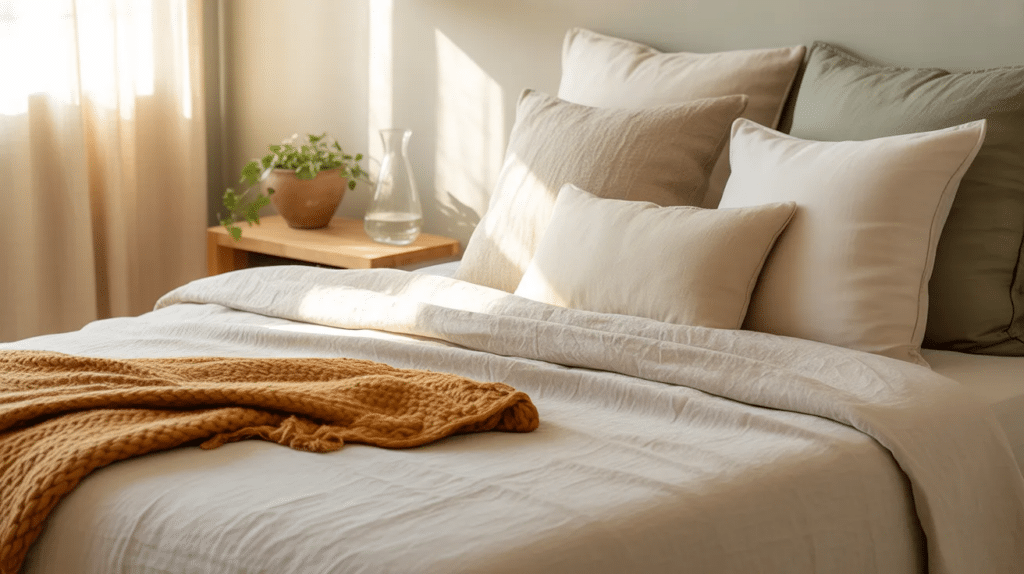
Hemp sheets are made from natural, durable fibers that are both eco-friendly and breathable. Hemp naturally wicks away moisture, resists mold, and softens with each wash, so you’ll feel more comfortable the longer you use them.
Ideal For: Eco-conscious sleepers who want sustainable, durable sheets that improve with age, giving you a more comfortable night’s rest the longer you have them.
11. Velvet Sheets
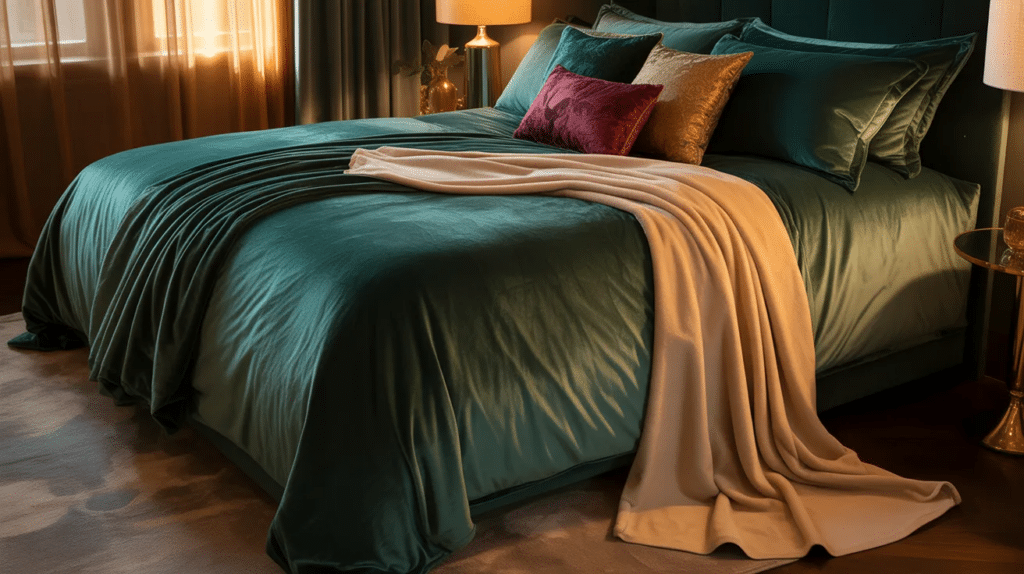
Velvet sheets bring a touch of luxury to your bed with their plush, warm texture. They’re perfect for colder months when you want something soft, cozy, and opulent.
Ideal For: Those seeking luxurious warmth and a premium feel, who are also willing to invest a little time in maintaining these beautiful sheets.
How Different Patterns Affect Feel and Durability
The pattern and weave of your sheets can have a big impact on how they feel and how long they last. I’ve learned that understanding the different patterns can help me choose the perfect sheets based on what I need, whether it’s breathability, durability, or a touch of luxury. Here’s how various patterns can affect your sheets:
| Pattern Type | Characteristics | Best For |
|---|---|---|
| Percale | Crisp, breathable with a matte finish. | Hot sleepers wanting a fresh, hotel-like feel. |
| Sateen | Smooth, shiny surface with a silky sheen. | Those who want softness and warmth in cooler months. |
| Twill | Thick, diagonal pattern that’s durable and wrinkle-resistant. | People looking for low-maintenance, durable sheets. |
| Jersey Knit | Soft, stretchy, t-shirt-like texture. | Comfort lovers wanting cozy, relaxed sheets. |
| Jacquard | Intricate woven patterns. | Those who want decorative, textured sheets. |
Choosing the right pattern really comes down to what you prioritize most, whether it’s breathability, durability, or that luxurious feel.
Thread Count and Its Impact
You’ve probably heard about thread count when shopping for sheets. It refers to how many threads are woven per square inch of fabric.
Here’s something most retailers won’t tell you: a higher thread count does not automatically mean better quality. Consumer Reports testing has found that thread count has no consistent impact on quality or longevity.
What actually matters is fiber quality and weave construction. A well-made 300-thread-count sheet in long-staple Egyptian cotton will outperform a poorly made 800-thread-count sheet made from short-staple fibers, every time.
Use these ranges as a starting guide, not a hard rule:
- Cotton percale: 200–400 is the sweet spot for breathability and durability
- Cotton sateen: 300–500 for softness without excess weight
- Bamboo / Tencel: 200–300 is plenty; the fiber does the work
- Flannel: Look at GSM (170–200) rather than thread count
- Silk: Use momme weight (19–25) as your quality metric
How Bed Sheets Affect Your Skin and Health
I never realized how much my sheets could affect my skin and overall health until I started paying more attention to the material.
Choosing the right fabric makes a big difference in keeping your skin safe and comfortable while you sleep. Here’s how different fabrics have helped me, and can help you too:
- Dust Mite and Allergen Resistance: Fabrics like tightly woven cotton and microfiber resist dust mites and allergens, making them great for allergy sufferers.
- Managing Skin Conditions: Smooth fabrics like bamboo or silk reduce friction, helping prevent skin irritation.
- Preventing Acne: Sheets that breathe prevent bacterial growth and clogged pores. Change your pillowcase regularly to help keep skin clear.
- Avoiding Chemical Sensitivities: Opt for OEKO-TEX certified or organic sheets to avoid harmful chemicals.
- Antimicrobial Properties: Some fabrics, like bamboo, naturally resist bacteria, helping your sheets stay fresher longer.
From a design standpoint, I always recommend OEKO-TEX Standard 100 certified sheets for clients with children or anyone with sensitivities. The certification ensures the finished product has been tested for over 100 harmful substances. It’s a reliable baseline regardless of which fabric you choose.
How to Layer Your Bed Sheets for Maximum Comfort
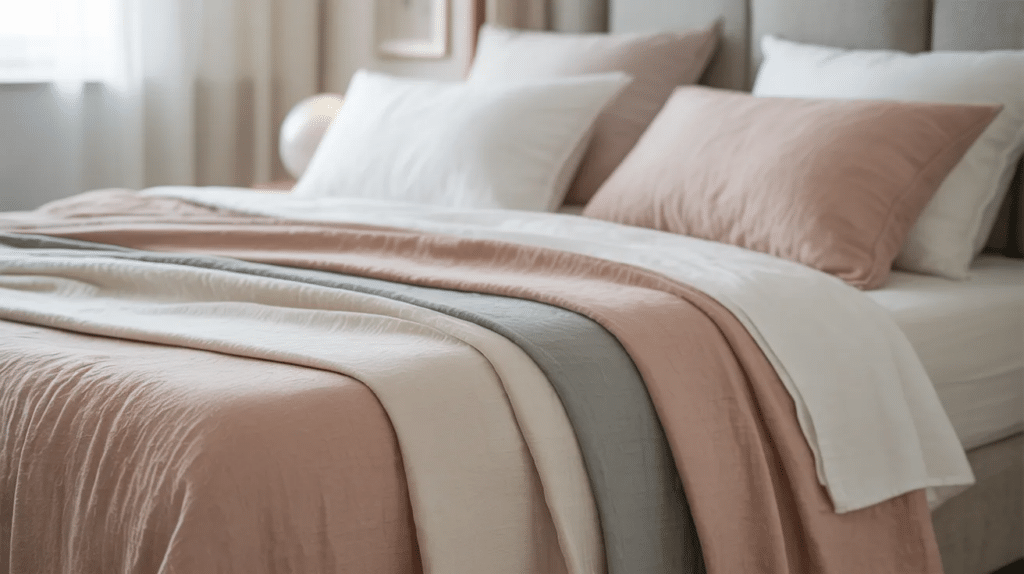
Once you’ve found the right sheets, layering them properly helps you adjust to changing temperatures. Here’s how to layer your bed based on the season:
| Season | Base Layer | Middle Layer | Top Layer | Accent/Tip |
| Winter | Percale or sateen sheets | Flannel blanket or quilt | Heavy duvet or comforter | Keep removable for temperature control. |
| Spring/Fall | Cotton or bamboo sheets | Lightweight blanket | Coverlet | Add a decorative throw at the foot. |
| Summer | Linen or Tencel sheets | None | Optional light cotton blanket | Maximize airflow with minimal layers. |
One layering approach that works well from a design and comfort standpoint: use a fitted sheet in your chosen fabric, skip the flat sheet in summer, and layer a lightweight coverlet instead. It looks cleaner on the bed and gives you easy temperature control without rearranging everything at night.
If you’re also thinking about how colors play into the overall room, the right bedding color combinations can make the whole setup feel more intentional.
And if you’re adding a duvet to your winter layer, getting the right duvet size matters as much as the sheet fabric underneath it.
Caring for Your Bed Sheets
To get the most out of your sheets, follow these care tips:
- Washing: Follow care labels. Wash cotton and microfiber in a machine, while hand-washing silk and linen gently.
- Drying: Tumble dry synthetics on low heat; line dry sensitive fabrics like silk and bamboo.
- Fit: Measure your mattress before buying sheets. Choose deep-pocket sheets for thicker mattresses to prevent slipping.
- Extend Their Life: Wash in cool water, dry on low heat, and rotate your sets to keep them fresh.
With proper care, your quality sheets will last for years.
Final Thoughts
Choosing the right bed sheets is more than just about making your bed look nice; it’s about enhancing your sleep, health, and overall comfort.
I’ve found that the right sheets can make all the difference in how well I rest, and I’m sure you’ll feel the same once you find your perfect match.
Now that you know the different types of sheets and how they impact your sleep, you’re all set to make a choice that will work for you.
If you’re looking for more ways to create the perfect sleep space, I’ve got plenty of tips and ideas to share. A great night’s sleep starts with the right sheets, and I can’t wait for you to experience it!