If you’ve ever imagined creating a space that feels effortlessly cozy yet stylish, modern Mediterranean interior design might be exactly what you’re looking for.
This classic style blends rustic beauty with clean, contemporary lines, making it perfect for anyone who wants a home that feels warm, inviting, and relaxed.
I’ll walk you through the essentials of Mediterranean design, its history, core principles, and how you can bring this relaxed, sun-soaked style into your own home.
From earthy colors to natural materials and seamless indoor-outdoor connections, let’s find out how you can create a Mediterranean-inspired sanctuary that feels as easy as it looks.
Understanding Mediterranean Interior Design
Mediterranean interior design is a classic style inspired by the sun-soaked coastal regions surrounding the Mediterranean Sea, including Greece, Italy, Spain, and southern France.
It evolved organically from the local climate, daily life, and artisanal traditions of these areas. The design emphasizes natural materials like wood, stone, and terracotta, alongside handcrafted details that reflect local craftsmanship.
The color palette draws inspiration from nature, with azure blues, warm ochres, and earthy neutrals creating a welcoming, relaxed atmosphere. The style celebrates comfort, connection, and imperfection, making it ideal for creating a tranquil, inviting home that feels like a seaside retreat.
Origins and History of Mediterranean Design
Mediterranean design has evolved over centuries, shaped by diverse cultures and climates across coastal regions.
Greek simplicity, Roman engineering, Moorish artistry, and Renaissance craftsmanship all influenced Mediterranean architecture and interiors.
Practical responses to the intense Mediterranean sun, like thick stone walls, shaded courtyards, and cross-ventilation, were key to creating comfortable living spaces.
This rich cultural exchange, combined with local resources such as limestone, clay, and timber, resulted in regional variations that still emphasize natural materials and sustainability.
In the United States, the style took hold in the early 20th century through architects like Addison Mizner, who built lavish Mediterranean Revival estates in Palm Beach, Florida, complete with clay-tiled roofs, arched loggias, and hand-painted tilework. That legacy still informs how American designers interpret the style today, balancing Old World richness with modern livability
The design principles of Mediterranean style honor both the place and its heritage, ensuring its timeless appeal.
Core Principles of Mediterranean Interior Design
Mediterranean design focuses on warmth, natural materials, and a seamless connection between indoor and outdoor spaces, creating a relaxing environment.
1. Warmth and Natural Materials
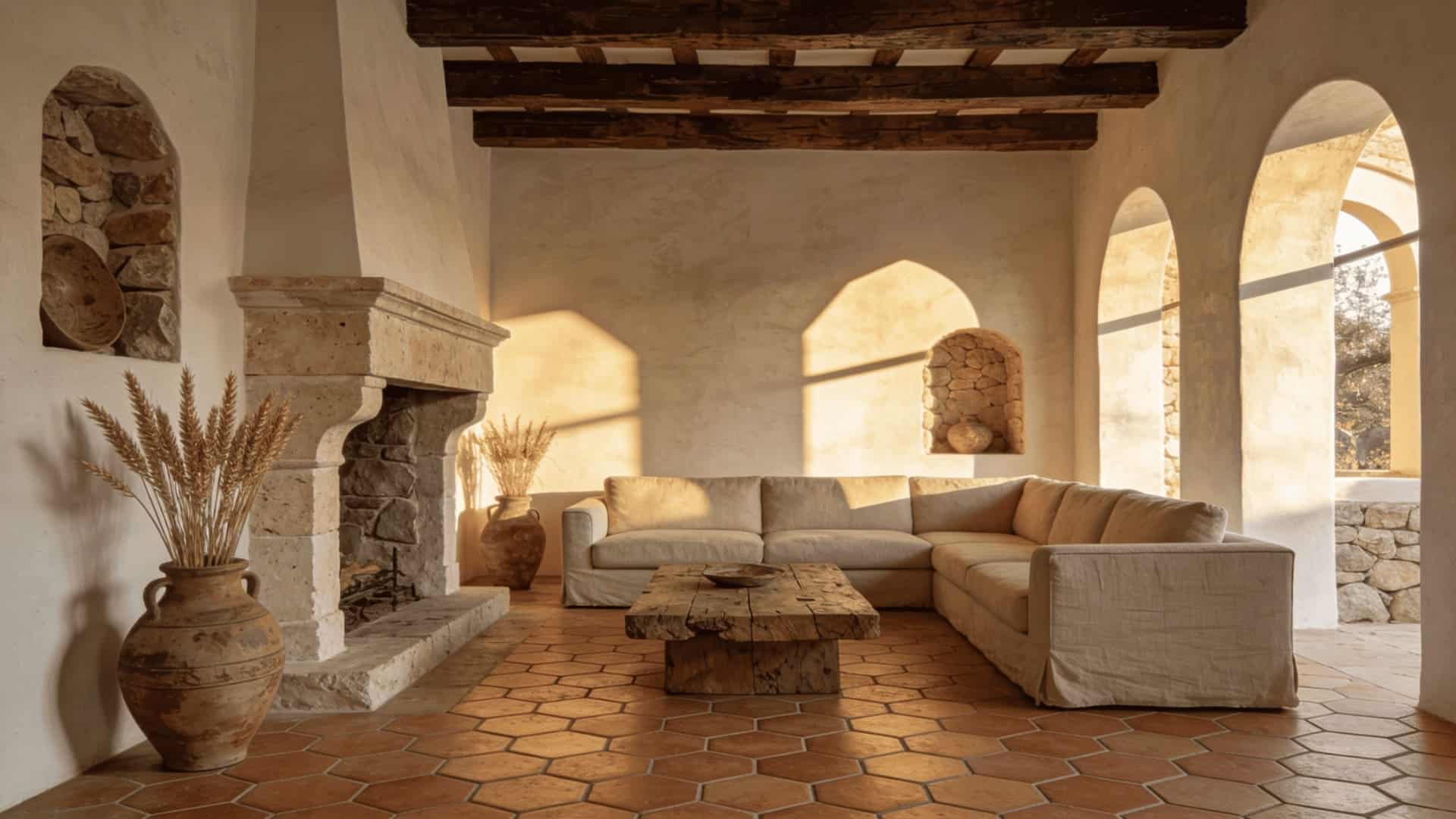
Mediterranean interiors emphasize the use of natural materials like wood, stone, terracotta, and ceramics. These materials bring texture and warmth, making spaces feel organic and inviting.
The use of textured plaster on walls adds depth and a rustic beauty that aligns with the Mediterranean’s connection to nature. The combination of these elements creates a sense of class and relaxation in the space.
2. Sun-Faded and Earthy Color Palette
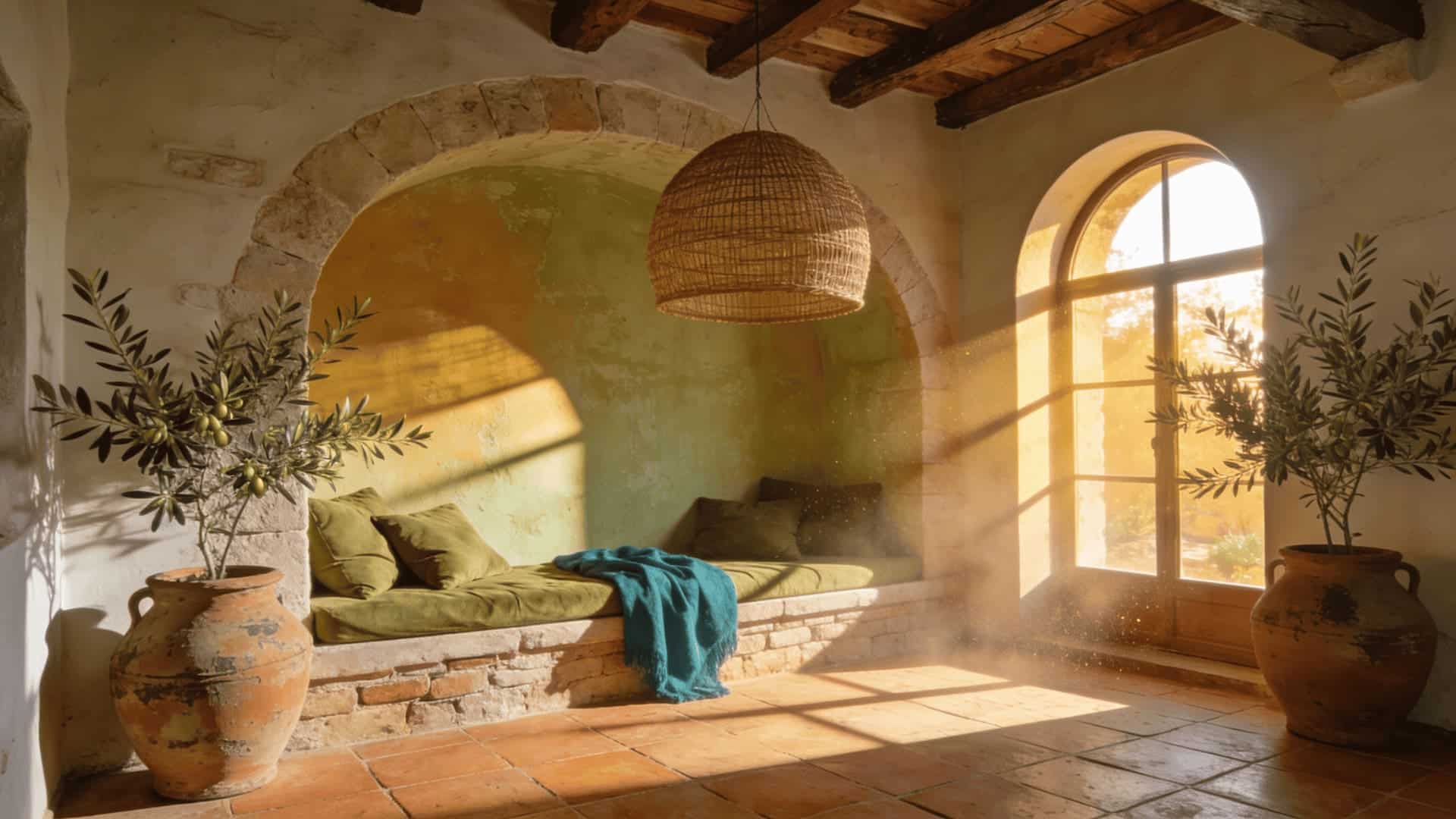
The Mediterranean color palette includes warm neutrals, terracotta, and sandy beiges, inspired by natural surroundings. Olive greens and ocean blues bring hues that mirror the landscape, offering a relaxed, grounded feel.
These earthy tones create a sense of warmth and harmony, helping spaces feel light and airy, with a subtle nod to the region’s sun-kissed shores and serene atmosphere.
For anyone starting a repaint, a few paint colors that work consistently well in this style: Sherwin-Williams Accessible Beige (SW 7036) for base walls, Farrow & Ball’s Jitney for a sun-warmed sandy neutral, and Behr Terracotta Clay for accent walls or niches. These are not bold choices, but that restraint is exactly what makes Mediterranean rooms feel serene rather than overdone
3. Connection Between Indoors and Outdoors
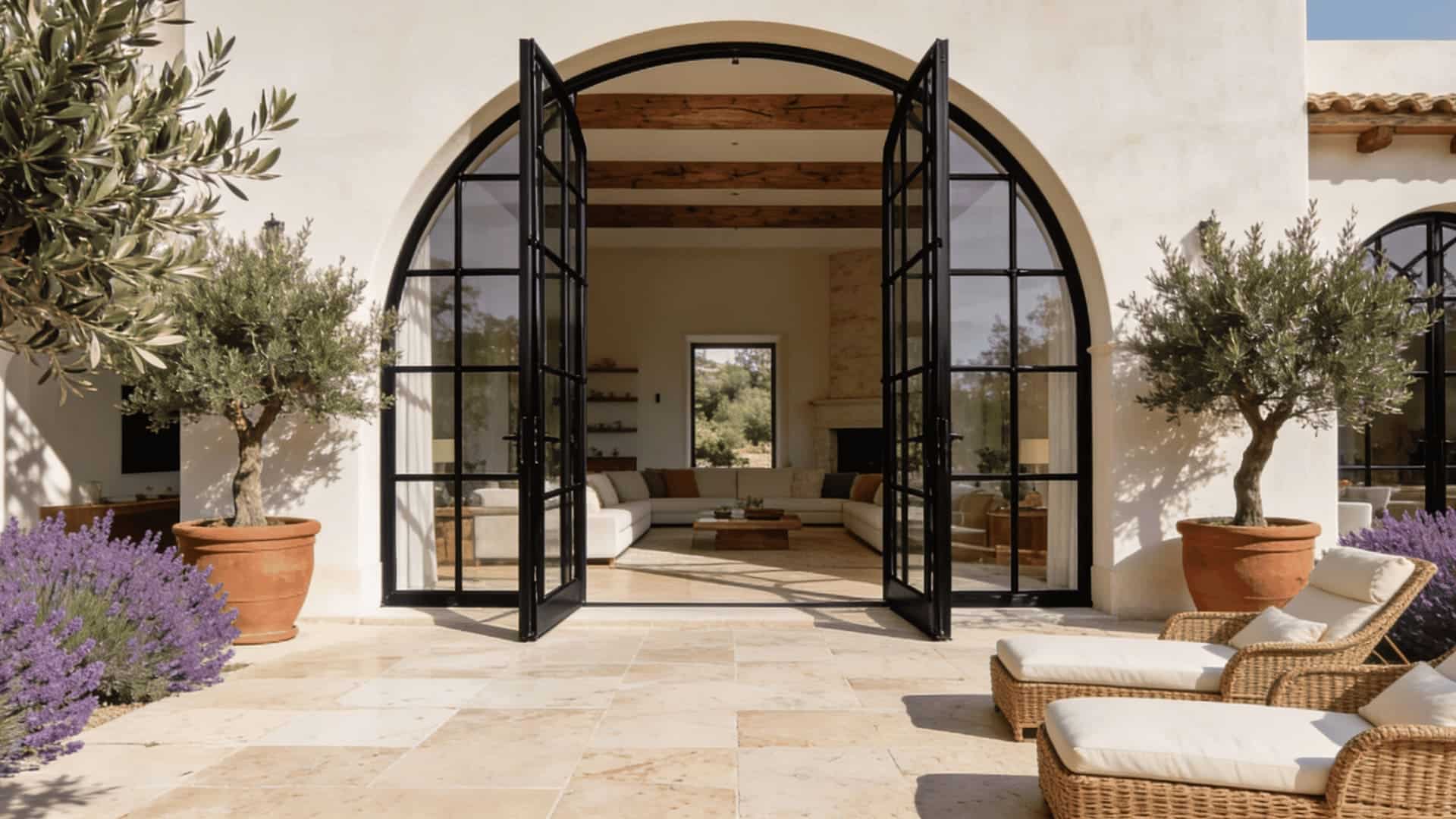
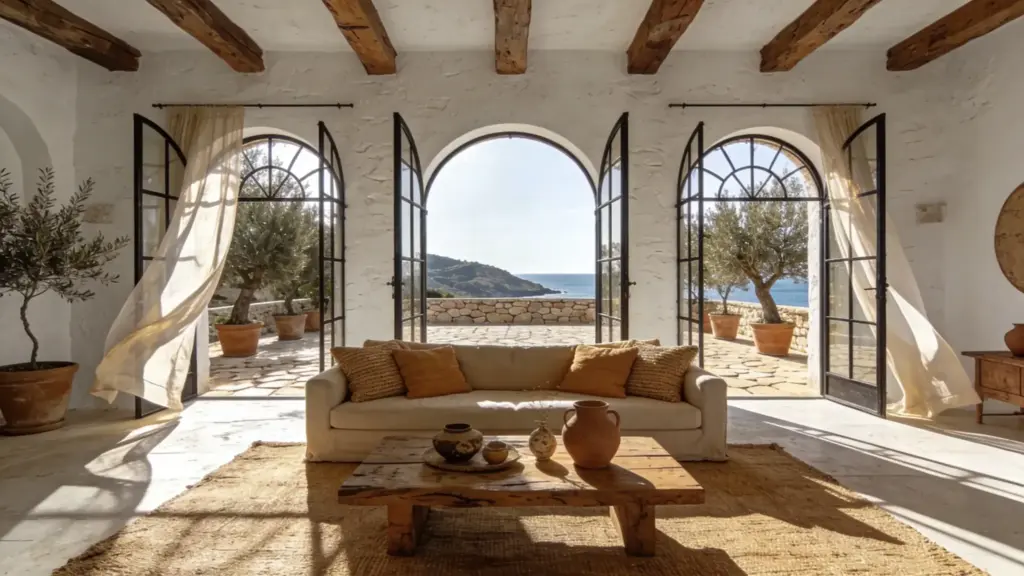
In Mediterranean design, large windows, balconies, and terraces create a natural flow between the indoors and outdoors. This seamless connection allows abundant natural light and fresh air to enter, creating a relaxed, open atmosphere.
Outdoor living areas, often featuring comfortable furniture and lush greenery, extend the living space, allowing homeowners to enjoy the beauty of the Mediterranean climate year-round.
4. Architectural Elements
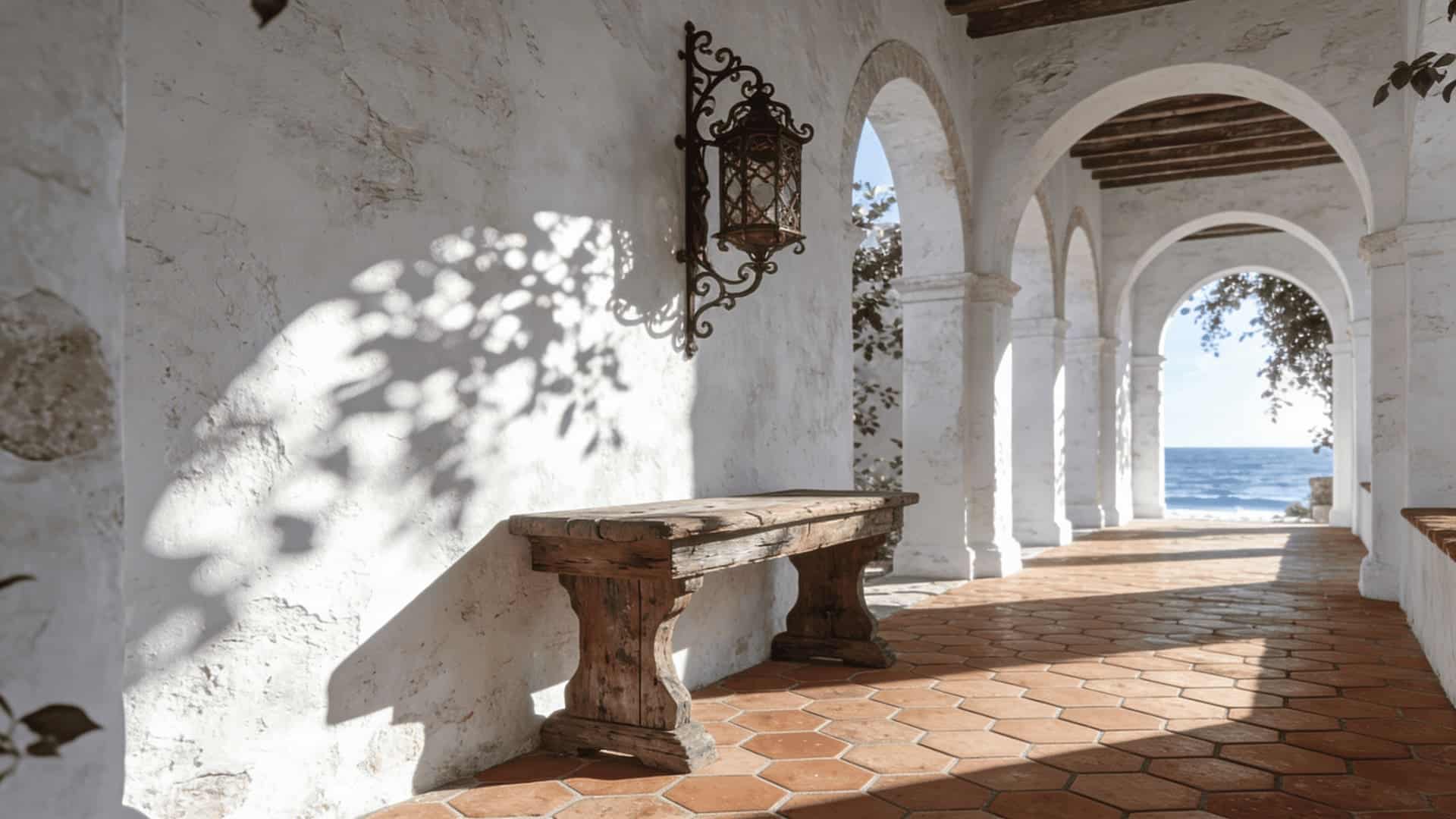
Key architectural features of Mediterranean design include arched doorways and windows, exposed beams, and rustic columns. These elements reflect the region’s heritage and tradition.
Textured walls add visual interest and warmth, often made from natural stone or plaster. These architectural details, coupled with an emphasis on open spaces, enhance the Mediterranean aesthetic, contributing to its welcoming, classic appeal.
If your home doesn’t have arches or beams already, you don’t need to add structural faux elements. A more effective approach: introduce curves at the furniture level, rounded sofas, arched mirrors, and curved shelving units all carry the same visual language without requiring renovation.
5. Comfortable and Relaxed Living
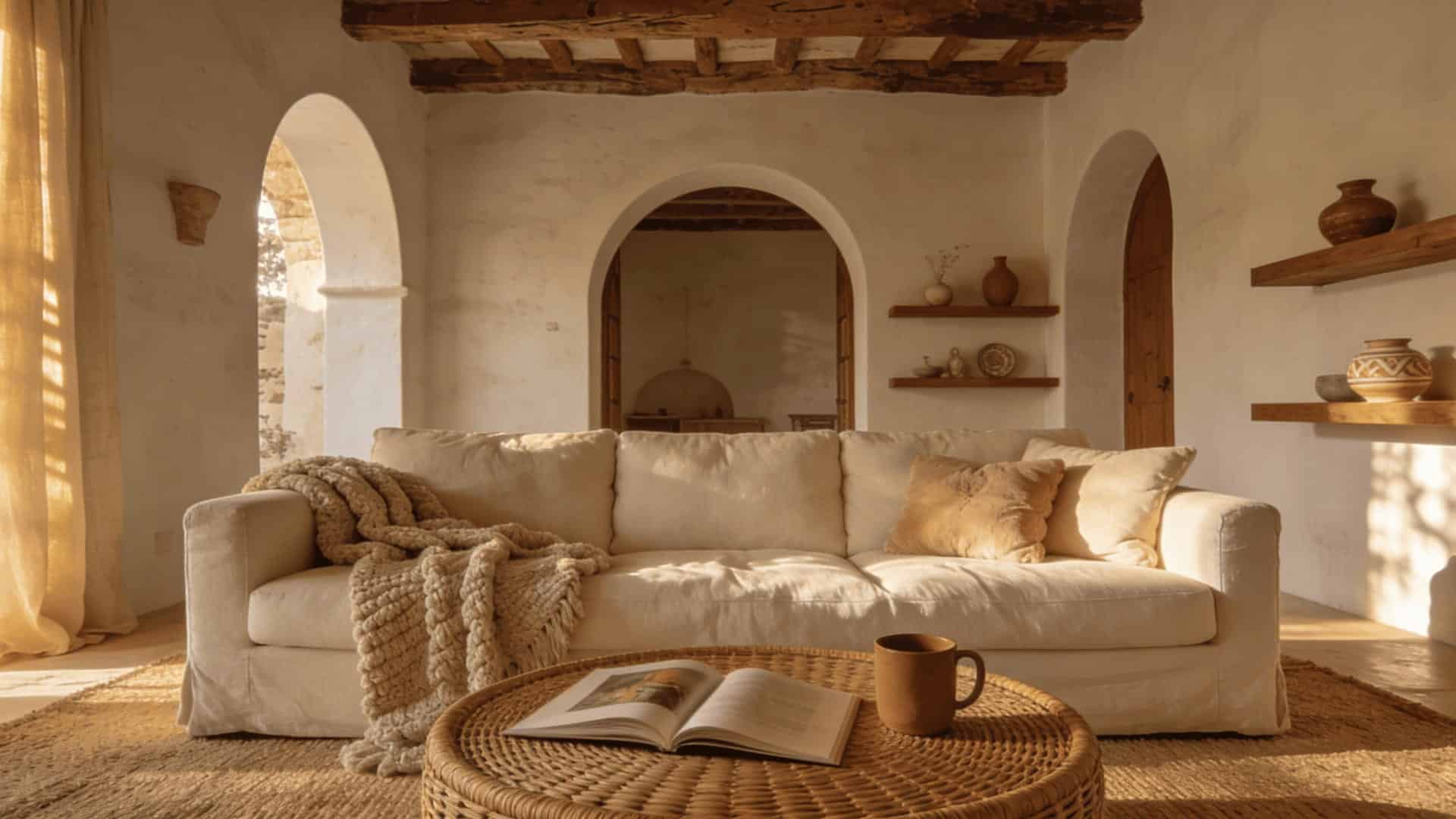
Furniture in Mediterranean interiors is designed for comfort and functionality, focusing on handcrafted, durable pieces. The lived-in feel is a key feature, with spaces reflecting a casual, unpretentious vibe.
Natural textures, such as woven fabrics and linen, help soften the room’s appearance. This approach emphasizes relaxation over perfection, allowing each piece to tell a story and create a welcoming, inviting environment.
Modern Mediterranean vs. Traditional Mediterranean
The traditional Mediterranean design is vibrant and detailed, while the modern Mediterranean simplifies the look, creating a more minimalist, light-filled space.
| Feature | Traditional Mediterranean | Modern Mediterranean |
|---|---|---|
| Patterns | Vibrant, intricate tiles, bold designs | Simplified patterns, minimalistic approach |
| Textures | Ornate, heavy textures (wood, tiles, carved furniture) | Cleaner, sleeker lines, lighter textures |
| Color Palette | Rich, deep tones (reds, yellows, bright blues) | Lighter tones (neutral, earthy, subtle blues and greens) |
| Materials | Wrought iron, terracotta, ceramic | Natural wood, stone, plaster with a focus on lightness |
| Furniture Style | Heavy, detailed furniture pieces | Sleeker, simpler furniture with emphasis on comfort |
The traditional Mediterranean style is bolder and busier, using vibrant colors and intricate textures. Modern Mediterranean, however, pares down these elements, favoring a minimalist approach with a focus on light colors, clean lines, and a blend of rustic warmth.
How to Incorporate Modern Mediterranean Interior Design in Your Home
Incorporating modern Mediterranean design into your home blends rustic beauty with sleek modern touches. Here’s how to transform different spaces.
1. Entryways and Living Rooms
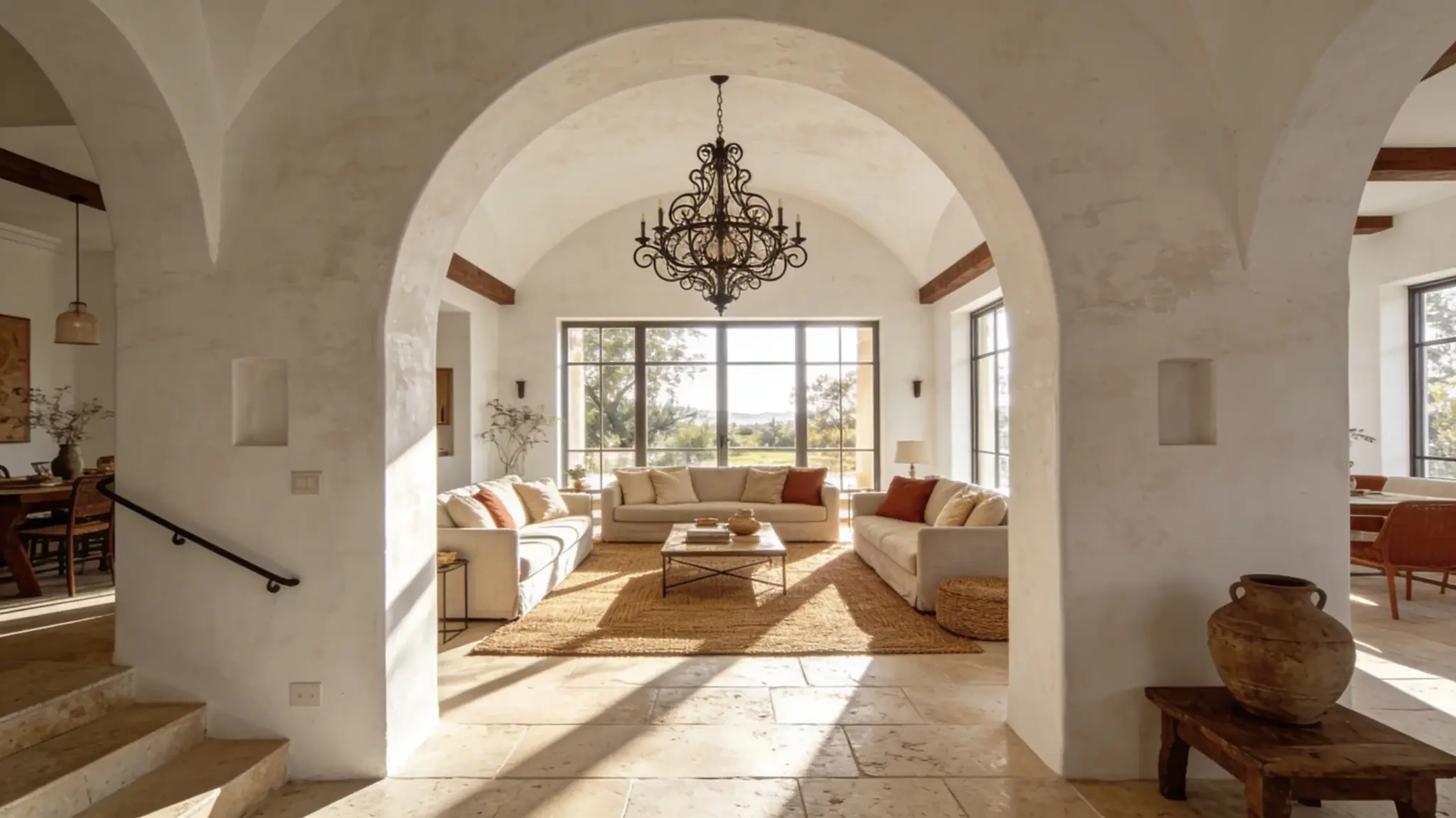
Modern Mediterranean entryways and living rooms focus on natural light, with neutral walls that reflect sunlight. Arches are a signature architectural feature that brings warmth and an open feel.
To improve the space, add statement lighting, such as wrought-iron chandeliers or pendant lights that reflect Mediterranean styles. Tactile textiles, like woven rugs, throws, and linen cushions, make the space cozy and inviting, perfectly blending comfort with style.
2. Kitchens
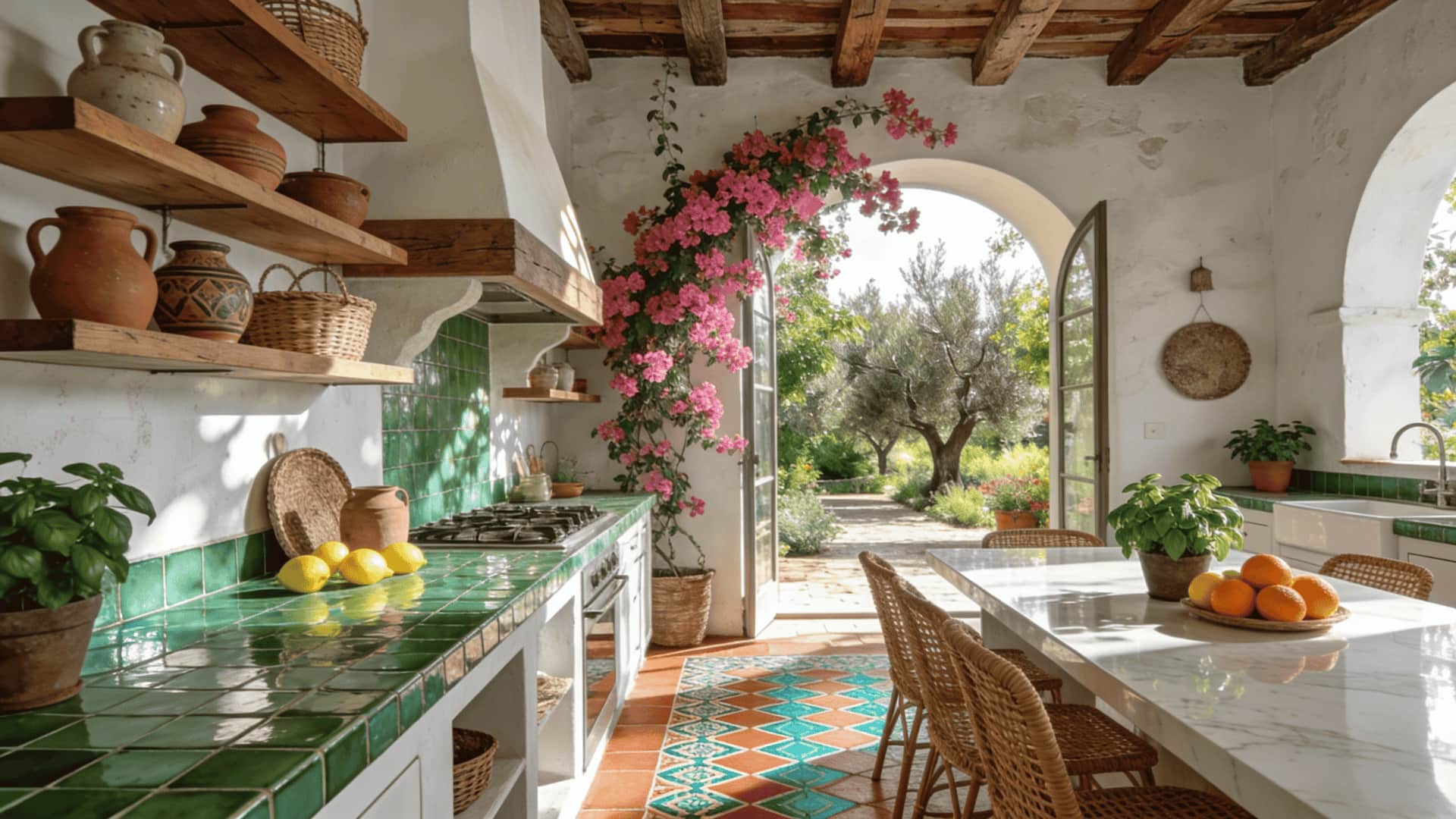
A modern Mediterranean kitchen combines terra-cotta or subtly patterned floors with stone countertops for a classic, natural aesthetic. Wood cabinetry brings warmth and texture to the space, while open shelving and ceramic accents complete the look.
You can incorporate classic Mediterranean elements, such as terracotta pots, into your kitchen decor. The key is using materials that blend rustic and refined touches while maintaining a functional, light-filled environment.
For countertops, honed travertine and leathered quartzite are worth considering over polished granite or engineered quartz; they’re matte, warmer-looking, and align better with the tactile quality that defines this style. Yes, they require a bit more sealing maintenance, but the visual return is significant.
3. Bedrooms
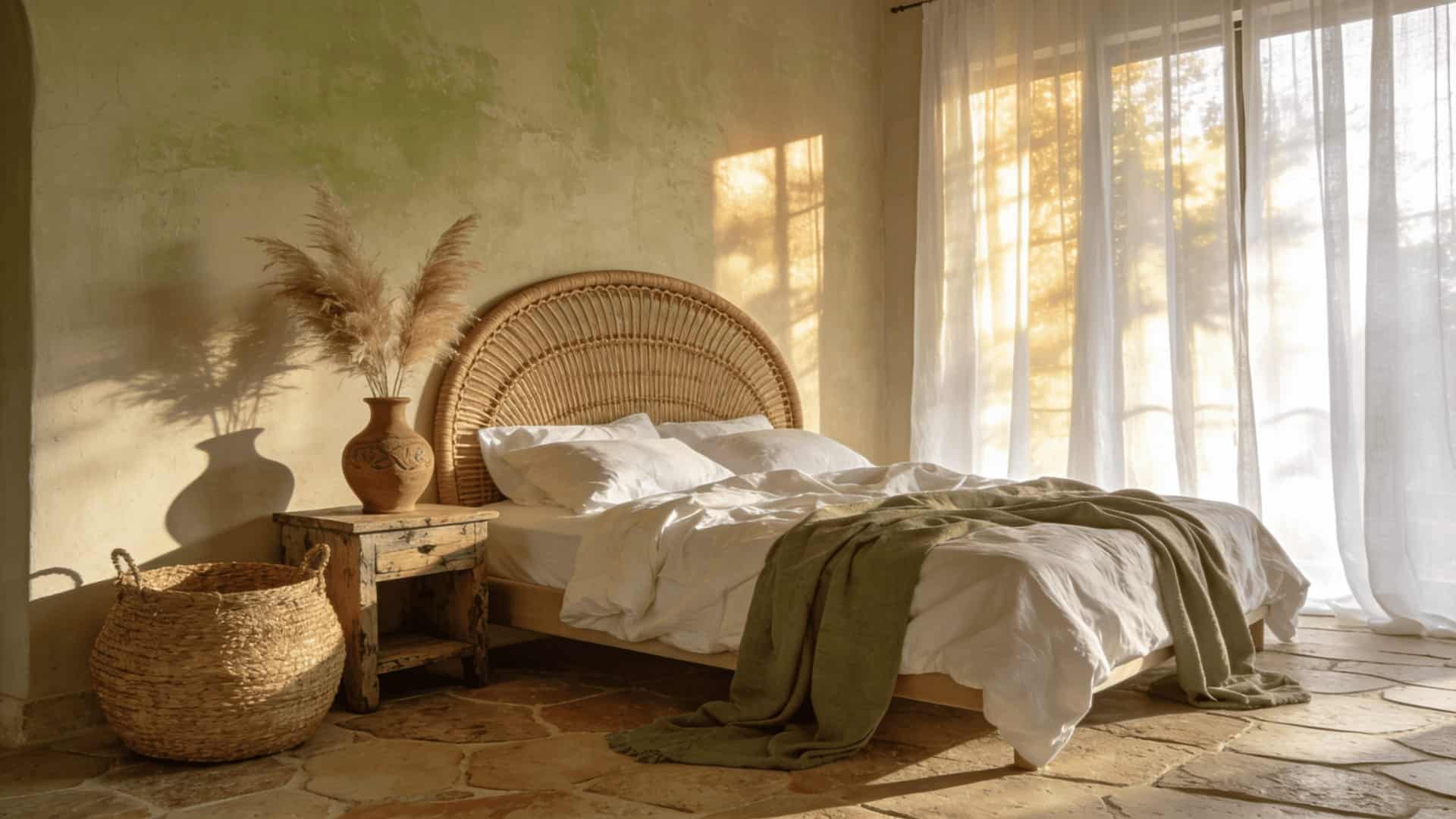
In a modern Mediterranean bedroom, light linens and soft, breathable fabrics create an airy atmosphere perfect for relaxation. Woven accents, such as baskets, throws, or woven bedspreads, add texture and comfort.
Subtle earth tones like warm beiges, soft greens, and muted blues keep the space serene and connected to nature. Consider adding a statement wooden headboard or woven rattan furniture to keep the room grounded in Mediterranean beauty.
4. Outdoor Spaces
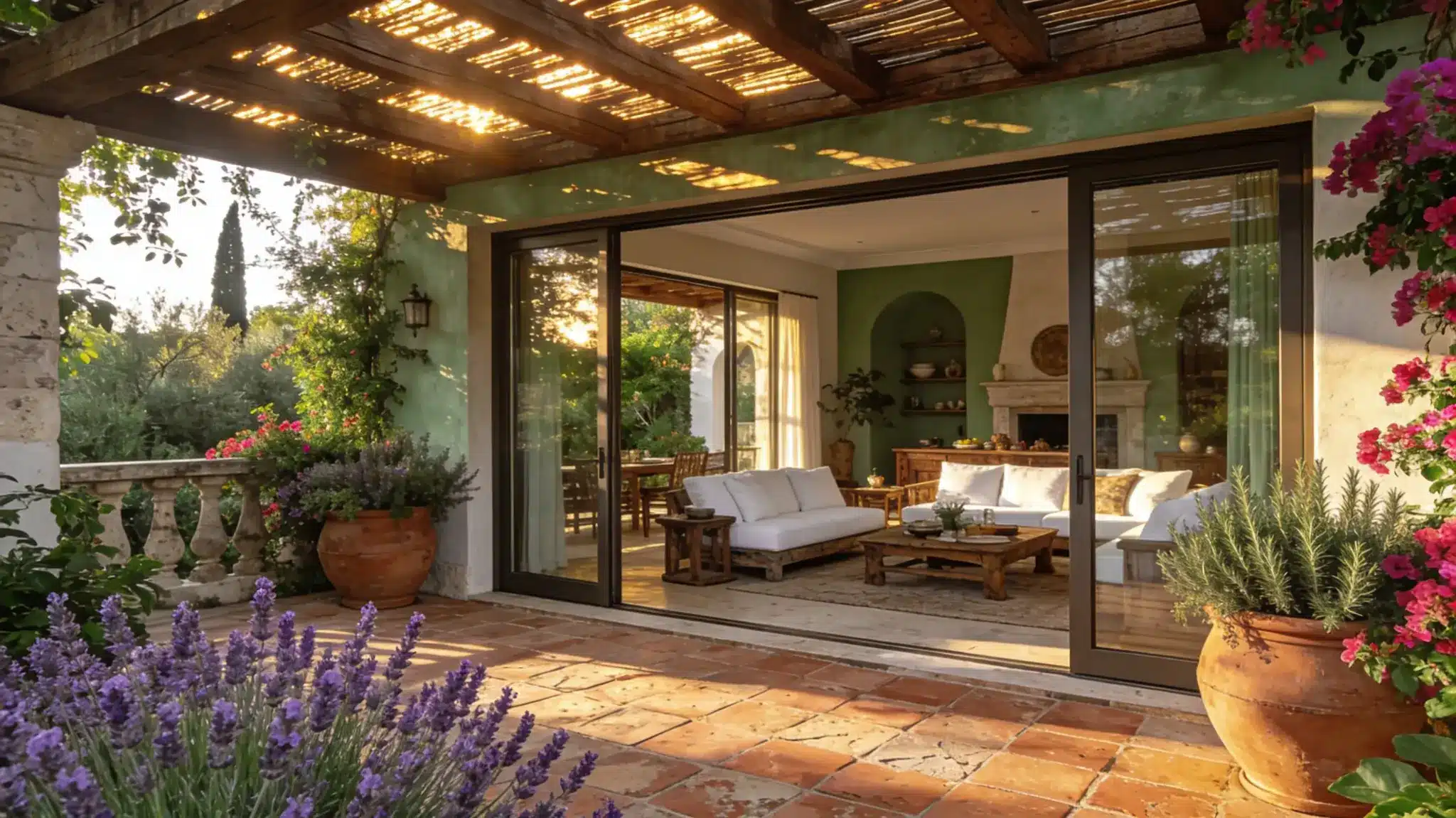
To incorporate Mediterranean design outdoors, create a seamless indoor-outdoor flow by installing large windows or sliding glass doors that open to lush greenery and outdoor seating areas.
For planting, the most authentic Mediterranean choices are olive trees, lavender, rosemary, bougainvillea, and agave.
Courtyards with a central water feature, even a modest wall fountain, carry enormous symbolic and sensory weight in this design tradition. The sound of moving water, combined with terracotta and stone, is as much of a design decision as any color or fabric choice.
Regional Variations in Mediterranean Design
The Mediterranean design draws inspiration from various countries around the region, each offering unique elements that blend into the overall aesthetic.
| Region | Key Features | Style Characteristics |
|---|---|---|
| Spanish Mediterranean | Rich, warm colors, patterned tiles, wrought iron | Vibrant and bold, with intricate patterns |
| Italian Mediterranean | Earthy tones, stone accents, rustic wood | Natural materials with rustic style |
| Greek Mediterranean | Whitewashed walls, blues, oceanic influences | Light and airy, reflecting coastal beauty |
| Moroccan & North African | Bold tiles, geometric patterns | Colorful and artistic, blending influences |
These regional variations give Mediterranean design its classic beauty, mixing bold textures, natural materials, and light, airy spaces.
Can You Achieve Modern Mediterranean Design on a Budget?
Yes, and it’s more accessible than most style guides imply. The Mediterranean aesthetic is rooted in natural, humble materials, clay, stone, linen, wood- not in expensive brand names or bespoke furniture. Here’s where budget goes furthest:
- Limewash paint: costs similar to premium paint but dramatically upgrades wall texture. Brands like Portola Paints offer ready-mixed options.
- Secondhand wooden furniture: thrifted oak or pine pieces with natural grain age into the style rather than out of it. A coat of tung oil and they’re perfect.
- Terracotta pots in varying sizes: an instant and affordable way to introduce the palette and material language into any room.
- Linen throws and undyed cotton cushion covers: widely available and far more effective than decorative pillows with patterns that fight the neutral base.
- Handmade ceramic bowls and vases: Etsy and local pottery markets carry affordable pieces with the imperfect, artisanal quality this style calls for.
The priority order matters: invest in wall treatment first, lighting second, and textiles third. Those three layers do the most work. Furniture can be sourced gradually.
Modern Mediterranean Design and Sustainability
This is a content area that very few competing guides address, but it’s worth noting: Mediterranean design is one of the most inherently sustainable interior styles available. The materials it favors, limestone, terracotta, timber, and natural plaster, are low in embodied carbon compared to synthetic finishes.
The regional tradition of thick walls, cross-ventilation, and shaded outdoor spaces was developed specifically to reduce heat load before mechanical cooling existed.
For homeowners looking to align aesthetics with environmental values, this style is a natural fit. Recycled ceramics, reclaimed wood beams, and locally sourced stone can all be incorporated without compromising the look, and often improve it, since aged or imperfect materials carry the “lived-in” quality that is central to the Mediterranean ethos
Common Mistakes to Avoid
To achieve a balanced and authentic modern Mediterranean design, here are some common mistakes you should avoid:
- Overuse of Patterns: Modern Mediterranean design embraces simplicity. Avoid overly intricate or mismatched patterns that can make the space feel cluttered. Instead, opt for subtle, understated patterns paired with solid colors for a more cohesive and calming atmosphere.
- Neglecting Natural Light: It’s key to the Mediterranean vibe. Don’t block light with heavy curtains or too much furniture. Ensure your design allows light to flow freely, illuminating the space and enhancing the warmth of natural materials like stone and wood.
- Choosing Inappropriate Furniture: Avoid overly modern or out-of-place furniture that doesn’t align with Mediterranean warmth. Stick to furniture with a rustic, handcrafted feel to maintain that inviting, lived-in beauty.
- Overcomplicating the Color Palette: Stick to a light, earthy palette and avoid too many bold or contrasting colors. Mediterranean spaces thrive on a serene, natural feel that allows for relaxation and harmony.
- Ignoring the Indoor-Outdoor Connection: The Mediterranean style celebrates seamless indoor-outdoor living. Don’t overlook this connection; incorporate large windows, balconies, or patios to bring the outdoors in and create a sense of flow throughout your home.
Final Thoughts
Incorporating modern Mediterranean interior design into your home is about creating spaces that foster warmth, comfort, and natural beauty.
By focusing on natural materials, a calming color palette, and a seamless flow between indoors and outdoors, you can transform your living space into a classic retreat.
Remember, Mediterranean design isn’t about perfection; it’s about creating an environment where you can truly relax and feel at ease. I hope this guide helped you find out how to bring the Mediterranean vibe to your home.
Have thoughts or experiences to share? Drop a comment below, and feel free to check out more of my blogs for further tips.