If you’re one of the more than 2 million people who get engaged each year, your engagement ring is a daily companion that faces a barrage of invisible hazards every time you wash your hands, apply lotion, or prep dinner. Diamonds are naturally lipophilic, meaning they actively attract grease and skin oils that create a dull, cloudy film over the surface of your gemstone.
Many people assume their ring stays clean simply because it gets wet in the shower or exposed to hand soap throughout the day. In reality, standard bath soaps and moisturizing body washes leave a stubborn residue that builds up inside the intricate lattice of your setting, trapping dirt underneath the stone.
Maintaining that original showroom brilliance requires a consistent, proactive care routine that protects both the stone and the precious metal holding it in place. Understanding the daily mechanics of how jewelry accumulates buildup is the first step toward preserving its structural integrity and sparkle for a lifetime.
The Chemistry of Safe Home Cleaning
You do not need expensive commercial jewelry cleaners or specialized machinery to restore the luster of your precious metals and gemstones at home. In fact, many off-the-shelf chemical solutions are too abrasive for delicate settings and can slowly erode the integrity of certain metal alloys over time.
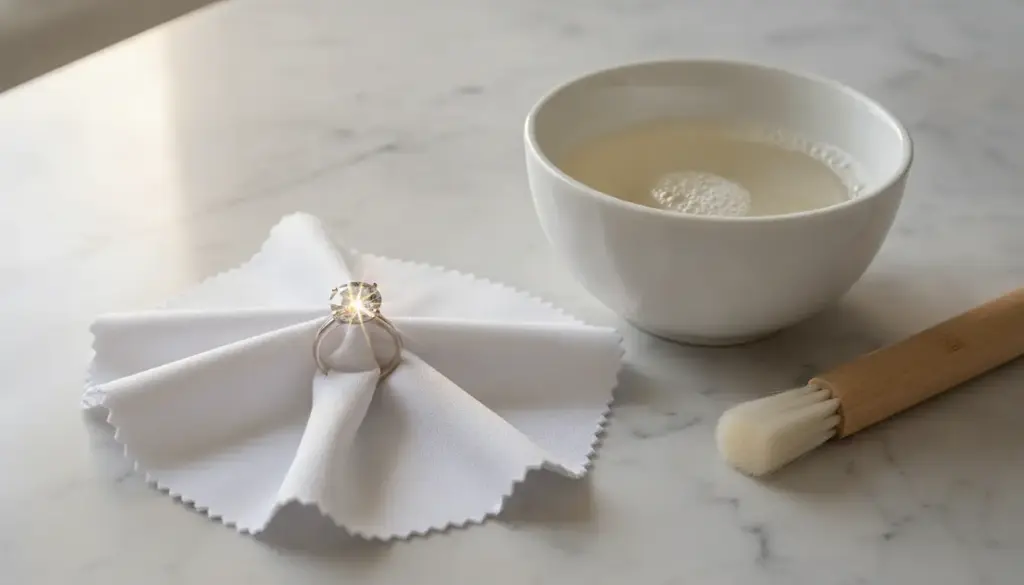
The safest and most effective method relies on basic household ingredients that break down organic oils without causing adverse chemical reactions. A simple mixture of warm water and a few drops of standard dishwashing soap acts as a gentle degreaser that loosens packed dirt without compromising the metal.
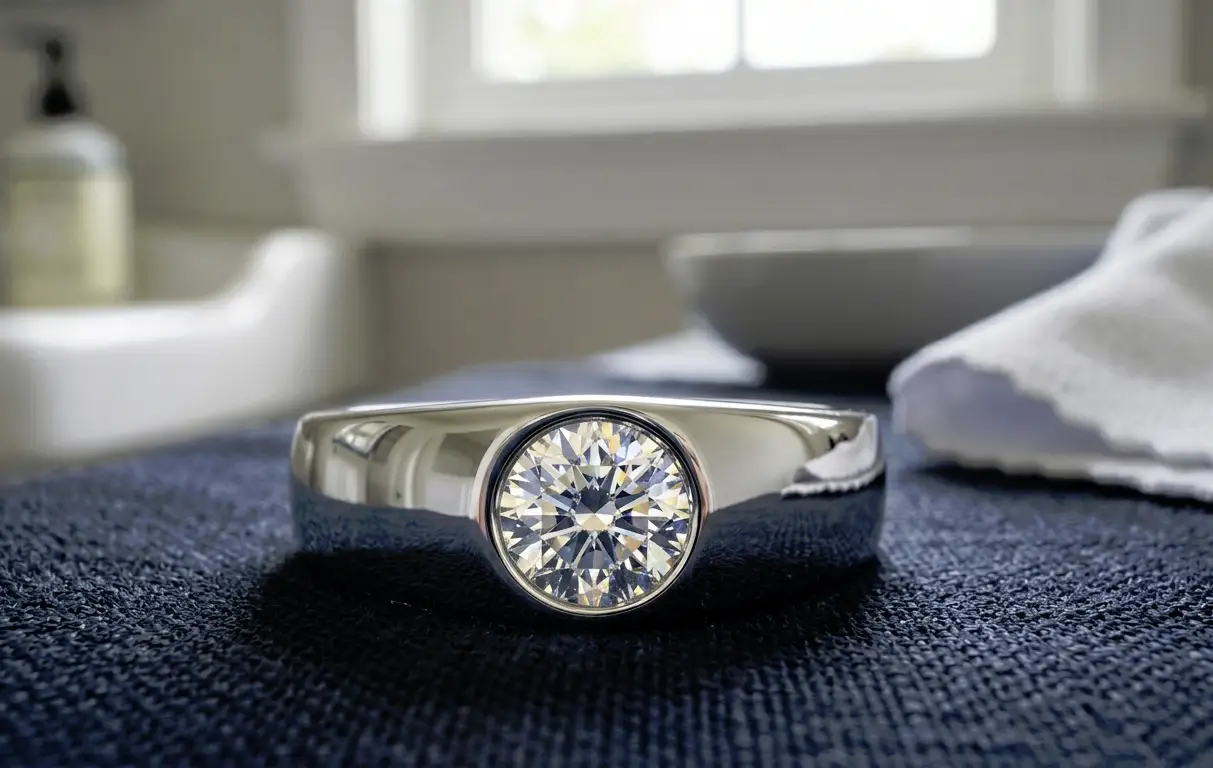
For those who wear a contemporary ring with burnished diamond accents, this mild approach is especially critical. Because burnished stones are flush-set directly into the metal without traditional prongs, harsh chemical cleansers or aggressive scrubbing can alter the smooth surface finish of the surrounding gold or platinum.
To clean your jewelry safely without causing surface abrasions, gather these specific items for your washing station:
- A small bowl filled with warm, filtered water
- A few drops of mild, blue dishwashing liquid
- A fresh, extra-soft bristle toothbrush
Soak the jewelry for roughly twenty to thirty minutes to allow the soap to penetrate the microscopic crevices where lotion and dust collect. Use the extra-soft brush to gently sweep away loose particles, paying close attention to the underside of the main setting where the most light enters the stone. Rinse the piece thoroughly in a separate bowl of clean water to ensure no soapy film remains, then dry it completely using a lint-free microfiber cloth.
Hidden Dangers to Your Setting
While daily accumulation of grime affects the visual brilliance of a stone, chemical exposure poses a far greater threat to the structural survival of your band. Household cleaning products, swimming pool chemicals, and even certain intensive beauty serums contain active ingredients that permanently damage precious metal alloys.
Chlorine causes stress corrosion cracking inside white gold and yellow gold, which can cause prongs to snap without warning. This chemical degradation eats away at the alloyed metals mixed with pure gold, making the entire framework brittle over time.
Common internet DIY advice often recommends using household baking soda or toothpaste to scrub away stubborn tarnishing from older rings. Professional gemologists strongly warn against using toothpaste or baking soda because these substances are highly abrasive and can leave microscopic scratches on the surface of soft precious metals like yellow gold and platinum. These tiny scratches ruin the polished finish of your band, turning a mirrored shine into a dull, satin texture that requires professional polishing to fix.
The physical mechanics of daily wear also subject a ring to constant micro-movement, which gradually fatigues precious metals over months of continuous use. Wearing your jewelry during heavy workouts, deep-cleaning sessions, or even while sleeping can cause unnecessary friction and impact.
Prongs can easily snag on bed sheets or clothing fibers, slowly pulling them away from the crown of the diamond. When a prong shifts even a fraction of a millimeter, the stone becomes loose and is at high risk of falling out during everyday activities.
Maintaining Long-Term Structural Integrity
Home cleaning is an excellent way to maintain surface brilliance, but it cannot replace the specialized diagnostics performed by an experienced bench jeweler. Fine jewelry requires regular structural checkups to identify loose components, thinning bands, and worn-down prongs before they result in a catastrophic loss.
Industry experts recommend that daily-worn jewelry be inspected every six months to catch microscopic structural fatigue early. A professional jeweler uses a high-powered loupe to verify that every stone is firmly seated and that the metal has not warped from accidental impact.
Between these biannual professional checkups, you should practice mindful wear habits to reduce physical strain on the piece. Remove your rings before participating in high-impact sports, gardening, or lifting weights at the gym to prevent the shank from bending out of round.
Storing your jewelry in a fabric-lined box with dedicated slots helps prevent harder gemstones from scratching softer metals while resting on your vanity. Taking these preventative steps safeguards your investment, keeping the metal secure and the diamonds catching the light perfectly for decades to come. If you’re putting as much planning as possible into the wedding itself, considering everything from the first dance song to the table settings, you should be just as attentive to your jewelry.
Developing a Mindful Jewelry Routine
Creating a dedicated space on your nightstand or near the sink for a padded jewelry dish helps build the habit of removing your ring before risky activities. Protecting your jewelry from everyday friction, heavy impact, and harsh cosmetic chemicals is the most reliable way to preserve its structural lifespan. For more insights on lifestyle and wellness topics of all types, stick around on our site.