

Workplace stress is no longer a side conversation reserved for HR departments or annual wellness seminars. It has become one of the defining challenges of modern work. Yet despite the growing awareness around employee wellbeing, many companies still misunderstand what workplace stress actually looks like, what causes it, and how deeply it affects both people and performance.
Too often, organizations reduce stress to individual weakness rather than recognizing it as a structural issue shaped by leadership, communication, workload expectations, and workplace culture. The result is a growing disconnect between what employers believe is supportive and what employees actually experience every day.
The conversation around workplace stress has improved over the last few years, but many businesses are still solving the wrong problems.
Workplace Stress Is Not Just About Heavy Workloads
One of the biggest misconceptions companies hold is that workplace stress is only caused by having “too much work.” While excessive workloads certainly contribute, stress often develops from uncertainty, lack of control, unclear expectations, poor management, and emotional exhaustion.
An employee handling a demanding project may perform well under pressure if expectations are clear and support exists. Meanwhile, someone with a lighter workload may feel significantly more stressed if communication is chaotic, priorities constantly change, or leadership creates an environment of fear and unpredictability.
Stress is not always tied to volume. In many cases, it is tied to instability.
Companies frequently underestimate how mentally draining unclear direction can be. Constantly shifting goals, reactive leadership, unrealistic deadlines, and poor communication create cognitive overload that follows employees long after work hours end.
Employees are not only carrying out tasks. They are carrying emotional uncertainty.
Wellness Perks Do Not Solve Structural Problems
Another common misunderstanding is the belief that wellness perks automatically equal mental health support. Companies now offer meditation apps, yoga subscriptions, wellness stipends, and “mental health days,” yet many employees still feel emotionally exhausted.
The reason is simple: perks cannot compensate for unhealthy systems.
An employee who is expected to answer emails late at night will not feel less stressed because the company offers a mindfulness webinar. Similarly, a toxic team culture cannot be repaired with occasional wellness initiatives if daily management practices continue creating anxiety and burnout.
Many organizations focus heavily on visible wellness branding because it is easier than confronting operational problems. It is easier to launch a wellness campaign than to redesign unrealistic workflows, improve staffing issues, or address poor leadership behavior.
Employees notice this disconnect quickly.
When companies promote wellbeing publicly while maintaining unhealthy internal expectations, wellness initiatives start feeling performative rather than supportive. This often damages trust even further.
Burnout Does Not Always Look Dramatic
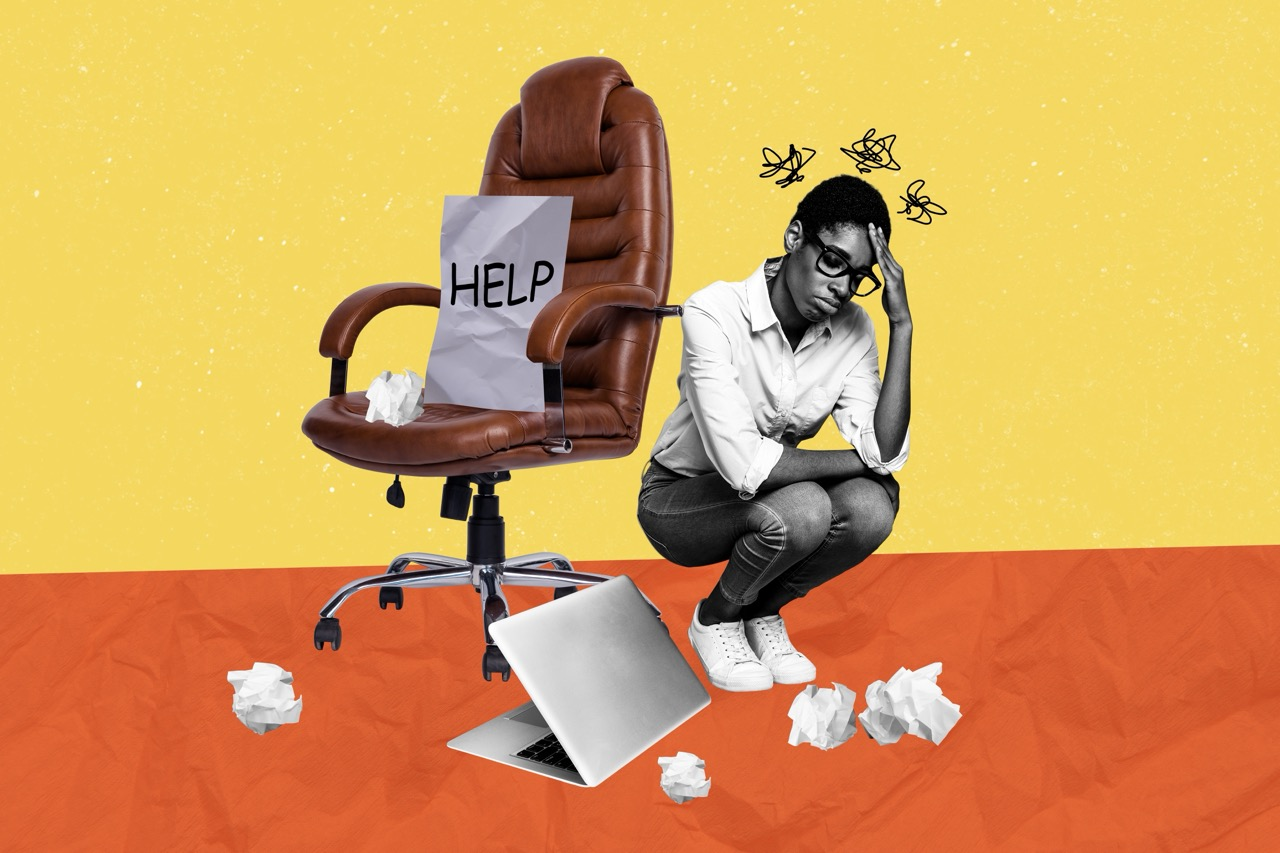
Many employers still expect stress and burnout to appear in obvious ways. They look for emotional breakdowns, absenteeism, or visibly disengaged employees. In reality, workplace stress is often much quieter.
Some of the most stressed employees are also the highest performers.
They continue meeting deadlines, attending meetings, and producing strong work while privately struggling with exhaustion, anxiety, sleep disruption, or emotional detachment. Because they remain productive, their stress often goes unnoticed until they suddenly resign, disengage completely, or experience serious mental and physical health consequences.
Anna Zhadan, Director at My Expat Mind, explains, “Burnout rarely begins with someone falling apart at work. More often, it starts when people become emotionally disconnected from themselves while continuing to perform for everyone else.”
Modern burnout often manifests as emotional numbness rather than overt collapse.
Employees may become less creative, less collaborative, or less emotionally invested in their work long before productivity declines. They stop contributing ideas, avoid conversations, or mentally disconnect from long-term goals. Companies often misread this as laziness or a lack of ambition rather than recognizing it as chronic stress.
The danger is that burnout rarely develops overnight. It accumulates slowly through repeated emotional strain, lack of recovery, and prolonged pressure.
Flexibility Alone Does Not Eliminate Stress
Remote and hybrid work transformed how companies think about flexibility. Many employers assumed that allowing employees to work from home would automatically reduce stress levels. In some cases, it did. In many others, it simply changed the type of stress employees experience.
Remote workers often struggle with blurred boundaries, digital fatigue, social isolation, and the pressure to appear constantly available online. Without physical separation between work and personal life, employees may find it harder to mentally disconnect from their jobs.
Ironically, flexibility can sometimes increase guilt and overwork. Employees working remotely may feel pressure to prove productivity by responding instantly to messages, attending excessive meetings, or remaining online beyond working hours. Companies that fail to establish healthy boundaries unintentionally create cultures where employees feel permanently connected to work.
Dr. Amanda Baes, Owner of Healing Hands Chiropractic, explains, “The body does not recognize whether stress comes from an office or a home workspace. When people never fully disconnect mentally, that tension eventually shows up physically through fatigue, poor sleep, headaches, and chronic strain.”
The issue is not whether employees work remotely or in the office. The real issue is whether the organization respects psychological boundaries and sustainable expectations.
Managers Have More Influence Than Companies Realize

Research consistently shows that managers heavily influence employee well-being, yet many companies still treat workplace stress as an individual resilience issue rather than a leadership issue.
A supportive manager can reduce stress even during demanding periods. A poor manager can create stress in otherwise healthy environments.
Micromanagement, inconsistent feedback, poor communication, favoritism, emotional unpredictability, and lack of empathy all contribute significantly to workplace anxiety. Employees often leave managers before they leave companies.
Despite this, many organizations promote individuals into leadership positions based primarily on technical performance rather than emotional intelligence or people management skills.
Managing people requires far more than operational expertise. It requires communication, empathy, emotional awareness, and the ability to create psychological safety within teams. Companies that ignore this reality often struggle with retention problems while failing to recognize leadership behavior as the root cause.
Stress Is Not Always Visible in Productivity Metrics
Many businesses rely heavily on productivity metrics to evaluate employee well-being. If deadlines are being met and output remains high, leaders may assume everything is functioning well. This is one of the most dangerous misunderstandings surrounding workplace stress.
Employees can remain productive while experiencing serious emotional strain. In fact, some people become more productive during periods of stress because they fear failure, job insecurity, or disappointing others.
Short-term performance can hide long-term damage.
An organization may appear highly efficient while quietly developing a culture of exhaustion, disengagement, and emotional burnout beneath the surface. Eventually, this leads to turnover, reduced innovation, communication breakdowns, and declining morale.
Seph Fontane Pennock, Founder of Regenerated.com, explains, “People often mistake consistent output for emotional stability. In reality, some employees are performing at a high level while quietly operating in survival mode every single day.”
Stress often damages qualities that are harder to measure immediately, such as creativity, collaboration, trust, and emotional resilience.
These losses rarely appear on quarterly reports until the cultural damage becomes severe.
Psychological Safety Is Still Widely Misunderstood
Many companies encourage employees to “speak openly” about mental health while unintentionally creating environments where honesty feels risky.
Psychological safety means employees can express concerns, ask questions, admit mistakes, or discuss workload challenges without fear of punishment or judgment. Unfortunately, many workplaces still operate with cultures where vulnerability feels professionally dangerous.
Employees quickly learn whether openness is truly accepted or quietly penalized.
If workers see colleagues criticized for setting boundaries, requesting support, or speaking honestly about workload stress, they stop communicating openly. Instead, they mask exhaustion until problems escalate.
This creates a cycle where leadership assumes employees are coping because nobody speaks up, while employees remain silent because they believe speaking up is unsafe. Companies often underestimate how strongly workplace culture shapes emotional behavior.
Policies alone do not create psychological safety. Leadership behavior does.
Constant Availability Is Not Commitment
One of the most normalized yet harmful workplace habits is equating constant availability with dedication.
Many organizations still reward employees who answer messages late at night, remain active during vacations, or respond instantly outside working hours. While this behavior may appear productive in the short term, it gradually creates unhealthy expectations across entire teams.
Employees begin feeling that rest must be earned rather than respected.
This culture quietly encourages emotional exhaustion because workers never fully disconnect from professional responsibilities. Over time, employees may lose the ability to mentally recover, even during personal time.
Sharon Amos, Director at Air Ambulance 1, explains, “In high-pressure industries, people often mistake constant responsiveness for reliability. But even the most dedicated professionals need recovery time to think clearly, make sound decisions, and sustain long-term performance.”
Rest is not the opposite of productivity. It is part of sustainable productivity.
Companies that fail to recognize this often experience rising burnout while wondering why morale and retention continue declining despite competitive salaries and benefits.
Workplace Stress Is Also a Business Problem
Some companies still treat mental health primarily as a personal issue rather than recognizing its direct business impact.
Workplace stress affects decision-making, communication quality, innovation, customer service, collaboration, and long-term organizational stability. Chronic stress reduces concentration, increases mistakes, and weakens problem-solving abilities.
High-stress environments also damage an employer’s reputation.
Talented employees increasingly prioritize workplace culture, flexibility, and mental well-being when evaluating career opportunities. Organizations known for burnout and unsustainable expectations struggle to attract and retain strong talent over time.
Ignoring stress is no longer simply an HR oversight. It is a strategic business risk. Companies investing seriously in employee wellbeing are not doing so out of generosity alone. They recognize that sustainable performance depends on emotionally healthy teams.
The Future of Work Requires a Different Approach
The future workplace cannot rely on outdated assumptions about endurance, overwork, and constant pressure. Employees today are more aware of mental health, emotional boundaries, and workplace culture than previous generations.
This shift is forcing companies to rethink what productivity and performance truly mean.
Healthy organizations are not defined by how much pressure employees can tolerate. They are defined by how effectively people can perform without sacrificing their mental well-being in the process.
That requires more than surface-level wellness campaigns. It requires honest conversations about workload expectations, leadership behavior, communication practices, recovery time, and organizational culture. It requires companies to stop viewing stress as an unavoidable byproduct of ambition and start recognizing preventable patterns that quietly damage both employees and businesses.
Workplace stress will never disappear entirely. Pressure is part of professional life. But there is a major difference between healthy challenge and chronic emotional exhaustion.
Many companies still fail to recognize where that line exists. The organizations that understand it first will not only build healthier workplaces, but also They will build stronger, more sustainable businesses for the future.