


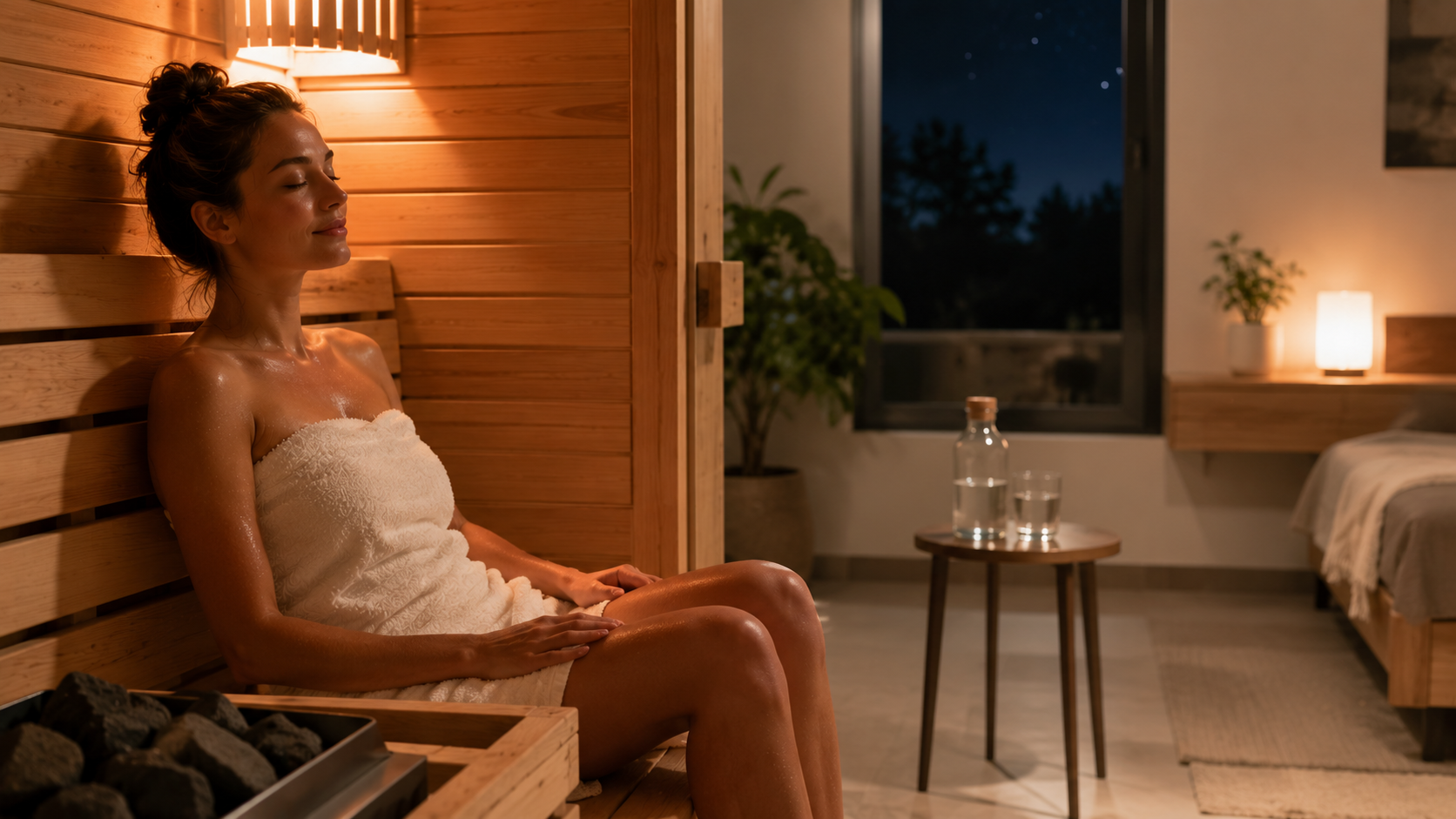
Sauna before bed is the use of dry, infrared, or steam heat in the evening before sleep. The purpose of sauna before bed is to raise skin temperature, promote sweating, support relaxation, and prepare the body for the natural cooling phase that occurs before sleep.
Sauna before bed matters because sleep depends on body temperature, circadian rhythm, nervous system activity, and bedroom comfort. The CDC states that adults need at least 7 hours of sleep each day for health, attention, mood, heart function, and metabolism.
Sauna before bed works best as a structured evening routine, not as a last-minute heat exposure. The strongest evidence for sleep comes from research on passive body heating. Haghayegh, Khoshnevis, Smolensky, Diller, and Castriotta’s 2019 systematic review found that warm bathing or showering 1 to 2 hours before bedtime improved sleep quality and shortened sleep onset time.
The practical takeaway is clear. Use the sauna earlier in the evening before bed, then cool down, hydrate, and enter a cool sleep environment.
Does Sauna Before Bed Help You Sleep Better?
Sauna before bed supports sleep when the heat session ends early enough to allow the body to cool. Heat raises skin temperature. Cooling after heat exposure increases heat loss through the skin. This cooling process aligns with the body’s normal sleep preparation.
The sleep mechanism is thermoregulation. The body prepares for sleep by lowering core temperature. Passive heating before bedtime supports this drop because blood vessels near the skin dilate, heat leaves the body, and the brain receives stronger sleep-timing signals.
A 2019 meta-analysis in Sleep Medicine Reviews found that water-based passive body heating before bedtime improved subjective sleep quality and sleep efficiency. The strongest timing window was 1 to 2 hours before bedtime.
Sauna before bed does not replace insomnia treatment. Sauna before bed acts as a supportive routine for relaxation, body temperature regulation, and sleep readiness. People with chronic insomnia, sleep apnea, night sweats, or medication-related sleep disruption need medical evaluation.
When Is the Best Time to Use a Sauna Before Bed?
The best time for a sauna before bed is 1 to 2 hours before sleep. This timing gives the body enough time to sweat, cool down, drink water, and return heart rate toward baseline.
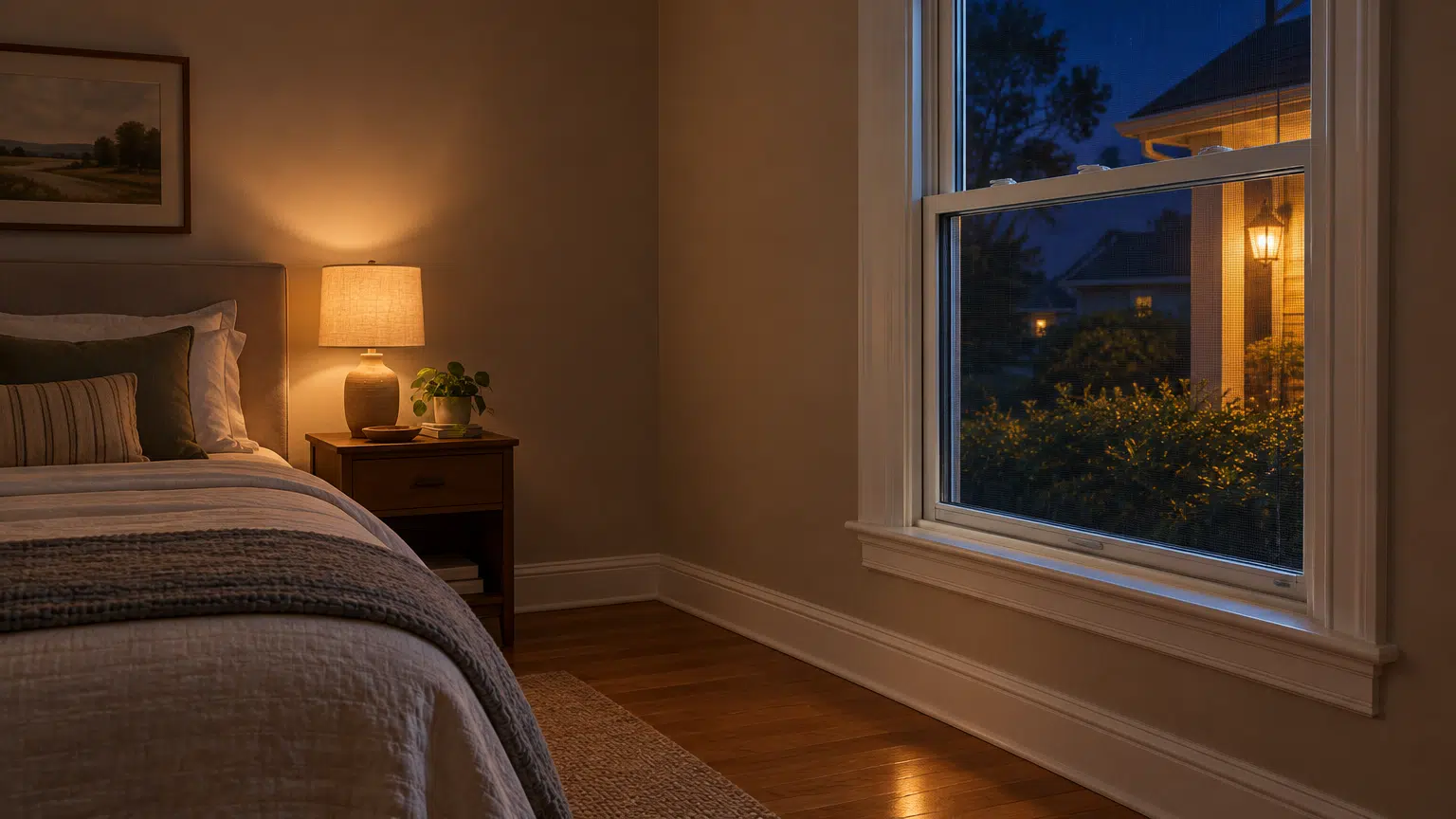
An immediate sauna before bed is less effective for many people because the body remains hot. A hot body delays comfort in bed, increases sweating, and disrupts sleep onset in warm bedrooms. A cooler bedroom supports sleep hygiene. The American Academy of Sleep Medicine recommends a quiet, relaxing bedroom with a comfortable, cool temperature.
A practical evening sauna timing plan uses 4 stages.
Stage | Timing | Purpose |
|---|---|---|
Sauna session | 90 to 120 minutes before bed | Raise skin temperature and promote relaxation |
Cool down | 60 to 90 minutes before bed | Let core temperature fall |
Hydration | 30 to 60 minutes before bed | Replace fluid without overdrinking |
Sleep environment | Bedtime | Keep the room cool, dark, and quiet |
How Long Should a Sauna Before Bed Session Last?
A sauna before bed session commonly lasts 10 to 20 minutes for healthy adults who tolerate heat well. Beginners benefit from 5 to 10 minutes because short exposure helps the body adapt without excessive heat stress.
Sauna duration depends on heat level, sauna type, hydration, health status, and heat tolerance. Traditional Finnish saunas use high dry heat. Infrared saunas use radiant heat at lower air temperatures. Steam rooms use humid heat, which reduces sweat evaporation and increases heat strain.
Mayo Clinic information on infrared sauna notes that studies show possible benefits for several chronic conditions, but larger, more rigorous studies are needed to confirm the results. This means sauna before bed deserves realistic claims. It supports relaxation and sleep preparation, but it is not a proven treatment for every sleep problem.
End the sauna before bed session when dizziness, nausea, chest discomfort, headache, weakness, or extreme heat occurs. These symptoms signal excessive heat strain.
What Are the Benefits of Sauna Before Bed?
Sauna before bed has 5 main benefits for healthy adults when used safely. These benefits include relaxation, sleep preparation, muscle comfort, circulation support, and routine consistency.
Relaxation is the most direct benefit. Heat exposure reduces physical tension and creates a quiet transition between daytime activity and sleep. Sauna before bed also limits screen exposure by replacing late-night phone use.
Sleep preparation is the second benefit. Passive body-heating research shows that evening heat exposure improves sleep onset when scheduled before bedtime, with sufficient cooling time.
Muscle comfort is the third benefit. Heat increases blood flow to the skin and peripheral tissues. The Mayo Clinic Proceedings review by Laukkanen and colleagues summarized evidence linking sauna bathing with cardiovascular and other health outcomes, although the authors also noted the need for more interventional research.
Circulation support is the fourth benefit. Sauna heat widens blood vessels and raises heart rate during exposure. Harvard Health notes that sauna use temporarily affects blood pressure, so people with low blood pressure or certain heart conditions need caution.
Routine consistency is the fifth benefit. A repeated evening sauna routine creates a stable cue for sleep. The brain links repeated calming behaviors with bedtime when the schedule stays consistent.
Is Sauna Before Bed Safe?
Sauna before bed is safe for many healthy adults when sessions are moderate, hydration is adequate, and alcohol is avoided. Sauna before bed is not safe for every person.

People with unstable angina, recent heart attack, severe aortic stenosis, uncontrolled blood pressure problems, fainting disorders, pregnancy-related heat concerns, fever, dehydration, or heat illness risk need medical guidance before sauna use. Harvard Health advises caution because sauna use temporarily lowers blood pressure in some people.
Alcohol increases sauna risk because alcohol impairs judgment, increases dehydration risk, and affects blood pressure. Heavy meals before sauna also increase discomfort because digestion and heat stress compete for circulation.
The safest approach is conservative. Start with short sauna sessions before bed, leave at the first sign of discomfort, cool down gradually, and avoid extreme heat exposure.
How Should You Use a Sauna Before Bed for Better Sleep?
Use a sauna before bed with a 4-step routine. First, finish the sauna 1 to 2 hours before bedtime. Second, cool down at room temperature or with a lukewarm shower. Third, drink water in moderate amounts. Fourth, sleep in a cool, dark, quiet bedroom.
Furthermore, the convenience of having a personal home sauna makes integrating this healthy practice into one’s regular schedule distinctly easier.
Many people also explore different sauna brands and systems to find an option that fits their available space and preferred heating style. Resources such as Norse Steam can help readers learn about different home sauna solutions without changing the core sleep routine discussed above.
This routine supports heat dissipation and sleep hygiene. AASM sleep hygiene guidance recommends limiting bright evening light and keeping the bedroom quiet, relaxing, and cool.
Do not use sauna before bed as a punishment routine, weight loss tactic, or detox claim. Sweat loss mostly reflects water loss. Rehydration replaces that fluid. Sauna before bed supports relaxation and temperature regulation, not rapid fat loss.
What Are Common Mistakes With Sauna Before Bed?
The most common sauna before bed mistakes are using the sauna too late, staying too long, entering dehydrated, drinking alcohol, and sleeping in a hot room.
Late sauna use keeps the body warm in bed. Long sauna use increases the risk of dehydration and dizziness. Alcohol increases heat strain. A hot bedroom blocks the cooling process that sleep requires.
The corrective action is simple. Keep sauna before bed moderate, finish early, drink water, and make the bedroom cool.
Conclusion: Should You Use a Sauna Before Bed?
Sauna before bed supports better sleep preparation when timing, cooling, hydration, and safety are controlled. The best routine is to place the sauna before bed, 1 to 2 hours before sleep, followed by gradual cooling and a cool bedroom.
Sauna before bed is not a medical treatment for chronic sleep disorders. It is a supportive evening habit for relaxation, thermoregulation, and routine consistency. For persistent insomnia, snoring, breathing pauses, or severe daytime sleepiness, contact a qualified sleep medicine professional.
FAQ About Sauna Before Bed
Is a Sauna Before Bed Good Every Night?
Sauna before bed every night is acceptable for some healthy adults if heat exposure remains moderate and hydration remains adequate. People with cardiovascular, blood pressure, pregnancy, or fainting concerns need medical advice first.
How Long Before Bed Should You Sauna?
Use the sauna 1 to 2 hours before sleep. This window supports cooling after heat exposure and aligns with passive body heating research on improved sleep onset.
Is an Infrared Sauna Before Bed Better than A Dry Sauna?
Infrared sauna before bed uses lower air temperature and radiant heat. Dry sauna before bed uses hotter air. The better option is the one that supports comfort, safe heat tolerance, and consistent sleep timing.
Should You Shower After a Sauna Before Bed?
A lukewarm shower after sauna before bed helps remove sweat and supports gradual cooling. Very cold showers feel stimulating for some people and disrupt relaxation.
Can Sauna Before Bed Cause Insomnia?
Sauna before bed disrupts sleep when it occurs too close to bedtime, lasts too long, causes dehydration, or keeps the body hot. Earlier timing reduces this risk.