Sleep is one of the most underestimated factors in overall health. Research consistently links poor sleep quality to increased stress, reduced cognitive function, weakened immunity, and long-term cardiovascular risk. Yet for most people, the bedroom remains the last room to get a serious upgrade (often treated as a storage problem rather than a wellness priority), even though what you sleep on directly shapes how well the body and mind recover each night.
The bed plays a key role in ensuring a good night’s sleep, so the choice deserves real attention. Exploring Henge furniture or Moroso bedroom collections, for example, gives a clear sense of what sleep-focused design looks like when ergonomics and material quality are treated as priorities.
Why the Bed Frame Could Matter More Than You Think
Most people spend more time choosing a mattress than a bed frame, but the two work as a system. Height, rigidity, and upholstery affect how supported the body feels, how easily you get in and out of bed, and even how temperature behaves around the sleeping surface. A well-engineered frame also absorbs movement, a meaningful factor for anyone sharing a bed.
When evaluating a bed frame, a few criteria are worth keeping in mind:
- Height: Too low makes daily use physically demanding; too high disrupts the enclosed feeling that supports sleep. A mid-height profile works for most adults.
- Rigidity: Any flex or creak in the structure interrupts sleep directly. The frame should feel completely stable under movement.
- Headboard: A padded headboard provides back support for reading in bed and insulation from a cold wall. Height and density both matter here.
- Upholstery: Fabric and leather absorb sound and regulate temperature better than hard finishes. The choice between them depends on climate and maintenance preference.
What Bed Materials Actually Do for Better Sleep
The right upholstery does more than look good. Each material brings specific properties to the sleeping environment:
- Bouclé and ribbed fabric absorb ambient sound and insulate well (suited to cooler rooms or noisier spaces).
- Full-grain leather is breathable, temperature-regulating, and improves with use over time.
- Velvet and dense weaves retain warmth and add visual calm, though they need more maintenance in humid climates.
- Wood (in wood-and-fabric frames) adds thermal mass and structural warmth without the heat retention of synthetic finishes.
The best bedroom materials in 2026 share one quality: they perform across seasons and hold up with daily use.
5 Incredible Beds That Stand Out in 2026
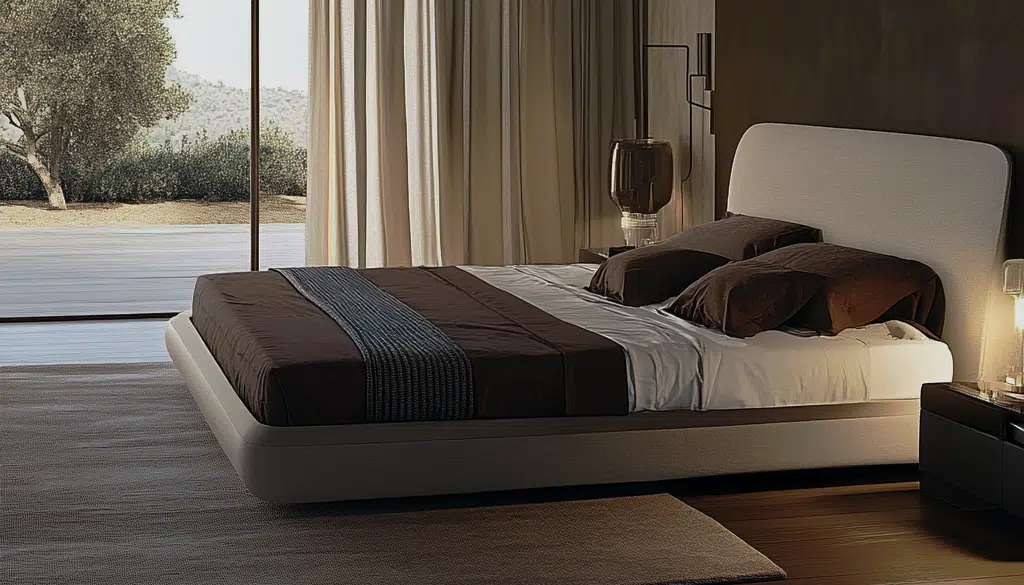
1) The Vibe Bed by Giorgetti offers upholstered proportions that feel generous without dominating the room. Its clean lines and muted palette keep the visual temperature calm, the kind of environment where the mind starts to slow down before the lights go off.
2) The Paris Bed by Baxter takes a softer approach, with a deep enveloping headboard that works almost like a physical barrier between the sleeper and the rest of the room. The leather upholstery is warm to the touch and improves with age, a quality that matters in a piece used every day.
3) The Talamo Bed by Zanotta earns its place through restraint. Nothing decorative that doesn’t also serve a purpose. That economy translates into visual calm that suits bedrooms oriented around recovery rather than display.
4) The Morrison Bed by Alf Dafrè combines wood and fabric in a way that reads as warm and settled from day one. It avoids the coldness of all-metal frames, producing an environment that feels immediately habitable.
5) The Softwall Bed by Living Divani is the most structural of the group. Its integrated padded wall panel extends the comfort surface behind the sleeper, reducing nighttime interruptions from repositioning against a hard surface.
Good Bed Choice: Where To Start
The framing around bedroom investment has shifted. Buying a well-designed bed is no longer purely a luxury decision, it’s increasingly understood as a health decision. The hours spent in bed represent roughly a third of a person’s entire life, and the quality of that time carries real, measurable consequences on everything from daily mood to long-term metabolic function.
Furniture that supports genuine rest belongs to a meaningfully different category of purchase. And the brands producing it in 2026 are taking that responsibility more seriously than ever.